About

Why diversity in real estate teams boosts sales in 2026
Despite steady progress, women hold only 9% of C-suite positions in commercial real estate today. This gap isn’t just an equity issue. It’s a missed opportunity for teams seeking innovation and stronger sales performance. Research shows diverse teams generate creative solutions and better client outcomes when managed effectively. This article reveals how real estate leaders can harness diversity to drive measurable results and build high-performing teams.
Table of Contents
- Understanding The Current State Of Diversity In Real Estate Teams
- How Diversity Improves Innovation And Problem-Solving In Real Estate Teams
- Managing Challenges Of Diversity For Stronger Real Estate Team Performance
- Practical Ways Real Estate Leaders Can Build And Leverage Diverse Teams
- Explore Tools To Enhance Your Diverse Real Estate Team’s Success
Key takeaways
| Point | Details |
|---|---|
| Diverse teams drive innovation | Teams with varied perspectives generate more creative solutions and improve decision-making in complex sales scenarios. |
| Representation gaps persist | Women comprise 36.7% of the industry workforce but face significant leadership and pay gaps. |
| Management skills matter | Conflict resolution and negotiation abilities help teams overcome diversity-related challenges and maximize performance. |
| Strategic recruitment pays off | Targeting mid- to senior-level diverse talent builds leadership pipelines and improves retention rates. |
Understanding the current state of diversity in real estate teams
Real estate teams face persistent diversity challenges that impact long-term growth and innovation. Understanding these gaps helps leaders make strategic hiring and development decisions.
Women occupy 36.7% of the commercial real estate industry workforce, but representation drops sharply at senior levels. Executive roles remain dominated by men, with women capturing less than one-tenth of C-suite positions. This leadership gap signals missed opportunities for diverse perspectives in strategic decision-making.
Pay disparities compound the representation problem. Women in real estate earn significantly less than male counterparts, with the largest gaps appearing in commission and bonus structures. These financial inequities create retention challenges, particularly for high-performing female agents who may seek opportunities elsewhere.
Diversity metrics reveal critical gaps:
- 50.8% of all leavers were from ethnic minority backgrounds in recent industry analysis
- Young women under 34 from ethnic minorities show the highest turnover rates
- Incremental gains appear in women’s brokerage representation and C-suite aspirations
- Mid- to senior-level diversity remains stagnant despite entry-level progress
| Diversity Metric | Current Status | Impact |
|---|---|---|
| Women in workforce | 36.7% overall | Moderate representation |
| Women in C-suite | 9% | Severe leadership gap |
| Ethnic minority retention | 50.8% turnover | High attrition risk |
| Pay equity | Significant gaps | Retention challenge |
These statistics matter because they reveal where teams lose talent and limit innovation potential. Aligning your recruitment strategy with 2026 real estate trends means addressing these gaps proactively. Teams that retain diverse talent through mid-career stages build stronger leadership pipelines and capture market opportunities competitors miss.
How diversity improves innovation and problem-solving in real estate teams
Real estate sales demand creative approaches to unique client challenges. Diverse teams bring the varied experiences and perspectives needed to develop innovative solutions and close complex deals.
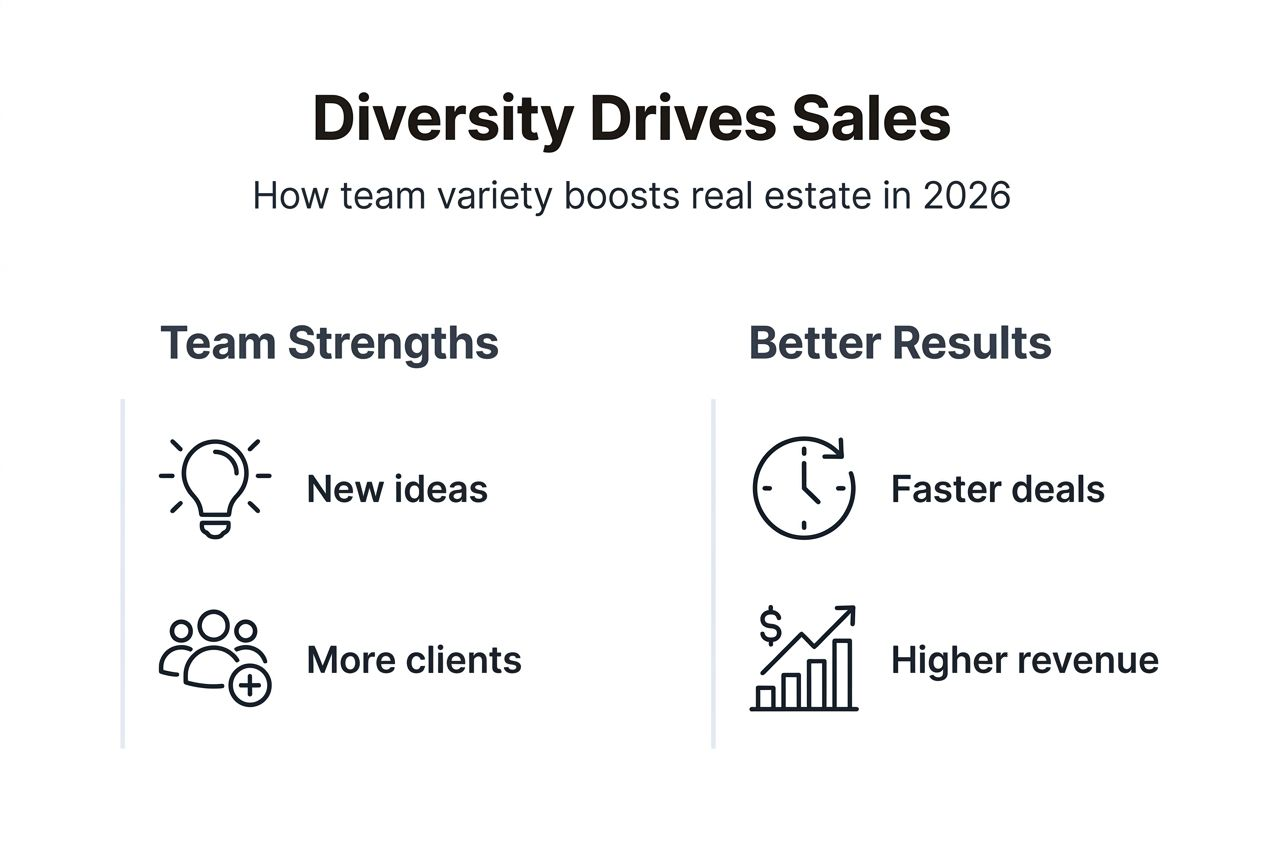
Diverse teams bring a wider range of perspectives, leading to more creative solutions and better decision-making according to comprehensive research. When team members approach problems from different angles, they identify opportunities homogeneous groups overlook. This advantage proves critical when serving diverse client bases or navigating market shifts.
Functional diversity strengthens team capabilities beyond demographics. Mixing agents with varied specializations, backgrounds, and skillsets creates natural knowledge-sharing opportunities. Functional diversity increases external communication, leading to higher ratings of innovation in team performance studies.
Diversity drives specific performance advantages:
- Broader market understanding helps teams connect with varied client demographics
- Multiple problem-solving approaches accelerate finding optimal solutions
- Varied networks expand referral sources and partnership opportunities
- Different communication styles improve client rapport across preferences
Consider how a team combining agents with luxury, commercial, and residential expertise approaches a mixed-use development opportunity. Each member contributes specialized knowledge, creating comprehensive solutions no single specialist could develop alone. This collaborative advantage translates directly to competitive positioning and client value.

Pro Tip: Create regular team sessions where members share unique insights from their backgrounds and experiences. This practice normalizes diverse thinking and helps teams apply varied perspectives to current challenges.
Technology amplifies these advantages when teams leverage real estate AI tools to identify patterns across diverse client segments. Combined with human diversity, data-driven insights create powerful competitive advantages. Understanding CRM role in real estate helps teams systematize and scale their diverse strengths across larger client bases.
Managing challenges of diversity for stronger real estate team performance
Diversity creates clear advantages, but it also introduces management complexities. Teams that address these challenges proactively unlock superior performance while avoiding common pitfalls.
Diversity can have negative direct effects on team performance due to teamwork challenges when left unmanaged. Different communication styles and work approaches sometimes create friction rather than synergy. Initial productivity may dip as team members learn to collaborate effectively across differences.
Conflict becomes more likely in diverse groups because varied perspectives naturally lead to disagreement. This isn’t inherently negative. Constructive conflict drives better decisions when teams channel disagreement productively. However, teams need negotiation and conflict resolution skills to mitigate diversity’s negative effects according to organizational research.
Critical management strategies for diverse teams:
- Establish clear communication protocols that accommodate different styles
- Provide conflict resolution training before issues emerge
- Create psychological safety where team members voice concerns without fear
- Set team goals that reward collective success over individual achievement
- Invest in regular team-building activities that build trust and understanding
- Monitor team dynamics and intervene early when friction appears
Organizational support matters tremendously. Leaders must protect teams from external pressures that exacerbate internal challenges. This includes providing adequate time for relationship-building, resources for professional development, and reward structures aligned with team outcomes.
Pro Tip: Schedule monthly check-ins specifically focused on team dynamics and collaboration quality. Address small issues before they grow into performance barriers.
Successful diverse teams develop strong internal processes that transform potential weaknesses into strengths. They invest time upfront establishing norms and building relationships. This investment pays dividends through sustained high performance and lower turnover. Combining these practices with real estate networking tips helps teams leverage their collective networks more effectively.
Practical ways real estate leaders can build and leverage diverse teams
Building diverse teams requires intentional strategies beyond good intentions. Leaders who implement systematic approaches see measurable improvements in representation and performance.
The industry needs more focus on mid- to senior-level talent development and retention according to recent analysis. Entry-level diversity efforts fail to create lasting change when talented professionals leave before reaching leadership positions. Strategic leaders address the entire career pipeline.
Retention strategies matter as much as recruitment. Data shows more women are aspiring to C-suite positions, indicating leadership potential within existing teams. Creating clear advancement paths keeps ambitious professionals engaged and developing.
| Strategy | Traditional Approach | Inclusive Approach | Outcome Difference |
|---|---|---|---|
| Recruiting | Post on standard job boards | Partner with diverse professional networks | 3x more diverse applicants |
| Development | One-size-fits-all training | Customized mentorship programs | Higher retention rates |
| Advancement | Informal promotion paths | Transparent criteria and sponsorship | More diverse leadership pipeline |
| Culture | Diversity as HR initiative | Diversity as business strategy | Sustainable competitive advantage |
Actionable steps to implement diversity-focused leadership development:
- Identify high-potential diverse talent at every career stage, not just entry level
- Create formal sponsorship programs pairing emerging leaders with executives
- Establish transparent promotion criteria and timelines to reduce bias
- Offer flexible work arrangements that support diverse life circumstances
- Track diversity metrics at all levels and hold leaders accountable for progress
- Build partnerships with diverse professional organizations for ongoing recruitment
- Invest in inclusive leadership training for all managers and team leads
Apply the same strategic thinking you use for real estate prospecting strategies to talent acquisition. Just as you target ideal client profiles, develop ideal candidate profiles that prioritize diverse backgrounds and experiences. Use lead generation tools comparison principles to evaluate which recruiting channels deliver the strongest diverse candidates.
Successful diversity initiatives require sustained commitment and measurement. Set specific goals, track progress quarterly, and adjust strategies based on results. Teams that treat diversity as a core business strategy rather than a compliance exercise see the strongest returns in innovation, sales performance, and market positioning.
Explore tools to enhance your diverse real estate team’s success
Building a diverse, high-performing team is just the beginning. The right technology and support systems help you maximize that team’s potential and convert capabilities into consistent results.

Your diverse team brings varied strengths to client acquisition and relationship management. Streamlining your prospecting in real estate workflow ensures every team member operates at peak efficiency regardless of their individual approach. Modern lead generation tools for realtors adapt to different working styles while maintaining consistent output quality across your team. Combining human diversity with real estate AI prospecting tools creates a competitive advantage that’s difficult for homogeneous teams to replicate. We provide the technology infrastructure and expert support that amplifies your team’s diverse capabilities.
FAQ
How can diversity increase my real estate team’s sales performance?
Diverse teams connect more effectively with varied client demographics and identify opportunities homogeneous groups miss. Different perspectives lead to creative sales strategies and stronger problem-solving when addressing unique client needs.
What are common challenges when managing diverse real estate teams?
Diversity can create interpersonal conflicts and communication gaps without proper management. Teams need strong negotiation and conflict resolution skills to transform potential friction into productive collaboration and superior outcomes.
How can I attract and retain diverse talent at senior levels?
Focus recruitment efforts on mid- and senior-level candidates, not just entry positions. Implement clear advancement paths, mentorship programs, and inclusive culture initiatives that demonstrate commitment to long-term career development. Apply targeted real estate prospecting strategies to reach experienced diverse professionals through specialized networks and partnerships.
What skills help teams harness the benefits of diversity?
Conflict resolution and transparent communication prove critical for diverse team success. Teams also need organizational support through appropriate rewards, adequate resources, and leadership commitment to real estate networking tips that leverage collective strengths.