About

Master 2026 real estate trends: outperform competitors
Artificial intelligence now automates up to 30% of sales tasks in real estate, fundamentally reshaping how brokers operate. The 2026 market brings unprecedented changes driven by technology, shifting demographics, and evolving economic policies. Understanding these trends isn’t optional anymore. Brokers who adapt will thrive, while those clinging to outdated methods risk losing ground to competitors who embrace innovation and meet modern buyer expectations.
Table of Contents
- Technological Advancements Transforming Real Estate Workflows
- Demographic And Consumer Behavior Trends For 2026
- Macroeconomic And Regulatory Changes Impacting The Market
- Common Misconceptions About 2026 Market Forecasts
- Framework For Comparing Traditional And Tech-Driven Brokerage Approaches
- Practical Strategies For Brokers To Leverage 2026 Trends
- Conclusion And Next Steps For Real Estate Professionals
- Leverage Expert Tools And Resources To Excel In 2026
Key takeaways
| Point | Details |
|---|---|
| Technology reshapes workflows | AI and VR tools boost efficiency by automating tasks and cutting sales cycles by 25%. |
| Buyer preferences evolve | 65% of millennials prioritize sustainable properties, while suburban demand grows 12% annually. |
| Economic shifts create opportunities | Rising interest rates and new policies require strategic adaptation to maintain competitive advantage. |
| Common myths mislead brokers | Technology enhances rather than replaces agents, and suburban growth continues strengthening. |
| Strategic adoption drives results | Implementing AI prospecting and virtual tours increases lead conversion rates by 20%. |
Technological advancements transforming real estate workflows
Artificial intelligence transforms how brokers handle daily operations. AI automates up to 30% of sales tasks, freeing professionals to focus on building client relationships and closing deals. This shift allows brokers to handle more clients without sacrificing service quality.
Virtual reality revolutionizes property showings. 58% of brokers now use VR tours, cutting sales cycles by approximately 25%. Buyers explore properties remotely, making informed decisions faster. This technology particularly benefits luxury and international markets where in-person visits prove challenging.
Data analytics sharpen pricing strategies. AI pricing models reduce errors by 10%, helping brokers set competitive prices that attract serious buyers. These tools analyze comparable sales, market trends, and property features to generate accurate valuations. Brokers using real estate AI prospecting tools see higher lead conversion rates.
Key technological applications include:
- Lead scoring systems that prioritize high-value prospects
- Automated follow-up sequences maintaining consistent client communication
- Predictive analytics forecasting market movements
- Virtual staging reducing photography and marketing costs
The metaverse opens new listing opportunities. Forward-thinking brokers create immersive property experiences that differentiate their offerings. Tech-savvy buyers expect these innovations, making adoption essential for staying competitive.
Pro Tip: Start with one technology like AI lead scoring before expanding to VR tours. Master each tool thoroughly to maximize return on investment and avoid overwhelming your team.
Integrating real estate automation tools streamlines administrative work, letting brokers concentrate on revenue-generating activities. The AI agent growth guide provides implementation frameworks for scaling operations efficiently.
Demographic and consumer behavior trends for 2026
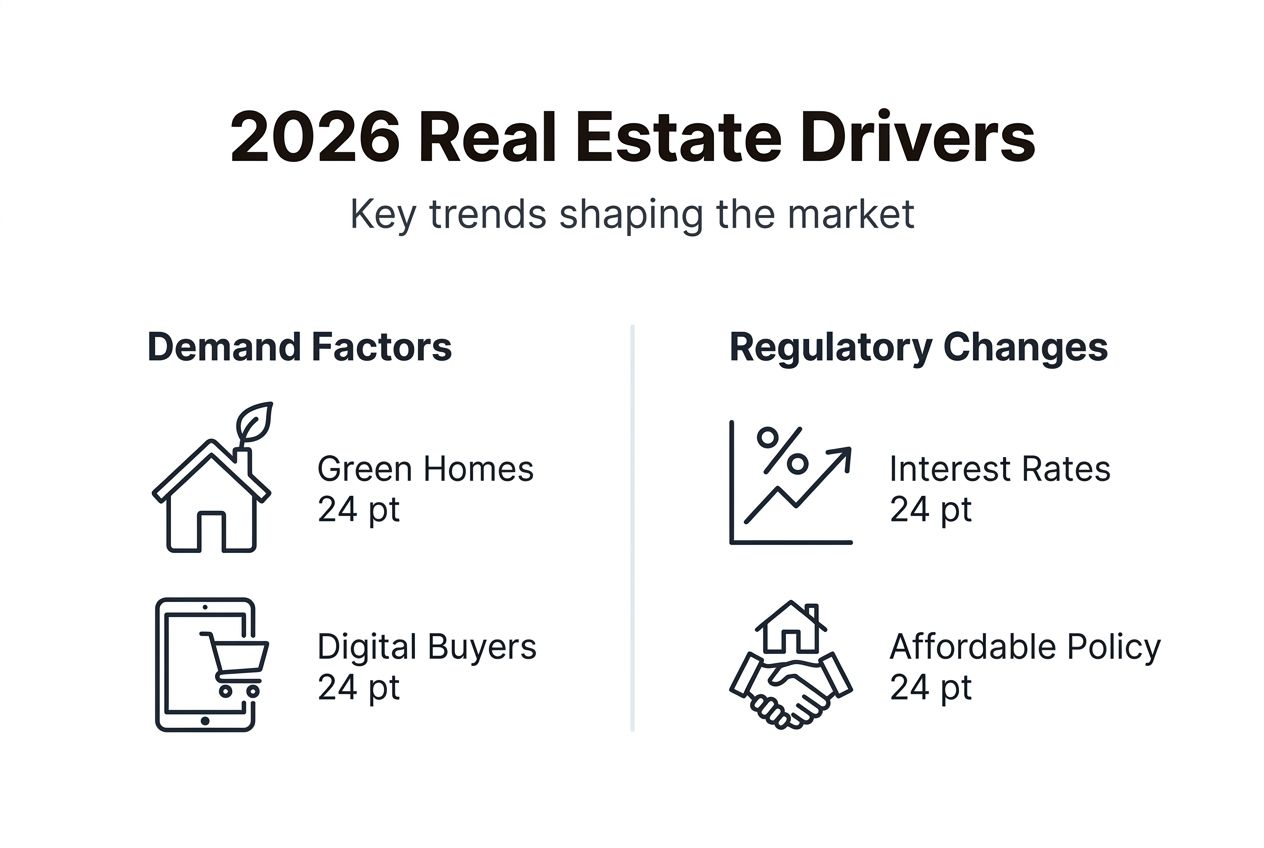
Millennial buyers dominate the market with distinct preferences. 65% willingly pay premiums for green homes, making sustainability a critical selling point. Energy-efficient appliances, solar panels, and eco-friendly building materials attract this demographic. Brokers highlighting environmental features close deals faster.

Digital expectations shape buyer interactions. 70% prefer brokers using digital tools for communication and property searches. Email updates, mobile apps, and virtual consultations meet modern convenience standards. Brokers without strong digital presence lose prospects to competitors offering seamless online experiences.
Suburban migration accelerates beyond pandemic trends. Suburban home demand grows 12% compared to 2025, driven by remote work flexibility and lifestyle preferences. Families seek larger properties, better schools, and lower living costs. This shift creates opportunities for brokers specializing in suburban markets.
Behavioral patterns brokers must address:
- Buyers conduct extensive online research before contacting agents
- Virtual tours influence 80% of initial property selections
- Social media recommendations drive referral business
- Transparency about fees and processes builds trust faster
Adapting marketing strategies proves essential. Brokers showcasing suburban properties with virtual tours capture growing demand. Understanding 2026 real estate buyer trends helps position listings effectively. Online engagement tools maintain relationships throughout extended decision processes.
Younger buyers value authenticity over polished sales pitches. Sharing genuine market insights and addressing concerns directly builds credibility. Brokers combining personal expertise with digital efficiency win millennial clients who research thoroughly before committing.
Macroeconomic and regulatory changes impacting the market
Interest rates climb approximately 1.5% in 2026, affecting mortgage affordability. Higher borrowing costs reduce purchasing power for many buyers, particularly first-time homeowners. Brokers must educate clients about rate trends and explore creative financing options to close transactions.
Government initiatives prioritize affordable housing development. New policies aim to balance supply and demand, addressing inventory shortages in key markets. These programs create opportunities for brokers specializing in first-time buyer segments. Understanding local incentives helps clients access available assistance.
Metro-specific regulations influence pricing dynamics. Zoning changes, rent control measures, and development restrictions vary significantly across cities. Brokers tracking local policy shifts anticipate market movements and advise clients strategically. Regulatory knowledge becomes a competitive advantage.
Economic factors requiring attention:
- Employment rates affecting buyer confidence and purchasing decisions
- Construction costs impacting new home prices and availability
- Tax policy changes influencing investment property demand
- International investment flows shaping luxury market dynamics
Market conditions create localized opportunities. Some regions slow while others accelerate based on economic factors and migration patterns. Brokers analyzing area-specific data identify where to focus marketing efforts. Diversifying across property types and price ranges mitigates risk.
Staying informed requires monitoring economic indicators and policy announcements. Brokers who understand macroeconomic impacts provide valuable guidance to nervous buyers and sellers. This expertise builds trust and positions professionals as market authorities rather than order-takers.
Common misconceptions about 2026 market forecasts
Technology enhances agent capabilities rather than eliminating them. AI augments rather than replaces professionals, handling repetitive tasks while humans manage relationships and negotiations. Personal connections remain irreplaceable in high-stakes transactions requiring empathy and complex problem-solving.
Suburban demand continues strengthening contrary to predictions of decline. 12% growth contradicts beliefs about returning urban preferences. Remote work permanence and lifestyle changes sustain suburban interest. Brokers dismissing this trend miss significant opportunities.
Digital tool effectiveness exceeds skeptical expectations. Some professionals underestimate buyer adoption of virtual tours and online communication. Data proves clients prefer brokers offering comprehensive digital services. Resistance to technology adoption creates competitive disadvantages.
“The agents who thrive in 2026 combine cutting-edge tools with irreplaceable human insight. Technology amplifies expertise rather than replacing the personal touch that closes deals.”
Misconceptions causing strategic errors:
- Believing luxury buyers don’t use virtual tours
- Assuming younger clients prefer minimal digital interaction
- Thinking AI pricing tools lack accuracy for unique properties
- Expecting post-pandemic trends to reverse completely
Clarity about market realities focuses efforts productively. Brokers investing in proven technologies and demographic shifts outperform those waiting for conditions to revert. The 2026 market rewards adaptation and punishes complacency.
Debunking myths requires examining actual data rather than assumptions. Brokers testing new approaches discover which innovations deliver results. Experimentation combined with performance tracking identifies optimal strategies for individual markets and client bases.
Framework for comparing traditional and tech-driven brokerage approaches
| Aspect | Traditional Approach | Tech-Driven Approach |
|---|---|---|
| Lead Generation | Manual prospecting, referrals, cold calling | AI prospecting tools with predictive scoring |
| Property Showings | In-person tours only | VR tours plus selective in-person visits |
| Sales Cycle Length | 90-120 days average | 65-90 days with virtual pre-qualification |
| Pricing Strategy | Comparative market analysis manually | AI-powered valuations with real-time data |
| Lead Conversion Rate | 1-2% industry standard | 2.4% with data-driven nurturing (20% increase) |
| Administrative Time | 40% of workweek | 25% with automation tools |
| Client Communication | Phone calls, occasional emails | Multi-channel automated sequences plus personal touch |
| Market Analysis | Quarterly manual reports | Real-time dashboard analytics |
Traditional methods rely heavily on personal networks and manual processes. Brokers spend significant time on administrative tasks that don’t directly generate revenue. While relationship skills remain valuable, inefficient workflows limit the number of clients one professional can serve effectively.
Tech-driven approaches integrate automation strategically. AI handles routine follow-ups, data entry, and initial lead qualification. Brokers focus energy on high-value activities like negotiations and relationship building. Understanding the real estate sales cycle helps optimize technology integration points.
Virtual reality reduces unnecessary property visits. Buyers tour multiple homes remotely before selecting finalists for in-person showings. This efficiency saves time for both brokers and clients while maintaining thorough property evaluation. Sales cycles shorten as decision-making accelerates.
Pro Tip: Blend both approaches by using technology for efficiency while maintaining personal touches that build trust. Automated systems handle logistics while you focus on understanding client needs and delivering exceptional service.
Choosing the right balance depends on your market and client base. Luxury buyers may expect more personal interaction, while first-time buyers appreciate digital convenience. Test different technology combinations to discover what works best for your specific situation and gradually expand successful implementations.
Practical strategies for brokers to leverage 2026 trends
-
Assess your local market dynamics to identify which trends impact your area most significantly. Analyze demographic shifts, economic conditions, and competitive landscape to focus efforts strategically.
-
Implement AI tools for pricing accuracy and lead generation. Start with real estate AI prospecting tools that integrate with existing systems. Train your team thoroughly before full deployment.
-
Adopt virtual reality platforms for property presentations. Create immersive tours that allow remote buyers to experience properties realistically. Invest in quality equipment and professional photography to maximize impact.
-
Prioritize marketing sustainable and suburban properties aligned with buyer preferences. Highlight energy efficiency, green features, and lifestyle benefits in listings and social media content.
-
Monitor regulatory changes affecting housing supply and demand in your markets. Subscribe to policy updates and join professional associations providing regulatory guidance.
-
Enhance client communication using technology while maintaining personal relationships. Use automated systems for routine updates but handle sensitive conversations personally. Balance efficiency with empathy.
-
Build expertise in creative financing options to help clients navigate higher interest rates. Partner with mortgage professionals offering diverse loan products and down payment assistance programs.
-
Develop a strong digital presence across platforms where your target buyers spend time. Create valuable content demonstrating market knowledge and showcasing properties effectively.
Pro Tip: Create a 90-day implementation plan focusing on one major technology adoption and one marketing strategy shift. Measure results before adding new initiatives to avoid overwhelming your team.
Explore top real estate tools for 2026 to identify solutions matching your specific needs. Evaluate real estate marketing software based on integration capabilities and user reviews. Invest time learning selected tools thoroughly to maximize return on investment.
Conclusion and next steps for real estate professionals
The 2026 real estate landscape demands strategic adaptation across technology, marketing, and client service. Brokers integrating AI, virtual reality, and data analytics gain significant competitive advantages. Understanding demographic shifts and economic conditions positions you to capitalize on emerging opportunities.
Immediate actions separate thriving brokers from struggling ones. Adopt at least one major technology tool this quarter. Refocus marketing to emphasize sustainable properties and suburban offerings. Stay informed about regulatory changes affecting your markets.
Continuous learning ensures ongoing relevance. The market evolves rapidly, requiring professionals to update skills and strategies regularly. Experiment with new approaches, measure results, and refine based on performance data.
Your 2026 success checklist:
- Evaluate and implement one AI tool for prospecting or pricing
- Create virtual tours for your top listings
- Develop marketing content highlighting sustainability features
- Establish monitoring systems for local policy changes
- Schedule quarterly technology and strategy reviews
Leverage expert tools and resources to excel in 2026
Navigating 2026 trends becomes simpler with the right support system. ex.plo.re provides cutting-edge tools specifically designed for modern real estate professionals facing these exact challenges. Our AI-powered prospecting solutions streamline client acquisition while our marketing platforms amplify your reach.

Real estate agents using our prospecting and client acquisition tools report faster lead conversion and shorter sales cycles. Our lead generation tools comparison guide helps you select the perfect solution for your market. Advanced AI prospecting capabilities integrate seamlessly with your existing workflow.
Our talented team combines technology expertise with real estate industry knowledge to amplify your impact. We understand the daily challenges brokers face and create solutions that actually work in real-world conditions. Let us help you implement the 2026 strategies that drive measurable results.
FAQ
What technologies will impact real estate workflows most in 2026?
AI automation handles routine administrative tasks and enhances pricing accuracy through real-time market analysis. Virtual reality creates immersive property tours that significantly shorten sales cycles. Data analytics improve client targeting by identifying high-probability prospects and predicting market movements.
How should brokers adapt marketing to millennial buyers in 2026?
Highlight green building features and sustainability credentials prominently in all listings. Use social media platforms and digital tools for engagement since 70% of buyers prefer tech-savvy brokers. Emphasize transparency about processes, fees, and market conditions to build trust with research-focused millennials.
Will technology replace real estate agents by 2026?
Technology augments agent efficiency but cannot replace the personal relationships essential for complex transactions. Brokers using AI and virtual tools to enhance service delivery outperform those resisting adoption. Human expertise remains critical for negotiation, emotional support, and navigating unique situations requiring judgment.
How will rising interest rates affect real estate in 2026?
Higher rates increase mortgage costs by approximately 1.5%, reducing buyer purchasing power across most segments. Market activity may slow in some areas while creating opportunities in affordable housing and creative financing niches. Brokers should educate clients about rate trends and explore diverse loan options to maintain transaction volume.