
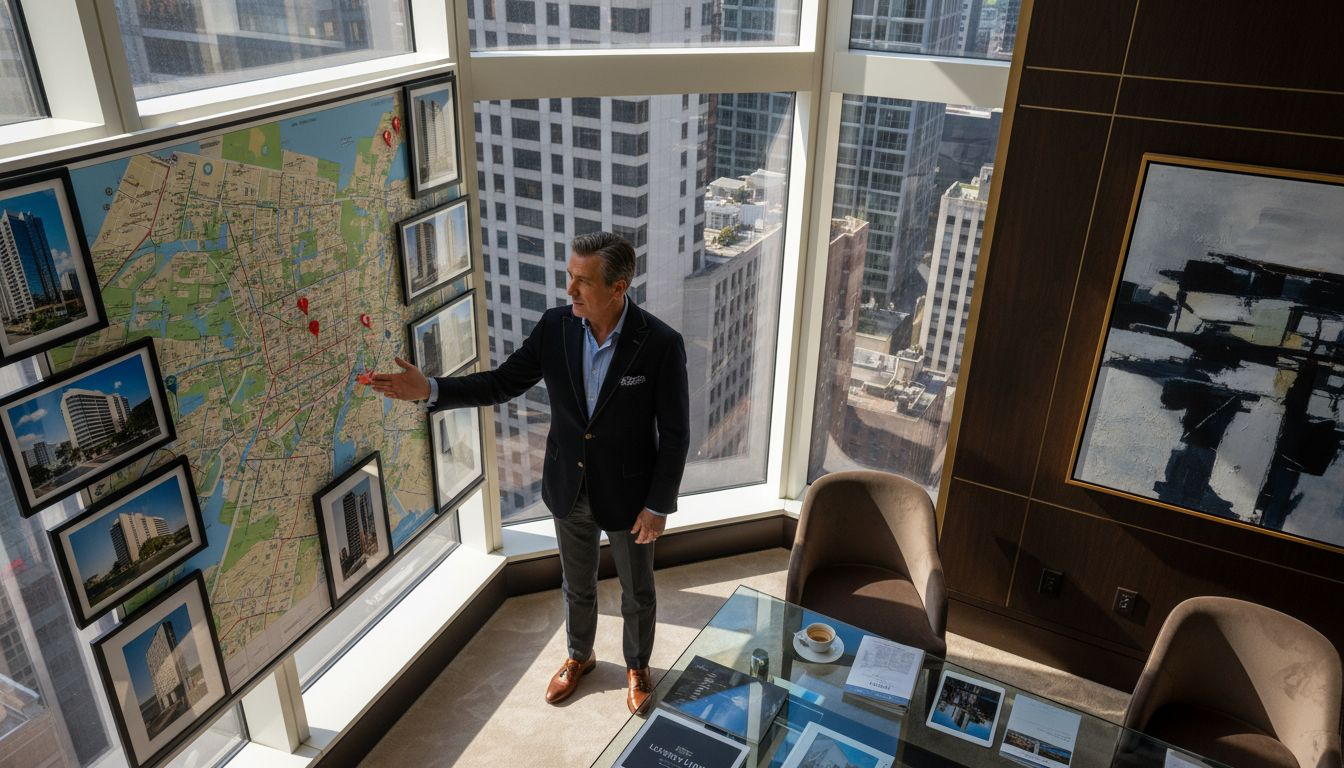
Sophisticated buyers in the luxury space are rewriting the rules in 2025. As client priorities shift toward values-driven experiences and sustainability, brokers across regions from the United States to China must rethink their approach. The global luxury goods market is forecast to total €358 billion with jewelry and fragrances showing remarkable resilience. This article highlights emerging trends, demographic shifts, and actionable strategies that empower luxury professionals to deliver exceptional results in a rapidly evolving environment.
Table of Contents
- Defining Luxury Market Trends For 2025
- Major Property And Yacht Segments Globally
- Buyer Demographics And Wealth Migration Patterns
- Impact Of Digitalization And Sustainable Luxury
- Financial Implications And Risk Factors For Brokers
- Mistakes To Avoid In Elite Client Acquisition
Key Takeaways
| Point | Details |
|---|---|
| Shift to Experience | In 2025, luxury consumers prioritize meaningful experiences and alignment with personal values over product ownership. |
| Generational Transformation | Millennials and Generation Z seek authenticity and personalized interactions, prompting brokers to adopt relationship-focused strategies. |
| Technological Integration | Brokers must leverage advanced technologies and sustainability practices to meet evolving consumer expectations in both property and yacht markets. |
| Financial Resilience | Adapting financial strategies to address market volatility, rising costs, and regulatory changes is crucial for survival in the luxury brokerage sector. |
Defining Luxury Market Trends for 2025
The luxury market stands at a critical inflection point in 2025, characterized by profound shifts in consumer behavior and economic dynamics. Global luxury goods market analysis reveals a nuanced landscape where traditional purchase patterns are rapidly evolving.
Several key trends are reshaping the luxury brokerage ecosystem:
- Experiential value trumps product possession
- Demographic shifts driving consumer preferences
- Technology-enabled personalization
- Sustainability as a core brand differentiator
- Multichannel engagement strategies
In 2025, luxury consumers are demanding more than high-end products—they seek comprehensive, meaningful experiences that align with their personal values. Luxury sector insights indicate a market forecast of €358 billion, with significant segments like jewelry and fragrances demonstrating resilience amid economic uncertainties.
Generational Transformation is perhaps the most critical trend. Younger affluent consumers are prioritizing authenticity, social responsibility, and personalized interactions over traditional luxury signaling. Luxury brokers must adapt by developing more nuanced, relationship-driven approaches that transcend transactional interactions.
Pro tip: Invest in understanding your clients’ evolving preferences through data-driven insights and personalized engagement strategies.
Major Property and Yacht Segments Globally
The global luxury market for property and yachts is experiencing unprecedented transformation in 2025, driven by sophisticated consumer demands and technological innovation. Luxury yacht market projections indicate a remarkable growth trajectory, with market value expected to reach USD 13.5 billion by 2025 and potentially expanding to USD 31.2 billion by 2035.
Key market segments in the luxury property and yacht landscape include:
- Ultra-high-net-worth individual (UHNWI) targeted properties
- Sustainable and eco-friendly yacht designs
- Hybrid propulsion technology vessels
- Smart home integrated luxury properties
- Personalized maritime and real estate experiences
The luxury yacht market is particularly dynamic, with three primary segments capturing significant investor and consumer interest:
- Motor Yachts: Representing the largest market share
- Sailing Yachts: Appealing to traditional maritime enthusiasts
- Superyachts: Symbolizing ultimate luxury and technological innovation
Technological Integration is reshaping both property and yacht markets. Wealthy consumers now expect advanced features like sustainable technologies, smart home systems, and customizable experiences that reflect their unique lifestyle preferences. Brokers must understand these evolving expectations to remain competitive.
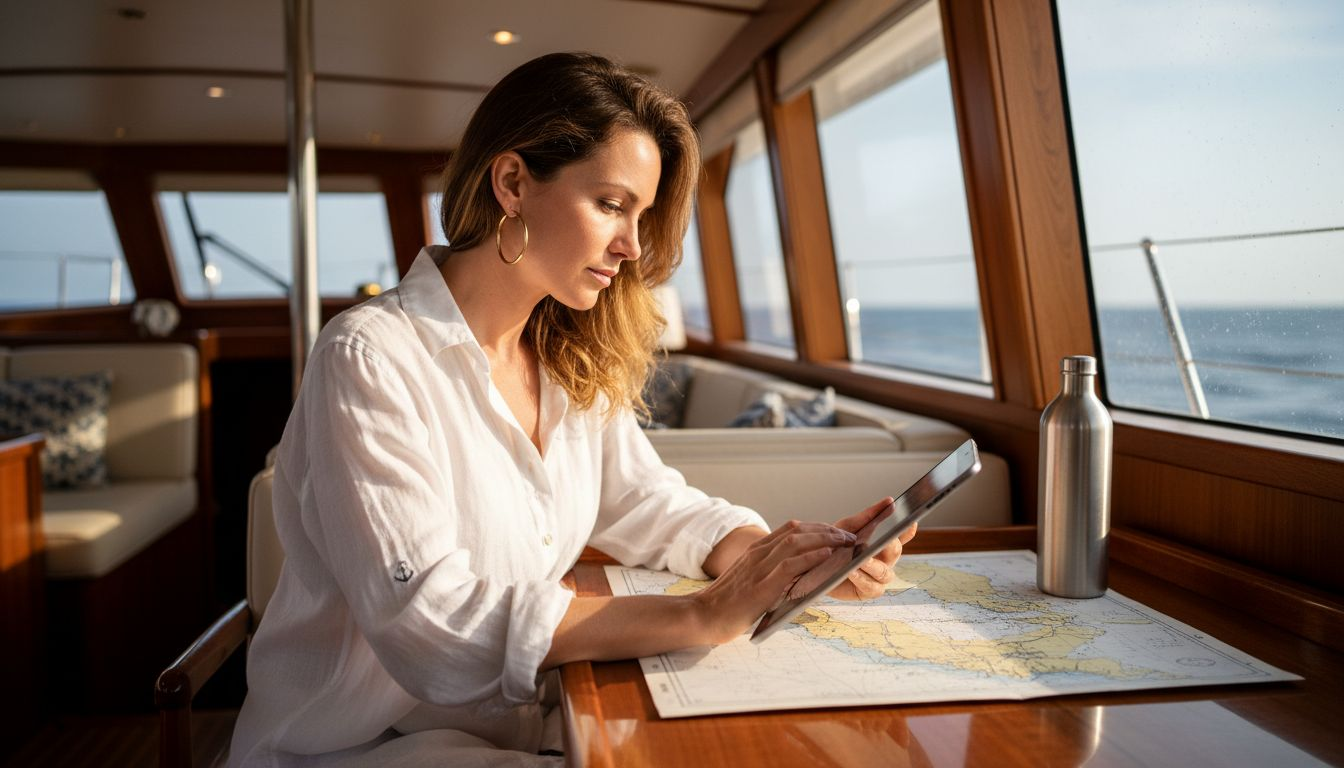
Here’s a side-by-side comparison of how digital and sustainable trends are reshaping luxury property versus yacht markets:
| Aspect | Luxury Property | Luxury Yachts |
|---|---|---|
| Key Technological Advance | Smart home automation | Hybrid propulsion systems |
| Sustainability Focus | Carbon-neutral buildings | Eco-friendly materials |
| Personalization | Custom interior design | Bespoke onboard experiences |
| Buyer Expectation | Seamless digital management | Advanced navigation technology |
| Resilient Segment | High-end condos | Superyachts |
Pro tip: Develop deep expertise in emerging technological trends and sustainable design to differentiate your luxury brokerage offerings.
Buyer Demographics and Wealth Migration Patterns
The luxury real estate and yacht market in 2025 is witnessing a profound transformation driven by shifting demographic patterns and emerging wealth migration trends. Generational Wealth Transfer is fundamentally reshaping consumer behaviors, with Millennials and Generation Z emerging as critical decision-makers in the high-end property and maritime markets.
Key demographic characteristics defining luxury buyer segments include:
- Age ranges between 35-55 years old
- Global mobility and multicultural backgrounds
- Advanced digital literacy
- Preference for sustainable and technologically integrated assets
- Emphasis on experiential investments over traditional ownership
Wealth migration patterns reveal several interesting global trends:
- Tech entrepreneurs moving from traditional tech hubs
- Remote work enabling geographic flexibility
- Tax optimization strategies driving relocation
- Climate-resilient location preferences
- Emerging luxury markets in Asia and Middle East
Geographical Diversification is becoming increasingly important. Ultra-high-net-worth individuals are no longer confined to single geographic locations, instead creating portfolio lifestyles that span multiple international properties and yacht destinations. This trend demands brokers develop sophisticated, globally networked approaches to serving sophisticated clients.
Pro tip: Build comprehensive international networks and develop deep cultural intelligence to effectively serve globally mobile luxury clientele.
Impact of Digitalization and Sustainable Luxury
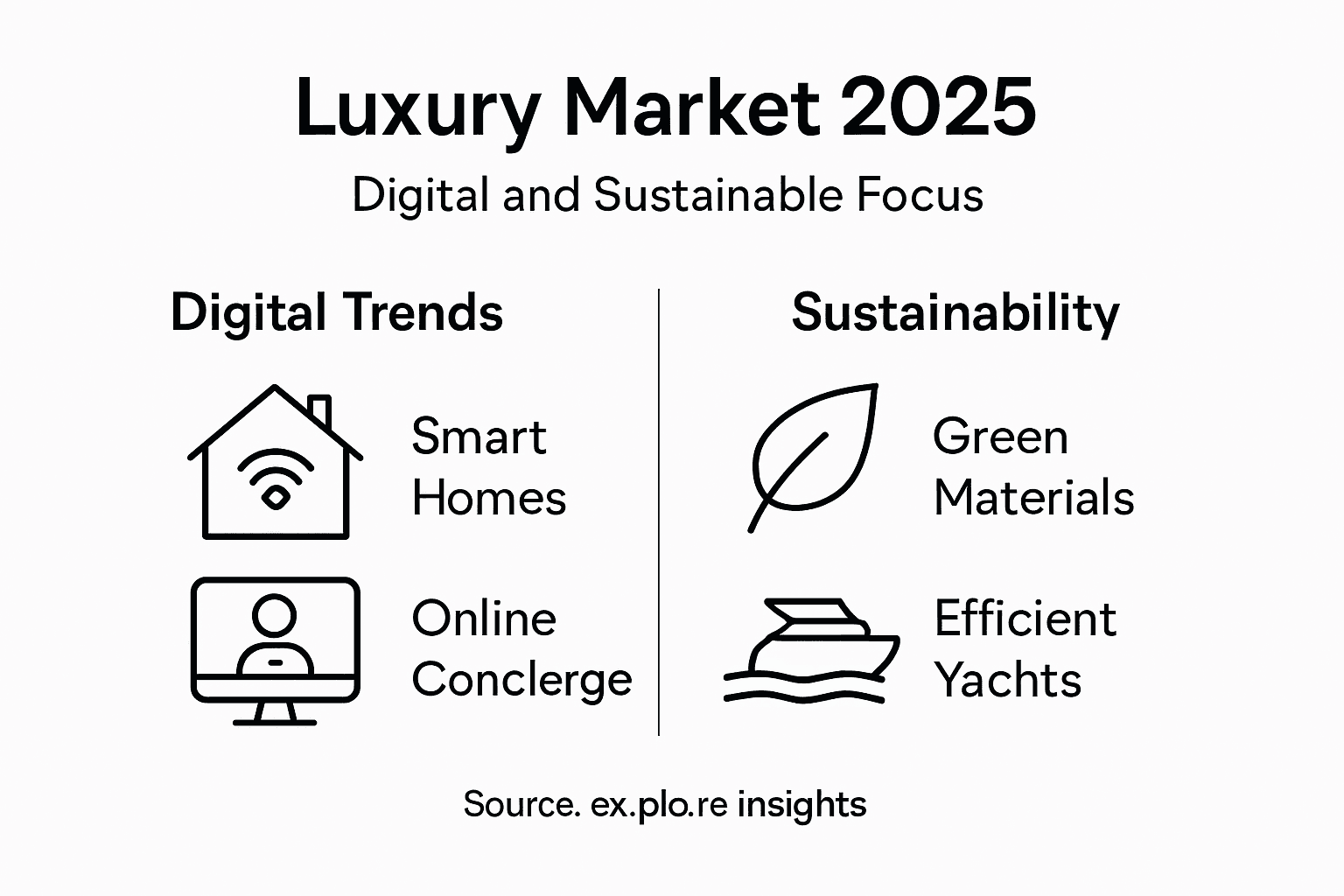
The luxury market is experiencing a profound digital transformation, where technology and sustainability converge to redefine brand experiences and consumer expectations. Sustainability and digital innovation are becoming critical strategic imperatives for luxury brokers seeking to differentiate themselves in an increasingly competitive landscape.
Key technological and sustainable innovations driving luxury market evolution include:
- Blockchain for product authentication and traceability
- Artificial intelligence-driven personalization
- Virtual and augmented reality property tours
- Carbon-neutral asset development
- Digital platforms enabling transparent sustainability reporting
The integration of digital technologies and sustainable practices is creating new value propositions for luxury clients:
- Enhanced transparency in sourcing and production
- Immersive digital brand experiences
- Precise environmental impact measurement
- Customized sustainability consulting
- Real-time ethical performance tracking
Digital Transformation is not just a trend but a fundamental reimagining of luxury brand interactions. Brokers who can seamlessly blend technological sophistication with genuine sustainability commitments will capture the most discerning and forward-thinking clients.
Pro tip: Invest in digital capabilities that demonstrate authentic commitment to sustainability and technological innovation.
Financial Implications and Risk Factors for Brokers
Luxury market brokers are navigating an increasingly complex financial landscape in 2025, characterized by unprecedented economic challenges and shifting market dynamics. Global luxury market pressures are forcing brokers to reimagine their financial strategies and risk management approaches.
Critical financial risk factors confronting luxury brokers include:
- Slowing demand in key markets like China and the U.S.
- Escalating operational costs
- Margin compression from pricing pressures
- Geopolitical economic uncertainties
- Increased compliance and regulatory requirements
Key strategic responses for financial resilience involve:
- Diversifying revenue streams
- Implementing advanced cost management techniques
- Developing flexible pricing models
- Investing in technology-driven efficiency
- Creating robust risk mitigation strategies
Financial Adaptability has become the cornerstone of survival in the luxury brokerage sector. Brokers must develop sophisticated financial models that can quickly respond to market volatility while maintaining premium service standards. The ability to balance operational efficiency with high-touch client experiences will separate successful brokers from those struggling to compete.
The following table summarizes primary financial risks and recommended strategies for luxury brokers in 2025:
| Financial Risk | Broker Strategy | Business Benefit |
|---|---|---|
| Market volatility | Diversify revenue streams | Greater stability |
| Rising costs | Implement cost management | Improved margins |
| Regulatory changes | Enhance compliance systems | Reduced legal exposure |
| Geopolitical uncertainty | Flexible pricing models | Faster market adaptation |
| Slowing demand | Invest in technology | Increased efficiency |
Pro tip: Develop a dynamic financial strategy that prioritizes agility, technological integration, and proactive risk management.
Mistakes to Avoid in Elite Client Acquisition
The landscape of luxury client acquisition demands unprecedented precision and strategic sophistication. Luxury brand client engagement strategies must transcend traditional approaches, recognizing that high-net-worth individuals expect deeply personalized, nuanced interactions.
Common critical mistakes luxury brokers must avoid include:
- Over-generalizing client communication strategies
- Neglecting deep personalization
- Failing to demonstrate genuine value
- Lacking technological sophistication
- Underestimating client intelligence
Top performance-killing errors in elite client acquisition involve:
- Treating high-value clients like standard market segments
- Presenting generic, non-customized proposals
- Demonstrating insufficient market knowledge
- Appearing transactional instead of relationship-driven
- Misunderstanding true client motivations
Strategic Differentiation requires brokers to develop razor-sharp insights into each client’s unique psychological and financial landscape. Successful acquisition means transforming interactions from mere transactions into meaningful, trust-based relationships that transcend traditional service paradigms.
Pro tip: Invest in comprehensive client intelligence systems that enable hyper-personalized, relationship-centric engagement strategies.
Elevate Your Luxury Brokerage with Data-Driven Tools and Expert Support
The luxury market trends for 2025 highlight the urgent need for brokers to embrace technological innovation, personalized client engagement, and sustainable offerings. If you struggle with adapting to sophisticated buyer expectations or managing complex, multichannel sales cycles, you are not alone. Key challenges like generating authentic client relationships, navigating wealth migration patterns, and integrating digital transformation require both insight and powerful tools.
ex.plo.re is designed to empower luxury brokers like you with cutting-edge CRM technology and expert talent to streamline prospecting, enhance client personalization, and amplify your market impact. From tracking evolving client preferences to managing global portfolios, our platform helps you stay ahead with agility and confidence.
Unlock your potential now and transform challenges into power moves.
Ready to lead the luxury market in 2025 and beyond Join ex.plo.re CRM today and discover how our tailored solutions can sharpen your sales pitch and fuel your growth. Don’t fall behind as the luxury brokerage landscape evolves Take the first step toward becoming a market leader with our platform and meet your new competitive advantage head on.
Frequently Asked Questions
What are the key trends shaping the luxury market in 2025?
Several key trends include a focus on experiential value over product possession, demographic shifts that influence consumer preferences, technology-enabled personalization, sustainability as a core brand differentiator, and the adoption of multichannel engagement strategies.
How is generational transformation impacting luxury buyer behavior?
Younger affluent consumers, particularly Millennials and Generation Z, prioritize authenticity, social responsibility, and personalized interactions over traditional luxury signaling. This shift is prompting brokers to adopt relationship-driven approaches in their service offerings.
What technological innovations are influencing the luxury property and yacht markets?
Technological advancements such as smart home automation in luxury properties and hybrid propulsion systems in yachts are becoming increasingly important. Additionally, the integration of AI-driven personalization and immersive digital experiences is essential for attracting discerning clients.
What financial risks do luxury brokers face in 2025?
Brokers face various financial risks, including slowing demand in key markets, rising operational costs, margin compression due to pricing pressures, and geopolitical uncertainties. Developing agile financial strategies and diversifying revenue streams are essential for mitigating these risks.