

Real estate success hinges on more than market knowledge and negotiation skills. Client relationship management (CRM) drives 47% higher lead conversion and 27% better client retention, transforming how agents and brokers compete in local markets. Yet many professionals dismiss CRM as overly technical or unnecessary, missing opportunities to systematize client interactions and build lasting loyalty. This guide reveals proven strategies, essential technologies, and actionable best practices that turn relationship management into your competitive advantage, helping you close more deals and cultivate a thriving referral network.
Table of Contents
- Key takeaways
- Understanding client relationship management in real estate
- Essential CRM features and technology for effective management
- Measurable benefits and strategic nuances of CRM in real estate sales
- Applying CRM to drive local market success and sustained growth
- Boost your real estate success with powerful prospecting tools
- Frequently asked questions about client relationship management in real estate
Key Takeaways
| Point | Details |
|---|---|
| CRM boosts conversions | CRM drives higher lead conversion and retention by systematizing client interactions across all stages. |
| Lifecycle based management | Effective CRM tailors communication for each stage from early relationship building through reactivation. |
| Automation and segmentation | Automation with drip campaigns and targeted messaging keeps clients engaged without manual effort. |
| Balance tech with humanity | Sustained loyalty comes from combining reliable technology with genuine human rapport. |
| Simplify CRM adoption | Prioritize simple adoption and clean data hygiene over feature overload. |
Understanding client relationship management in real estate
Client relationship management encompasses strategies like active listening, consistent communication, and lifecycle management across every stage of the client journey. Unlike transactional approaches that end at closing, effective CRM treats each interaction as part of an ongoing relationship that generates referrals and repeat business.
The real estate client lifecycle consists of four distinct stages. Relationship building establishes initial trust before formal agreements begin. Active transaction management guides clients through property searches, negotiations, and closings with clear communication and expert advice. Post-sale retention maintains connections through check-ins, market updates, and anniversary messages. Reactivation brings past clients back into your pipeline when they’re ready for their next move or can refer friends and family.
Strategic approaches that support these stages include:
- Active listening to understand client motivations beyond stated preferences
- Consistent communication through multiple channels at appropriate intervals
- CRM tools that track every interaction and schedule follow-ups automatically
- Personalized content that addresses specific client circumstances and goals
These lifecycle stages support long-term loyalty rather than one-time transactions. When you systematically nurture relationships, clients become advocates who voluntarily promote your services. The role of CRM in real estate extends beyond database management to creating a repeatable system that turns satisfied buyers and sellers into your most effective marketing channel.
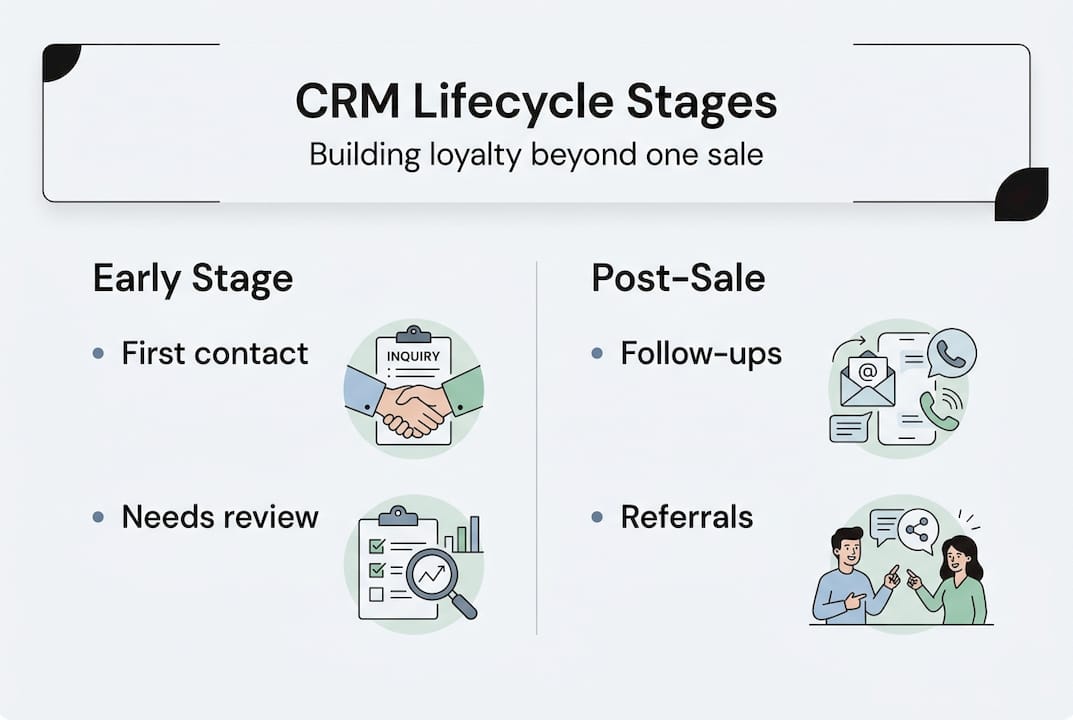
Effective CRM requires understanding that each stage demands different communication strategies. Early relationship building focuses on education and trust. Transaction management prioritizes responsiveness and problem-solving. Post-sale retention offers value without immediate sales pressure. Reactivation re-establishes relevance when timing aligns with client needs. Mastering these distinctions separates top performers from agents who treat every client interaction identically.
Essential CRM features and technology for effective management
Modern CRM platforms offer capabilities that transform how agents organize and engage their client base. Contact management and segmentation organize clients by preferences and transaction status, enabling targeted communication that resonates with specific groups. Instead of broadcasting generic messages, you can send first-time buyers educational content about financing while sharing investment property analyses with experienced investors.
Automation for scheduled communications ensures consistent engagement without manual effort. Set up drip campaigns that deliver market updates every two weeks, birthday messages, or anniversary emails celebrating purchase dates. These automated touchpoints maintain your presence in clients’ minds without requiring daily attention, freeing you to focus on high-value activities like showings and negotiations.

Activity tracking and reporting provide actionable insights into what works. Monitor which email subjects generate opens, which property types attract the most inquiries, and which follow-up sequences convert leads to appointments. This data-driven approach replaces guesswork with evidence, letting you refine strategies based on actual performance rather than assumptions.
Traditional versus AI-powered CRM systems present distinct advantages and challenges:
| System Type | Adoption Rate | ROI | Speed-to-Lead | Concerns |
|---|---|---|---|---|
| Traditional CRM | Low (complex interfaces) | Moderate | Manual delays | Requires extensive training |
| AI-powered CRM | Higher (intuitive design) | 300-500% returns | Automated instant response | May reduce personal touch |
AI-enhanced CRM offers better ROI through automation but raises questions about maintaining genuine relationships. The key lies in using technology to handle repetitive tasks while preserving personal interactions for moments that matter. Let AI send appointment reminders and property alerts, but personally call clients after showings to discuss reactions and next steps.
Core features that drive real estate success include:
- Lead scoring that prioritizes hot prospects based on engagement patterns
- Integration with MLS systems for seamless property matching
- Mobile access for updating records immediately after client meetings
- Customizable pipelines that reflect your specific sales process
Pro Tip: Prioritize CRM hygiene over feature exploration. After every client interaction, immediately log notes and assign the next task with a specific date. This simple discipline prevents leads from falling through cracks and builds momentum through consistent follow-through. A basic CRM used religiously outperforms a sophisticated system used sporadically.
Exploring the role of AI in real estate and real estate AI prospecting tools reveals how technology amplifies rather than replaces human expertise. The most successful agents use automation to scale their reach while maintaining the personal touch that builds trust and loyalty.
Measurable benefits and strategic nuances of CRM in real estate sales
Empirical evidence demonstrates CRM’s transformative impact on real estate performance. CRM improves conversions by 47%, increases retention rates by 27%, boosts sales by 29%, delivers $8.71 for every dollar invested, and reduces administrative costs by 34%. These aren’t marginal improvements but fundamental shifts in how efficiently you convert prospects into clients and clients into advocates.
| Metric | Improvement | Business Impact |
|---|---|---|
| Lead conversion rate | 47% increase | More closed deals from same lead volume |
| Client retention | 27% rise | Higher lifetime value per client |
| Overall sales | 29% growth | Direct revenue increase |
| Return on investment | $8.71 per $1 spent | Profitable technology adoption |
| Administrative efficiency | 34% cost savings | More time for revenue-generating activities |
These numbers translate into real competitive advantages. When you convert nearly half again as many leads as competitors, you dominate local markets without proportionally increasing marketing spend. Better retention means satisfied clients return for their next transaction and refer friends, creating a self-sustaining growth engine.
Expert practices include building genuine rapport before paperwork, setting boundaries, using flexible agreements, and positioning as a protective guide. These nuances separate mechanical CRM usage from relationship artistry. Start conversations by understanding client dreams and concerns rather than immediately discussing listings. This investment in connection pays dividends when clients trust your recommendations during stressful negotiations.
Strategic relationship management techniques include:
- Establishing clear communication preferences and response time expectations upfront
- Offering flexible contract terms that demonstrate confidence in your value
- Framing your role as a protective advocate navigating complex transactions
- Sharing market insights that help clients make informed decisions independently
In competitive markets, positioning yourself as a protective guide rather than a salesperson builds credibility. Clients appreciate agents who point out property flaws and advise patience when appropriate, recognizing this honesty as evidence of genuine advocacy. This approach creates loyalty that survives market fluctuations and competitive pressures.
Pro Tip: Implement systematic post-sale follow-ups at 30, 90, and 365 days after closing. The 30-day check-in addresses immediate settling concerns. The 90-day touchpoint offers local service recommendations. The anniversary message celebrates their home ownership milestone and naturally prompts referral requests. This structured approach keeps you top-of-mind during the critical first year when clients are most likely to recommend you.
Understanding sales funnel real estate conversions and implementing a master follow-up workflow for brokers ensures you capture maximum value from every lead while building relationships that generate ongoing returns.
Applying CRM to drive local market success and sustained growth
Systematic CRM implementation transforms how you compete in local markets by reducing acquisition costs and maximizing client lifetime value. CRM drives local success by systematizing relationships and leveraging referrals, with 70% of top earner deals coming from past clients and referrals. This statistic reveals why relationship management isn’t optional but essential for sustainable growth.
When most of your business originates from people who already know and trust you, marketing costs plummet while conversion rates soar. Past clients require minimal convincing because they’ve experienced your service firsthand. Referrals arrive pre-qualified, trusting you based on recommendations from people they respect. This efficient growth model frees resources for exceptional service delivery rather than constant prospecting.
Actionable CRM best practices for immediate implementation:
- Segment your database into active clients, past clients, sphere of influence, and cold leads with distinct communication strategies for each group
- Schedule quarterly market updates for past clients featuring neighborhood-specific data and trends affecting their property values
- Automate birthday and home anniversary messages with personalized notes referencing specific transaction details
- Create a referral request system that activates 60 days post-closing when satisfaction is highest and moving stress has faded
- Implement a reactivation campaign for clients who purchased 5-7 years ago, as they’re statistically likely to consider their next move
- Track every lead source meticulously to identify which marketing channels generate the highest quality prospects
Balancing technology with personal connection requires intentional boundaries. Use automation for informational touchpoints like market reports and property alerts. Reserve personal calls and meetings for emotional moments like offer negotiations, inspection concerns, and closing celebrations. This hybrid approach scales your reach while preserving the human elements that build deep loyalty.
Prioritizing CRM adoption and hygiene over feature complexity ensures consistent usage. Many agents abandon sophisticated systems because daily use feels overwhelming. Start with core functions like contact management, task scheduling, and basic email automation. Master these fundamentals before exploring advanced capabilities. A simple system used daily beats a powerful platform used sporadically.
Small and competitive markets demand particular attention to relationship quality. When everyone knows everyone, your reputation spreads quickly through both positive and negative experiences. CRM helps you deliver consistently excellent service by ensuring no client feels neglected or forgotten. Systematic follow-ups demonstrate professionalism that stands out in markets where many agents rely on informal relationship management.
Pro Tip: Simplify CRM adoption by focusing on one metric: next action completion rate. If you consistently complete scheduled follow-ups within 24 hours of their due date, you’ll outperform 80% of agents regardless of which features you use. Set daily reminders to review your task list and clear pending items. This discipline builds momentum and prevents the database neglect that kills most CRM initiatives.
Leveraging best real estate prospecting tools and understanding the role of CRM in real estate provides the foundation for implementing these strategies effectively in your local market.
Boost your real estate success with powerful prospecting tools
Transforming CRM knowledge into consistent results requires tools designed specifically for real estate professionals. Our platform streamlines prospecting and client management, amplifying the work you’re already doing with cutting-edge technology and expert support.

Specialized solutions help you automate and personalize every client interaction while maintaining the genuine connections that drive referrals and repeat business. Integration with AI-powered prospecting accelerates your speed-to-lead, ensuring you respond to inquiries before competitors even see them. These capabilities translate directly into higher conversion rates and reduced acquisition costs.
Key benefits of purpose-built prospecting tools:
- Automated lead capture and instant follow-up sequences that engage prospects immediately
- Intelligent segmentation that delivers targeted content based on client preferences and behaviors
- Analytics dashboards revealing which strategies generate the highest ROI in your specific market
- Mobile-optimized interfaces for updating records and responding to clients from anywhere
Explore best real estate prospecting tools to discover how technology can multiply your effectiveness. Learn advanced strategies through our guide on prospecting in real estate client acquisition, and see how real estate AI prospecting tools are reshaping competitive dynamics. Let our talented team and technology amplify your impact so you can focus on what you do best: building relationships and closing deals.
Frequently asked questions about client relationship management in real estate
What is the primary role of CRM in real estate?
CRM systematizes client interactions throughout the entire sales lifecycle, from initial contact through post-sale retention and reactivation. It transforms sporadic relationship management into a consistent system that generates referrals, repeat business, and predictable revenue growth.
How does CRM improve lead conversion rates?
CRM improves conversion by ensuring timely follow-ups, delivering personalized content based on client preferences, and tracking engagement patterns that reveal buying readiness. Automated reminders prevent leads from falling through cracks while analytics identify which communication strategies resonate most effectively with different prospect segments.
What CRM features matter most for real estate agents?
Contact segmentation, automated communication scheduling, activity tracking, and mobile access deliver the highest value for most agents. These core capabilities ensure consistent client engagement without overwhelming complexity. Advanced features like AI-powered lead scoring and predictive analytics add value once you’ve mastered fundamental CRM hygiene.
Can CRM replace personal relationships in real estate?
CRM enhances rather than replaces personal relationships by handling repetitive tasks and ensuring consistent touchpoints. Technology manages scheduling, reminders, and informational updates, freeing you to focus on high-value personal interactions during showings, negotiations, and emotional decision points. The most successful agents use CRM to scale their reach while preserving genuine human connection.
How quickly can agents see ROI from CRM implementation?
Most agents notice improved organization and fewer missed follow-ups within the first month. Measurable increases in conversion rates typically appear within 90 days as automated nurturing sequences mature and systematic follow-ups generate appointments. Full ROI, including referral generation and retention improvements, becomes evident after 6-12 months of consistent use. Discover more about the role of CRM in real estate to understand how strategic implementation accelerates these timelines.