
Digital marketing drives 71% higher conversion rates for local real estate agents compared to traditional methods. Yet many luxury brokers still question whether digital strategies deliver real ROI. Modern buyers begin their property search online, making digital presence non-negotiable for agents aiming to attract local real estate clients and close more deals efficiently.
Table of Contents
- Why Digital Marketing Matters For Real Estate Agents
- How Digital Marketing Attracts Local Clients
- Personalization And Targeted Strategies In Luxury Real Estate
- Comparing Digital Marketing Channels For Real Estate Agents
- Common Misconceptions About Digital Marketing In Real Estate
- Leveraging Crm And Automation Tools To Amplify Marketing Efforts
- Data-Driven Marketing: Using Analytics For Better Client Conversion
- Practical Steps To Implement Digital Marketing For Real Estate Success
- Boost Your Real Estate Success With Our Digital Marketing Tools
- Frequently Asked Questions
Key Takeaways
| Point | Details |
|---|---|
| Conversion Impact | Digital marketing boosts local client conversions by up to 71% versus traditional advertising. |
| Personalization Power | CRM tools and segmented campaigns increase engagement rates by 50% in luxury markets. |
| Channel Diversity | SEO, social media, and targeted ads each deliver measurable ROI when properly implemented. |
| Timeline Expectations | Results typically emerge within 3-6 months with consistent effort and optimization. |
| Data-Driven Success | Analytics tracking improves conversion rates by 20% through continuous campaign refinement. |
Why Digital Marketing Matters for Real Estate Agents
Buyer behavior has fundamentally shifted. Over 90% of home buyers now start their search online before ever contacting an agent. This digital-first approach means agents who lack strong online visibility lose opportunities to competitors who master digital channels.
The importance of digital marketing for real estate extends beyond simple visibility. Research confirms 71% higher conversion rates through local digital marketing compared to traditional newspaper ads or cold calling. Digital strategies enable precise targeting, immediate engagement, and measurable results that traditional methods cannot match.
Key benefits include:
- Increased local visibility through search engine optimization and geo-targeted advertising
- Enhanced engagement via personalized content and interactive virtual tours
- Measurable ROI with detailed analytics tracking every dollar spent
- Stronger client relationships built through consistent social media presence
- Cost efficiency targeting ideal prospects instead of broad audiences
Growth in online property searches continues accelerating, particularly in luxury markets where discerning buyers expect sophisticated digital experiences. Agents who embrace these tools position themselves as tech-savvy professionals aligned with modern expectations.
Pro Tip: Publish fresh local market insights weekly on your website and social channels. Consistent content updates signal search engines that your site remains relevant, boosting organic rankings over competitors who post sporadically.
The shift to digital isn’t temporary. It represents the new foundation of successful real estate marketing. Agents who adapt quickly gain market share while others struggle with declining traditional channel effectiveness. Social media marketing for local leads now equals or exceeds traditional networking in many markets.
How Digital Marketing Attracts Local Clients
Three core channels drive most local client acquisition: local SEO, social media marketing, and targeted digital advertising. Each operates differently but compounds effectiveness when used together.

Local SEO optimization positions your website at the top of search results when prospects search for agents in your area. Local SEO benefits include 60% website traffic increases for agents who optimize Google Business profiles, use location-specific keywords, and build quality local backlinks. This organic traffic converts at higher rates because searchers have immediate intent.
Social media marketing builds brand awareness and generates direct inquiries. Social media marketing benefits show 35% more local inquiries for agents posting property tours, market updates, and client testimonials consistently. Platforms like Instagram and Facebook allow precise geographic targeting, ensuring your content reaches local prospects actively considering moves.
Targeted digital advertising delivers immediate visibility. PPC campaigns and geo-fenced ads place your listings directly in front of buyers searching specific neighborhoods or property types. Data reveals 70% higher conversion rates with targeted digital ads compared to untargeted traditional advertising.
Content marketing benefits extend beyond immediate leads. Publishing valuable local market analysis, neighborhood guides, and buyer education establishes you as the trusted local expert. This authority drives organic inbound leads from prospects who discover your expertise through search.
Best practices for maximizing reach:
- Target long-tail keywords like “luxury condos downtown Seattle” instead of generic “real estate agent”
- Use geo-fencing to serve ads to people physically visiting open houses or luxury shopping districts
- Post daily on social platforms during peak engagement hours (evenings and weekends)
- Create video walkthroughs generating 300% more engagement than static photos
- Respond to all comments and messages within one hour to maximize conversion
Your digital presence creates discovery moments. A prospect searching neighborhood schools finds your detailed guide. A luxury buyer scrolling Instagram sees your stunning property video. These touchpoints build familiarity and trust before they ever contact you, shortening the sales cycle dramatically.
Personalization and Targeted Strategies in Luxury Real Estate
Luxury clients expect experiences tailored to their preferences and lifestyle aspirations. Generic marketing messages fail in high-end markets where relationships and relevance determine success.
Luxury marketing personalization delivers 50% increases in lead conversion by matching content to individual buyer profiles. This means sending waterfront property updates only to buyers who specified water views, or sharing private club information to prospects valuing exclusive amenities.
Email segmentation demonstrates remarkable results:
| Campaign Type | Open Rate | Appointment Rate |
|---|---|---|
| Generic Blast | 12% | 2.1% |
| Segmented by Price Range | 23% | 5.8% |
| Behavioral Triggered | 41% | 9.3% |
Email marketing segmentation experts report 29% higher email open rates via segmentation compared to one-size-fits-all newsletters. Behavioral triggers, like sending follow-up property suggestions after a website visit, perform even better.
Effective personalization tactics include:
- Behavioral targeting that recommends properties based on browsing history and saved searches
- Interactive virtual tours allowing prospects to explore luxury properties remotely on their schedule
- Segmented newsletters grouping clients by budget, property type preference, and timeline
- Personalized video messages addressing prospects by name and referencing their specific needs
- Custom property books featuring only listings matching stated criteria
Luxury content marketing strategies leverage virtual tours to boost buyer engagement by 25%. High-net-worth buyers appreciate the efficiency of pre-qualifying properties virtually before committing to in-person viewings.
Pro Tip: Connect your CRM to email and website analytics. Set automated workflows that send personalized follow-ups within hours of specific actions, like downloading a neighborhood guide or viewing a listing three times. Timely, relevant outreach converts warm leads into appointments.
Personalization isn’t about manipulation. It’s about respecting busy luxury clients’ time by showing them only what truly matches their vision. This relevance builds trust and positions you as a partner who understands their needs deeply.
Comparing Digital Marketing Channels for Real Estate Agents
Choosing the right channel mix requires understanding each option’s strengths, costs, and suitability for your market position.
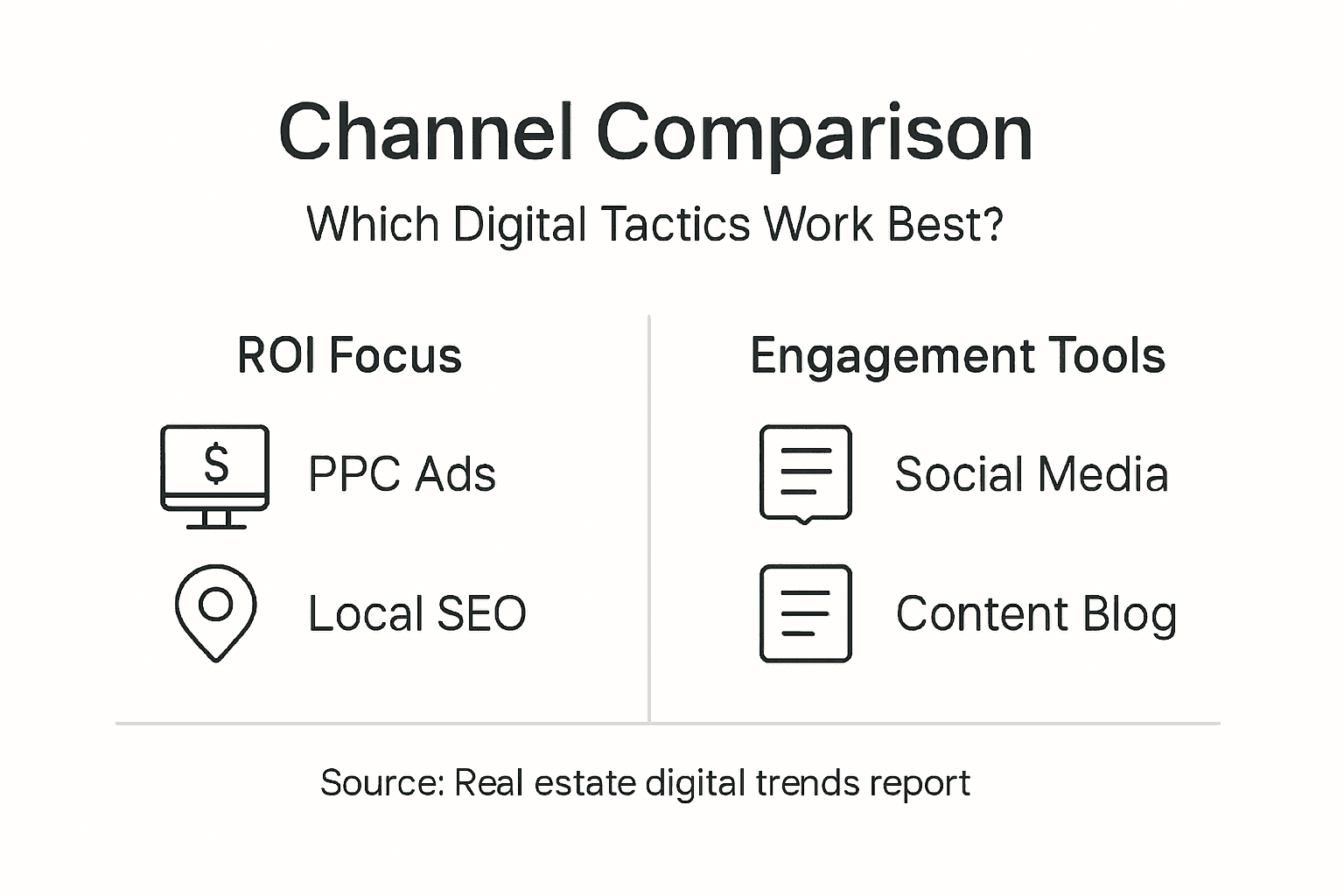
| Channel | Typical ROI | Monthly Cost | Best For | Time to Results |
|---|---|---|---|---|
| Local SEO | 500-800% | $500-2000 | Long-term organic growth | 3-6 months |
| Social Media | 300-600% | $300-1500 | Brand building and engagement | 1-3 months |
| PPC Advertising | 200-400% | $1000-5000 | Immediate lead generation | 1-4 weeks |
| Email Marketing | 400-700% | $200-800 | Nurturing existing leads | 2-8 weeks |
PPC campaigns deliver 200% ROI from PPC vs traditional ads, making them attractive for agents needing immediate lead flow. However, PPC requires ongoing management expertise and budget. Once you stop paying, visibility disappears instantly.
SEO builds lasting value. Rankings earned through quality content and optimization continue driving traffic long after publication. The digital marketing channel comparison shows SEO delivering the highest long-term ROI despite slower initial results.
Strategic considerations when choosing channels:
- Budget constraints favor SEO and organic social media over expensive PPC campaigns
- Brand-building priorities benefit from consistent social media presence showcasing personality
- Immediate lead needs justify PPC investment despite higher costs
- Luxury markets require multi-channel presence as high-net-worth buyers research extensively
- Local market dominance demands strong SEO to capture organic search traffic
Social media proves essential in luxury sectors where visual storytelling and lifestyle alignment drive decisions. Platforms showcase property aesthetics and neighborhood character better than text alone. Email marketing excels at nurturing relationships over extended luxury sales cycles that often span months.
No single channel solves everything. Successful agents diversify across three or four complementary channels, using PPC for immediate leads while building SEO and social foundations for sustainable long-term growth. Start with channels matching your strengths, then expand as you develop systems and expertise.
Common Misconceptions About Digital Marketing in Real Estate
Three persistent myths prevent agents from fully embracing digital strategies, despite overwhelming evidence supporting their effectiveness.
Misconception 1: Digital marketing costs too much for individual agents
Reality shows the opposite. Targeted campaigns save cost by focusing spending on qualified prospects instead of broad audiences. A $1000 monthly digital budget targeting specific neighborhoods and demographics reaches more qualified buyers than $5000 spent on newspaper ads seen by mostly irrelevant readers. Digital channels provide granular cost control and transparent performance tracking.
Misconception 2: Results happen immediately or the strategy failed
Quality digital marketing typically requires 3-6 months before generating measurable sales impact. SEO rankings build gradually. Social audiences grow through consistent engagement. Email lists require nurturing before conversions accelerate. Expecting overnight success guarantees disappointment and premature strategy abandonment.
Misconception 3: Social media doesn’t work for luxury real estate
High-net-worth buyers use Instagram, LinkedIn, and Facebook extensively. They may not publicly engage with real estate content, but they absolutely consume it while researching. Luxury agents consistently generating qualified social leads prove this myth false. Success requires sophisticated content and precise targeting, not generic posts.
Realistic expectations and corrections:
- Budget $500-2000 monthly for meaningful multi-channel presence, scaling as results justify
- Commit to 6-month minimum testing periods before evaluating channel effectiveness
- Focus on qualified lead metrics (appointments, showings) rather than vanity metrics (likes, followers)
- Understand that digital complements rather than completely replaces relationship-building and networking
- Recognize that consistency matters more than perfection when building digital presence
Patience and persistent effort separate successful digital marketers from those who dabble briefly then quit. The agents dominating local searches and social feeds today started months or years ago, building authority through accumulated quality content and engagement.
Leveraging CRM and Automation Tools to Amplify Marketing Efforts
Manual lead tracking and follow-up cannot scale effectively. Modern CRM systems and automation tools multiply agent productivity while improving personalization quality.
CRM importance in real estate centers on systematic lead management. Research shows CRM automation doubles lead follow-up efficiency, ensuring no prospect falls through cracks. The system tracks every interaction, schedules reminders, and triggers appropriate next steps automatically.
Automation tools for real estate agents deliver 30% increases in sales closures through integrated tools. Integration connects email marketing, social media, website activity, and communication history in one dashboard. This unified view reveals exactly where each prospect stands in the buying journey.
Automation benefits include:
- Personalized email sequences triggered by specific prospect behaviors like property views or guide downloads
- Automated task scheduling ensuring timely follow-ups without manual calendar management
- Data tracking capturing source attribution, engagement patterns, and conversion paths
- Lead scoring prioritizing hot prospects ready for immediate contact
- Integration with social platforms and email tools eliminating duplicate data entry
Modern CRM automation systems handle routine communications, freeing agents to focus on high-value relationship activities. When a prospect downloads your buyer guide at 2am, the system immediately sends a personalized welcome email and schedules a follow-up call for the next business day. No manual intervention required.
Pro Tip: Spend your first month customizing CRM workflows to match your local market’s typical buyer journey. Map the exact touchpoints from initial contact through closing, then build automated sequences supporting each stage. Generic templates rarely fit perfectly without customization.
Integration eliminates data silos. Your CRM knows which emails prospects opened, which properties they viewed on your website, and which social posts they engaged with. This intelligence enables truly personalized conversations referencing their demonstrated interests without awkward guesswork.
Data-Driven Marketing: Using Analytics for Better Client Conversion
Guesswork and intuition cannot compete with data-informed optimization. Agents who systematically track and analyze performance metrics consistently outperform those who don’t.
Analytics improve conversion rates by 20% through continuous refinement based on actual behavior patterns rather than assumptions. The right metrics reveal exactly which marketing activities generate qualified leads and which waste resources.
Actionable metrics to track consistently:
- Website traffic sources showing which channels drive the most qualified visitors
- Email open and click rates indicating content relevance and subject line effectiveness
- Social engagement patterns revealing optimal posting times and content types
- Sales funnel progression identifying exactly where prospects get stuck or drop off
- Cost per lead by channel enabling budget reallocation to highest-performing options
- Lead quality scores distinguishing tire-kickers from serious buyers ready to transact
Client behavior analytics reveal patterns invisible to casual observation. You might discover luxury prospects who view listings three times before inquiring convert at 60% rates, while single-view contacts convert at only 8%. This insight justifies prioritizing three-view prospects for immediate personal outreach.
AI tools now automate much data interpretation, identifying significant trends and suggesting optimization opportunities. These systems spot subtle patterns across hundreds of interactions that humans would miss. Evaluating marketing performance parallels athletic performance analysis where granular metrics reveal hidden improvement opportunities.
Establish monthly review cycles examining key metrics. Compare current performance against prior periods and goals. Identify underperforming areas requiring adjustment and successful tactics deserving expansion. This disciplined approach compounds improvements over time.
Data transforms marketing from art to science. Rather than wondering why some campaigns succeed while others fail, you know exactly what drives results. This clarity enables confident investment in proven tactics while quickly cutting ineffective activities.
Practical Steps to Implement Digital Marketing for Real Estate Success
Transforming these insights into results requires systematic implementation. Follow this roadmap to build your digital marketing foundation:
-
Conduct comprehensive local market research identifying your ideal client demographics, their online behavior patterns, and competitor digital presence gaps you can exploit.
-
Optimize your website and local SEO by claiming and completing your Google Business Profile, implementing location-specific keywords throughout your site, and building backlinks from local business directories and partnerships.
-
Build personalized segmented campaigns dividing your database by property preferences, budget ranges, and buying timelines, then creating tailored content streams for each segment.
-
Integrate CRM with marketing automation connecting your email platform, social accounts, and website analytics to your CRM, then building automated workflows nurturing leads systematically.
-
Analyze data and refine continuously establishing monthly performance reviews examining key metrics, identifying optimization opportunities, and adjusting tactics based on results rather than assumptions.
Set realistic goals aligned with your market position. New agents might target 10 qualified monthly leads initially, while established brokers aim for 50 or more. Define what “qualified lead” means specifically, whether that’s appointment requests, showing attendees, or direct inquiries.
Schedule consistent content creation. Block three hours weekly for developing blog posts, property descriptions, social media content, and email newsletters. Consistency matters more than perfection. Publishing good content weekly beats perfect content quarterly.
Diversify across channels gradually. Start strong in one or two channels, then expand as systems stabilize. Trying to master everything simultaneously spreads efforts too thin and prevents meaningful traction anywhere. Building your generating real estate leads system takes time but compounds powerfully.
Patience proves essential. The luxury marketing implementation tips emphasize that sustainable success requires 6-12 months of consistent effort before achieving market dominance. Front-load the work knowing payoff accelerates over time as rankings improve, audiences grow, and automation handles increasing workload.
Establish content calendars planning posts and campaigns weeks ahead. This prevents last-minute scrambling and ensures consistent presence even during busy transaction periods. Batch-create content during slower periods to maintain flow during peak seasons.
Boost Your Real Estate Success with Our Digital Marketing Tools
Implementing these digital marketing strategies effectively requires the right tools and expertise. Our platform provides prospecting client acquisition tools specifically designed for real estate agents and luxury brokers seeking to streamline their sales cycle.
We offer comprehensive real estate marketing software and real estate automation tools that integrate seamlessly with the strategies outlined throughout this guide. Our solutions amplify your existing efforts, helping you convert more local clients while saving time on repetitive tasks. Let our technology and talented team accelerate your path to becoming a power broker in your market.
Frequently Asked Questions
What is the best digital marketing channel for local real estate agents?
Local SEO delivers the highest long-term ROI for most agents because it captures prospects actively searching for agents in your area. Combining SEO with targeted social media provides both immediate visibility and sustainable organic growth. The optimal mix depends on your specific market dynamics and whether you prioritize quick leads or building lasting market presence.
How long does it take to see results from digital marketing in real estate?
Expect 3-6 months before seeing measurable sales impact from SEO and organic social media efforts. PPC advertising can generate leads within weeks but requires ongoing investment. Patient consistency matters more than channel choice because rankings, audiences, and automation systems all improve gradually through accumulated effort and optimization.
Can luxury brokers benefit from social media marketing?
Absolutely. High-net-worth buyers extensively research online even if they don’t publicly engage with content. Instagram and LinkedIn particularly suit luxury marketing because visual storytelling showcases property aesthetics and lifestyle alignment that drive high-end decisions. Success requires sophisticated content and precise targeting rather than generic posts.
How does a CRM system improve lead conversion in real estate?
CRM systems ensure systematic follow-up so no prospect gets forgotten during long sales cycles. Automation triggers personalized messages based on specific behaviors like property views or guide downloads. Integration provides complete visibility into each prospect’s journey, enabling truly relevant conversations that convert at significantly higher rates than generic outreach.
What key metrics should I track in my digital marketing campaigns?
Prioritize cost per qualified lead, lead-to-appointment conversion rate, and sales funnel progression by stage. Also monitor website traffic sources, email engagement rates, and social media reach to understand which channels drive results. Tracking these metrics monthly enables data-informed optimization that continuously improves performance and ROI.