

Virtual tours and artificial intelligence now drive more than half of modern property searches, highlighting how digital marketing is reshaping the american real estate sector. Global agents face fierce competition and rapidly changing client expectations as advanced technologies redefine traditional sales tactics. This guide reveals how innovative digital strategies let you connect with international buyers, craft immersive experiences, and achieve stronger market presence no matter where you operate.
Table of Contents
- Defining Digital Marketing In Real Estate Today
- Core Strategies For Real Estate Agents Online
- Key Technologies Shaping Modern Property Sales
- Leveraging Content, Social, And Paid Channels
- Risks, Compliance, And Common Pitfalls
Key Takeaways
| Point | Details |
|---|---|
| Embrace Technological Integration | Real estate professionals should leverage advanced technologies like AI, big data, and VR to enhance property marketing and client engagement. |
| Adopt a Multichannel Marketing Strategy | A comprehensive approach utilizing content, social media, and paid channels will improve visibility and foster meaningful connections with potential clients. |
| Focus on Compliance and Risk Management | Real estate agents must understand legal and ethical implications of digital marketing to avoid significant risks and reputational harm. |
| Continuous Learning and Adaptation | Staying updated with current digital marketing trends and compliance requirements is crucial for maintaining a competitive edge in the market. |
Defining Digital Marketing in Real Estate Today
Digital marketing in real estate represents a transformative approach to property sales and client engagement, moving far beyond traditional advertising methods. Modern real estate professionals now leverage sophisticated technological ecosystems that fundamentally reshape how properties are marketed, discovered, and transacted. Advanced digital technologies are integrating seamlessly into real estate marketing practices, transforming traditional boundaries of communication and sales strategy.
At its core, digital marketing in real estate encompasses a comprehensive suite of online strategies designed to connect agents with potential buyers through targeted, data-driven approaches. These strategies include search engine optimization, social media marketing, virtual property tours, targeted email campaigns, and sophisticated customer relationship management systems. Real estate professionals now utilize artificial intelligence, big data analytics, and immersive technologies like virtual and augmented reality to provide potential buyers with rich, interactive property experiences that transcend physical limitations.
The technological landscape of real estate marketing continues to evolve rapidly, integrating tools that enable hyper-personalized client experiences. Agents can now track client preferences, predict market trends, and deliver precisely targeted content through advanced digital platforms. This technological revolution allows for unprecedented levels of client engagement, with tools that provide real-time insights, automated communication workflows, and intelligent lead generation capabilities that dramatically improve conversion rates and operational efficiency.
Pro tip: Invest in learning one new digital marketing skill every quarter to stay ahead of technological trends and maintain a competitive edge in the real estate marketplace.
Core Strategies for Real Estate Agents Online
Successful real estate agents recognize that online marketing demands a multifaceted, strategic approach tailored to modern digital landscapes. Effective digital strategies require comprehensive triangulation research methods that combine qualitative and quantitative data to understand evolving consumer behaviors and preferences. This approach enables agents to craft targeted marketing campaigns that resonate with potential buyers and sellers across multiple digital platforms.
The core digital strategies for real estate agents revolve around several key technological and communication channels. Social media marketing has become an essential tool, allowing agents to showcase properties, share market insights, and build personal brand recognition. Search engine optimization (SEO) techniques help agents increase their online visibility, ensuring their listings and professional profiles appear prominently in local search results. Content marketing through blogs, video tours, and professional websites provides valuable information that establishes agents as trusted local market experts.
Advanced digital marketing strategies now incorporate sophisticated data analytics and artificial intelligence to enhance lead generation and client engagement. Agents can leverage targeted email campaigns, retargeting advertisements, and personalized communication workflows to nurture potential clients more effectively. Virtual property tours, interactive mapping tools, and real-time communication platforms enable agents to provide immersive property experiences that transcend traditional marketing limitations. These technological innovations allow for more precise market segmentation and more meaningful connections with potential clients.

Pro tip: Develop a consistent digital presence by creating a comprehensive online portfolio that showcases your expertise, recent successful transactions, and unique value proposition across multiple platforms.
Key Technologies Shaping Modern Property Sales
The rise of Real Estate 4.0 represents a technological revolution driven by cutting-edge digital technologies that are fundamentally transforming property sales and marketing. Artificial intelligence, big data analytics, cloud computing, Internet of Things (IoT), virtual and augmented reality, and digital twin technologies are reshaping how real estate professionals connect with potential buyers, analyze market trends, and deliver immersive property experiences.
Advanced machine learning algorithms and data analytics platforms now enable real estate agents to develop unprecedented insights into consumer behavior and market dynamics. These technologies facilitate more precise market segmentation, predictive pricing models, and personalized marketing strategies. Virtual and augmented reality tools allow potential buyers to explore properties remotely, providing immersive 3D tours and interactive visualizations that dramatically enhance the property discovery process. Cloud-based information management systems streamline communication, document sharing, and transaction workflows, making property sales more transparent and efficient.
The integration of smart technologies extends beyond marketing and sales into property management and development. Digital twin technologies create exact virtual replicas of physical properties, enabling detailed analysis of building performance, potential maintenance issues, and energy efficiency. Artificial intelligence-powered chatbots and customer relationship management systems provide instant, personalized communication with potential clients, while IoT sensors can monitor property conditions in real-time, offering valuable data for both buyers and sellers. These technological innovations are not just enhancing marketing capabilities but fundamentally restructuring how real estate transactions are conceived, executed, and experienced.
Pro tip: Invest in continuous technology training to stay ahead of digital trends and integrate emerging tools that can differentiate your real estate services.
Here is a summary of key digital tools transforming real estate marketing today:
| Technology | Main Function | Business Impact |
|---|---|---|
| Artificial Intelligence | Predictive lead generation | Higher conversion rates |
| Big Data Analytics | Market trend analysis | Data-driven decisions |
| Virtual/Augmented Reality | Immersive property tours | Enhanced buyer engagement |
| Cloud Computing | Real-time data sharing | Streamlined workflows |
| Internet of Things (IoT) | Property condition monitoring | Improved service & efficiency |
| Digital Twins | Virtual property replicas | Informed maintenance planning |
Leveraging Content, Social, and Paid Channels
Real estate digital marketing demands a sophisticated, multichannel approach that seamlessly integrates content, social media, and paid advertising strategies. Modern real estate professionals must craft a comprehensive digital marketing ecosystem that reaches potential buyers through diverse, interconnected channels. This approach allows agents to create targeted, engaging experiences that capture audience attention and drive meaningful interactions throughout the property discovery and purchasing journey.
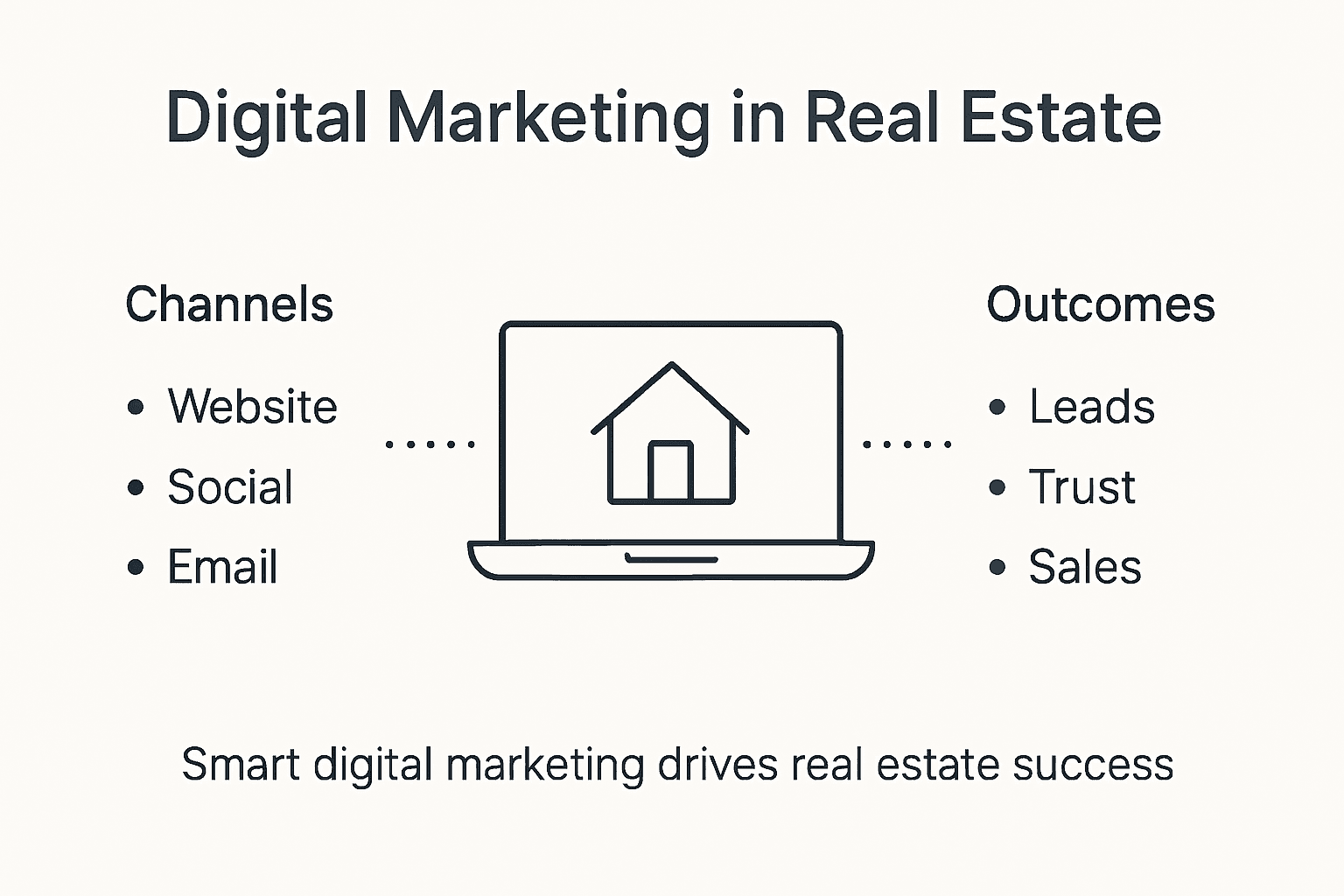
Content marketing serves as the foundational strategy, enabling real estate agents to establish expertise and build trust through valuable, informative materials. Blog posts, property guides, neighborhood insights, and market trend analyses provide potential clients with substantive information that positions agents as knowledgeable local experts. Social media platforms like Instagram, Facebook, and LinkedIn amplify these content efforts, offering visual storytelling opportunities through property showcases, virtual tours, and behind-the-scenes glimpses of real estate transactions. Targeted paid advertising channels, including Google Ads and social media sponsored content, extend the reach of organic content, allowing precise demographic targeting and retargeting of potential buyers.
Successful multichannel marketing requires a strategic, data-driven approach that tracks performance across different platforms. Agents must leverage analytics tools to understand engagement metrics, audience behaviors, and conversion rates. Pay-per-click advertising, sponsored social media posts, and programmatic display ads enable hyper-targeted marketing that reaches specific buyer segments based on location, income, property preferences, and browsing history. By integrating these channels with compelling, high-quality content, real estate professionals can create a dynamic marketing approach that attracts, engages, and converts potential clients more effectively than traditional marketing methods.
Pro tip: Develop a consistent content calendar that synchronizes your messaging across content, social, and paid channels to maximize audience engagement and brand recognition.
Risks, Compliance, and Common Pitfalls
Digital marketing in real estate demands careful navigation of complex legal and ethical landscapes, with significant risks emerging from inadequate understanding of regulatory frameworks and data management protocols. Real estate professionals must recognize that digital marketing strategies carry substantial legal and reputational risks that extend far beyond simple advertising challenges. Missteps in digital communication can lead to potential litigation, regulatory penalties, and permanent damage to professional credibility.
Key compliance risks center on several critical areas of digital marketing practice. Data privacy represents a paramount concern, with stringent regulations governing how personal information can be collected, stored, and utilized. Real estate agents must implement robust consent mechanisms, transparent data handling policies, and secure technological infrastructure to protect client information. Advertising content demands meticulous attention to accuracy, with strict guidelines prohibiting misleading property descriptions, manipulated imagery, or unsubstantiated claims about property values and characteristics. Additionally, agents must carefully navigate fair housing regulations, ensuring digital marketing materials do not inadvertently discriminate against protected classes through targeting algorithms or selective representation.
Technological vulnerabilities present another significant risk dimension for digital marketing strategies. Cybersecurity threats, including data breaches, phishing attempts, and unauthorized access to client information, can devastate an agent’s professional reputation. Agents must invest in comprehensive digital security protocols, including multi-factor authentication, encrypted communication channels, and regular security audits. Furthermore, rapidly evolving digital platforms require continuous education and adaptation, as marketing strategies that comply with current regulations may become non-compliant as platform policies and legal frameworks shift. Professional liability insurance, ongoing compliance training, and a proactive approach to risk management are essential for mitigating potential digital marketing challenges.
The table below compares common digital marketing risks and compliance areas for real estate professionals:
| Area of Risk | Description | Mitigation Strategy |
|---|---|---|
| Data Privacy | Secure client information handling | Use encryption & consent tools |
| Advertising Accuracy | Truthful property representations | Implement fact checks & review |
| Fair Housing Compliance | Avoid discriminatory targeting | Audit marketing for compliance |
| Cybersecurity | Protect data from breaches | Adopt multi-factor authentication |
| Regulatory Changes | Adapting to shifting policies | Provide ongoing compliance training |
Pro tip: Conduct a quarterly digital marketing compliance audit to identify and address potential regulatory risks before they become problematic.
Unlock Real Estate Success with Smarter Digital Marketing Tools
The article highlights the challenge real estate agents face in navigating complex, technology-driven marketing landscapes while maintaining personalized client engagement. Key pain points include the need for precise lead generation, streamlined workflows, real-time insights, and compliance with evolving digital regulations. Concepts such as artificial intelligence, data-driven lead nurturing, and immersive virtual tours demonstrate how critical modern tools are to standing out and converting prospects effectively.
At ex.plo.re, we understand that mastering these advanced strategies while managing daily tasks feels overwhelming. That is why our platform is designed to amplify your existing efforts without forcing you to change your workflow. Get more local clients, enhance your sales pitch, and become a power broker using our cutting-edge CRM tools that integrate seamlessly with your work. Discover how to transform your marketing approach and elevate client experiences with ease.
Ready to take control of your digital marketing success with confidence?

Explore how ex.plo.re streamlines your prospecting and sales cycle to boost conversion rates and save you time today. Visit ex.plo.re CRM to start amplifying your impact and stay ahead in the competitive real estate market. Learn more about how to integrate AI-driven lead generation, automate client communications, and manage compliance effortlessly at ex.plo.re CRM. Don’t wait. Elevate your real estate success now.
Frequently Asked Questions
How does digital marketing improve real estate sales?
Digital marketing enhances real estate sales by leveraging advanced technologies and data-driven strategies, enabling agents to reach targeted audiences, engage clients through immersive property experiences, and streamline communication for better conversion rates.
What digital marketing strategies are most effective for real estate agents?
Effective strategies include search engine optimization (SEO), social media marketing, content creation (blogs and videos), targeted email campaigns, and using tools like virtual tours and data analytics to enhance client interactions.
How can virtual reality be utilized in real estate marketing?
Virtual reality can be used to provide immersive property tours, allowing potential buyers to explore listings remotely. This technology creates interactive experiences that engage clients and enhance their understanding of the property.
What are the compliance risks associated with digital marketing in real estate?
Compliance risks include data privacy issues, misleading advertising practices, and fair housing regulation violations. Real estate professionals must ensure transparency in data handling and accurate property representations to mitigate these risks.