

Negotiating high-value real estate transactions separates successful agents from those who struggle to close. When stakes are high and clients demand results, your ability to navigate complex negotiations directly impacts your reputation and revenue. This guide walks you through the complete negotiation cycle, from preparation through execution to final verification, equipping you with proven strategies to enhance client trust, secure better terms, and consistently close deals that elevate your standing as a power broker in your market.
Table of Contents
- Key takeaways
- Understanding the negotiation process: preparation essentials
- Executing negotiation strategies for high-value real estate deals
- Verifying outcomes and closing deals successfully
- Enhance your negotiation process with expert tools and resources
- Frequently asked questions
Key Takeaways
| Point | Details |
|---|---|
| Preparation drives outcomes | Begin with clear objectives, market data, and stakeholder research to guide every move. |
| Define measurable objectives | Set specific goals such as price targets, contingencies, and closing timelines that align with client priorities. |
| Do thorough market research | Pull current comps, neighborhood trends, and property specifics to justify your stance. |
| Understand seller motivations | Research timelines and emotional drivers to identify leverage points you can address. |
Understanding the negotiation process: preparation essentials
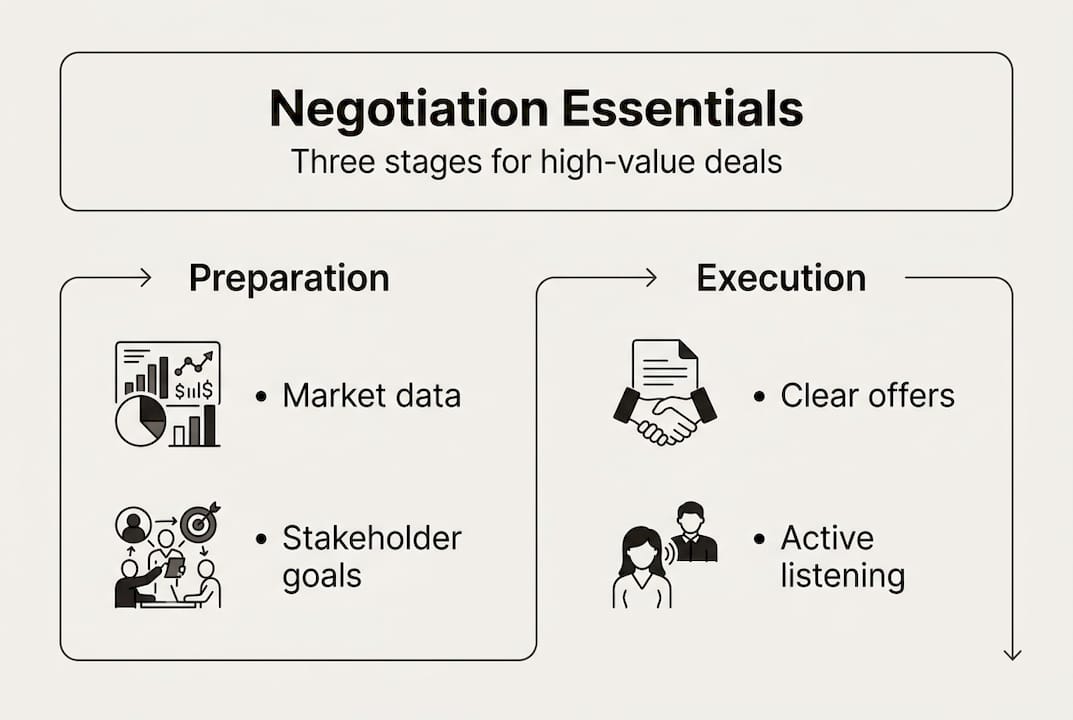
Successful negotiations start long before you sit down at the table. Effective negotiation starts with thorough preparation, including understanding client needs and market data, which means investing time upfront to position yourself strategically. Your first step involves setting clear, measurable objectives that align precisely with your client’s goals, whether that means achieving a specific price point, securing favorable contingencies, or accelerating the closing timeline.
Market research forms the backbone of your preparation. You need current comparable sales data, neighborhood trends, and property-specific insights that justify your position. Pull recent transactions within a half-mile radius, analyze days on market, and identify pricing patterns that support your negotiation stance. This data becomes your ammunition when opposing parties challenge your proposals or question your valuations.
Understanding stakeholder motivations separates average agents from exceptional negotiators. Research the seller’s situation, timeline pressures, and emotional drivers. Are they relocating for work and need a quick close? Downsizing after retirement and prioritizing certainty over maximum price? Each scenario creates different leverage points you can address strategically. Similarly, understand the opposing agent’s track record, preferred negotiation style, and past transaction patterns to anticipate their approach.
Organizing your negotiation materials ensures you can respond quickly and professionally during discussions. Compile contracts, financial documents, inspection reports, and disclosure statements in a digital folder accessible from any device. Create a one-page summary of key property features, recent improvements, and unique selling points you can reference instantly. This level of organization signals competence and builds client confidence in your abilities.
Leveraging technology amplifies your preparation effectiveness. The role of CRM in real estate extends beyond contact management to tracking client preferences, communication history, and negotiation patterns across your portfolio. Modern CRM systems let you document every client interaction, set reminders for follow-up actions, and analyze which strategies yield the best outcomes. You can also integrate real estate marketing strategies for agents into your preparation by understanding how your client discovered the property and what messaging resonated with them.
Pro Tip: Create a negotiation preparation checklist that covers objectives, market data, stakeholder research, materials organization, and CRM updates. Use this checklist for every high-value transaction to ensure consistent, thorough preparation that positions you for success.
| Preparation Element | Purpose | Timeline |
|---|---|---|
| Objective setting | Align agent and client goals | 3-5 days before negotiation |
| Market research | Gather comparable sales and trend data | 2-4 days before negotiation |
| Stakeholder analysis | Understand motivations and constraints | 1-3 days before negotiation |
| Materials organization | Compile all relevant documents digitally | 1-2 days before negotiation |
| CRM documentation | Update client preferences and history | Ongoing through transaction |
Executing negotiation strategies for high-value real estate deals
When negotiation begins, your preparation transforms into action through deliberate communication and strategic positioning. Opening dialogue effectively requires establishing genuine rapport with all parties while maintaining professional boundaries. Start by acknowledging shared goals, finding common ground on transaction objectives, and creating a collaborative atmosphere that reduces adversarial tension. This approach doesn’t mean compromising your client’s interests but rather framing discussions as problem-solving rather than combat.
Presenting offers demands clarity and justification rooted in objective data. Walk through each component of your proposal, explaining the rationale behind your price, contingencies, and terms using the market research you compiled during preparation. When you state a number, immediately support it with comparable sales, property features, or market conditions that validate your position. This evidence-based approach makes it harder for opposing parties to dismiss your offer as unreasonable or arbitrary.
Active listening becomes your most powerful tool during negotiation conversations. Strong communication and strategic concessions increase closure rates in high-value deals, which requires genuine attention to what others say and don’t say. Listen for underlying concerns behind stated objections. When a seller balks at your price, are they worried about comparable sales in their neighborhood, anxious about finding their next home, or simply testing your commitment? Identifying the real issue lets you address root causes rather than surface symptoms.

Strategic concessions require careful calibration to maintain momentum without sacrificing critical terms. Never concede on major points without receiving something valuable in return. If you increase your offer price, secure a faster closing, reduced contingencies, or included appliances. Structure concessions as conditional, using phrases like “We can move to that price if you can accommodate our preferred closing date.” This approach keeps negotiations balanced and prevents one-sided agreements that leave your client dissatisfied.
Emotional management separates successful negotiations from failed ones. High-value transactions trigger strong emotions for buyers, sellers, and agents alike. Stay focused on your client’s objectives rather than getting drawn into personal conflicts or ego battles. When tensions rise, call for a brief pause, reframe the discussion around shared goals, or suggest revisiting contentious points after addressing easier items. Your calm, professional demeanor reassures clients and often de-escalates heated situations.
Integrating negotiation tips for brokers into your execution strategy means applying proven techniques consistently across transactions. These include anchoring with your first offer, using silence strategically after presenting proposals, and framing concessions as gains rather than losses. You can also optimize your approach by understanding the sales funnel real estate conversions that led to this negotiation, tailoring your strategy based on whether the client came from a referral, online search, or open house.
Pro Tip: Practice the “echo technique” during negotiations by repeating the last few words of what someone says as a question. This simple method encourages them to elaborate, reveals additional information, and demonstrates you’re listening carefully without seeming manipulative.
- Establish rapport by finding common ground and acknowledging shared transaction goals before discussing terms.
- Present your offer with clear justification using comparable sales data and property-specific features.
- Listen actively to identify underlying concerns and motivations behind stated objections or counteroffers.
- Structure concessions as conditional exchanges that maintain balance and protect your client’s critical interests.
- Manage emotions by staying focused on objectives, calling strategic pauses, and maintaining professional composure.
- Document all verbal agreements immediately in writing to prevent misunderstandings or selective memory later.
Verifying outcomes and closing deals successfully
Once you reach verbal agreement, the verification phase ensures that understanding translates into a closed transaction. Review every contract detail with your client before signatures, walking through terms, contingencies, timelines, and financial obligations line by line. This thorough review prevents last-minute surprises and confirms your client genuinely understands what they’re committing to. Ask specific questions about their comfort level with each major term rather than simply asking if they have questions.
Digital tools streamline transaction tracking and deadline management during the verification phase. Proper verification and follow-up are essential to finalize deals and maintain client trust, which requires systems that alert you to upcoming contingency expirations, inspection deadlines, and financing milestones. Set automated reminders for yourself and your client, create shared calendars that display all critical dates, and use project management software that shows transaction progress visually. This proactive approach prevents missed deadlines that could jeopardize the deal.
Post-negotiation communication maintains momentum and addresses concerns before they become deal-killers. Send your client a summary email within 24 hours of reaching agreement, outlining next steps, required actions, and upcoming deadlines. Schedule a follow-up call within 48-72 hours to answer questions and address any buyer’s or seller’s remorse that might emerge. Regular updates throughout the closing process reassure clients and demonstrate your ongoing commitment to their success.
Comparing closing approaches helps you select the method that fits your client’s needs and transaction complexity. Some deals benefit from expedited closings that minimize opportunities for second thoughts, while others require extended timelines to accommodate financing, inspections, or relocation logistics. Consider your client’s risk tolerance, financial readiness, and emotional state when recommending a closing strategy. High-net-worth clients often prefer certainty and speed, while first-time buyers may need additional time to arrange financing and complete due diligence.
Documenting lessons learned transforms each negotiation into a learning opportunity that improves your future performance. After closing, spend 30 minutes reviewing what worked well, what could have been handled better, and what surprised you during the process. Record these insights in your CRM or a dedicated negotiation journal, creating a personal knowledge base you can reference before similar transactions. Patterns emerge over time, revealing your strengths and areas for development.
Leveraging real estate AI prospecting tools during the verification phase helps you maintain your pipeline while closing current deals. Automated prospecting ensures you’re consistently generating new opportunities rather than experiencing feast-or-famine cycles common among agents who neglect lead generation during active transactions.
Pro Tip: Create a closing checklist specific to high-value transactions that includes verification steps often overlooked in standard deals, such as wire fraud prevention protocols, title insurance review for properties over certain values, and estate planning considerations for high-net-worth clients.
- Conduct line-by-line contract review with clients, asking specific questions about their understanding and comfort level with each major term.
- Implement digital tracking systems with automated deadline reminders to prevent missed contingencies or financing milestones.
- Send post-negotiation summary emails within 24 hours and schedule follow-up calls within 48-72 hours to address emerging concerns.
- Maintain regular communication throughout closing with progress updates and proactive problem-solving for potential issues.
- Document negotiation lessons in your CRM or journal to build a personal knowledge base for continuous improvement.
| Closing Approach | Best For | Timeline | Risk Level |
|---|---|---|---|
| Expedited closing | Cash buyers, motivated sellers, simple transactions | 7-14 days | Low if properly managed |
| Standard closing | Financed purchases, typical contingencies | 30-45 days | Medium, standard due diligence |
| Extended closing | Complex financing, relocation needs, estate sales | 60-90 days | Higher, more opportunities for issues |
| Leaseback closing | Sellers needing occupancy after sale | 30-60 days plus leaseback period | Medium to high, dual agreement risk |
Enhance your negotiation process with expert tools and resources
Mastering negotiation requires more than strategy; it demands the right tools to identify quality clients, manage relationships, and execute efficiently. Before you can negotiate effectively, you need a steady pipeline of high-value prospects who match your expertise and market focus.
Explore the best real estate prospecting tools to discover platforms that connect you with motivated buyers and sellers in your target price range. These solutions filter out tire-kickers and focus your energy on serious prospects worth your negotiation expertise. Understanding prospecting in real estate fundamentals helps you build systems that consistently generate opportunities rather than relying on referrals alone.

Compare lead generation tools for realtors to find solutions that integrate with your existing workflow and amplify your reach. The right combination of prospecting technology, CRM capabilities, and negotiation preparation positions you as the power broker clients seek for their most important transactions.
Frequently asked questions
What are the key stages of the negotiation process for real estate agents?
The negotiation process consists of three essential stages: preparation, execution, and verification. Preparation involves setting objectives, researching market data, and understanding stakeholder motivations. Execution focuses on applying communication strategies, presenting offers with justification, and managing concessions strategically. Verification ensures agreement details are confirmed, progress is tracked, and deals close successfully with proper documentation.
How can real estate agents improve client trust during negotiations?
Transparent communication and active listening form the foundation of client trust during negotiations. Share your strategy openly, explain the rationale behind your recommendations, and involve clients in key decisions rather than dictating terms. Align every negotiation action with your client’s stated objectives, demonstrating that their interests drive your approach. Regular updates and proactive problem-solving reinforce your commitment to their success.
What digital tools help agents manage the negotiation process effectively?
CRM platforms organize client data, track communication history, and set automated reminders for critical negotiation deadlines. These systems let you document preferences, analyze past transaction patterns, and maintain consistent follow-up throughout the negotiation cycle. Role of CRM in real estate extends to integrating market data, contract management, and post-closing relationship nurturing. AI-powered prospecting tools identify high-potential leads who match your ideal client profile, ensuring your negotiation skills focus on opportunities worth your expertise.
What common mistakes should agents avoid during negotiations?
Under-preparation undermines even the most skilled negotiators, so invest adequate time in research and planning before entering discussions. Unclear or misaligned goals create confusion and weaken your position, making it essential to confirm objectives with your client explicitly. Ignoring client needs or emotional cues damages trust and leads to dissatisfaction even when deals close. Failing to document verbal agreements in writing creates opportunities for misunderstandings that can derail transactions during verification and closing.