Most real estate agents think power brokers are just the highest-selling agents in the market. That’s only half the story. True power brokers combine strategic influence, exclusive networks, and negotiation mastery to dominate luxury property deals. They represent the top 20% of producers who generate the majority of revenue in their firms. This article reveals the skills, tactics, and mindset shifts that separate elite power brokers from the rest, giving you a roadmap to elevate your own status in luxury real estate.
Table of Contents
- Understanding What A Power Broker Is In Real Estate
- Core Skills And Traits That Define A Power Broker
- Impact And Prestige Of Being A Power Broker
- Dispelling Common Misconceptions About Power Brokers
- Sales And Client Acquisition Strategies Unique To Power Brokers
- Practical Steps To Elevate Your Status To A Power Broker
- Conclusion: Elevating Your Impact As A Real Estate Power Broker
- Boost Your Power Broker Potential With Expert Tools
Key Takeaways
| Point | Details |
|---|---|
| Power brokers are top 20% revenue producers | They leverage exclusive networks and market insight to access deals unavailable to most agents. |
| Relationship management drives success | Building genuine, long-term connections outweighs transactional networking every time. |
| Strategic sales tactics differentiate elites | Tailored pitches, advanced negotiation, and CRM tools give power brokers a competitive edge. |
| Misconceptions cloud the path | Becoming a power broker requires deliberate effort, not luck or just high volume. |
| Technology amplifies broker impact | Modern prospecting tools and AI streamline client acquisition and scale your reach. |
Understanding What a Power Broker Is in Real Estate
A power broker isn’t just an agent who closes lots of deals. Power brokers rank in the top 20% of revenue producers within their firms, wielding influence through deep market knowledge, strategic networks, and negotiation prowess. They operate at the intersection of expertise and relationships, controlling access to premium listings and high-net-worth clients that others can’t reach.
In luxury real estate, these brokers set the standard for excellence. They don’t chase every lead. Instead, they cultivate relationships with decision-makers, developers, and investors who drive the most valuable transactions. Their success stems from understanding client psychology, market timing, and the art of positioning properties to appeal to discerning buyers.
Production benchmarks matter. Power brokers typically handle transactions worth millions annually, often representing both buyers and sellers in complex deals. They command higher commission rates because clients recognize the value of their connections and expertise. While regular agents may close 10 to 15 deals per year, power brokers handle 30 or more, often at significantly higher price points.
Here’s how power brokers differ from regular agents:
| Characteristic | Power Broker | Regular Broker |
|---|---|---|
| Annual Revenue | Top 20% tier, often $500K+ | Variable, typically under $200K |
| Client Base | High-net-worth, repeat referrals | Mix of buyers and sellers |
| Network Access | Exclusive industry connections | Standard MLS and local contacts |
| Negotiation Skills | Master-level, strategic | Competent, transactional |
| Market Influence | Sets trends, controls inventory | Follows market conditions |
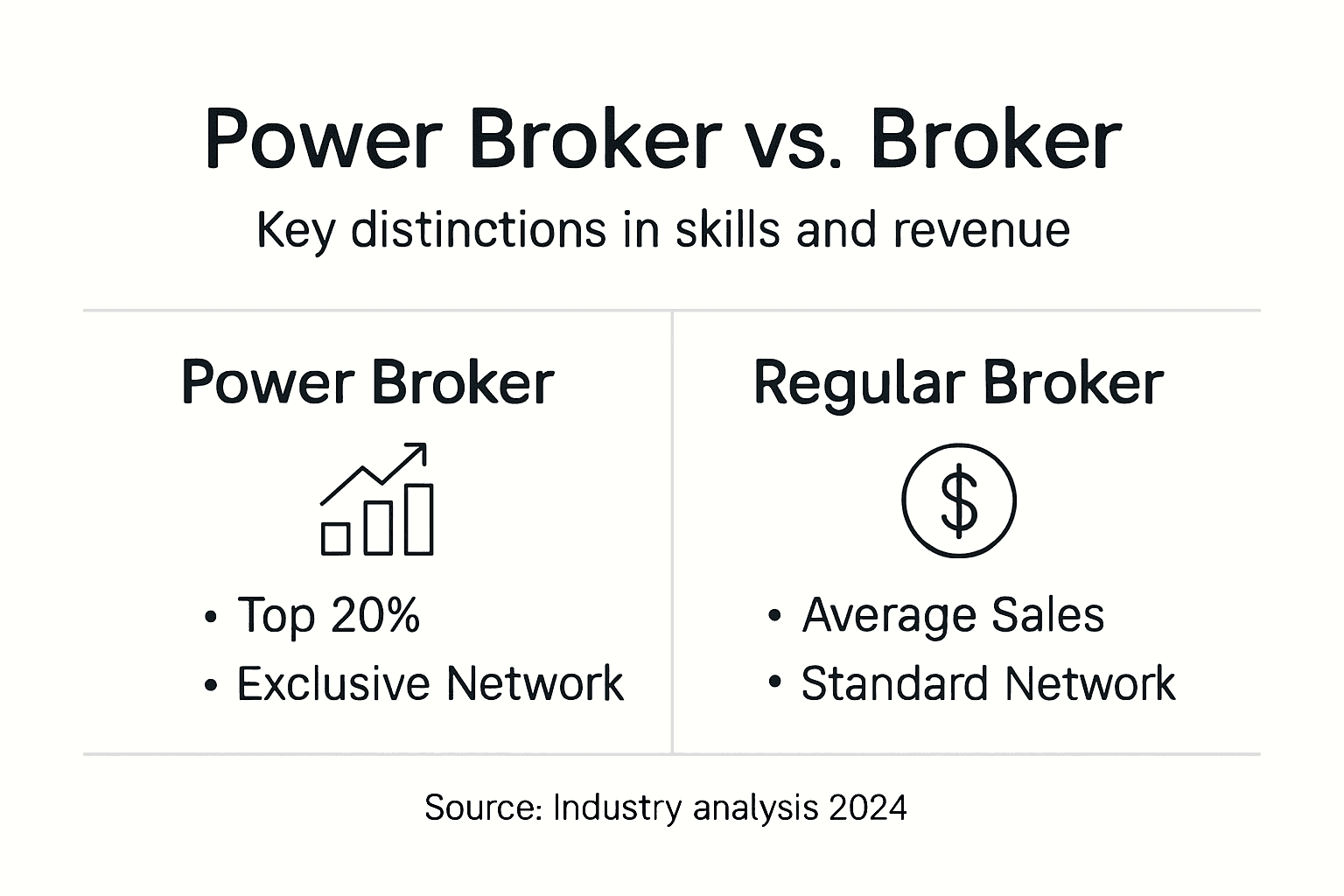
Understanding these distinctions helps you identify where you stand and what gaps to close. Power brokers don’t emerge overnight. They build their status through years of strategic positioning and skill development.
Core Skills and Traits That Define a Power Broker
Networking separates power brokers from the pack. They don’t just attend events. They create opportunities by connecting the right people at the right time. This means maintaining relationships with developers, lenders, attorneys, and other brokers who can refer premium clients. Every conversation becomes a potential deal catalyst.
Negotiation expertise is non-negotiable. Power brokers leverage exclusive networks and industry insight to negotiate better terms and access deals not typically available to general brokers. They understand leverage points, buyer psychology, and timing. When competing offers pile up, power brokers know how to structure deals that stand out without just raising the price.
Market knowledge goes beyond comps and trends. Power brokers study neighborhood developments, zoning changes, and economic indicators that affect property values. They anticipate shifts before they happen, positioning clients to capitalize on emerging opportunities. This level of insight builds trust and justifies premium fees.
Client insight is equally critical. Power brokers tailor every interaction to individual needs and preferences. They research buyers’ lifestyles, investment goals, and decision-making processes before presenting properties. This personalized approach transforms transactions into relationships that generate referrals for years.
Key traits include:
- Strategic thinking that prioritizes long-term relationships over quick commissions
- Emotional intelligence to read clients and adapt communication styles
- Resilience to handle complex deals with multiple stakeholders and obstacles
- Continuous learning to stay ahead of market innovations and buyer expectations
Pro Tip: Build genuine relationships by offering value before asking for business. Share market insights, make introductions, and provide resources without expecting immediate returns. This generosity compounds into trust and referrals.
Developing broker reputation requires consistency in these areas. Power brokers in luxury brokerage understand that their brand is built on every interaction, not just closed deals.
Impact and Prestige of Being a Power Broker
Power brokers deliver measurable results that justify their elite status. Consider how IMA broker Sophie Bird reduced premiums by 62% and 65% in consecutive years, demonstrating strategic client service that goes beyond standard transactions. This level of performance creates lasting client relationships and generates word-of-mouth referrals that fuel continued growth.

Revenue benchmarks tell the story. While average real estate agents earn around $50,000 annually, power brokers often exceed $500,000 in gross commission income. Transaction volume also differs dramatically. Regular agents close 8 to 12 deals per year, while power brokers handle 30 to 50 transactions, often at higher price points that amplify earnings.
| Metric | Power Broker | Average Agent |
|---|---|---|
| Annual Transactions | 30-50+ | 8-12 |
| Average Sale Price | $800K-$2M+ | $300K-$500K |
| Gross Commission Income | $500K-$1M+ | $40K-$80K |
| Client Retention Rate | 70-85% | 30-45% |
| Referral Business | 60-75% | 20-35% |
Industry recognition amplifies credibility. Exclusive industry awards act as social proof enhancing power brokers’ credibility and attracting premium clients. These accolades aren’t just trophies. They signal to potential clients that you’ve been vetted by industry leaders and proven your expertise in competitive markets.
Prestige creates a virtuous cycle. As your reputation grows, you attract better clients, access exclusive listings, and command higher fees. This elevated status allows you to be more selective about who you work with, focusing on relationships that align with your strengths and values.
“Power brokers don’t just close deals. They create opportunities that didn’t exist before, connecting the right properties with the right buyers at exactly the right moment.”
This strategic positioning transforms your practice from reactive to proactive. Instead of chasing leads, you become the go-to expert that clients seek out when they’re ready to make significant real estate moves.
Dispelling Common Misconceptions About Power Brokers
Many agents assume power brokers are simply high-volume salespeople who close more deals than everyone else. Volume matters, but it’s not the defining characteristic. Power brokers focus on strategic relationships and deal quality, not just quantity. A broker handling 50 transactions at $200,000 each isn’t necessarily more influential than one closing 20 deals at $2 million.
Another myth suggests becoming a power broker is about luck or having insider connections from the start. This misses the reality that most power brokers built their networks systematically over years. They invested time in relationship building, market education, and skill development. There’s no shortcut, but there is a clear path.
Some believe power brokers operate in ethical gray areas, using influence to manipulate deals unfairly. The opposite is true. Professional standards and ethics are foundational to sustained success. Power brokers maintain their status by delivering consistent results while upholding integrity. One ethical lapse can destroy years of reputation building.
The idea that technology and automation diminish the need for power brokers is gaining traction. In reality, technology amplifies what skilled brokers already do well. AI tools handle data analysis and lead generation, freeing power brokers to focus on high-value activities like negotiation and relationship management that machines can’t replicate.
Common traps to avoid:
- Prioritizing transaction volume over relationship depth and client satisfaction
- Neglecting continuous education on market trends and negotiation tactics
- Relying solely on past successes instead of adapting to changing buyer preferences
- Viewing other brokers as pure competitors rather than potential collaboration partners
Pro Tip: Focus on becoming a trusted advisor first, successful closer second. Clients remember how you made them feel and whether you protected their interests, not just whether you closed the deal.
Understanding these realities helps you avoid wasting time on ineffective strategies. Power broker status comes from deliberate choices about where to invest your energy and how to position yourself in the market.
Sales and Client Acquisition Strategies Unique to Power Brokers
Targeted networking drives power broker success. Instead of attending every real estate event, they focus on gatherings where high-net-worth individuals and decision-makers congregate. Charity galas, private club events, and industry conferences become hunting grounds for meaningful connections. Each interaction is intentional, with follow-up systems ensuring no opportunity slips away.
Referral cultivation is systematic, not accidental. Power brokers maintain detailed records of past clients, tracking life events and milestones that might trigger real estate needs. They send personalized updates about market conditions, property opportunities, and relevant news. This consistent communication keeps them top of mind when referrals arise.
Tailored pitches differentiate power brokers from agents using generic presentations. Before meeting luxury buyers, they research investment portfolios, lifestyle preferences, and purchase history. Property presentations highlight features aligned with specific client priorities, whether that’s privacy, investment returns, or lifestyle amenities.
Advanced technology leverages time effectively. Power brokers use sophisticated CRM systems to track client interactions, automate follow-ups, and identify patterns in buyer behavior. Luxury market trends are monitored through data analytics tools that surface opportunities before competitors notice them.
Here’s how to implement these strategies:
- Identify three to five high-value networking venues where your ideal clients spend time and commit to regular attendance
- Create a quarterly touchpoint system for past clients including market updates and personalized messages
- Develop property presentation templates that highlight luxury features most valued by discerning buyers
- Invest in CRM technology that tracks client preferences and automates routine communications
- Build a referral incentive program rewarding clients who introduce qualified leads
Advanced prospecting tips enhance these approaches by identifying high-probability leads earlier in their buying journey. Power brokers don’t wait for clients to come to them. They proactively identify potential buyers and sellers, then position themselves as the obvious choice.
Marketing tactics used by power brokers:
- Exclusive property previews for select client groups before public listings
- Thought leadership content positioning them as market experts through blogs and social media
- Strategic partnerships with luxury service providers like interior designers and mortgage specialists
- Video marketing showcasing properties with cinematic quality that appeals to affluent buyers
These luxury broker marketing ideas create multiple touchpoints with potential clients, building familiarity and trust before formal engagement begins. The key is consistency and quality over frequency.
Practical Steps to Elevate Your Status to a Power Broker
Transforming into a power broker requires deliberate action across multiple fronts. Start by auditing your current network. Who are your strongest connections? Where are the gaps? Identify five influential people in your market you don’t know yet and create a plan to build relationships with them over the next six months.
Follow these steps systematically:
- Invest in advanced negotiation training through recognized programs or mentorship with established power brokers
- Upgrade your technology stack with CRM tools designed for luxury real estate prospecting and client management
- Commit to daily market research, spending 30 minutes reviewing new listings, sales data, and economic indicators
- Join exclusive industry organizations where power brokers congregate and volunteer for leadership roles
- Develop a personal brand that communicates expertise through content creation and strategic visibility
Mindset shifts matter as much as tactical changes. Power brokers think long-term, viewing each interaction as a potential relationship rather than a transaction. They invest time in people who may not buy for years, trusting that consistent value delivery will eventually pay dividends.
They also embrace rejection differently. Every “no” becomes data about market preferences and timing. Instead of taking rejection personally, power brokers analyze what they can learn and adjust their approach accordingly.
Pro Tip: Master the psychology of negotiation by studying behavioral economics and decision-making patterns. Understanding why people say yes or no gives you leverage that pure market knowledge can’t provide.
Generating real estate leads consistently requires systems that work even when you’re focused on current clients. Power brokers automate lead capture and qualification, ensuring a steady pipeline without constant manual effort.
Building a real estate brand establishes you as the go-to expert in your niche. This means defining what you’re known for and consistently delivering content and experiences that reinforce that positioning.
Implementing a prospecting workflow designed for luxury leads ensures no opportunity is missed. Power brokers have documented processes for every stage of client acquisition, from initial contact through closing and beyond.
Conclusion: Elevating Your Impact as a Real Estate Power Broker
Power brokers occupy the top 20% of real estate producers because they’ve mastered skills that go far beyond closing transactions. They build strategic networks, deliver exceptional client service, and leverage technology to amplify their reach. The path to this elite status requires deliberate effort across relationship building, negotiation mastery, and market expertise.
You don’t need luck or insider connections to start. You need a clear strategy, consistent execution, and willingness to invest in your development. The tools and tactics outlined here give you a roadmap, but the transformation happens through daily choices to prioritize long-term relationships over quick wins.
Begin by identifying one area where you can immediately upgrade your approach. Maybe it’s implementing a better CRM system, joining a new networking group, or developing a signature client experience. Small, consistent improvements compound into the influence and prestige that define power brokers.
Boost Your Power Broker Potential with Expert Tools
Becoming a power broker is easier when you have the right technology supporting your efforts. Modern prospecting in real estate requires tools that streamline lead generation, automate follow-ups, and provide market insights instantly. That’s where we come in.

Our platform helps luxury brokers scale their impact without sacrificing the personal touch that wins high-value clients. From lead generation tools for realtors to real estate AI prospecting tools that identify opportunities before your competition, we provide everything you need to compete at the power broker level. Let our technology amplify the strategies you’re already implementing so you can focus on what you do best: building relationships and closing deals.
FAQ
What is a power broker in real estate?
A power broker is a top-performing real estate agent who combines deep market expertise, exclusive networks, and master-level negotiation skills to dominate luxury property transactions. These professionals rank in the top 20% of revenue producers within their firms, wielding influence that gives them access to premium listings and high-net-worth clients unavailable to most agents.
How do power brokers build their client network?
They build networks through targeted, strategic relationship cultivation rather than random networking. Power brokers attend exclusive events where decision-makers gather, maintain systematic follow-up with past clients, and provide value before asking for business. This approach creates referral engines that generate qualified leads consistently.
What sales strategies do power brokers use to close luxury deals?
Power brokers employ advanced negotiation techniques that leverage market psychology and timing to secure favorable terms for clients. They create tailored presentations addressing each buyer’s unique lifestyle needs and investment goals. Sophisticated CRM tools track client preferences and automate timely follow-ups, ensuring no opportunity is missed while maintaining the personal touch luxury clients expect.
Can any agent become a power broker quickly?
No, achieving power broker status requires years of deliberate skill development and strategic network building. It’s not about luck or instant success. Power brokers systematically master market knowledge, negotiation tactics, and relationship management over time. The journey demands consistent effort, continuous learning, and patience as reputation and influence compound through proven results.