About

What is drip marketing: a real estate pro’s guide
Most real estate agents believe that sending more emails means more clients. Fire off a mass blast to your entire list every week, and surely someone bites. The reality? That approach overwhelms prospects, trains them to ignore you, and burns your sender reputation. Understanding what is drip marketing changes everything. Drip marketing builds engagement gradually and adapts based on how individual leads respond, making it one of the most powerful tools in a real estate professional’s arsenal. This guide breaks down exactly how it works and how to apply it to win more clients.
Table of Contents
- Understanding drip marketing: concept and core components
- Drip vs broadcast emails: why drip marketing suits real estate better
- Timing and triggers: crafting real estate drip sequences that engage
- What to include in your drip campaigns: content that converts real estate leads
- Comparing popular real estate drip marketing sequences
- The crucial drip marketing truth real estate pros often overlook
- Real estate prospecting and automation tools to power your drip marketing
- Frequently asked questions
Key Takeaways
| Point | Details |
|---|---|
| Drip marketing basics | Drip marketing is an automated sequence of targeted messages designed to nurture real estate leads over time. |
| Automation with triggers | Sequenced emails use timing and behavioral triggers to personalize follow-ups effectively. |
| Distinct from broadcast emails | Unlike mass emails, drip campaigns deliver relevant content tailored to each lead’s journey stage. |
| Timing matters | Initial contact within minutes and thoughtful scheduling improve engagement and conversion. |
| Human follow-up essential | Stopping automation when leads show intent to enable fast personal outreach boosts success. |
Understanding drip marketing: concept and core components
Drip marketing is a system of automated, pre-planned messages sent to leads over time based on where they are in the buying or selling process. Think of it as a conversation you architect in advance, one that responds intelligently to what your leads do instead of blasting everyone with the same message at the same time.
Drip marketing sends automated, targeted emails on a schedule or triggered by specific actions to nurture leads toward a decision. Drip campaigns are pre-written sequences sent automatically based on triggers or timing. This means you set the rules once, and the system works for you around the clock.
The core components of any drip marketing strategy include:
- Triggers: Events that start or adjust a sequence, such as a lead signing up on your website, clicking a listing, downloading a neighborhood guide, or going quiet for 30 days.
- Sequences: A planned series of messages with a defined purpose, whether that’s educating a first-time buyer or re-engaging a cold lead.
- Segmentation: Grouping leads by behavior, intent, or stage so each person receives content that actually matches where they are.
- Personalization: Using the lead’s name, the property type they browsed, or their location to make every message feel relevant.
- Automation rules: Logic that pauses, adjusts, or ends a sequence based on lead responses, preventing tone-deaf messaging when someone is ready to act.
To nurture real estate leads effectively, you need all five components working together. Miss one and your drip campaign becomes just another forgettable email sequence.
Drip vs broadcast emails: why drip marketing suits real estate better
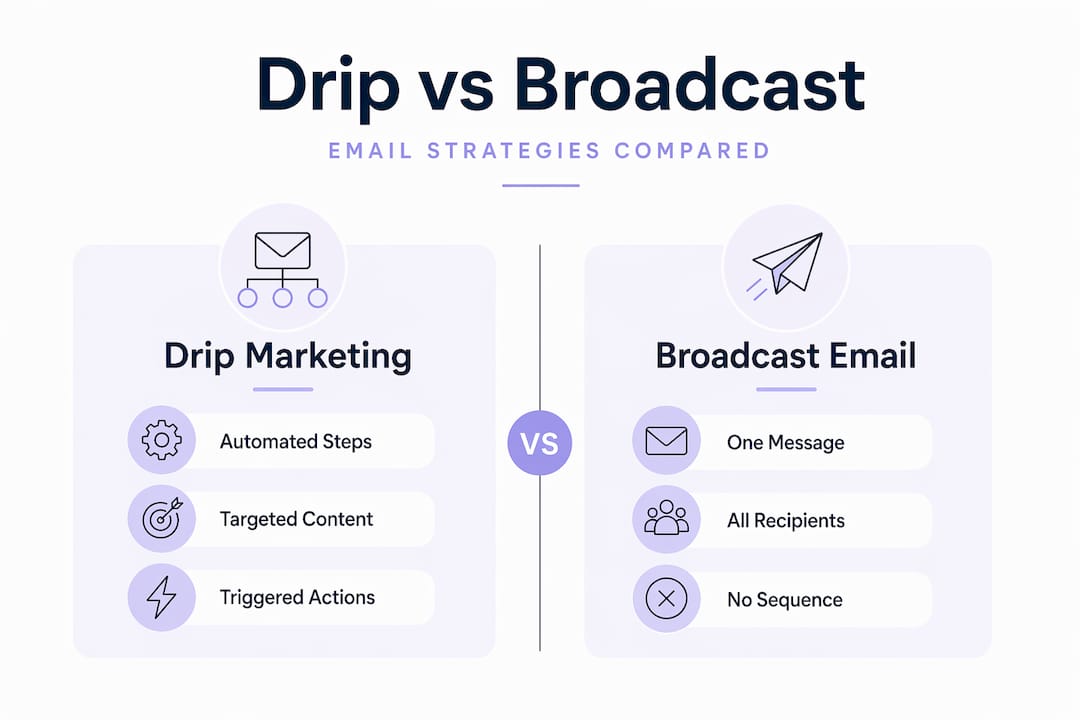
A broadcast email is the digital equivalent of a billboard. You put one message in front of everyone and hope it lands. Drip marketing is the opposite: it is a personalized conversation timed to meet each lead where they actually are.
Drip campaigns differ from mass email blasts by sending targeted, sequenced messages based on timing, triggers, and customer stage. This distinction matters enormously in real estate, where leads range from “just curious” browsers to “ready to sign” buyers who need radically different messages.

| Feature | Broadcast email | Drip marketing |
|---|---|---|
| Audience targeting | Entire list at once | Segmented by behavior or stage |
| Message timing | Manually scheduled | Automated by triggers or intervals |
| Personalization | Minimal | High, based on lead actions |
| Lead journey awareness | None | Fully integrated |
| Cost efficiency | Low ROI on cold leads | Focused on engaged, likely converters |
| Relationship building | One-off touchpoints | Ongoing, trust-building sequences |
Here is why this matters for real estate specifically:
- A first-time buyer needs education about the mortgage process before they are ready to tour homes.
- A past client needs a gentle check-in every quarter, not a weekly blast about new listings.
- A warm lead who already toured two properties needs a direct nudge and social proof, not a welcome email.
Building your email marketing workflow for realtors around drip logic means you stop wasting time sending the wrong message to the wrong person. Every dollar and minute you spend goes toward leads who are actually moving toward a decision.
Timing and triggers: crafting real estate drip sequences that engage
Timing is where most drip campaigns either win or die. You can have brilliant content and sharp segmentation, but if your messages land at the wrong moment, they get ignored.
The first 14 days after a lead arrives are your highest-leverage window. Key touches include Day 1 rapid contact, Day 7 social proof, then monthly touches to maintain presence. Miss that window and conversion rates drop sharply.
Here is a practical sequence structure for a new real estate lead:
- Day 1 (within 5 minutes): Automated welcome message with a personal touch, relevant listing, or neighborhood overview matching their search.
- Day 3: Value-add email featuring a short market insight or buyer/seller FAQ tailored to their profile.
- Day 7: Social proof message including a client testimonial or recent success story in their target area.
- Day 14: Soft call to action inviting them to schedule a call or request more listings.
- Month 2 onward: Monthly market updates or curated listings to maintain presence without pressure.
Triggers like email opens, website visits, or listing clicks adjust cadence or re-enroll contacts in different sequences. So if a lead clicks three listings in one week, that behavior signals high intent and should trigger a more direct, faster-paced sequence.
Pro Tip: Always build an “exit rule” into every sequence. The moment a lead replies to your email, calls you, or fills out a contact form, automation must pause immediately. A lead who says “I am ready to view homes this weekend” should never receive a generic drip email the next morning.
Understanding types of real estate leads helps you build triggers that actually reflect how each segment behaves, rather than guessing at timing that may not fit your market.
What to include in your drip campaigns: content that converts real estate leads
Content is what makes your drip sequences worth opening. The wrong content, even delivered at the perfect time, kills momentum. Effective drip emails educate, build trust, and guide prospects through the buyer journey with timely, relevant content matched to their stage.
Here is what should be in your real estate drip content mix:
- Educational content: Explain the buying process, what to expect at closing, how to read a comparative market analysis, or what contingencies actually mean. Leads who feel informed trust you more.
- Market updates: Share local market data specific to their target neighborhood. Generic national stats feel irrelevant. Hyper-local numbers feel like insider knowledge.
- Testimonials and success stories: A short story about a client who found their dream home in a competitive market builds credibility without sounding like a sales pitch.
- Listing alerts: Curated listings that match their stated preferences show you are paying attention, not just mass-mailing properties.
- Soft calls to action: Invitations to “reply with questions” or “check out this new listing” keep engagement open without pressure.
- Seasonal or event-based content: Open house invitations, interest rate news, or tax season homeowner tips keep the conversation current.
Pro Tip: Limit each email to one clear focus. Agents often cram three topics into a single message trying to be thorough. That kills click-through rates. One email, one purpose, one call to action.
Balance is everything. Sending daily emails to a cold lead creates fatigue fast. Your email workflows for realtors should space content to feel like a trusted advisor checking in, not a salesperson chasing a commission.
Comparing popular real estate drip marketing sequences
Not all drip sequences are built the same. The message that works for a brand-new lead will alienate a past client, and vice versa. Separate drip sequences for new leads, warm leads, and past clients ensure messaging aligns with lead journey stage and intent.
| Sequence type | Primary goal | Content focus | Typical cadence | Exit trigger |
|---|---|---|---|---|
| New lead | Build trust fast | Welcome, education, listings | Days 1, 3, 7, 14, monthly | Reply, call, or form submission |
| Warm lead | Move toward decision | Social proof, deep market data, personal CTA | Every 5 to 7 days | Showing request or direct inquiry |
| Past client | Maintain loyalty | Home tips, referral ask, market updates | Monthly to quarterly | Referral provided or new inquiry |
How to structure each type:
- New lead sequence: Start fast. Your first email lands within minutes. Early messages focus on establishing credibility and delivering value before asking for anything.
- Warm lead sequence: These prospects already know you. Go deeper. Share a market analysis for their specific target area. Invite them to a private showing. Make it feel exclusive.
- Past client sequence: These relationships are gold. Monthly home maintenance tips, anniversary messages on their purchase date, or a simple “thinking of you” check-in before spring selling season keeps you top of mind when they are ready to refer someone.
Automation must adapt when behavior changes. If a past client suddenly starts clicking listing links again after 18 months of silence, that is a signal to shift them into a warm lead sequence, not keep sending home maintenance tips. Your real estate lead sources also influence which sequence a lead enters from day one, since someone from a referral needs a different opening than someone who found you through a paid ad.
The crucial drip marketing truth real estate pros often overlook
Here is what the best drip marketing guides rarely say plainly: automation is not a replacement for human judgment. It is scaffolding. The agents who win are not the ones with the most elaborate sequences. They are the ones who know exactly when to step out of the sequence and pick up the phone.
Most agents build drip campaigns and then walk away, assuming the system handles everything. What actually happens is that hot leads receive a scheduled Day 7 email while waiting for a human to call them back. That delay kills deals. The biggest performance lift comes from stopping or changing drip sequences immediately when intent signals appear, enabling timely human follow-up.
This concept, called handoff logic, is where drip marketing strategy earns its real ROI. The sequence exists to warm the lead and deliver value passively. The moment a lead signals intent by replying, clicking a showing request link, or calling your office, the automation must immediately yield to a human response.
Monitoring your engagement data is not optional. Open rates, click patterns, and reply rates tell you which sequences are working and which are producing silence. If a sequence generates zero replies after 60 days, the content or timing is wrong. Adjust it. Most agents never do, and they wonder why their drip campaigns generate lists and not clients.
The agents who nurture real estate leads most effectively treat drip marketing as a living system, one they actively review, test, and refine based on real engagement signals. That discipline is what separates a power broker from an agent with a fancy email tool.
Real estate prospecting and automation tools to power your drip marketing
With a deeper understanding and expert insights in hand, the next move is putting the right tools in place to execute your drip strategy with precision and consistency.

At ex.plo.re, we have built a platform specifically for real estate agents, luxury brokers, and yacht brokers who want to stop guessing and start converting. Explore our curated list of best real estate prospecting tools to find software that integrates with your existing CRM and handles lead capture, segmentation, and automated follow-up in one place. Learn how automation in real estate sales can support your drip campaigns with smart handoff logic, so no hot lead slips through while you are showing a property. And if you want a full framework for follow-up, our guide on how to nurture real estate leads walks you through every stage. Your next client is already in your pipeline. The right tools help you close them.
Frequently asked questions
What is the main difference between drip marketing and broadcast email?
Drip marketing sends targeted, automated messages based on user actions or timing, while broadcast emails send the same message to everyone at once. Drip campaigns differ from broadcast emails by responding to where each individual lead is in their journey rather than treating the entire list as one audience.
How soon should real estate agents contact a new lead in a drip campaign?
Agents should contact a new lead within 5 minutes of capture for maximum impact. The first 14 days are highest leverage, with Day 1 rapid contact being the single most important touchpoint in the entire sequence.
Can drip marketing sequences be customized for different types of real estate leads?
Yes, and they must be. Separate drip sequences for new, warm, and past clients ensure each person receives content that reflects their actual stage and intent, not a one-size-fits-all message that misses the mark.
What should real estate professionals do when a lead shows strong buying or selling intent?
Pause or end the automated drip immediately and follow up personally. Handoff logic means stopping sequences the moment intent signals appear so a human can respond quickly and close the opportunity before it cools.