About

What Is Due Diligence in Yacht Sales? Risk-Free Closings
Most luxury yacht brokers know that skipping thorough due diligence can turn an American yacht sale into a legal and financial nightmare. In a market where a single overlooked lien or missing compliance record can cost hundreds of thousands, robust verification is more vital than ever. This guide breaks down proven investigative techniques and expert strategies to help you spot hidden risks, streamline vital checks, and protect your reputation with every high-value transaction.
Table of Contents
- Defining Due Diligence In Yacht Sales
- Different Types Of Yacht Due Diligence
- Core Steps In A Comprehensive Check
- Legal And Regulatory Risks To Watch
- Avoiding Costly Mistakes In Closings
Key Takeaways
| Point | Details |
|---|---|
| Comprehensive Due Diligence Is Essential | Engage professional brokers for thorough inspections, ensuring protection against financial and legal risks. |
| Various Types of Due Diligence | Legal, financial, technical, and operational assessments are crucial for uncovering potential hidden issues. |
| Attention to Legal and Regulatory Risks | Understand sanctions and compliance challenges to avoid potential legal complications in transactions. |
| Preventing Common Closing Mistakes | Develop comprehensive checklists for ownership verification and regulatory compliance to safeguard transactions. |
Defining Due Diligence in Yacht Sales
In the high-stakes world of luxury yacht transactions, due diligence represents the comprehensive investigative process that protects buyers and sellers from potential financial and legal risks. Legal investigation techniques reveal critical information about vessel ownership, financial standing, and potential legal complications before finalizing a sale.
Due diligence in yacht sales involves a systematic examination of multiple critical elements. This process includes verifying the yacht’s complete ownership history, conducting thorough mechanical and structural inspections, reviewing maintenance records, checking for any outstanding liens or legal encumbrances, and confirming the vessel’s compliance with maritime regulations. Professional yacht brokers typically perform these detailed assessments to ensure transparent and secure transactions.
The primary objectives of due diligence extend beyond simple transaction verification. By meticulously examining every aspect of the yacht’s background, buyers can uncover potential hidden issues that might significantly impact the vessel’s value or operational capabilities. This might include investigating previous damage history, understanding the yacht’s sea-worthiness, confirming accurate documentation, and assessing potential repair or maintenance requirements that could represent substantial future investments.
Pro tip: Always request and review a comprehensive marine survey conducted by a certified marine surveyor before finalizing any yacht purchase, as this independent assessment provides the most reliable overview of the vessel’s true condition.
Different Types of Yacht Due Diligence
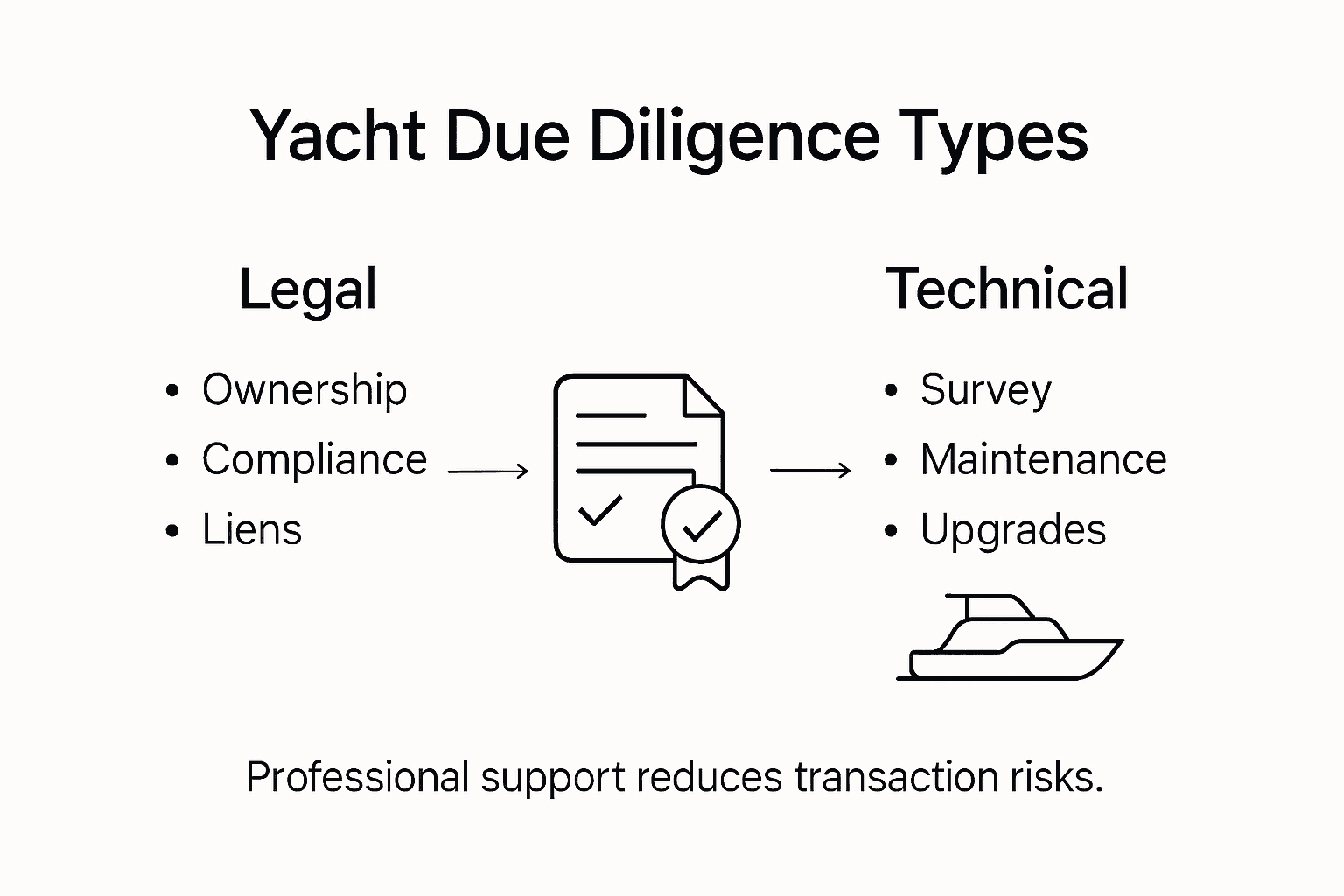
Yacht transactions require a multifaceted approach to due diligence, encompassing several critical investigative domains. Maritime risk screening plays a crucial role in identifying potential risks and ensuring a transparent, secure transaction across different assessment categories.
The primary types of yacht due diligence include:
- Legal Due Diligence: Verifies complete vessel ownership history, checks for outstanding liens, confirms registration status, and ensures compliance with maritime regulations
- Financial Due Diligence: Assesses the financial standing of both buyer and seller, evaluates transaction risks, and examines potential financial encumbrances
- Technical Due Diligence: Involves comprehensive mechanical and structural inspections, reviewing maintenance records, and evaluating the yacht’s overall condition
- Operational Due Diligence: Examines the vessel’s operational history, previous usage patterns, and potential restrictions or limitations
Each type of due diligence serves a unique purpose in mitigating risks and providing comprehensive protection for both buyers and sellers in yacht transactions. The intricate nature of maritime transactions requires a detailed and systematic approach that goes beyond surface-level evaluations. Professional yacht brokers and maritime experts typically conduct these assessments, leveraging specialized knowledge to uncover potential issues that might not be immediately apparent.
Here’s how the four main types of yacht due diligence differ in focus and benefits:
| Due Diligence Type | Main Focus | Primary Benefit |
|---|---|---|
| Legal | Verifying ownership, liens | Reduces fraud and disputes |
| Financial | Assessing buyer/seller finances | Prevents hidden liabilities |
| Technical | Inspecting condition, records | Ensures safety and repairs |
| Operational | Evaluating usage history | Detects performance issues |
Pro tip: Engage a certified maritime attorney and a professional marine surveyor to conduct a comprehensive due diligence review, ensuring you have expert insights across all critical assessment categories.
Core Steps in a Comprehensive Check
Conducting a thorough yacht due diligence requires a systematic approach that goes beyond superficial assessments. Comprehensive risk management strategies are essential for ensuring a secure and transparent yacht transaction that protects both buyer and seller interests.
The core steps in a comprehensive yacht due diligence check typically include:
- Ownership Verification
- Confirm current vessel registration
- Trace complete ownership history
- Check for any existing liens or legal encumbrances
- Financial Assessment
- Verify seller’s financial standing
- Evaluate transaction financial risks
- Review potential hidden financial obligations
- Technical Inspection
- Conduct detailed marine surveying
- Assess mechanical and structural condition
- Review complete maintenance and repair records
- Legal Compliance Check
- Validate maritime regulatory compliance
- Screen for potential sanctions risks
- Confirm documentation accuracy
- Operational History Review
- Investigate previous vessel usage patterns
- Assess potential operational restrictions
- Evaluate overall vessel performance history
Each step requires meticulous attention to detail and specialized expertise. Professional yacht brokers and maritime experts leverage sophisticated screening techniques to uncover potential risks that might not be immediately apparent during initial evaluations. The comprehensive nature of this process ensures that all critical aspects of the yacht transaction are thoroughly examined before finalizing the sale.
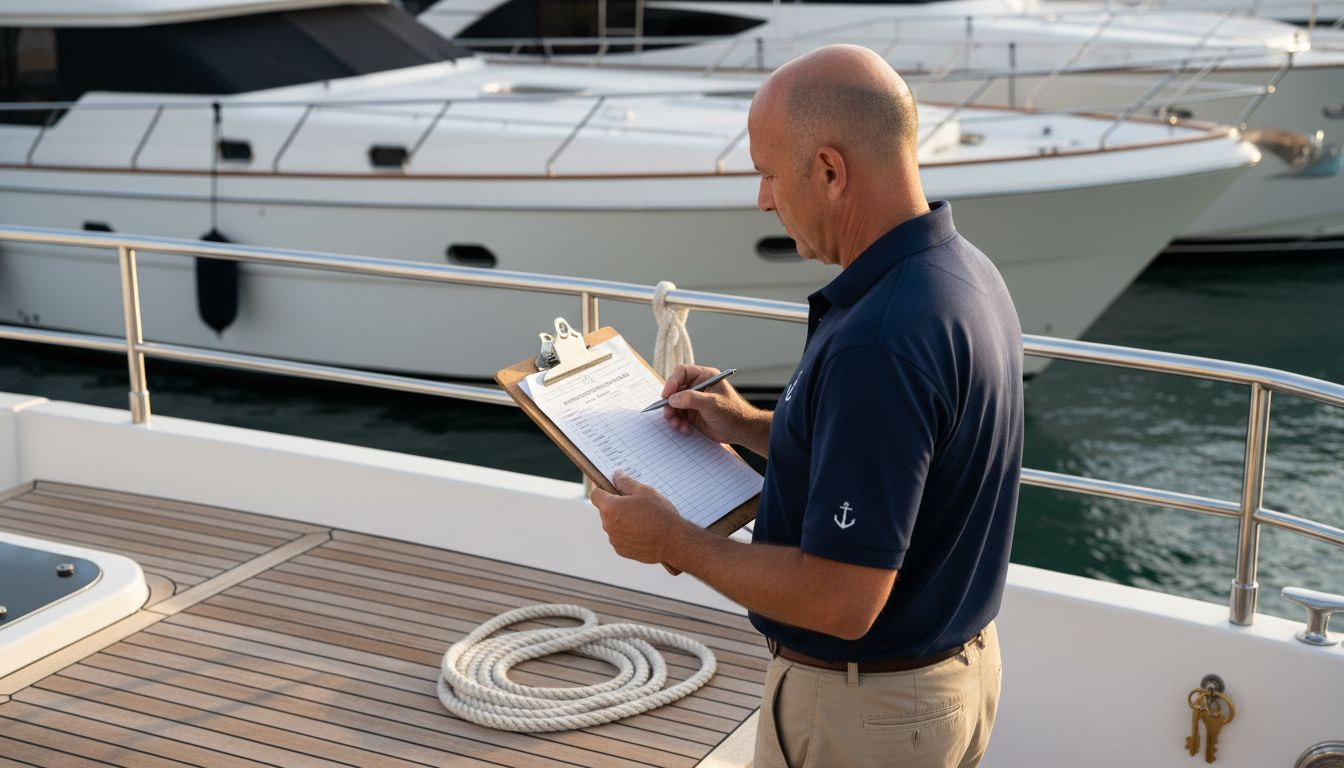
Pro tip: Create a standardized checklist for each due diligence step and maintain digital documentation of your findings to streamline future yacht transaction assessments.
Legal and Regulatory Risks to Watch
Navigating the complex landscape of yacht sales requires a sophisticated understanding of potential legal and regulatory risks that can derail transactions. Maritime regulatory screening becomes critical in identifying potential compliance challenges that could expose buyers and sellers to significant legal vulnerabilities.
Key legal and regulatory risks in yacht transactions include:
-
Sanctions Exposure
- Potential connections to politically exposed persons
- Risk of inadvertent transactions with sanctioned entities
- International financial compliance challenges
-
Jurisdictional Complexity
- Variances in maritime registration requirements
- Potential legal ambiguities across different maritime jurisdictions
- Challenges with non-transparent vessel ownership structures
-
Compliance Documentation
- Verification of accurate maritime registration
- Ensuring complete and legitimate ownership transfer documentation
- Screening for potential historical legal encumbrances
Understanding these risks requires more than surface-level investigation. Professional yacht brokers must develop comprehensive screening protocols that go beyond traditional documentation checks. This involves sophisticated background investigations, international legal research, and nuanced understanding of maritime regulatory frameworks across multiple jurisdictions.
The consequences of overlooking these risks can be substantial. Potential outcomes include transaction cancellation, legal disputes, financial penalties, and potential criminal liability. Successful yacht transactions demand a proactive and thorough approach to identifying and mitigating these complex legal and regulatory challenges.
Pro tip: Engage specialized maritime legal counsel with international experience to conduct a comprehensive regulatory risk assessment before finalizing any yacht transaction.
Avoiding Costly Mistakes in Closings
Closing a yacht sale represents the most critical moment in any maritime transaction, where seemingly minor oversights can result in substantial financial and legal complications. Comprehensive due diligence protocols are essential for preventing costly errors that could potentially derail the entire transaction.
Common costly mistakes in yacht sale closings include:
-
Inadequate Ownership Verification
- Failing to confirm complete ownership history
- Overlooking potential existing liens
- Neglecting to validate seller’s legal right to transfer vessel
-
Financial Documentation Gaps
- Incomplete source of funds documentation
- Insufficient financial background checks
- Lack of transparent transaction tracking
-
Regulatory Compliance Failures
- Ignoring international maritime regulations
- Bypassing know-your-customer (KYC) requirements
- Overlooking potential sanctions or legal restrictions
Successful yacht transactions demand a meticulous approach that goes beyond surface-level documentation. Professional yacht brokers must develop comprehensive verification strategies that anticipate potential risks and create multiple layers of protection. This involves not just checking documents, but understanding the complex ecosystem of maritime sales, including jurisdictional nuances, financial regulations, and potential hidden legal complications.
The financial implications of these mistakes can be devastating. Potential consequences range from transaction cancellation and legal disputes to significant monetary losses and potential criminal liability. Proactive risk management becomes the cornerstone of successful, secure yacht sales.
This table summarizes common closing mistakes and how to prevent them:
| Mistake Area | Common Issue | Prevention Strategy |
|---|---|---|
| Ownership | Missing lien checks | Multiple independent verifications |
| Financial | Incomplete fund tracking | Strict documentation review |
| Regulatory | Ignoring maritime rules | Consult international legal counsel |
| Documentation | Flawed transfer paperwork | Use standardized transaction forms |
Pro tip: Develop a standardized, comprehensive closing checklist that includes mandatory verification steps for ownership, financial documentation, and regulatory compliance to minimize transaction risks.
Streamline Risk-Free Yacht Transactions with Expert Tools and Support
Navigating the complex due diligence process in yacht sales means facing challenges like verifying ownership, uncovering hidden liens, and ensuring full regulatory compliance. These critical steps are essential to avoid costly mistakes during closings and to protect your clients’ investments. If you want to enhance your sales pitch and confidently guide buyers and sellers through risk-free yacht closings, leveraging cutting-edge tools and expert talent is key.

Discover how ex.plo.re empowers yacht brokers and luxury real estate agents to streamline prospecting and manage every stage of the sales cycle with precision. Amplify your impact with tailored resources designed for due diligence workflows, financial verification, and transaction transparency. Take control of complexity now and become the trusted power broker your clients need. Visit our CRM platform to get started and transform uncertainty into seamless yacht sales success.
Frequently Asked Questions
What is due diligence in yacht sales?
Due diligence in yacht sales is a comprehensive investigative process that buyers and sellers undertake to assess the vessel’s ownership, financial standing, compliance with regulations, and condition before finalizing a transaction.
Why is due diligence important in yacht transactions?
Due diligence is essential in yacht transactions to mitigate financial and legal risks, uncover hidden issues that could affect the vessel’s value, and ensure transparency and security in the sale process.
What types of due diligence should be conducted when buying a yacht?
The main types of due diligence in yacht sales include legal due diligence, financial due diligence, technical due diligence, and operational due diligence, each focusing on different aspects of the transaction.
How can I avoid mistakes during the closing of a yacht sale?
To avoid mistakes in a yacht sale closing, ensure thorough ownership verification, maintain complete financial documentation, adhere to regulatory compliance, and use a standardized closing checklist for all mandatory verification steps.