

Most american yacht owners discover that selling a luxury vessel involves far more than listing a price and waiting for offers. A single overlooked contract detail can lead to unexpected costs or disputes. In fact, legal complexities and exclusive broker relationships impact nearly every yacht sale. Understanding the structure and purpose of a yacht sales mandate agreement helps american sellers protect their interests, set clear expectations, and avoid common pitfalls when navigating this high-stakes market.
Table of Contents
- Defining A Yacht Sales Mandate Agreement
- Types Of Yacht Sales Mandates Explained
- Legal Structure And Key Contract Elements
- Rights, Duties, And Broker Obligations
- Financial Risks And Common Pitfalls To Avoid
Key Takeaways
| Point | Details |
|---|---|
| Yacht Sales Mandate Agreement | This is a legal contract that formalizes the relationship between a yacht owner and broker, defining responsibilities, expectations, and compensation. |
| Types of Mandates | Yacht sales mandates can be either exclusive or non-exclusive, each offering different levels of broker engagement and flexibility. |
| Key Contract Elements | Essential components include duration, commission rates, broker responsibilities, and termination clauses to prevent disputes. |
| Financial Risks | Potential financial risks include unclear commission structures and unexpected costs; thorough due diligence is crucial for yacht owners. |
Defining a Yacht Sales Mandate Agreement
A yacht sales mandate agreement represents a critical legal contract that establishes the formal relationship between a yacht owner and their chosen yacht broker. According to Barche Magazine, this agreement grants the broker exclusive rights to market and sell the yacht, creating a structured framework for the sales process.
The core purpose of a yacht sales mandate agreement is to clearly define the responsibilities, expectations, and compensation for both the yacht owner and the broker. As detailed in The Law of Yachts & Yachting, these contracts specify critical elements such as:
- Exclusive marketing rights for the broker
- Specific commission structure
- Duration of the sales mandate
- Broker’s marketing and sales obligations
- Conditions for contract termination
Typically, these agreements protect both parties by establishing transparent guidelines for the yacht sales process. The broker receives a guaranteed commission structure and exclusive selling rights, while the yacht owner benefits from professional marketing, comprehensive sales strategies, and a clear understanding of the financial terms. By formalizing these expectations in writing, yacht sales mandates help minimize potential misunderstandings and provide a solid legal foundation for the yacht selling transaction.
Types of Yacht Sales Mandates Explained
Yacht sales mandates primarily come in two distinct categories: exclusive and non-exclusive agreements. According to Barche Magazine, these different types of mandates offer yacht owners varying levels of flexibility and broker engagement in the sales process.
In an exclusive mandate, a single yacht broker receives sole rights to market and sell the vessel. This arrangement provides several strategic advantages:
- Concentrated marketing efforts
- Dedicated broker attention
- Potential for more comprehensive sales strategy
- Clearer communication channels
- Reduced competition between brokers
Conversely, a non-exclusive mandate permits multiple brokers to simultaneously market the yacht. As detailed in The Law of Yachts & Yachting, this approach can increase the yacht’s market exposure but may also create potential complications in commission structures and sales coordination.
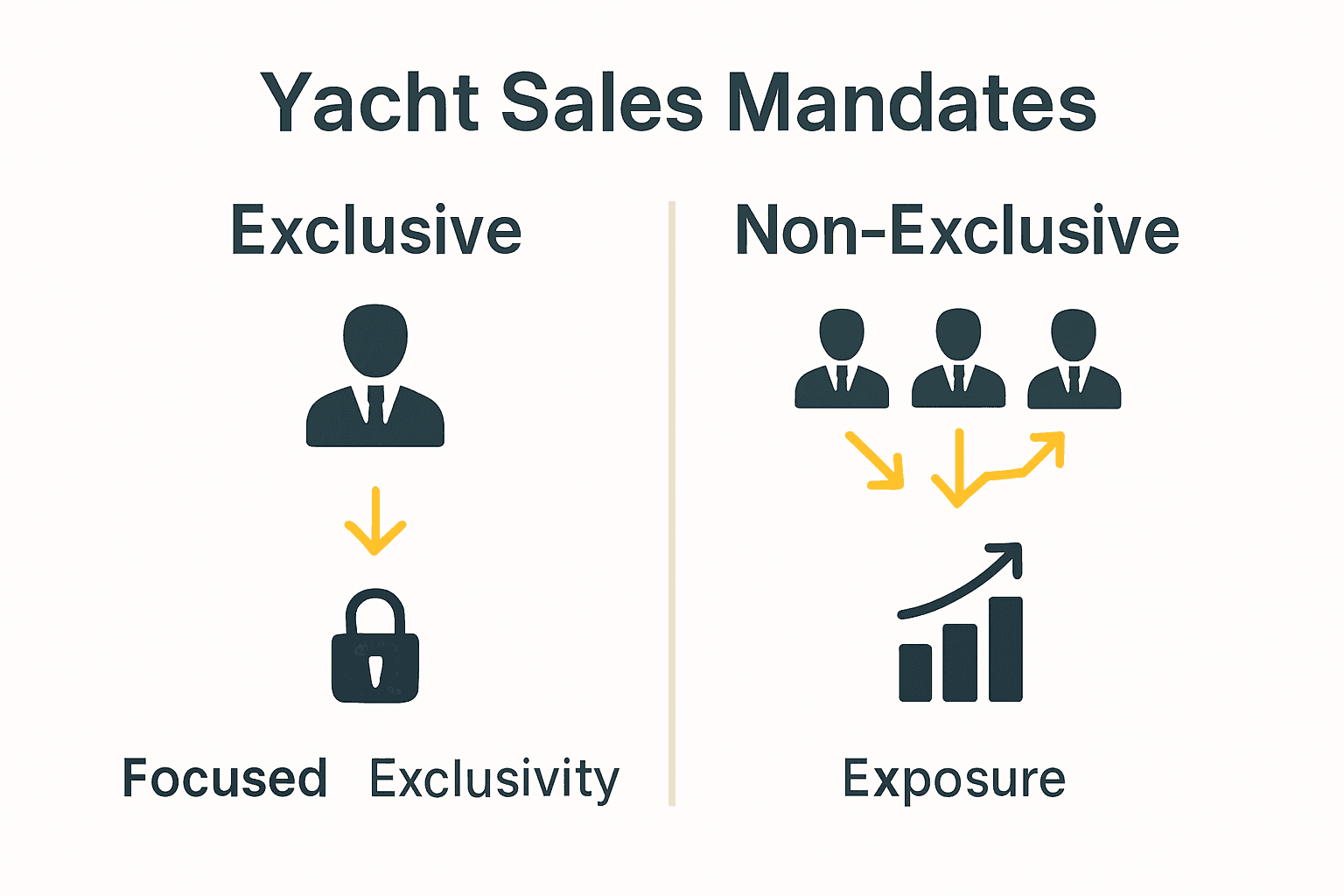
The selection between exclusive and non-exclusive mandates depends on various factors, including the yacht’s market value, the owner’s sales urgency, and the broker’s reputation and network.
 Yacht owners should carefully evaluate their specific goals and the potential benefits of each mandate type, considering aspects like commission rates, marketing capabilities, and the broker’s industry connections when making their decision. To gain deeper insights into selecting the right sales approach, check out our guide on yacht sales commission to help inform your decision-making process.
Legal Structure and Key Contract Elements
A yacht sales mandate agreement represents a complex legal document with multiple critical components that protect both the yacht owner and the broker. Barche Magazine emphasizes the importance of meticulously defining each contractual element to prevent potential disputes and misunderstandings.
The fundamental legal structure typically includes several key contract elements:
- Duration of Agreement: Specific timeframe for the sales mandate
- Commission Rates: Clearly defined percentage or fixed amount
- Broker’s Responsibilities: Detailed marketing and sales obligations
- Termination Clauses: Conditions for contract cancellation
- Confidentiality Provisions: Protecting sensitive yacht and owner information
According to The Law of Yachts & Yachting, the scope of a broker’s authority must be explicitly outlined to ensure transparency and legal protection. This includes defining the broker’s power to negotiate, accept offers, and represent the yacht owner’s interests. Yacht owners should pay particular attention to dispute resolution mechanisms and payment terms, which can significantly impact the overall sales process.
To ensure a comprehensive and legally sound agreement, it’s crucial to consult with a maritime legal professional who specializes in yacht sales contracts.
Check out our guide on yacht brokerage to gain deeper insights into navigating these complex legal arrangements and protecting your interests throughout the yacht sales process.
Rights, Duties, and Broker Obligations
In a yacht sales mandate, the relationship between the yacht owner and broker is governed by a complex set of rights and responsibilities. Barche Magazine highlights the critical nature of clearly defining these obligations to ensure a smooth and transparent sales process.
The broker’s primary duties typically include:
- Active and strategic marketing of the yacht
- Regular and detailed communication with the owner
- Professional negotiation of potential offers
- Conducting thorough market research
- Maintaining strict confidentiality
- Presenting accurate and comprehensive yacht information to potential buyers
According to The Law of Yachts & Yachting, brokers have a fiduciary duty to act in the best interest of the yacht owner. This means providing honest advice, avoiding conflicts of interest, and working diligently to secure the most favorable terms possible. Yacht owners, in turn, must cooperate by maintaining the vessel in sellable condition, providing necessary documentation, and allowing reasonable access for viewings and inspections.
To navigate these complex responsibilities effectively, yacht owners should consider partnering with a professional who understands the intricacies of maritime sales. For more insights into selecting the right broker, check out our guide on why hire a yacht broker to make an informed decision about your yacht sales strategy.
Financial Risks and Common Pitfalls to Avoid
Navigating the complex world of yacht sales mandates requires a keen understanding of potential financial risks and strategic vulnerabilities. Barche Magazine emphasizes that many financial complications arise from poorly defined contract terms and ambiguous commission structures.
The most significant financial risks in yacht sales mandates include:
- Unclear commission payment schedules
- Disputes over broker compensation
- Unexpected marketing or advertising expenses
- Potential legal costs from contract misunderstandings
- Market value fluctuations during sales process
- Hidden maintenance or preparation costs
According to The Law of Yachts & Yachting, yacht owners must conduct rigorous due diligence to mitigate financial risks. This involves thoroughly vetting potential brokers, understanding all contractual obligations, and maintaining transparent communication throughout the sales process. Misrepresentation of the yacht’s condition, incomplete documentation, or failure to comply with legal requirements can lead to significant financial losses.
To protect your investment and minimize potential pitfalls, yacht owners should consider consulting with maritime legal professionals and experienced brokers who understand the nuanced financial landscape of yacht sales. For more strategic insights into making informed decisions, explore our guide on why hire a yacht broker to navigate these complex financial considerations effectively.
Take Control of Your Yacht Sales with Confidence
Navigating the complexities of a yacht sales mandate demands clarity, strong negotiation skills, and a professional edge. Whether you are facing challenges around contract terms or seeking to maximize your broker’s impact, understanding the rights and duties involved is just the start. You need tools that streamline communication, simplify commission management, and amplify your sales pitch without disrupting your existing workflow.

Elevate your yacht sales strategy with ex.plo.re CRM. Our platform empowers yacht brokers and sellers with cutting-edge solutions designed to handle every detail from lead prospecting to closing. Gain access to expert talent, transparent workflows, and reliable tools tailored for yacht brokerage professionals. Don’t wait until a financial risk or misunderstanding slows your sales cycle. Explore how ex.plo.re can help you seal deals faster and smarter today by visiting our complete yacht brokerage guide or learn more about commission structures in our yacht sales commission guide.
Take the next step toward mastering your yacht sales mandate visit ex.plo.re CRM now and turn your yacht sales challenges into your greatest advantage.
Frequently Asked Questions
What is a yacht sales mandate agreement?
A yacht sales mandate agreement is a legal contract that establishes the relationship between a yacht owner and their broker, granting the broker exclusive rights to market and sell the yacht while outlining responsibilities, expectations, and compensation for both parties.
What are the types of yacht sales mandates?
Yacht sales mandates primarily come in two types: exclusive and non-exclusive. An exclusive mandate gives a single broker sole rights to market the yacht, while a non-exclusive mandate allows multiple brokers to market the vessel simultaneously.
What are the key elements included in a yacht sales mandate?
Key elements of a yacht sales mandate typically include the duration of the agreement, commission rates, broker responsibilities, termination clauses, and confidentiality provisions to protect the owner’s information.
How can yacht owners mitigate financial risks in a sales mandate?
Yacht owners can mitigate financial risks by thoroughly vetting potential brokers, understanding the contractual obligations, maintaining clear communication, and consulting with maritime professionals to avoid misunderstandings and potential legal costs.