

Most real estate agents still rely on cold calls and door knocking, convinced these methods remain the gold standard for client acquisition. Yet in 2026, social selling has quietly become the defining competitive advantage for top performers. This strategic approach transforms social media platforms into relationship-building engines that generate qualified leads, nurture prospects authentically, and close more sales. Understanding how to leverage social selling effectively separates power brokers from struggling agents in today’s digital-first real estate landscape.
Table of Contents
- Understanding The Role Of Social Selling In Real Estate
- Top Social Selling Platforms And Tools For Real Estate Professionals
- Effective Social Selling Strategies To Boost Client Acquisition And Sales
- How Social Selling Elevates Luxury Broker Success In 2026
- Explore Real Estate Prospecting Tools To Master Social Selling
- Frequently Asked Questions
Key takeaways
| Point | Details |
|---|---|
| Social selling builds authentic relationships | Using social platforms strategically creates trust and engagement that traditional prospecting cannot match |
| Lead generation improves dramatically | Agents integrating social selling see measurably higher conversion rates and referral volumes |
| Platform selection matters significantly | LinkedIn, Instagram, and Facebook each serve distinct audiences requiring tailored content approaches |
| Integration amplifies existing workflows | Social selling works best when combined with sales funnels, CRM systems, and content marketing |
| Luxury markets demand specialized tactics | High-end brokers must balance exclusivity with public engagement to maximize social selling results |
Understanding the role of social selling in real estate
Social selling represents a fundamental shift from interruption-based prospecting to permission-based relationship building. Instead of cold outreach that disrupts potential clients, you engage prospects where they already spend time, providing value before requesting anything in return. This approach aligns perfectly with how modern buyers research properties and evaluate agents online before making contact.
The distinction between social selling and traditional prospecting lies in timing and intent. Traditional methods push your message to strangers hoping for interest. Social selling positions you as a trusted resource, so clients seek you out when ready to transact. You share market insights, neighborhood updates, and property showcases that demonstrate expertise without demanding immediate action.
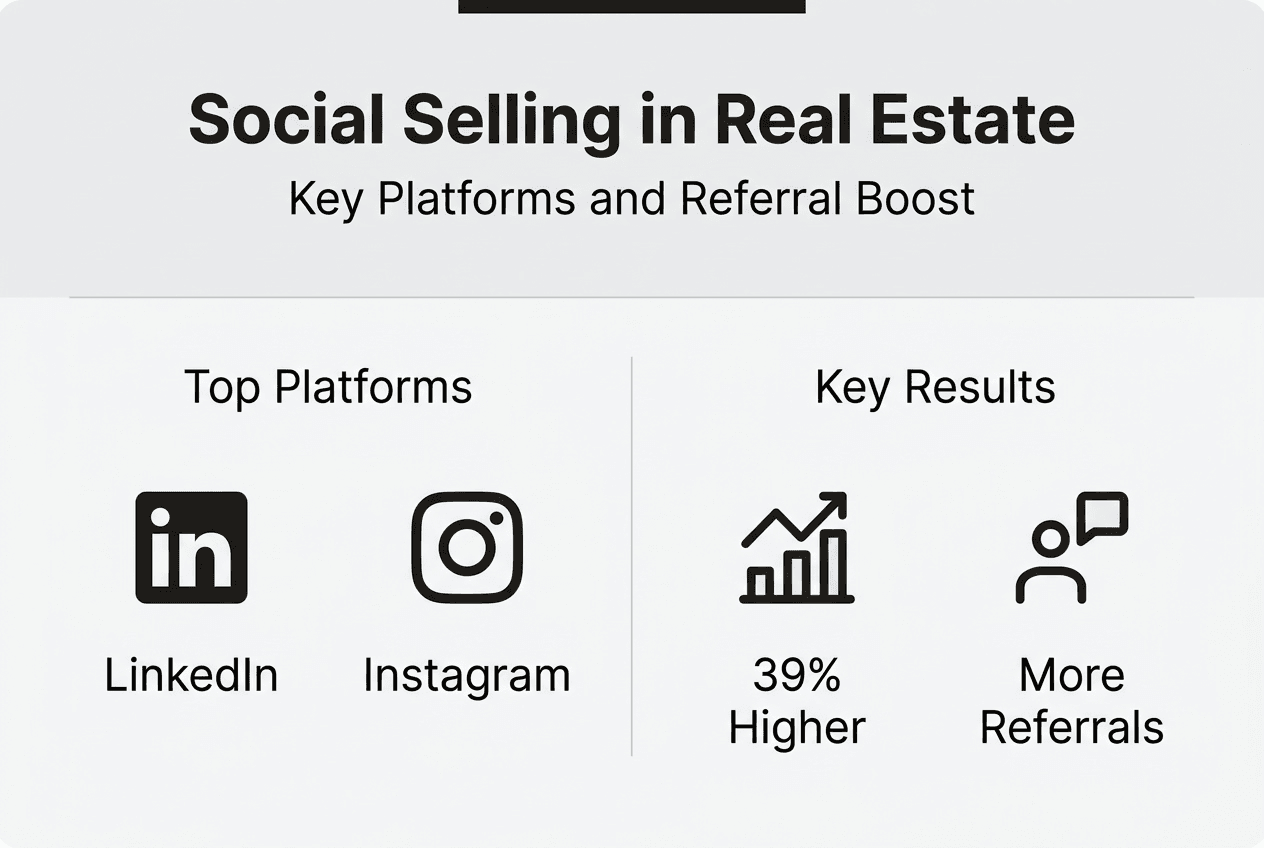
Real estate professionals using social selling techniques experience 39% higher referral rates compared to those relying solely on conventional methods. This dramatic improvement stems from the authentic connections formed through consistent, valuable social interactions. When you help someone understand local market trends or answer questions publicly, you build credibility that translates directly into client acquisition.
Current client behavior makes social selling essential rather than optional. Buyers now conduct extensive online research before contacting agents, reviewing social profiles, content quality, and community engagement. Your social presence serves as a 24/7 showcase of your expertise, personality, and market knowledge. Prospects form opinions about your capabilities based on what they observe across platforms.
Several factors make 2026 the pivotal year for social selling adoption:
- Algorithm changes favor authentic engagement over promotional content
- Video and interactive content formats dominate user attention
- Younger buyers entering the market expect digital-first interactions
- Privacy regulations make traditional lead capture more challenging
Pro Tip: Dedicate 30 minutes daily to genuine social engagement, commenting on local business posts, sharing neighborhood news, and answering real estate questions in community groups, before posting your own content.
The integration of social selling with digital marketing strategies creates a multiplier effect. Your social efforts amplify content marketing, email campaigns gain warmer audiences, and paid advertising performs better when prospects recognize your name from organic interactions. This synergy explains why top producers treat social selling as foundational infrastructure rather than an optional add-on.
Top social selling platforms and tools for real estate professionals
Selecting the right platforms determines your social selling success more than any other factor. Each network attracts distinct demographics, supports different content formats, and rewards specific engagement styles. Matching your target market to platform strengths prevents wasted effort and maximizes return on time invested.
LinkedIn, Instagram, and Facebook dominate social selling efforts for real estate agents, each serving unique purposes. LinkedIn excels for commercial real estate, investor relations, and professional networking. Instagram showcases visual property features and lifestyle branding. Facebook builds local community connections and facilitates neighborhood-specific engagement.

| Platform | Best For | Content Type | Engagement Style |
| — | — | — |
| LinkedIn | Commercial deals, investor networking | Long-form articles, market analysis | Professional commentary, industry insights |
| Instagram | Luxury properties, lifestyle branding | High-quality photos, short videos, Stories | Visual storytelling, behind-the-scenes content |
| Facebook | Local communities, first-time buyers | Community updates, live videos, events | Conversational, neighborhood-focused |
| YouTube | Educational content, virtual tours | Property walkthroughs, market updates | In-depth explanations, how-to guides |
| TikTok | Younger buyers, trend-driven content | Short-form video, quick tips | Entertaining, authentic, fast-paced |
Beyond social platforms, complementary tools streamline social selling execution. CRM systems track social interactions alongside traditional touchpoints, ensuring no prospect falls through gaps. Content scheduling platforms maintain consistent presence without requiring constant manual posting. Analytics tools identify which content types generate actual leads versus vanity metrics.
The most effective real estate professionals combine social platforms with specialized prospecting tools that automate repetitive tasks while preserving personal touches. These systems flag high-intent prospects based on social behavior, suggest optimal outreach timing, and track relationship progression from initial connection to closed transaction.
Platform-specific optimization requires understanding audience expectations:
- LinkedIn users expect data-driven insights and professional expertise
- Instagram followers want aspirational visuals and authentic personality
- Facebook communities value local knowledge and helpful responsiveness
- YouTube viewers seek comprehensive information and educational value
Pro Tip: Focus on mastering two platforms completely before expanding to others, as mediocre presence across many networks underperforms strong engagement on fewer channels.
Luxury agents benefit particularly from tailored social media approaches that balance exclusivity with accessibility. High-net-worth clients expect discretion yet appreciate behind-the-scenes glimpses that demonstrate market access and negotiation prowess. This delicate balance requires sophisticated content strategy and platform selection.
Effective social selling strategies to boost client acquisition and sales
Implementing social selling successfully requires systematic processes rather than sporadic activity. The most productive agents follow structured workflows that ensure consistent execution while allowing flexibility for authentic interactions. This disciplined approach transforms social selling from hopeful experimentation into predictable lead generation.
Your social selling process should follow these sequential steps:
- Identify target prospects through platform search tools and community participation
- Observe their content, interests, and stated needs before initiating contact
- Provide value first through helpful comments, relevant resources, or introductions
- Establish connection with personalized outreach referencing specific shared interests
- Nurture relationships through consistent, non-promotional engagement over weeks
- Introduce services naturally when prospects signal readiness through questions or life changes
- Maintain relationships post-transaction to generate referrals and repeat business
Integrating social selling with optimized sales funnels significantly improves conversion rates by ensuring prospects receive appropriate content at each awareness stage. Social platforms excel at top-of-funnel awareness and middle-funnel consideration. Your funnel should capture social prospects into email sequences that provide deeper value and guide toward consultation requests.
Content marketing amplifies social selling effectiveness when strategically coordinated. Create pillar content like comprehensive neighborhood guides or market analysis reports, then atomize these into social-friendly snippets. Each social post drives traffic back to substantial resources that capture contact information and demonstrate expertise depth.
Building trust virtually demands consistency, transparency, and genuine helpfulness. Prospects evaluate your reliability by observing how regularly you post, how quickly you respond to comments, and whether your advice proves accurate over time. This extended evaluation period means social selling requires patience and long-term commitment rather than quick-win mentality.
Common pitfalls sabotage social selling efforts:
- Treating social platforms as broadcast channels rather than conversation spaces
- Posting exclusively promotional content without providing educational value
- Ignoring comments and messages, signaling disinterest in actual engagement
- Copying competitor content instead of developing authentic voice and perspective
- Abandoning efforts after weeks without immediate results
Pro Tip: Schedule social selling activities in your calendar like client appointments, protecting this time from interruptions to ensure consistent execution regardless of daily chaos.
Successful social sellers track metrics that matter: conversation rates, profile visits from target demographics, inbound inquiries, and actual closed transactions attributed to social connections. Vanity metrics like follower counts and post likes mean nothing without corresponding business results. Review analytics monthly to identify which content types and engagement tactics generate real opportunities.
Combining social selling with proven marketing strategies and strategic networking approaches creates a comprehensive client acquisition system. Social selling feeds your pipeline with warm prospects while traditional methods provide immediate opportunities. This balanced approach insulates your business from algorithm changes or platform volatility.
How social selling elevates luxury broker success in 2026
Luxury real estate demands specialized social selling tactics that respect high-net-worth client expectations while leveraging digital platforms effectively. The challenge lies in maintaining exclusivity and discretion while building the public profile necessary for social selling success. Top luxury brokers navigate this tension by carefully curating what they share and how they engage.
Luxury brokers using tailored marketing tools see measurably higher engagement rates than those applying generic social strategies. These specialized approaches account for longer sales cycles, relationship-focused transactions, and the importance of reputation management in high-end markets. Your social presence must convey sophistication, market access, and proven negotiation capabilities.
Platform selection matters even more critically in luxury markets. Instagram and LinkedIn dominate luxury social selling, while Facebook plays a smaller role. Instagram showcases property aesthetics and lifestyle positioning. LinkedIn builds credibility with business owners, executives, and investors who comprise many luxury buyers. YouTube serves educational purposes, establishing thought leadership through market insights.
Luxury-focused social selling tactics include:
- Sharing market intelligence about exclusive neighborhoods and upcoming developments
- Highlighting unique property features and architectural details rather than prices
- Demonstrating relationships with luxury service providers, designers, and contractors
- Discussing investment potential and wealth preservation aspects of high-end real estate
- Maintaining aspirational yet authentic personal branding that resonates with affluent audiences
The data reveals significant engagement differences across luxury-focused platforms:
| Metric | Instagram | LinkedIn | Facebook | YouTube |
| — | — | — | — |
| Average engagement rate | 3.2% | 2.1% | 1.4% | 8.7% (views to likes) |
| Lead quality score | High | Very High | Medium | High |
| Sales cycle impact | Awareness | Consideration | Maintenance | Education |
| Content production cost | Medium | Low | Low | High |
Balancing exclusivity with engagement requires thoughtful content boundaries. Share enough to demonstrate expertise and market access without violating client confidentiality or diminishing property mystique. Focus on market trends, neighborhood evolution, and design inspiration rather than specific transaction details. This approach provides value while respecting privacy expectations.
Luxury clients expect immediate, professional responses to inquiries regardless of channel. Your social selling infrastructure must include notification systems and response protocols ensuring no high-value prospect waits hours for acknowledgment. This responsiveness signals the white-glove service level they anticipate throughout the transaction.
Integrating luxury brokerage strategies with social selling creates competitive advantages in crowded high-end markets. Your social presence differentiates you from competitors relying solely on traditional luxury marketing methods. Younger luxury buyers particularly expect sophisticated digital engagement from their brokers.
Developing a systematic prospecting workflow specifically for luxury leads ensures social connections progress toward transactions. This workflow should identify high-intent signals like repeated property views, engagement with investment content, or connections with luxury service providers. These behaviors indicate readiness for personalized outreach beyond generic social interaction.
Explore real estate prospecting tools to master social selling
Transforming social selling insights into consistent results requires the right technology infrastructure supporting your efforts. Modern prospecting tools integrate seamlessly with social platforms, automating data capture while preserving the authentic interactions that make social selling effective. These systems track prospect behavior across channels, ensuring you engage at optimal moments with relevant messaging.

The most successful agents combine social selling expertise with strategic prospecting approaches that systematically move prospects from initial awareness to closed transactions. This integration prevents social connections from languishing without follow-through while ensuring your prospecting efforts benefit from the trust built through social engagement. Technology bridges these activities, creating a unified client acquisition system.
Explore specialized lead generation tools designed specifically for real estate professionals who recognize that social selling represents just one component of comprehensive marketing strategy. These platforms amplify your social efforts by capturing leads, nurturing relationships, and providing analytics that optimize your approach over time.
Frequently asked questions
What is social selling and why is it crucial for real estate agents?
Social selling uses social media networks to build authentic relationships with prospects that eventually convert into clients and closed transactions. Unlike traditional advertising or cold outreach, this approach provides value first, establishing trust before requesting business. It aligns perfectly with how modern clients research agents and properties online, making your expertise visible during their decision-making process. The shift toward social media marketing reflects fundamental changes in buyer behavior that make social selling essential for sustainable growth.
Which social media platforms work best for luxury real estate brokers?
LinkedIn and Instagram dominate luxury real estate social selling due to their user demographics and content formats. LinkedIn connects you with high-net-worth professionals, business owners, and investors who comprise much of the luxury market. Instagram showcases property aesthetics and lifestyle positioning that resonates with affluent buyers. YouTube serves educational purposes, establishing thought leadership through market analysis. Facebook plays a smaller role in luxury markets but remains valuable for local community connections. Success requires platform-specific content strategies that respect luxury client expectations while building your public profile.
How can I integrate social selling with my existing sales funnel effectively?
Use social platforms for top-of-funnel awareness and initial relationship building, then capture prospects into email sequences that provide deeper value and guide toward consultation requests. Social selling data should inform which content prospects receive at each funnel stage based on their demonstrated interests and engagement patterns. Incorporate social proof and community engagement into your nurture sequences, showing prospects how you help others. The key lies in aligning social activities with funnel objectives so each interaction moves prospects closer to transaction readiness rather than existing as isolated activities.
What common mistakes should real estate agents avoid in social selling?
The biggest mistake involves treating social platforms as broadcast channels, posting promotional content without genuine engagement or value provision. Agents also fail by ignoring platform-specific norms, using identical content across networks despite different audience expectations. Inconsistent activity undermines trust, as prospects evaluate your reliability through posting frequency and response times. Another critical error involves measuring vanity metrics like follower counts instead of tracking actual business results. Finally, many agents abandon social selling prematurely, expecting immediate returns from activities that require months to generate momentum. Learn from proven marketing strategies that emphasize consistency and authentic value delivery over quick promotional wins.