

Overview: Local prospecting — focusing outreach on neighborhood- and radius-based targets — delivers higher response rates, faster sales velocity, and lower cost-per-lead than broad, non-geographic campaigns. HubSpot reports that 88% of mobile local searches result in a call or business visit within one day. Face-to-face contact in a shared neighborhood compresses the trust-building timeline that remote outreach stretches across months. The single action to start: pick one ZIP code or subdivision, run a six-week circle prospecting loop, and measure CPL and pipeline per drive-hour at the end of it.
- Higher response rate: Local contacts recognize your name, your signs, and your recent sales — cold becomes warm fast.
- Faster sales cycle: Proximity means same-day meetings instead of week-long scheduling chains.
- Lower CPL: Tight geographic targeting eliminates wasted spend on out-of-market impressions.
- Referral lift: A win on one block generates introductions two streets over.
Pro Tip: Before you dial a single number, pull the last 90 days of sales data for your target ZIP. Knowing the exact address, price, and days-on-market of every recent transaction gives you a conversation opener no out-of-area agent can match.
Key Takeaways
Local prospecting delivers measurably higher response rates, faster pipeline, and lower CPL than broad campaigns — and the six-week circle loop is the fastest way to prove it in your market.
| Point | Details |
|---|---|
| Start with one ZIP | Pick one neighborhood with recent sales velocity and work it intensively before expanding. |
| Six-touch cadence wins | Mail, call, door-knock, follow-up, digital, and second mail in six weeks outperforms any single channel. |
| Track CPL and pipeline per drive-hour | These two metrics tell you which neighborhoods are worth owning and which to drop. |
| Compliance is non-negotiable | Scrub DNC lists, confirm TCPA consent, and check local solicitation permits before every campaign. |
| Plo automates the follow-up | Plo’s CRM tagging, call tracking, and AI ad tools keep your local campaign running between field visits. |
Table of Contents
- What are the real benefits of local prospecting for agents?
- Which local prospecting methods actually work for agents?
- How to build a six-week local prospecting campaign from scratch
- Scripts and templates you can use today
- How do you measure the success of a neighborhood campaign?
- What U.S. compliance rules apply to local prospecting?
- Common mistakes that kill local prospecting results
- Does local prospecting actually work? A sample six-week workflow
- What most agents get wrong about local prospecting
- Plo helps you run local prospecting campaigns faster
- Sources
What are the real benefits of local prospecting for agents?
The advantages of local marketing are not abstract. Each one maps directly to a number you already track.
Higher response and engagement. Neighbors respond to agents who know their street. When your opener references a specific sale two blocks away, you are no longer a cold caller — you are a local expert. Targeted local campaigns deliver 3–5x higher conversion rates compared with broad-market campaigns when properly targeted and automated. That multiplier alone justifies the geographic focus.
Faster sales velocity. Proximity breeds trust and compresses the sales cycle because local prospects can meet quickly and share the same regional context. A homeowner who sees your sign on their morning walk is already pre-sold on your market presence before you knock. Scheduling friction drops to near zero when you are already in the neighborhood.
Lower cost per lead. Broad digital campaigns bleed budget on impressions that will never convert. Shifting to local-first strategies focuses resources on high-intent nearby prospects and builds a defensible local market position that compounds over time. Your CPL falls not because you spend less, but because every dollar targets someone who could realistically list or buy within your drive radius.
Referral and network effects. Close one deal in a neighborhood and the social proof travels. Neighbors talk. A yard sign, a sold sticker, and a thank-you note to adjacent homeowners can generate two or three organic inquiries without a single additional ad dollar. This is the local lead generation advantage. That broad campaigns simply cannot replicate.
Local authority and brand recognition. Owning hyperlocal mindshare is a long-term asset. When every homeowner in a subdivision associates your name with the last three sales, you become the default call when they are ready to move. That recognition is built through consistent presence, not one-time blasts.
Stat to know: 88% of mobile local searches result in a call or visit within 24 hours — meaning your digital and offline local touchpoints are working together even when you cannot see it.
Which local prospecting methods actually work for agents?
Think of this as your tactical menu. No single channel wins alone — the combination is what converts.
-
Circle calling. Phone outreach to homeowners within a defined radius of a recent sale or new listing. Pros: fast, scalable, measurable. Cons: requires clean data and Do Not Call compliance. Use case: Call the 50 nearest neighbors within 48 hours of a listing going live. Your opener writes itself: “I just listed 412 Maple — do you know anyone thinking of making a move?”
-
Door-knocking. In-person visits to targeted addresses. Pros: highest trust-building channel; face-to-face contact is irreplaceable. Cons: time-intensive; weather and HOA rules can limit access. Use case: Hit 20 doors per morning in a dense subdivision after a sold announcement. Leave a one-page market update if no one answers.
-
Targeted direct mail. Postcards, market reports, or “just sold” mailers to a defined carrier route or custom list. Pros: tangible, low competition in many markets, easy to brand. Cons: slower feedback loop; 4–6 week lag before response. Use case: Send a “neighborhood market snapshot” postcard to 200 homes in your farm area monthly for three consecutive months before expecting measurable lift.
-
Hyperlocal digital ads. Geofenced or ZIP-targeted ads on Google, Meta, or programmatic platforms. Pros: precise targeting, fast deployment, trackable. Cons: requires budget discipline and creative refresh. Use case: Run a ZIP-targeted Facebook ad featuring a recent sold price to homeowners aged 35–65 in your farm area. Local SEO and hyperlocal ad targeting compound each other when your Google Business Profile is current.
-
Open-house follow-up. Structured outreach to attendees and neighbors within 48 hours of an open house. Pros: warm leads who self-selected by showing up. Cons: volume is limited to event attendance. Use case: Text or call every sign-in within 24 hours; door-knock the six nearest neighbors the same afternoon.
-
Event and sponsorship outreach. Sponsoring a local school fundraiser, farmers market booth, or neighborhood association meeting. Pros: builds community credibility and offline signals that now feed AI and search visibility. Cons: slower ROI; harder to attribute directly. Use case: Sponsor a neighborhood block party and collect contact info through a door-prize drawing.
Combining channels multiplies results. A mail piece lands on Tuesday. You door-knock Thursday. You follow up by phone the following Monday. That three-touch sequence in eight days outperforms any single channel by a wide margin — and it costs less per conversion than a sustained digital-only campaign.
How to build a six-week local prospecting campaign from scratch
Step 1: Choose your target area
Use these signals to select a neighborhood worth farming:
- Recent sales velocity — three or more closed transactions in the past 90 days signals an active market.
- New listings and expireds — a cluster of expireds suggests seller frustration and opportunity.
- FSBO activity — owners trying to sell themselves are warm prospects for a value conversation.
- Permit activity — renovation permits often precede a listing decision by 6–18 months.
- Density rule — target a loop you can work in under three miles. Dense 3-mile loops increase in-person meetings and pipeline without adding headcount, according to field sales case studies.
Step 2: Build your message framework
Every touchpoint needs a hyperlocal hook. Three quick templates:
- Phone opener: “Hi [Name], this is [Your Name] with [Brokerage]. I just sold [Address] for [Price] — one of the strongest sales in [Neighborhood] this quarter. I wanted to reach out to neighbors first because demand is still high. Do you have any plans to make a move in the next year?”
- Door-knock opener: “Hi, I’m [Name] — I just listed/sold [Address] down the street. I’m reaching out to neighbors personally because I have buyers still looking in this area. Do you have two minutes?”
- Direct mail blurb: “[Neighborhood] Market Update: [X] homes sold in the last 90 days at an average of $[Price]. If you’ve been thinking about your options, now is a strong time to talk. Call or text [Number] for a no-obligation conversation.”
Step 3: Set your cadence
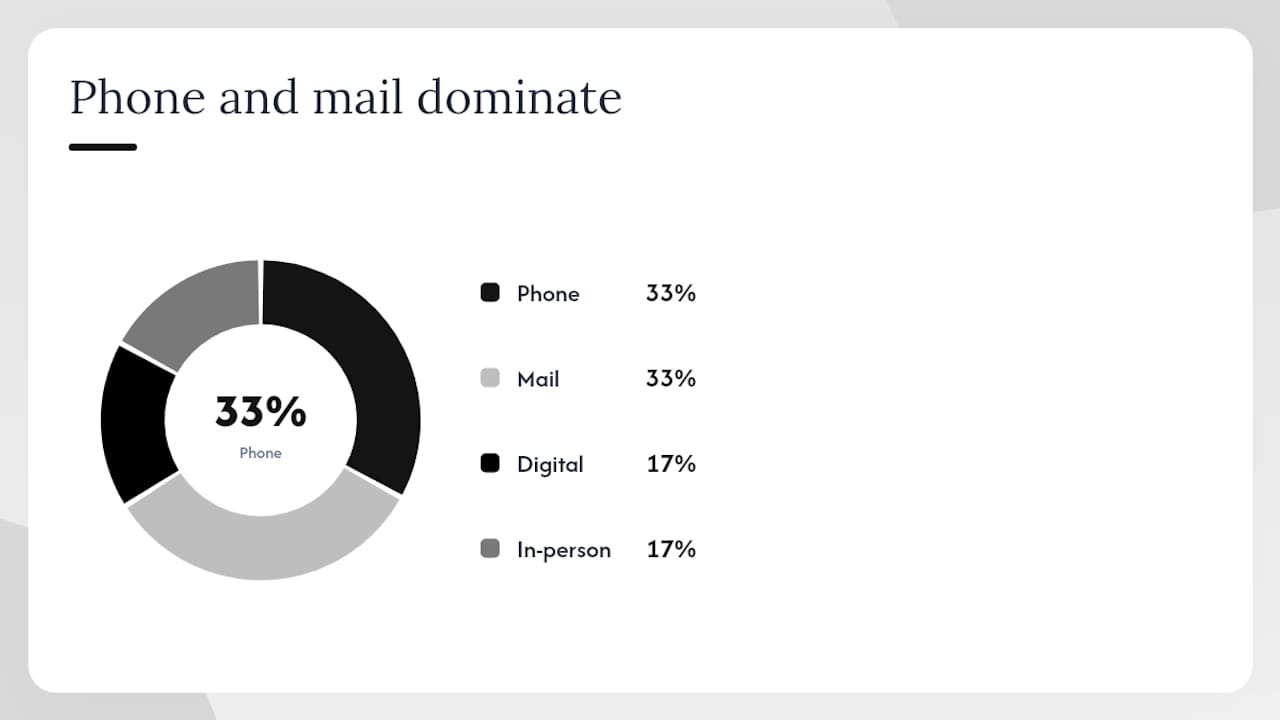
| Week | Touch Type | Channel | Goal |
|---|---|---|---|
| 1 | Market update mailer | Direct mail | Awareness |
| 2 | Circle calls (50 contacts) | Phone | Engagement |
| 3 | Door-knock (20 doors) | In-person | Trust |
| 4 | Follow-up call to non-answers | Phone | Pipeline |
| 5 | Hyperlocal social ad | Digital | Retargeting |
| 6 | Personal note or second mailer | Mail/text | Conversion |
Step 4: CRM integration
Tag every contact with neighborhood name, touch date, and channel. Set a pipeline stage for “local farm — contacted” and a follow-up task auto-trigger at 14 days. Use UTM parameters on all digital links so you can attribute web traffic to specific campaigns. Automating follow-up notifications raises conversion probability by ensuring no lead sits cold while you are in the field.
Scripts and templates you can use today
Clean, short, and personalized beats long and polished every time. Here are ready-to-adapt versions for each channel.
Phone openers:
- Recent sale hook: “Hi [Name], I just sold [Address] — actually got [X] offers in [Y] days. I’m calling neighbors first because I still have buyers looking. Is this a good time?”
- Market data hook: “Hi [Name], values in [Neighborhood] are up compared to last year. I wanted to make sure you had the latest numbers before making any decisions about your home.”
- FSBO approach: “Hi, I saw your home is for sale — I respect that. I actually have a buyer who may be a fit. Would you be open to a quick conversation?”
- Expired listing: “Hi [Name], I noticed your home came off the market. I have a different approach that’s been working in [Neighborhood] — would you be willing to hear it?”
Voicemail template: “Hi [Name], this is [Your Name] with [Brokerage]. I just sold [Address] nearby and wanted to share what that means for your home’s value. I’ll send you a quick market update — feel free to call or text me at [Number] anytime.”
Door-knock intro: “Hi, sorry to interrupt — I’m [Name], I work this neighborhood. I just [listed/sold] [Address] and wanted to personally reach out to neighbors. I have a one-page market update if you’d like it. No pitch, just information.”
Direct mail blurb: “Your neighbor at [Address] just sold for $[Price]. [Neighborhood] is moving fast. If you’re curious what your home is worth right now, I’ll give you a straight answer — no obligation. [QR code or phone number].”
Social message (DM or comment): “Congrats on [local event/school news]! I work in [Neighborhood] and love seeing the community thrive. If you ever want to know what homes are doing around here, happy to share — no strings.”
Personalization triggers to use:
- A specific recent sale address and price
- Local school name or district news
- A nearby permit or renovation you noticed
- A local business opening or closing
- A shared neighborhood group or HOA
Pro Tip: Reference validated, current contact data before every outreach session. Stale numbers and wrong names kill credibility faster than any bad script.
How do you measure the success of a neighborhood campaign?
Set your KPIs before week one, not after. Here is what to track and what to expect.
| Metric | Definition | Target Range (6-week loop) |
|---|---|---|
| Response rate | Contacts who engaged / total contacts | 8% |
| Meeting rate | Meetings booked / contacts engaged | 20–35% |
| CPL | Total campaign spend / leads generated | Varies by market |
| Pipeline per drive-hour | Pipeline value added / hours in field | Track weekly |
| Referral rate | Referrals received / closed transactions | 1+ per close |
| ZIP penetration | Contacts reached / total households in loop | 30–50% in 6 weeks |
Simple CPL example: If you spend $400 on mailers, $150 on digital ads, and invest 12 hours of your time at a $75/hour opportunity cost, your total campaign cost is $1,450. If that generates 10 leads, your CPL is $145. Compare that against your average commission and the math becomes obvious fast.
Pipeline per drive-hour is the metric most agents ignore. If you spend four hours working a loop and add $120,000 in potential pipeline, that is $30,000 per drive-hour. Tracking this weekly tells you which neighborhoods are worth your time and which are not.
Stat to note: Properly targeted local campaigns can deliver 3–5x higher conversion rates versus broad-market outreach — which means your CPL math improves dramatically when geography is tight.
Tracking checklist:
- CRM tags: neighborhood name, touch type, date, outcome
- UTM parameters on every digital link
- Dedicated call-tracking number per campaign
- Weekly dashboard: response rate, meetings booked, pipeline added
- Automation rules to trigger follow-up tasks within minutes of a new inquiry
What U.S. compliance rules apply to local prospecting?
Running outreach without knowing the rules is a fast way to generate fines instead of leads. Here is the essential checklist.
Do Not Call (DNC) and TCPA basics:
- The FTC’s National Do Not Call Registry applies to residential phone numbers. Scrub your call list against it before every campaign.
- The Telephone Consumer Protection Act (TCPA) restricts automated calls and texts to cell phones without prior express written consent. Manual calls to cell numbers have different rules — know the distinction.
- Real estate agents are not exempt from TCPA simply because the call is about a property. If you are using a dialer or sending mass texts, consult a compliance attorney before launch.
- Calling hours under the FTC rule: 8 AM to 9 PM local time, Monday through Saturday. Some states (Florida, for example) have stricter windows.
Local solicitation rules:
- Many municipalities require a solicitation permit for door-to-door canvassing. Check your city or county clerk’s office before knocking.
- HOA communities often restrict or prohibit door-to-door solicitation. Verify before entering a gated or managed community.
- “No Soliciting” signs carry legal weight in some jurisdictions. Respect them — the reputational cost of ignoring one outweighs any lead.
Pre-outreach compliance checklist:
- Scrub phone list against the National DNC Registry (updated monthly)
- Confirm TCPA consent status for any text or automated outreach
- Verify local solicitation permit requirements for your target municipality
- Check HOA rules for any planned door-knocking area
- Review your state’s real estate commission guidelines on advertising and solicitation
This is general information, not legal advice. Confirm current rules with the FTC, your state’s real estate commission, or a qualified attorney before launching any outreach campaign.
Common mistakes that kill local prospecting results
The failure modes are predictable. Most agents hit the same three walls.
Spray-and-pray geography. Targeting five different neighborhoods simultaneously with thin coverage in each produces nothing. Depth beats breadth. Work 200 homes in one ZIP intensively before expanding.
Inconsistent cadence. One mailer and two calls is not a campaign — it is a test with no statistical validity. The six-touch cadence in the table above exists because single-touch outreach rarely converts. Commit to the full sequence before judging results.
Stale data. Wrong numbers and outdated addresses waste time and damage your sender reputation. Validate contact lists before every campaign cycle.
No personalization. “Dear Homeowner” is a delete. Reference the street, the recent sale, the school district, or the local business — something that proves you are not a bot.
Best practices that actually move the needle:
- Route your door-knocking by detour cost, not lead score alone. A “good enough” prospect two doors down creates more efficient pipeline per drive-hour than a perfect prospect across town.
- Use an inside-sales assistant or SDR to confirm appointments before you drive. This preserves your geographic efficiency and fills your calendar before you leave the office.
- A/B test your message hook first (recent sale vs. market data vs. buyer demand), then test touch order, then timing. Change one variable per test cycle.
- Audit your metrics every Friday. If response rate drops below 5% by week three, adjust the hook — not the channel.
- Building a consistent local brand across every touchpoint — mail, door, digital, social — compounds recognition faster than any single high-spend tactic.
Partnerships accelerate credibility. A referral relationship with a local mortgage broker, title company, or home inspector gives you warm introductions and co-marketing opportunities. Sponsoring a neighborhood association event or a school fundraiser builds the offline credibility that now amplifies digital and AI-driven discovery. These are not soft tactics — they are lead-generation infrastructure.
Does local prospecting actually work? A sample six-week workflow
The evidence is consistent. Field sales teams operating in dense geographic loops markedly increase contact rates and pipeline without adding headcount. Redefining territories into 3-mile loops has tripled in-person meeting cadence in documented practitioner examples.
Here is a realistic six-week benchmark for a single-agent campaign targeting 200 households:
Expected six-week totals: 4–12 meetings, $500K–$1.2M in potential pipeline, CPL well below a broad digital campaign at comparable spend.
If results are under expectations by week four: Tighten the geographic loop, swap the message hook, and add one more in-person touch. Do not abandon the channel — adjust the variable.
If results exceed expectations: Expand the loop by one adjacent block and increase call volume before adding budget. Efficiency first, then scale.
For international context on local lead tactics in other markets, this practical guide for property agents offers a useful comparison point — the core loop logic translates even when the market differs.
What most agents get wrong about local prospecting
There is a version of this conversation that goes: “I tried farming a neighborhood for three months and got nothing.” And almost every time, the diagnosis is the same — they sent two mailers, made a handful of calls, and declared the strategy broken.
Local prospecting is not a campaign. It is a market position you build and defend. The agents who own a neighborhood did not win it in six weeks. They showed up consistently for six months, then six more, until their name became synonymous with that ZIP code. The six-week loop in this article is a test — a way to validate that a neighborhood is worth owning before you commit to it long-term.
What I find underestimated is the compounding effect of local authority. Your first sold sign generates mild curiosity. Your fifth generates calls. Your tenth generates referrals before you even knock. The math of local brand recognition is exponential, not linear — and most agents quit before the curve bends.
The other thing worth saying plainly: technology does not replace the relationship. CRM automation, AI ad creation, and call tracking are force multipliers. They make a good local prospecting strategy faster and more measurable. But no tool replaces a genuine conversation with a neighbor who trusts you because you know their street. Use the tools to get more of those conversations, not to avoid them.
Plo helps you run local prospecting campaigns faster
Running a local prospecting campaign manually — juggling call lists, mailers, CRM tags, and ad creative — eats hours that should go toward client conversations. Plo gives real estate agents a single platform where local client acquisition workflows run automatically: CRM tagging by neighborhood, call tracking per campaign, AI-generated ad creative for ZIP-targeted campaigns, and template libraries for phone, mail, and social outreach.
The difference is operational. Instead of manually logging every door-knock and scheduling follow-up calls from a spreadsheet, your pipeline updates in real time and your next touch triggers automatically. Agents using Plo spend more time in the field and less time in the back office. If you want to see how it fits your current prospecting workflow, book a demo call or explore the top prospecting tools for real estate to find the right setup for your market.
Sources
These sources back the claims in this article and are worth bookmarking for ongoing reference.
- HubSpot — Local marketing
- U.S. Chamber — Benefits of local marketing
- AI Journal — Local prospecting: the B2B strategy everyone’s overlooking