

TL;DR:
- Effective follow-up builds trust and increases referral and repeat business in real estate.
- A CRM, segmented lists, personalized templates, and automation are key to a successful follow-up system.
- Relevance, timing, and value-driven messaging are more impactful than volume or generic outreach.
You spend hours generating leads, hosting showings, and crafting the perfect pitch. Then a prospect goes quiet, and you move on. Sound familiar? The hard truth is that 64% of buyers and sellers choose agents they already know or were referred to, which means your follow-up process is either building that relationship or killing it. Most lost deals aren’t lost at the showing. They’re lost in the silence that follows. This guide gives you a practical, step-by-step system to follow up consistently, add real value at every touchpoint, and convert more leads into loyal, referring clients.
Table of Contents
- Why effective follow-up is the backbone of real estate success
- What you need to set up an efficient follow-up system
- Step-by-step: How to execute a winning follow-up process
- Measuring, troubleshooting, and optimizing your follow-up results
- What most agents get wrong about follow-up and what actually works
- Scale your follow-up with the right real estate tools
- Frequently asked questions
Key Takeaways
| Point | Details |
|---|---|
| Value drives engagement | Each follow-up should provide useful insights, not just reminders. |
| Systematize your outreach | Using tools and templates streamlines consistent communication. |
| Personalize each touchpoint | Tailored messages outperform generic check-ins every time. |
| Track and adjust results | Regularly evaluating your metrics helps optimize your follow-up process. |
Why effective follow-up is the backbone of real estate success
Let’s be direct: your follow-up strategy is your business development engine. Without it, even the best leads go cold and the warmest referrals slip away to a competitor who simply stayed in touch. The numbers back this up. 64% of real estate clients work with agents they already know or were referred to by someone they trust. That statistic should reshape how you think about every interaction you have after the first meeting.
Understanding why follow-up matters goes beyond just closing a single deal. Every client you serve has a lifetime value that extends far beyond one transaction. Think about it: a buyer you helped in 2022 is likely thinking about upgrading in 2026. If you haven’t stayed in contact, someone else gets that call. And when their coworker asks for an agent recommendation, you’re not the name that comes to mind.
Here’s what poor follow-up actually costs you:
- Lost repeat business: Clients forget you exist if you disappear after closing.
- Missed referral revenue: One satisfied client can generate 3 to 5 referrals over a lifetime.
- Wasted lead spend: Every dollar you put into lead generation is undermined by weak follow-up.
- Damaged brand perception: Inconsistent outreach signals disorganization to potential clients.
| Follow-up behavior | Business impact |
|---|---|
| No follow-up after closing | Client forgets your name within 12 months |
| Generic check-in emails | Low open rates, no engagement |
| Value-driven, personalized outreach | Higher referral rates and repeat business |
| Consistent, scheduled touchpoints | Stronger trust and top-of-mind awareness |
Consistent, value-driven communication is what separates top producers from average agents. When you show up regularly with relevant market updates, neighborhood insights, and personalized property matches, you’re not just staying in touch. You’re positioning yourself as the expert they’ll call when they’re ready to move. Effective lead nurturing isn’t about volume. It’s about relevance and timing.
With the stakes established, let’s break down what you actually need in place before you start following up.
What you need to set up an efficient follow-up system
Before you send a single follow-up message, you need the right infrastructure. Jumping into outreach without a system is how agents end up with scattered notes, forgotten leads, and inconsistent communication. Here’s what your foundation should look like.
1. A CRM or organized tracking system
A customer relationship management tool (CRM) is your command center. It stores contact details, logs every interaction, and reminds you when to follow up next. If you’re just starting out, even a well-structured spreadsheet works. The key is having one place where every lead and client lives. A solid follow-up workflow setup starts with knowing exactly who you need to contact and when.

2. Segmented lead lists
Not all leads are equal. Separate your contacts into clear categories:
- Active buyers searching now
- Active sellers preparing to list
- Past clients who may refer or return
- Cold leads who showed interest but went quiet
- Sphere of influence including friends, family, and colleagues
Segmentation allows you to send the right message to the right person. A first-time buyer doesn’t need the same content as a luxury seller.
3. Message templates that add real value
Every touchpoint should provide value: market updates, curated listings, local neighborhood data, or helpful resources. Create a library of templates for email, text, and phone scripts. Customize them for each segment so they feel personal, not automated.
4. Automation and scheduling tools
Use scheduling tools to plan follow-up sequences in advance. Automation handles the routine touchpoints so you can focus your personal energy on high-value conversations. A well-built email follow-up sequence can run in the background while you’re out at showings.
| Tool type | Purpose | Example use case |
|---|---|---|
| CRM | Contact management and reminders | Track every lead interaction |
| Email automation | Scheduled value-driven campaigns | Monthly market update sequences |
| Text/SMS platform | Quick, personal touchpoints | Day-after showing check-in |
| Calendar/scheduler | Booking and reminder management | Set next follow-up call date |
Pro Tip: Build your template library before you need it. When you’re busy, you’ll thank yourself for having a ready-made market update email or a post-showing text script that takes 30 seconds to personalize and send.
Now that you’re equipped, it’s time to put your system into action with a clear sequence.
Step-by-step: How to execute a winning follow-up process
Having the tools is one thing. Using them in the right order, at the right time, is what drives results. Here’s a repeatable five-step process you can start using today.
-
Initial outreach within 24 hours. After any first contact, showing, or inquiry, send a personalized message the same day or the next morning. Reference something specific from your conversation. This sets the tone and shows you’re attentive.
-
Set your next touchpoint immediately. Don’t wait to feel inspired. After every interaction, log the next follow-up date in your CRM. Whether it’s three days or two weeks out, schedule it now so it doesn’t fall through the cracks.
-
Send value-driven messages on a consistent cadence. Space your outreach thoughtfully. For active leads, every three to five days works well. For past clients, monthly or quarterly is appropriate. Value-driven communication increases engagement and builds the kind of trust that generates referrals organically.
-
Personalize check-ins with relevant content. A seasonal home maintenance tip, a just-sold comparable in their target neighborhood, or a new listing that matches their criteria. These messages show you’re thinking about them specifically, not just blasting a list.
-
Close every message with a next step or value offer. Never leave a follow-up open-ended. Ask a question, invite a response, or offer something useful. “Would you like me to pull comps for that street?” is far more effective than “Just checking in!”
“The agents who win long-term aren’t the ones with the most leads. They’re the ones who show up consistently with something worth saying.”
Sample message ideas by type:
- Market update: “Homes in [neighborhood] sold 8% faster last month. Want a quick breakdown of what that means for your search?”
- Property match: “A new listing just hit that fits your criteria. Want me to schedule a showing this week?”
- Seasonal tip: “Spring is the hottest time to list. Here are three things you can do now to maximize your sale price.”
For deeper guidance on improving follow-ups after showings, timing and tone matter as much as content. Review your email follow-up tips regularly to keep your messaging sharp.
Execution is just the start. How do you know if your follow-up is actually working and where can you adjust?
Measuring, troubleshooting, and optimizing your follow-up results
You can’t improve what you don’t measure. Tracking the right metrics turns your follow-up system from a guessing game into a predictable growth engine.
Key metrics to track:
| Metric | What it tells you |
|---|---|
| Response rate | Are your messages relevant and timely? |
| Meeting set rate | Is your outreach converting to real conversations? |
| Deals closed from follow-up | What percentage of revenue traces back to nurturing? |
| Referral conversion rate | Are past clients actively sending you new business? |
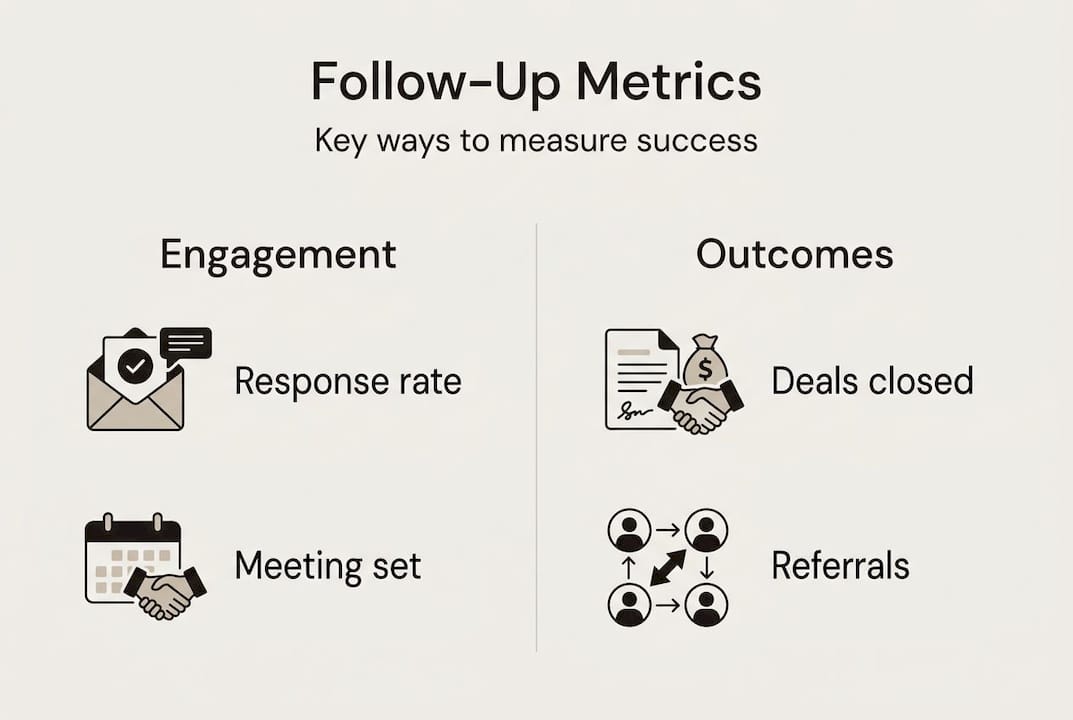
Since 64% of transactions trace back to prior relationships or referrals, your referral conversion rate is one of the most telling indicators of follow-up health. If that number is low, your outreach isn’t building enough trust or staying top of mind.
Common mistakes to fix:
- Generic messages: “Just checking in” emails get ignored. Every message needs a specific reason for reaching out.
- Too much frequency: Reaching out daily signals desperation, not professionalism. Space it out.
- No next step: If your message doesn’t invite a response or offer something actionable, it’s a dead end.
- Ignoring cold leads: Many agents abandon leads after two or three attempts. The reality is that some buyers take six to twelve months to convert. Consistent lead nurturing strategies keep you in the running.
Adjust your approach based on what the data shows. If response rates drop, refresh your templates. If meeting set rates are low, tighten your calls to action. Treat your follow-up system like a living process, not a set-it-and-forget-it routine.
Bringing it all together, here’s what many agents miss when following conventional wisdom.
What most agents get wrong about follow-up and what actually works
Here’s the uncomfortable truth: most agents confuse activity with effectiveness. They send more emails, make more calls, and automate more sequences. Then they wonder why their conversion rates stay flat. The problem isn’t volume. It’s relevance.
We’ve seen agents with half the outreach frequency outperform high-volume competitors simply because every message they sent meant something. A personalized note referencing a client’s specific neighborhood concern beats five generic check-ins every time. Automation is a powerful tool, but it’s a multiplier of quality, not a replacement for it.
The biggest missed opportunity we see is agents failing to leverage market insights in their follow-up. You have access to data your clients don’t. Use it. When you share a sharp observation about local inventory trends or a pricing shift in a target zip code, you become indispensable. That’s how you build a referral pipeline that runs on its own.
Focus on quality lead generation paired with value-first messaging, and your follow-up becomes a brand asset, not just a sales tactic.
Scale your follow-up with the right real estate tools
You now have the framework. The next step is building the infrastructure that makes it repeatable and scalable without burning you out.

At ex.plo.re, we give real estate agents and brokers the top real estate prospecting tools and sales automation capabilities to run a smarter follow-up process every day. From automated sequences to personalized outreach at scale, our platform amplifies the work you’re already doing. Stop losing deals to silence. Explore what a purpose-built CRM for real estate can do for your pipeline, and let our team and technology help you close more with less friction.
Frequently asked questions
How often should I follow up with real estate leads?
Follow up within 24 hours initially, then every few days with value-driven updates. As rapport builds, you can space out effective follow-up sequences to weekly or monthly without losing momentum.
What should every follow-up message in real estate include?
Every message should provide value through market insights, personalized listings, or helpful resources, rather than a generic check-in that adds nothing to the conversation.
How do I know if my follow-up process is working?
Track response rates, deal conversions, and referral requests. Since 64% of transactions come from repeat or referral clients, a rising referral rate is one of the clearest signs your process is building real trust.
What’s the biggest mistake agents make in follow-ups?
Relying on impersonal, generic messages is the most common failure. Value-driven communication that speaks to a client’s specific situation consistently outperforms high-volume, low-effort outreach.