

Losing 80% of your leads because you didn’t respond in five minutes sounds extreme, but it’s reality for agents without a nurturing system. Effective lead nurturing transforms initial interest into closed deals by building relationships through timely, personalized communication. This guide walks you through immediate follow-up tactics, multi-channel engagement strategies, and smart segmentation to convert more leads faster in 2026.
Table of Contents
- Introduction To Real Estate Lead Nurturing
- Prerequisites: What You Need Before Starting
- Step 1: Immediate Follow-Up—The Critical First Contact
- Step 2: Multi-Channel Communication For Engagement
Key takeaways
| Point | Details |
|---|---|
| Lead nurturing builds relationships through consistent, personalized contact, unlike lead generation which focuses solely on acquiring new prospects. | This ongoing engagement increases conversion rates and strengthens client loyalty. |
| Responding within five minutes boosts conversion chances by 80%, making immediate follow-up your highest-impact action. | Set up CRM alerts and automated workflows to ensure no lead waits. |
| Multi-channel communication combining email, phone, SMS, and social media increases engagement by 60% compared to single-channel approaches. | Personalize messages per channel while maintaining consistent brand voice. |
| Segmented nurturing drives 40% higher conversions by tailoring content to lead behavior and readiness stages. | Use CRM tools to automate segmentation based on engagement patterns. |
| Tracking engagement rates, conversion timelines, and client satisfaction scores reveals bottlenecks and guides strategy improvements. | Consistent nurturing delivers 5x ROI within three months when properly measured. |
Introduction to real estate lead nurturing
Lead nurturing in real estate means maintaining regular, valuable contact with prospects from initial inquiry through closing and beyond. It’s about building trust through educational content, property updates, market insights, and personalized check-ins that keep you top of mind. This differs fundamentally from lead generation, which focuses on attracting new prospects through advertising and outreach.
The benefits are substantial. Nurtured leads show higher engagement rates, respond more positively to your communications, and convert at dramatically better rates than cold contacts. Agents who nurture leads consistently build stronger client relationships that generate referrals and repeat business. Without nurturing, even high-quality leads go cold as competitors who follow up faster win their business.
Common challenges include maintaining consistent communication across dozens or hundreds of leads, personalizing messages at scale, and knowing when to adjust your approach based on lead behavior. Many agents struggle with timing, sending too many messages too quickly or waiting too long between contacts. Others rely entirely on automation, losing the personal touch that builds real connections.
Successful nurturing requires:
- Systematic follow-up schedules that maintain contact without overwhelming leads
- Personalized content addressing each lead’s specific interests and property preferences
- Multi-channel presence meeting leads where they prefer to communicate
- Tracking systems that reveal which leads need immediate attention versus long-term nurturing
- Flexibility to adjust strategies based on lead responses and engagement patterns
Prerequisites: what you need before starting
Before implementing nurturing strategies, you need foundational tools and knowledge. A reliable CRM with automation capabilities is non-negotiable. Your CRM should handle contact management, automated email sequences, task reminders, and lead scoring to prioritize hot prospects. Without these features, you’ll spend hours on manual tasks instead of building relationships.
Clean, segmented contact data determines nurturing success. Import all leads with complete information including contact preferences, property interests, price range, timeline, and initial contact source. Remove duplicates and verify phone numbers and email addresses before launching campaigns. Dirty data wastes resources sending messages to invalid contacts.
Understanding lead qualification and buyer readiness stages helps you tailor communication appropriately. Not every lead is ready to buy immediately. Some are researching neighborhoods, others are comparing agents, and a few are ready to view properties today. Your CRM should categorize leads by stage so you can send relevant content.
Essential prerequisites include:
- CRM software with email automation, SMS integration, and task management
- Clean contact database with verified information and no duplicates
- Lead scoring system identifying hot, warm, and cold prospects
- Multi-channel communication capabilities including phone, email, SMS, and social media
- Content library with property listings, market reports, neighborhood guides, and educational resources
| Tool/Skill | Basic Level | Advanced Level |
|---|---|---|
| CRM Platform | Simple contact manager with email | Full automation with scoring, segmentation, workflows |
| Data Quality | Manual entry, occasional cleanup | Automated validation, real-time duplicate detection |
| Lead Scoring | Intuitive judgment | Behavioral tracking, engagement metrics |
| Content Assets | Property listings only | Full library: guides, videos, market reports |
Step 1: Immediate follow-up—the critical first contact
Responding within five minutes increases conversion chances by 80%. This isn’t optional for serious agents. Every minute you delay gives competitors opportunity to capture that lead. Set up instant notifications on your phone and computer when new leads arrive through your website, social media, or lead generation platforms.

Configure your CRM to trigger automatic text or email acknowledgments within seconds of lead capture. These messages should thank the prospect for their interest, confirm you received their inquiry, and promise personal follow-up within minutes. Then actually call or text them personally within that five-minute window while their interest peaks.
Your initial contact script should:
- Introduce yourself and confirm you’re responding to their specific inquiry
- Ask one qualifying question about their property preferences or timeline
- Offer immediate value like sending comparable listings or scheduling a viewing
- Set clear next steps with specific dates and times for follow-up
- Ask their preferred communication channel for future contact
Pro Tip: Save templated responses for common inquiry types but personalize each message with the prospect’s name and specific property or neighborhood they asked about. This combines speed with personal touch.
Balance automation and personalization by using templates for structure while customizing key details. Your automated acknowledgment buys you time to research the lead and prepare a personalized follow-up. Check their inquiry source, review properties they viewed on your website, and look up their neighborhood of interest before making that first call. This preparation makes your rapid response feel thoughtful, not robotic.
Step 2: multi-channel communication for engagement
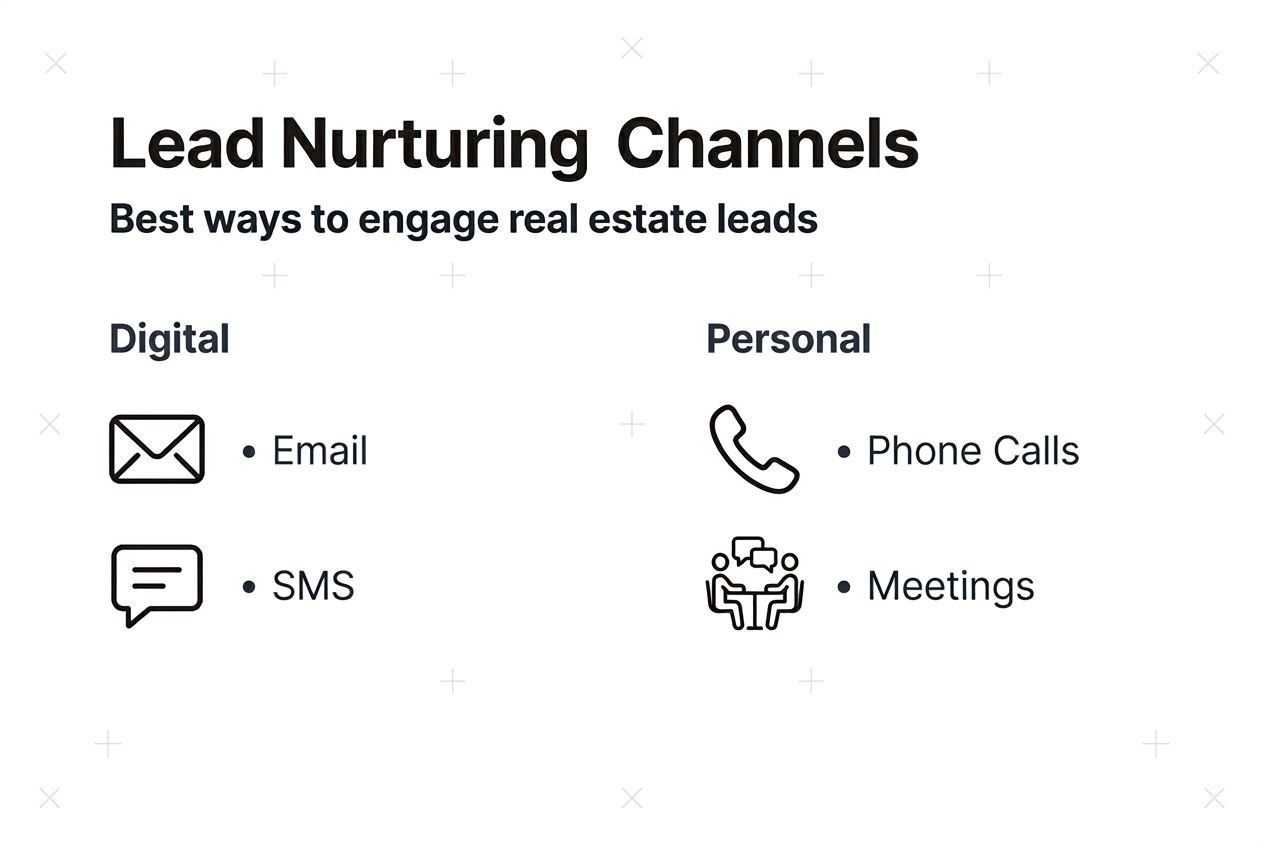
Relying on a single communication channel cuts your engagement potential in half. Combining email, phone, SMS, and social media increases lead engagement by 60% compared to email-only approaches. Different leads prefer different channels, and using multiple touchpoints keeps you visible without feeling repetitive.
Email works best for detailed content like market reports, property comparisons, and neighborhood guides. Phone calls build personal connection and allow real-time conversation about concerns or questions. SMS excels for quick updates, appointment reminders, and time-sensitive information like new listings matching their criteria. Social media lets you stay visible through valuable content while maintaining a less formal presence.
Personalize messages per channel while maintaining consistent core information. Your email might include a detailed property analysis with photos and statistics. Your follow-up text could say