

Every real estate agent faces the challenge of turning mountains of market data into a compelling sales advantage. Accurate market reports are powerful tools for understanding local property trends, but widespread economic misconceptions often distort how these reports are interpreted. By mastering the truth behind economic misconceptions and analyzing diverse report types, professionals unlock relevant insights that drive smarter strategies and attract high-net-worth clients.
Table of Contents
- Market Reports Defined And Common Myths
- Essential Types For Real Estate Brokers
- Key Metrics And How Reports Are Built
- Using Reports To Enhance Sales Pitch
- Common Mistakes And Maximizing Value
Key Takeaways
| Point | Details |
|---|---|
| Understanding Market Reports | Market reports transform raw data into actionable insights, highlighting trends and patterns in real estate. |
| Dispelling Common Myths | Real estate professionals must correct misconceptions about market reports to make informed decisions. |
| Types of Market Reports | Different report types, such as pricing and demographic analyses, guide brokers in strategic decision-making. |
| Data Presentation Strategies | Effective communication of market data enhances client trust and elevates sales pitches through storytelling. |
Market Reports Defined and Common Myths
Real estate market reports are strategic documents that transform raw data into actionable intelligence for agents seeking competitive advantage. These comprehensive analyses synthesize complex market trends, property valuations, and buyer behavior patterns into clear, digestible insights that drive smarter sales strategies.
Understanding market reports requires dispelling several pervasive myths that can mislead even experienced professionals. Economic misconceptions often shape misguided perspectives about market dynamics, potentially undermining an agent’s decision-making process. Let’s explore the most common misunderstandings:
-
Market Reports Aren’t Just Numbers
- They represent nuanced narrative about local real estate ecosystems
- Provide contextual understanding beyond raw statistical data
- Reveal underlying economic and demographic shifts
-
Common Market Report Myths
- Reports predict exact future prices (False)
- Only relevant for large metropolitan areas (Incorrect)
- Can be generalized across different regions (Inaccurate)
Critical Interpretation Factors for market reports include understanding the data source, collection methodology, and specific geographic boundaries. Government support and social structures significantly influence market evolution, which means reports must be viewed through a comprehensive lens that considers broader economic contexts.
Agents who treat market reports as dynamic, evolving tools rather than static documents will gain significant strategic advantages. Successful professionals dig deeper, asking critical questions about data trends, understanding local economic drivers, and interpreting reports within the broader market narrative.
Pro tip: Always cross-reference multiple market reports and validate data points from diverse sources to ensure comprehensive market understanding.
To clarify how common misconceptions differ from report realities, see the summary table below:
| Myth About Market Reports | Actual Role of Reports | Strategic Impact |
|---|---|---|
| Predict exact prices | Identify trends and ranges | Enables informed pricing tactics |
| Only for big cities | Applicable to all regions | Supports localized strategies |
| Universal across markets | Custom to each locale | Avoids misinformed decisions |
Essential Types for Real Estate Brokers
Real estate market reports are strategic tools that provide critical insights for brokers navigating complex market landscapes. Brokers benefit from reports analyzing multiple key dimensions that inform sophisticated decision-making strategies across different market segments.
Understanding the various types of market reports enables agents to develop targeted, data-driven approaches that maximize their competitive edge. These comprehensive analyses can be categorized into several essential types:
-
Pricing and Valuation Reports
- Detailed property value trends
- Comparative market analyses
- Price per square foot evaluations
- Neighborhood-specific pricing insights
-
Demographic and Economic Reports
- Population growth patterns
- Income distribution analyses
- Employment rate trends
- Migration and relocation patterns
-
Geographic and Transactional Reports
- Regional market performance
- Supply and demand dynamics
- Inventory levels and turnover rates
- Seasonal market fluctuations
Critical Market Intelligence involves synthesizing these diverse report types to create a holistic understanding of local and regional real estate ecosystems. Successful brokers don’t just collect data – they interpret complex market signals, identifying emerging opportunities before they become apparent to competitors.
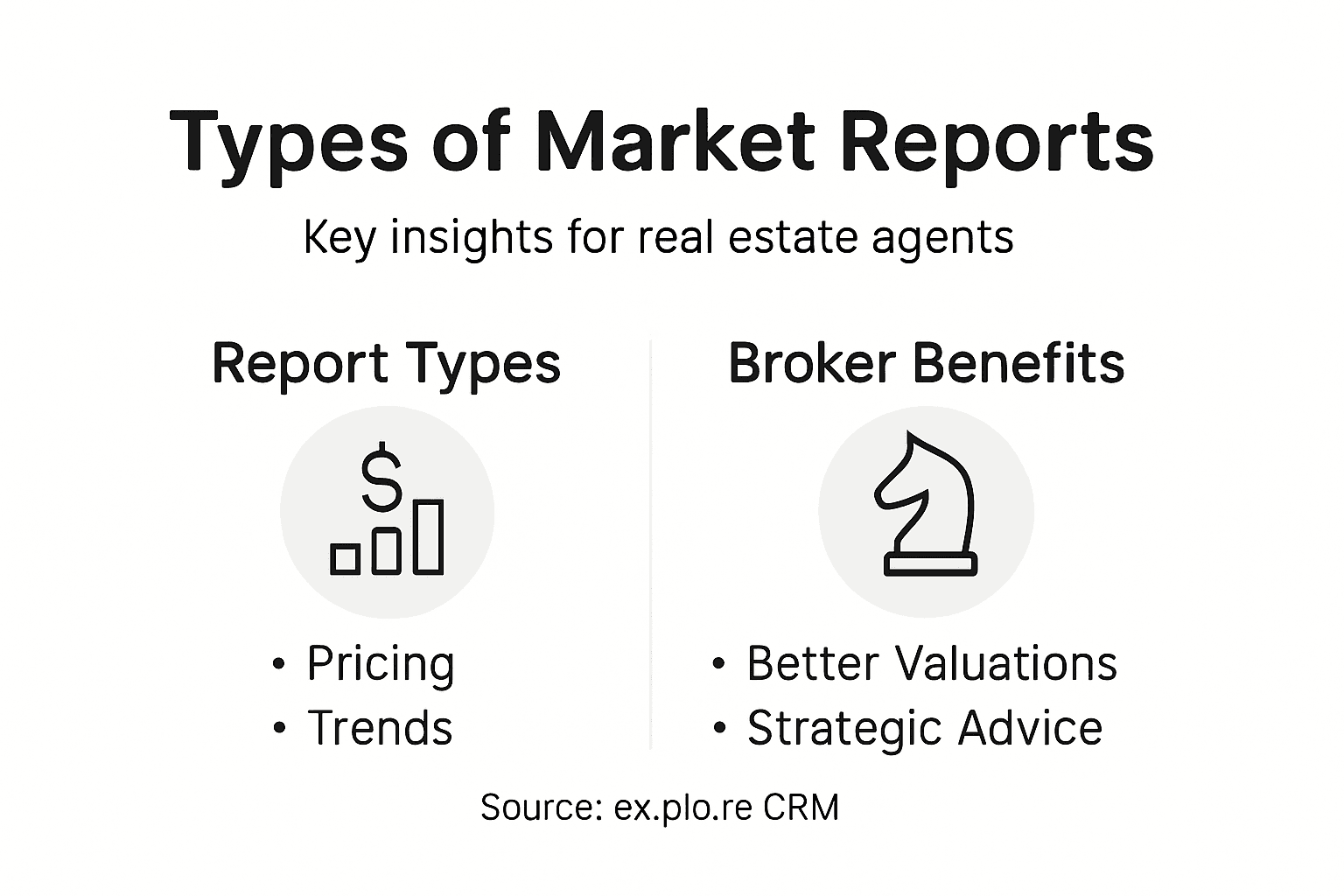
Each report type serves a unique purpose, providing specialized insights that contribute to a comprehensive market strategy. By mastering these analytical tools, real estate professionals can transform raw data into actionable intelligence that drives strategic decision-making.
Pro tip: Develop a systematic approach to analyzing market reports, cross-referencing multiple sources to validate trends and uncover nuanced market insights.
Below is a quick reference table outlining core report types and how each benefits brokers:
| Report Type | Main Focus | Broker Advantage |
|---|---|---|
| Pricing/Valuation | Current and past pricing data | Enables precise client guidance |
| Demographic/Economic | Population, jobs, income shifts | Reveals hidden demand drivers |
| Geographic/Transactional | Regional inventory, transactions | Optimizes territory strategies |
Key Metrics and How Reports Are Built
Building comprehensive market reports requires a strategic approach to tracking essential sales performance metrics. Real estate professionals must understand the intricate process of collecting, analyzing, and interpreting data that transforms raw information into actionable market intelligence.
Market reports are constructed using multiple layers of critical metrics that provide a holistic view of real estate dynamics. These metrics can be categorized into several key dimensions:
-
Activity Metrics
- Number of property showings
- Client consultation frequency
- Marketing outreach efforts
- Lead generation performance
-
Pipeline Performance Metrics
- Lead conversion rates
- Average deal size
- Sales cycle length
- Stage-specific conversion rates
-
Revenue and Outcome Metrics
- Closed transaction volume
- Average commission per transaction
- Client retention rates
- Year-over-year revenue growth
Advanced Reporting Techniques involve sophisticated data integration that goes beyond simple number tracking. Successful brokers develop nuanced reporting systems that connect individual metrics to broader market trends, creating predictive models that anticipate market shifts before they become obvious.

The most effective market reports synthesize quantitative data with qualitative market insights, providing a comprehensive narrative that helps agents make strategic decisions. By understanding how these metrics interrelate, real estate professionals can develop more targeted, responsive business strategies.
Pro tip: Invest in robust data tracking systems that allow seamless integration of multiple metric types, enabling more comprehensive and insightful market analysis.
Using Reports to Enhance Sales Pitch
Transforming market data into a compelling sales narrative requires strategic storytelling that goes beyond raw numbers. Yacht sales techniques demonstrate powerful data-driven approaches for leveraging market insights to create persuasive client presentations.
Successful real estate agents understand that market reports are more than statistical collections – they’re powerful communication tools that can dramatically elevate a sales pitch. These reports provide credible, objective evidence that builds client trust and positions the agent as a knowledgeable market expert:
-
Data-Driven Storytelling Techniques
- Translate complex metrics into clear narratives
- Highlight local market trends
- Demonstrate deep market understanding
- Connect statistical insights to client goals
-
Client Confidence Builders
- Showcase comprehensive market knowledge
- Provide transparent, current market information
- Demonstrate predictive market intelligence
- Build perceived expertise through data
-
Strategic Presentation Approaches
- Use visual graphics and charts
- Create personalized market snapshots
- Align data with specific client needs
- Develop targeted recommendation frameworks
Contextual Reporting transforms dry statistics into compelling client conversations. By interpreting market data through the lens of individual client objectives, agents can create more resonant, persuasive presentations that go beyond traditional sales pitches.
The most effective agents view market reports as dynamic storytelling tools, using data to craft narratives that speak directly to client aspirations, concerns, and investment potential. This approach transforms complex information into meaningful, actionable insights.
Pro tip: Customize market report presentations to each client’s specific goals, using targeted data points that directly address their unique real estate objectives.
Common Mistakes and Maximizing Value
Mistakes in market report communication can dramatically undermine an agent’s professional credibility. Real estate professionals must navigate complex data presentation challenges to ensure their market insights remain compelling, accurate, and genuinely valuable to potential clients.
Understanding the most prevalent pitfalls helps agents refine their reporting strategy and deliver more impactful market intelligence:
-
Critical Reporting Mistakes
- Overloading reports with technical jargon
- Presenting outdated or stale data
- Failing to contextualize statistical information
- Neglecting visual presentation clarity
-
Data Interpretation Errors
- Misrepresenting market trends
- Drawing premature conclusions
- Overlooking nuanced regional variations
- Ignoring contradictory data points
-
Client Communication Weaknesses
- Using complex statistical language
- Not tailoring reports to specific client needs
- Presenting raw data without narrative
- Lacking actionable recommendations
Strategic Report Optimization requires a holistic approach that transforms raw data into meaningful, digestible insights. Successful agents view market reports as dynamic storytelling tools that bridge complex market information and client understanding.
Maximizing report value means creating a narrative that speaks directly to client goals, translating abstract market trends into concrete, personalized insights that demonstrate professional expertise and market mastery.
Pro tip: Develop a standardized yet flexible reporting template that allows for quick customization while maintaining a consistent, professional presentation style.
Unlock the Full Potential of Market Reports to Drive Your Sales Success
Navigating the complexities of real estate market reports can be overwhelming. The challenge is transforming raw data into clear, actionable insights that truly impact your sales strategy and client confidence. If you struggle with interpreting pricing trends, demographic shifts, or geographic data—or if you want to master the art of storytelling through market intelligence you are not alone. Many agents face these exact hurdles highlighted in the article “Market Reports Driving Sales Success for Agents.”
At ex.plo.re CRM, we specialize in empowering real estate agents like you to overcome these obstacles. Our platform streamlines your prospecting and sales cycles by integrating powerful tools designed for analyzing critical sales metrics, enhancing your market report presentations, and refining your sales pitch to create a compelling client narrative. Experience the difference with support from a talented team dedicated to amplifying your work and transforming market confusion into clear client value.
Imagine confidently guiding each client with personalized, data-driven insights while saving time on manual data analysis. This urgent advantage lets you stand out as a market expert and close deals faster. Don’t let common reporting mistakes or outdated approaches hold you back from becoming the power broker you aspire to be.
Elevate your sales approach now and turn market data into your greatest asset.

Start your journey today with ex.plo.re CRM and discover how our cutting-edge tools and expert support can transform your market reports into powerful sales machines. Take control of your success and connect with the clients who need your expertise most.
Frequently Asked Questions
What are real estate market reports?
Real estate market reports are strategic documents that analyze complex market trends, property valuations, and buyer behavior patterns to provide actionable intelligence for agents.
How do I interpret a market report effectively?
To interpret a market report effectively, understand the data sources, collection methodologies, and geographic boundaries. Always look for broader economic contexts and trends that may affect market dynamics.
What are the common myths about market reports?
Some common myths include the belief that reports can predict exact future prices, that they are only relevant for large metropolitan areas, and that they can be generalized across different regions without considering local specifics.
What types of market reports are essential for real estate brokers?
Essential types of market reports include pricing and valuation reports, demographic and economic reports, and geographic and transactional reports, each providing unique insights that aid in strategic decision-making.