
Bold moves on social media start with deep audience insights. For every american agent or yacht broker, knowing your customer goes far beyond simple trends. When over 60 percent of global buyers discover properties and luxury assets online, missing the mark on targeting means losing real opportunities. This guide uncovers strategic steps for defining your ideal client, optimizing your presence, and designing content that earns lasting engagement—no matter if you are in Canada, France, or the United States.
Table of Contents
- Step 1: Define Your Target Audience And Local Market
- Step 2: Set Up And Optimize Professional Social Media Profiles
- Step 3: Create Engaging Content Tailored For Buyers And Sellers
- Step 4: Implement Targeted Advertising And Outreach Campaigns
- Step 5: Measure Results And Refine Your Marketing Strategy
Quick Summary
| Key Insight | Explanation |
|---|---|
| 1. Define Your Target Audience | Understanding your local market and client demographics helps tailor your marketing strategies effectively. |
| 2. Optimize Social Media Profiles | Create professional and well-optimized profiles on key platforms to position yourself as a trusted real estate expert. |
| 3. Craft Engaging Content | Develop content that addresses the specific needs and motivations of both buyers and sellers to build trust and engagement. |
| 4. Implement Targeted Advertising | Utilize platform-specific tools to create targeted ad campaigns that attract your ideal client segments. |
| 5. Measure and Refine Your Strategy | Regularly track key performance metrics to understand your effectiveness and adjust strategies for better results. |
Step 1: Define your target audience and local market
Successfully marketing yourself on social media starts with understanding exactly who you want to reach. This step will help you pinpoint the specific local audience most likely to work with you as a real estate professional.
Begin by examining your local market through a strategic lens. Advanced audience identification techniques reveal that modern targeting goes far beyond basic demographics. Your goal is to create a comprehensive profile of potential clients in your specific geographic region.
Start by gathering data on your local real estate market. Analyze characteristics like median home prices, popular neighborhoods, typical buyer age ranges, and income levels. Look at recent sales records and local economic indicators. Consider factors such as job markets, school districts, and community development plans that might influence home buying decisions. Create a detailed spreadsheet tracking these insights to build a nuanced understanding of who might be searching for properties in your area.
Platform specific research becomes crucial here. Social media audience segmentation allows you to understand not just who your audience is but where they are most active online. Different social platforms attract different demographics, so match your audience research with platform usage patterns. For instance LinkedIn might connect you with professionals relocating for work, while Instagram could help you reach younger first time homebuyers.
Here’s a comparison of major social platforms for real estate marketing:
| Platform | Typical Audience | Best Used For |
|---|---|---|
| Professionals, relocators | Networking, sharing expertise | |
| Millennials, young buyers | Visual listings, stories | |
| Families, local clients | Community engagement, events | |
| YouTube | Broad, how-to seekers | Home tours, market insights |
Map out specific buyer personas representing your ideal clients. Give them names, backstories, and detailed characteristics. Are they young professionals? Retirees looking to downsize? Growing families seeking more space? Understanding these personas will dramatically improve your social media content strategy.
Pro Tip: Create a living document of your target audience insights that you update quarterly to stay current with market shifts and emerging demographic trends.
Step 2: Set up and optimize professional social media profiles
Establishing a powerful online presence requires strategic social media profile creation that positions you as a trusted real estate professional. This step will transform your digital footprint from amateur to authoritative.
Begin by selecting platforms that align with your target audience. Professional online presence matters more than being everywhere at once. Focus on networks where your potential clients are most active. For real estate agents, this typically means LinkedIn for professional networking, Instagram for visual property showcasing, and Facebook for local community engagement.
Each profile needs meticulous optimization. Use a high quality professional headshot that represents your personal brand professionally. Choose a background image that highlights local real estate or your specific market area. Craft a compelling bio that speaks directly to your ideal client demographic. Highlight your specialties like luxury homes, first time buyer support, or specific neighborhood expertise. Include relevant certifications, years of experience, and a clear value proposition that distinguishes you from other agents.

Consider your profile as a dynamic marketing tool. Regularly update your content with market insights, property listings, community events, and local real estate trends. Use consistent branding across platforms including color schemes, professional imagery, and a unified messaging tone. Add contact information that makes it easy for potential clients to reach you including a professional email, phone number, and business website link.
Track your profile performance using built in analytics tools. Pay attention to engagement rates, follower growth, and which types of content generate the most interaction. Be prepared to adjust your strategy based on these insights.
Pro Tip: Create a content calendar that helps you plan and schedule posts consistently across your chosen social media platforms to maintain a professional and engaging online presence.
Step 3: Create engaging content tailored for buyers and sellers
Building a social media content strategy that resonates with potential clients requires understanding their unique motivations and pain points. Your goal is to craft compelling narratives that transform followers into qualified real estate leads.
Social media content strategies demand a nuanced approach that speaks directly to different audience segments. Buyers and sellers have distinctly different information needs. For potential home buyers, create content that addresses their anxieties and aspirations. Share first time homebuyer guides, neighborhood spotlight videos, mortgage affordability calculators, and local market trend insights. Demonstrate your expertise by breaking down complex real estate processes into digestible visual content.
For home sellers, develop content that highlights your marketing prowess and local market knowledge. Showcase successful sale stories, provide home staging tips, share comparative market analysis insights, and explain how your professional network maximizes property exposure. Use before and after property transformation posts, client testimonial videos, and data visualizations that prove your ability to secure optimal sale prices.
Your content should balance educational value with personal branding. Authentic storytelling in real estate marketing means showing the human side of your professional journey. Share personal stories about why you love your local community, feature local business spotlights, and create behind the scenes glimpses of your real estate workflow. Use high quality images, short video clips, and interactive content like polls or Q&A sessions to boost engagement.
Utilize a mix of content formats to keep your audience interested. Alternate between infographics, short video tours, market update reels, client success stories, and live streaming open house events. Track which types of content generate the most interaction and continuously refine your approach based on audience feedback and analytics.
Pro Tip: Develop a consistent content mix of 70% value driven educational posts 20% personal branding and 10% direct sales promotions to maintain follower interest and trust.
Step 4: Implement targeted advertising and outreach campaigns
Mastering social media advertising requires strategic precision and a deep understanding of your local real estate market. Your goal is to transform passive scrolling into active lead generation by creating laser focused campaigns that speak directly to potential buyers and sellers.
Targeted social media advertising demands a sophisticated approach to audience segmentation. Begin by leveraging platform specific targeting tools that allow you to narrow your audience based on demographics location income level homeownership status and specific real estate interests. Facebook and Instagram offer powerful tools to create custom audiences that match your ideal client profile. Design separate ad sets for first time homebuyers luxury property investors downsizing retirees and other distinct market segments.
Develop multiple ad variations that speak to different client motivations. Use compelling visuals that showcase local properties market insights and your professional expertise. Create video content that walks through neighborhood highlights provides quick market updates and demonstrates your unique value proposition. Implement retargeting strategies that reconnect with users who have previously engaged with your content ensuring your brand remains top of mind.
Social media advertising research emphasizes the importance of continuous testing and optimization. Allocate a modest budget to experiment with different ad formats audience targeting and messaging. Track key performance indicators like click through rates conversion rates and cost per lead. Be prepared to quickly pivot your strategy based on real time data and audience response.
Consider developing a multi channel outreach approach that combines paid advertising with organic engagement. Use direct messaging platforms to follow up with potential leads who interact with your ads. Create personalized communication strategies that provide genuine value rather than aggressive sales pitches. Build trust by offering free market insights local community information and professional guidance.
Pro Tip: Allocate approximately 20% of your monthly marketing budget to experimental ad campaigns and continuously monitor performance metrics to refine your targeting strategy.
Step 5: Measure results and refine your marketing strategy
Transforming social media data into actionable insights requires a systematic approach to performance tracking. Your goal is to develop a robust measurement framework that continuously improves your real estate marketing effectiveness.
Social media marketing performance measurement demands a comprehensive understanding of key metrics that reflect your campaign’s true impact. Start by establishing clear key performance indicators (KPIs) specific to your real estate business. These might include lead generation rate audience engagement metrics conversion percentages and return on ad spend. Most social media platforms provide built in analytics tools that offer granular insights into your content and advertising performance.
Track metrics across multiple dimensions to get a holistic view of your marketing effectiveness. Monitor follower growth rate post reach engagement rate click through rates and most importantly the number of qualified leads generated. Pay special attention to which types of content and ad formats drive the most meaningful interactions. Marketing campaign analytics reveal that successful real estate agents consistently analyze and adapt their strategies based on data driven insights.
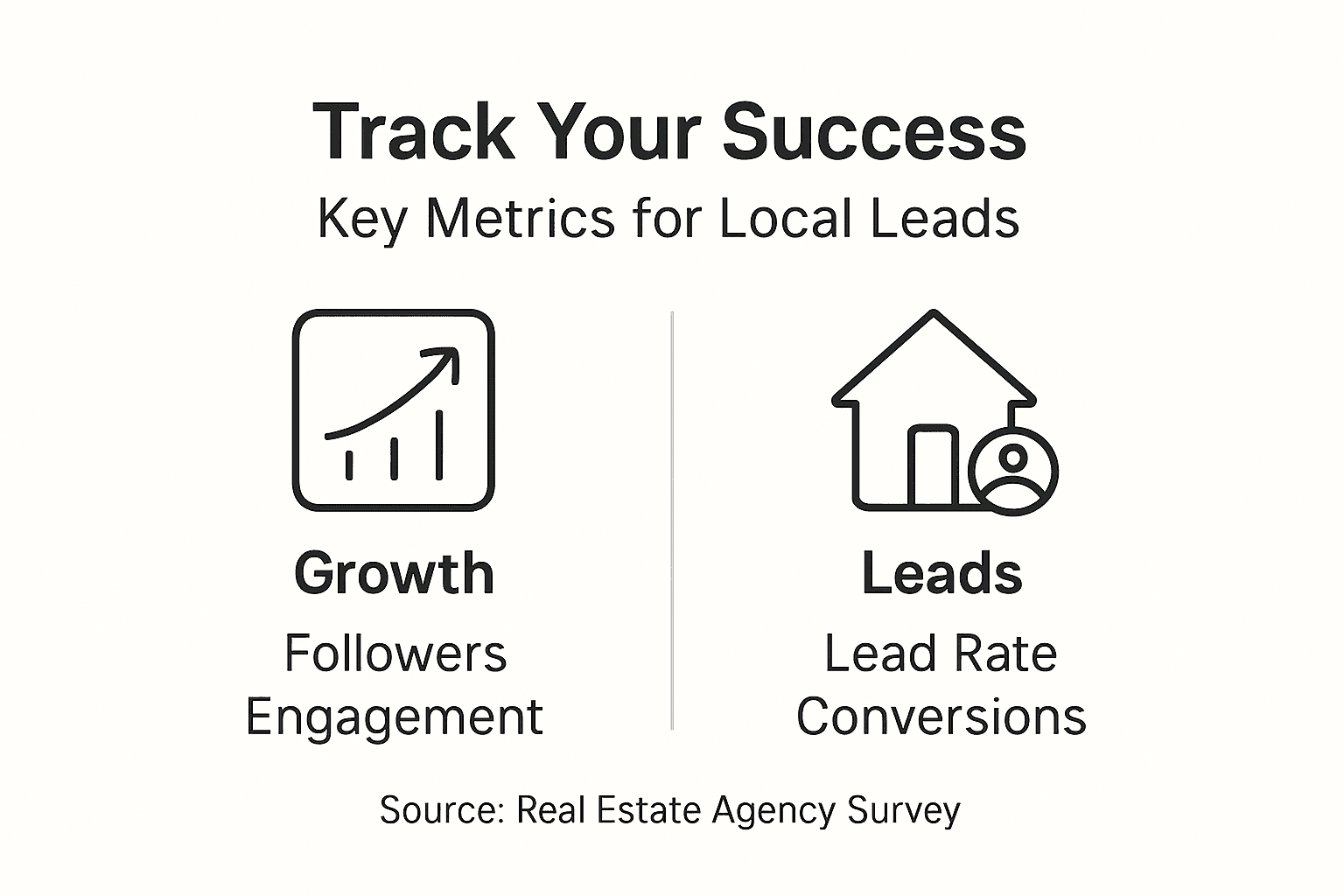
This summary highlights key metrics to track for marketing improvement:
| Metric | What It Measures | Why It Matters |
|---|---|---|
| Follower Growth Rate | Change in audience size | Gauges audience appeal |
| Engagement Rate | Interactions per post | Indicates content effectiveness |
| Lead Generation Rate | Inquiries from social media | Tracks direct business impact |
| Conversion Percentage | Leads becoming clients | Measures sales success |
Develop a monthly review process where you systematically evaluate your social media marketing performance. Create a dashboard that consolidates key metrics from different platforms. Look for patterns in audience behavior identify top performing content types and understand which targeting strategies generate the most qualified leads. Be prepared to make quick adjustments experimental ad sets audience targeting and content approaches based on your findings.
Consider implementing a quarterly strategic review that goes beyond surface level metrics. Analyze the quality of leads generated not just their quantity. Track metrics like lead to client conversion rate average transaction value and client retention. This deeper analysis will help you refine your approach and allocate your marketing resources more effectively.
Pro Tip: Create a standardized monthly reporting template that automatically compares current performance against previous periods to quickly identify trends and opportunities for optimization.
Amplify Your Local Lead Generation with Tools Designed for Real Estate Agents
Struggling to turn social media efforts into actual leads? This article reveals how crucial it is to define your target audience, optimize your profiles, and craft content that resonates with buyers and sellers. But managing all these steps while keeping up with daily prospecting can feel overwhelming. That is where ex.plo.re CRM steps in to support you. Our platform streamlines your sales cycle and enhances your ability to engage your local market effectively without changing the way you work.

Take control of your social media marketing strategy today. Use cutting-edge tools that align with your goals like targeted advertising, content scheduling, and lead tracking all in one place. See how personalized solutions at ex.plo.re CRM help you convert followers into loyal clients faster. Get started now and become the power broker your local market needs.
Frequently Asked Questions
How can I define my target audience for social media marketing?
To define your target audience, analyze your local real estate market by examining factors like median home prices, popular neighborhoods, and buyer demographics. Start by creating a detailed spreadsheet to track these insights, which will help you understand who is most likely to engage with your services.
What social media platforms should I focus on as a real estate agent?
Focus on platforms that align with where your potential clients are most active. Typically, use LinkedIn for professional networking, Instagram for showcasing properties, and Facebook for engaging with the local community.
What type of content should I create for buyers and sellers on social media?
Create tailored content that addresses the unique needs of buyers and sellers. For buyers, share guides and local market insights; for sellers, provide tips on home staging and success stories. Aim for a content mix of 70% educational posts, 20% personal branding, and 10% direct sales promotions.
How can I improve engagement on my social media profiles?
Improve engagement by regularly posting high-quality content and using a consistent branding strategy across platforms. Implement interactive content like polls or Q&A sessions and analyze which types of posts generate the most interaction to refine your approach.
What metrics should I track to measure my social media marketing success?
Track key metrics such as follower growth rate, engagement rate, and lead generation rate to measure success. Set up a monthly review to evaluate these metrics and adjust your strategy based on which content types and ad formats perform best.
How do I create effective social media advertisements for real estate?
To create effective advertisements, utilize audience segmentation tools to target distinct market segments. Develop multiple ad variations tailored to different client motivations and track performance metrics to optimize your campaigns for better engagement and lead generation.