

Most luxury agents underestimate how deeply an American buyer’s priorities are shaping global property demand. In today’s premium market, success requires more than simply listing expensive homes. High-net-worth clients now seek smart design, sustainability, and bespoke amenities that command a new level of expertise. Find out what truly distinguishes luxury real estate now and how top brokers worldwide adapt to meet these elevated expectations.
Table of Contents
- Defining Luxury Real Estate In Today’s Market
- Types And Categories Of Luxury Properties Worldwide
- Essential Features And Amenities That Set Luxury Apart
- Legal Framework And Compliance For Luxury Transactions
- Costs, Taxes, And Financial Implications For Brokers
- Top Risks, Common Mistakes, And How To Avoid Them
Key Takeaways
| Point | Details |
|---|---|
| Luxury Real Estate Definition | Luxury real estate now includes exclusive, technologically advanced living spaces emphasizing sustainability and exceptional design beyond mere price. |
| Diverse Property Types | Luxury properties span various categories, including residential, commercial, and mixed-use spaces designed for high-net-worth individuals. |
| Technological Integration | Smart home systems and personalized amenities are foundational features of luxury properties, creating seamless, comfortable living environments. |
| Legal Compliance | Rigorous legal protocols and compliance with international regulations are essential for successful luxury real estate transactions, requiring specialized expertise. |
Defining Luxury Real Estate in Today’s Market
Luxury real estate represents more than just high-priced properties. It embodies exclusive, premium living spaces that transcend traditional housing by offering exceptional quality, unique design, prime locations, and unparalleled amenities. Emerging global real estate trends indicate that luxury properties are increasingly defined by sophisticated criteria beyond mere square footage.
In today’s market, luxury real estate is characterized by several distinctive features. These properties are not simply expensive, but strategically positioned investments that reflect advanced technological integration, sustainability, and exceptional architectural design. Modern high-net-worth buyers seek properties that demonstrate environmental consciousness, smart home technologies, and adaptable living spaces that accommodate changing lifestyle needs.
The definition of luxury real estate has evolved dramatically, moving beyond traditional markers of opulence. Reimagining real estate frameworks emphasize creating liveable, sustainable environments that prioritize human experience. Luxury properties now represent holistic living solutions that integrate cutting-edge design, technological infrastructure, and environmental responsibility. These spaces are meticulously crafted to provide not just shelter, but comprehensive lifestyle experiences that cater to discerning clients’ sophisticated preferences.
Pro Tip: Research local market trends and understand that luxury is increasingly defined by experiential quality, technological integration, and sustainable design rather than just price point.
Types and Categories of Luxury Properties Worldwide
Luxury real estate encompasses a diverse range of property types that extend far beyond traditional residential spaces. Global property classifications reveal multiple categories of high-end real estate, each catering to specific market segments and sophisticated buyer preferences. These categories include residential, commercial, and mixed-use properties that represent exceptional architectural design, premium locations, and unparalleled amenities.
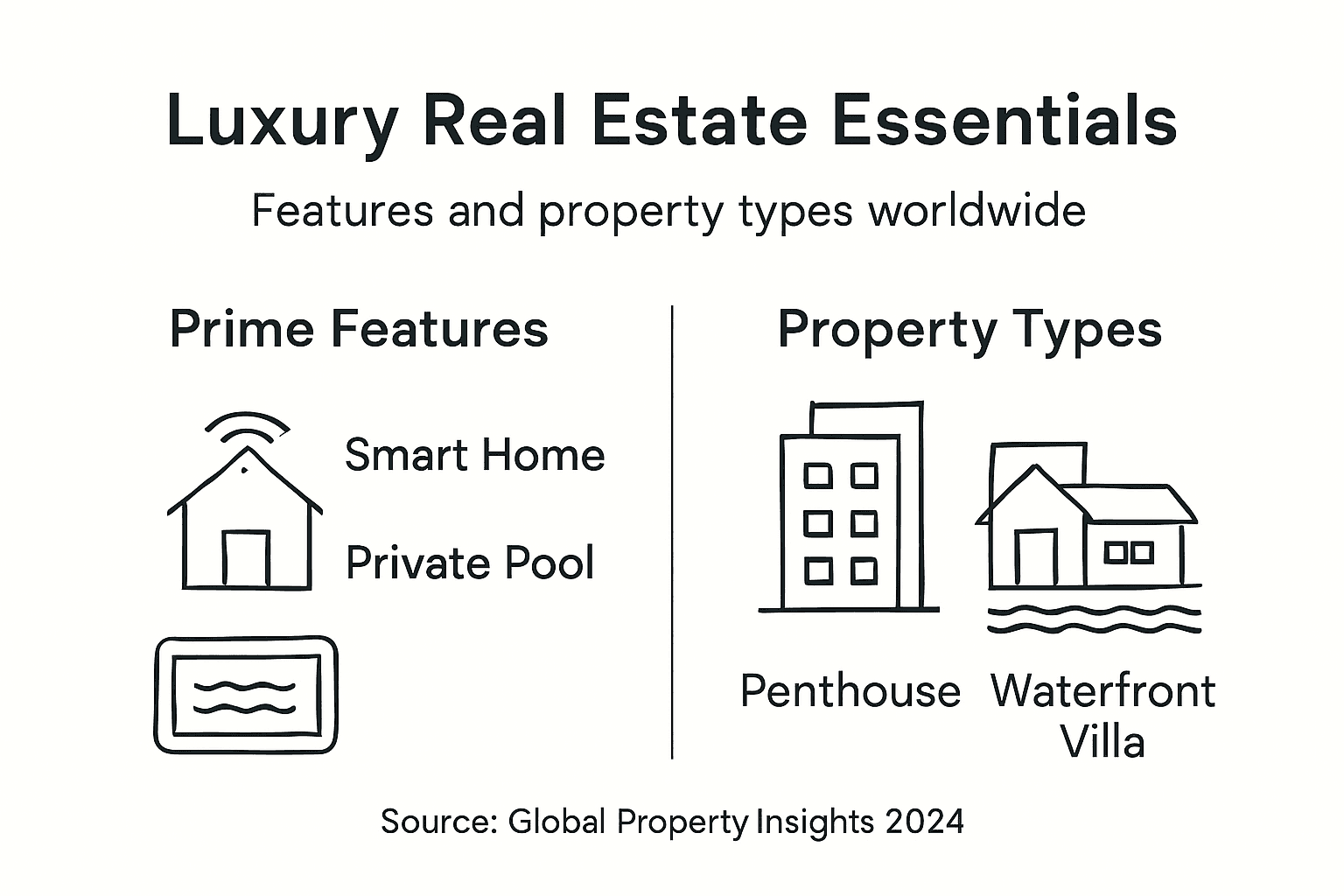
Residential luxury properties represent the most prominent segment, featuring several distinctive subcategories. Mansion estates dominate the high-end residential market, offering expansive living spaces with advanced technological integrations and custom design features. Luxury apartments in premier urban centers, waterfront villas, historic restored properties, and ultra-modern architectural masterpieces constitute additional residential luxury classifications. Each property type reflects unique characteristics that appeal to discerning high-net-worth individuals seeking more than just a living space.
Building types worldwide demonstrate that luxury real estate extends well beyond residential segments. Commercial luxury properties include trophy office buildings, exclusive retail spaces, boutique hospitality venues, and specialized infrastructure projects. These properties are distinguished by exceptional design quality, prime geographical positioning, advanced technological infrastructure, and environmental sustainability features that set them apart from standard commercial real estate offerings.
Pro Tip: Research local luxury property markets comprehensively, understanding that each region presents unique property classifications and investment opportunities specific to its cultural and economic landscape.
Here’s a comparison of key luxury real estate property types worldwide:
| Property Type | Typical Location | Distinctive Feature |
|---|---|---|
| Mansion Estate | Suburban/exclusive rural areas | Expansive grounds, privacy |
| Luxury Apartment | Prime city centers | Skyline views, concierge |
| Waterfront Villa | Coastal/river/lakefront | Private docks, panoramas |
| Boutique Office | Financial districts | Advanced tech, amenities |
| Historic Property | Heritage districts/landmarks | Restored details, rarity |
| Ultra-modern Home | Urban enclaves | Smart systems, design |
Essential Features and Amenities That Set Luxury Apart
Luxury real estate transcends traditional property offerings by delivering extraordinary features that create exceptional living experiences. Hotel amenities in luxury properties reveal a comprehensive approach to comfort and exclusivity, where every detail is meticulously curated to meet the highest standards of discerning clients. These amenities go beyond mere functionality, transforming living spaces into personalized environments that anticipate and exceed resident expectations.

Technological integration represents a cornerstone of modern luxury real estate amenities. Smart home systems now provide unparalleled convenience, featuring advanced security protocols, automated climate control, voice-activated interfaces, and seamless connectivity. High-end properties increasingly incorporate cutting-edge technologies that allow residents to manage entire living environments through sophisticated digital platforms. Comprehensive wellness facilities, including private fitness centers, spa-like bathrooms, and integrated health monitoring systems, further distinguish luxury properties from standard real estate offerings.
Luxury accommodation amenities demonstrate that personalization is the ultimate marker of high-end real estate. Premium properties now offer bespoke services such as dedicated concierge teams, custom interior design consultations, private chef services, and tailored lifestyle management. These amenities transform residential spaces from mere living quarters into comprehensive lifestyle ecosystems that cater to every conceivable resident need and preference. Advanced security features, including biometric access controls, surveillance systems, and private entry protocols, provide an additional layer of exclusivity and protection.
Pro Tip: Always evaluate luxury property amenities through the lens of holistic lifestyle enhancement, not just individual features.
This summary illustrates essential luxury real estate amenities and their impact:
| Amenity Type | Practical Benefit | Lifestyle Advantage |
|---|---|---|
| Smart Home System | Centralized control, efficiency | Personalized comfort, security |
| Wellness Facilities | Onsite fitness, health support | Private spa experience |
| Concierge Services | Seamless daily logistics | Time-saving, exclusive convenience |
| Bespoke Interiors | Custom spaces, unique materials | Individualized aesthetics |
| Enhanced Security | Biometric access, surveillance | Peace of mind, limited access |
Legal Framework and Compliance for Luxury Transactions
Luxury real estate transactions demand rigorous legal compliance and sophisticated transactional protocols. Anti-money laundering regulations represent a critical component of ensuring transparency and legal integrity in high-end property dealings. These comprehensive guidelines require extensive documentation, thorough client verification, and meticulous record-keeping to prevent financial misconduct and protect all parties involved in luxury property exchanges.
Regulatory compliance encompasses multiple complex dimensions beyond basic legal requirements. Luxury real estate professionals must navigate intricate international legal frameworks that vary significantly across different jurisdictions. This involves understanding nuanced ownership transfer protocols, tax implications, foreign investment regulations, and detailed beneficial ownership verification standards. Advanced compliance programs integrate sophisticated risk assessment methodologies, ensuring that each transaction meets the highest legal and ethical standards.
Global compliance concepts highlight the importance of developing comprehensive internal control mechanisms. Successful luxury real estate transactions require proactive risk management strategies that go beyond traditional transactional approaches. This includes implementing advanced technological solutions for client verification, maintaining robust digital documentation systems, and establishing clear protocols for identifying and mitigating potential legal and financial risks associated with high-value property transfers.
Pro Tip: Always engage specialized legal counsel with expertise in international luxury real estate transactions to ensure complete regulatory compliance and minimize potential legal complications.
Costs, Taxes, and Financial Implications for Brokers
Luxury real estate brokerage requires sophisticated financial management and deep understanding of complex economic landscapes. Emerging real estate trends reveal significant challenges for brokers, including macroeconomic factors that dramatically impact transaction profitability. High-end property transactions involve intricate cost structures that extend far beyond traditional commission models, demanding advanced financial strategies and comprehensive market intelligence.
Transaction costs in luxury real estate represent a multifaceted financial ecosystem. Brokerage fees typically range between 5% to 10% of property value, with variations based on market complexity, property type, and geographical location. These fees must account for extensive marketing expenses, advanced client acquisition strategies, legal consultation costs, and sophisticated technological infrastructure required to serve high-net-worth clientele. Successful brokers integrate detailed financial modeling to predict potential revenue streams and manage operational expenses effectively.
Real property tax structures create additional layers of financial complexity for luxury real estate professionals. Different jurisdictions impose varying taxation frameworks that significantly impact net transaction values and investment returns. Brokers must develop comprehensive understanding of international tax regulations, including recurrent property taxes, capital gains implications, and potential deductibility of transaction-related expenses. This requires continuous professional education and strategic financial planning to optimize client outcomes and maintain competitive positioning in the luxury market.
Pro Tip: Develop a robust financial tracking system that captures all transaction-related expenses and potential tax implications to maximize profitability and maintain precise revenue forecasting.
Top Risks, Common Mistakes, and How to Avoid Them
Luxury real estate risks represent a complex landscape of potential challenges that require strategic navigation. Market volatility, geopolitical uncertainties, and rapid shifts in consumer preferences create significant potential pitfalls for luxury real estate professionals. Successful brokers must develop robust risk management strategies that anticipate and mitigate these dynamic market conditions, maintaining agility and strategic foresight.
Risk management in luxury real estate demands comprehensive understanding of multiple interconnected factors. Common mistakes include overvaluation of properties, inadequate due diligence, and failure to recognize emerging market trends. Brokers frequently underestimate the importance of technological adaptation, sustainability requirements, and the evolving expectations of high-net-worth clients. Sophisticated risk mitigation involves continuous market research, leveraging advanced technological tools, and maintaining flexible business models that can quickly respond to changing market dynamics.
Navigating economic uncertainties requires brokers to develop sophisticated predictive capabilities. Key risks include economic slowdowns, resource scarcity, and technological disruptions that can rapidly transform market conditions. Successful professionals must invest in continuous learning, embrace innovative technologies like artificial intelligence, and align their business strategies with emerging market realities. This approach involves developing comprehensive market intelligence, maintaining flexible operational frameworks, and creating adaptive business models that can withstand unexpected market challenges.
Pro Tip: Develop a dynamic risk assessment framework that combines technological insights, continuous market research, and proactive adaptation strategies to stay ahead of potential market disruptions.
Elevate Your Luxury Real Estate Success with Proven Tools and Insights
Navigating luxury real estate means mastering complex client expectations, cutting-edge technology, and sophisticated market trends. This article highlights challenges like the need for seamless prospecting, delivering personalized offerings, and managing high-value transactions with precision. If you want to transform into a power broker who commands the luxury market by leveraging advanced sales strategies and expert tools designed specifically for upscale properties, we can help.
Discover how ex.plo.re’s CRM platform complements your existing workflow by streamlining lead management and enhancing your client engagement. Gain an edge by integrating tools that amplify your impact without changing your daily routine. From local client acquisition to customizing your sales pitch for high-net-worth buyers, our solutions align perfectly with the demands identified in luxury real estate today.
Take your luxury real estate business to the next level before your competition does.
Luxury real estate professionals trust our expert team and technology to boost their client base and close deals faster.

Seize the opportunity to become the luxury market leader. Visit ex.plo.re CRM now and start amplifying your influence with tools tailored to your ambitions.
Frequently Asked Questions
What defines luxury real estate?
Luxury real estate is characterized by exclusive properties that not only have high price points but also feature exceptional quality, unique designs, prime locations, and unparalleled amenities, moving beyond traditional metrics like square footage.
What types of properties are considered luxury real estate?
Luxury real estate includes various property types such as mansion estates, luxury apartments, waterfront villas, historical properties, boutique offices, and ultra-modern homes, each appealing to high-net-worth individuals with specific preferences and lifestyles.
What amenities and features set luxury real estate apart?
Luxury properties often include advanced smart home technologies, comprehensive wellness facilities, personalized concierge services, bespoke interiors, and enhanced security measures, all aimed at providing exceptional living experiences that prioritize convenience and quality of life.
What legal considerations are important in luxury real estate transactions?
Luxury real estate transactions necessitate strict legal compliance and understanding of complex regulatory frameworks, including detailed ownership transfer protocols and anti-money laundering regulations, requiring specialized legal counsel to navigate effectively.
Recommended
- Luxury Brokerage Explained: Elevating High-End Transactions
- 7 Powerful Luxury Broker Marketing Ideas for More Clients
- Luxury Yacht and Homeowner Habits 2025: Complete Guide
- Real Estate vs Yacht Brokerage Differences Explained
- Luxury Villa Opportunity in Exclusive Pantovčak District – 385 Real Estate