

Over 85% of American clients seeking luxury assets turn to expert brokers for guidance on high-value purchases. Choosing between real estate and yacht brokerage can feel confusing, even for seasoned professionals. Each profession follows a different path and requires specialized skills, from understanding complex regulations to navigating global markets. This guide breaks down the true distinctions so American buyers and sellers can make informed, confident decisions in these high-stakes environments.
Table of Contents
- Core Differences Between Real Estate And Yacht Brokerage
- Sales Process And Client Experience Compared
- Licensing, Regulations, And Legal Duties
- Financial Models, Costs, And Commission Structures
- Common Pitfalls And Client Expectations
Key Takeaways
| Point | Details |
|---|---|
| Distinctions in Asset Complexity | Yacht brokerage involves more complex, variable asset evaluations compared to standardized real estate transactions. |
| Licensing and Regulatory Variances | Real estate agents face a standardized licensing framework, whereas yacht brokers navigate diverse regulations in different maritime regions. |
| Financial Structures | Yacht brokers typically deal with higher transaction values and more complex commission structures compared to real estate agents. |
| Client Expectation Management | Yacht brokers must manage client expectations that require extensive technical knowledge and international market insight, unlike local real estate transactions. |
Core Differences Between Real Estate And Yacht Brokerage
Both real estate and yacht brokerage involve selling high-value assets, but their operational approaches differ significantly. Yacht brokers and real estate agents share core similarities in representing buyers and sellers, yet the specialized nature of their markets creates distinct professional landscapes.
The primary differences emerge in asset complexity, client interactions, and market dynamics. Real estate agents typically handle more standardized properties within local or regional markets, while yacht brokers navigate a more global, specialized marketplace with highly variable asset values. Yacht transactions involve intricate technical assessments of vessel condition, maritime regulations, and international shipping considerations that traditional real estate transactions rarely encounter.
Compensation structures also diverge between these professions. Both earn commissions, but yacht brokerage often involves higher-percentage payouts due to the significantly higher unit prices of marine vessels. Licensing requirements differ substantially: real estate agents must meet state-specific educational and certification standards, whereas yacht brokers operate under more variable regional regulations. Specialization becomes critical – understanding maritime law, vessel maintenance, and international sales processes requires a more niche expertise than residential or commercial property transactions.
Marketing strategies further distinguish these professional domains. Real estate agents leverage local market knowledge, property staging, and community-specific appeals, while yacht brokers must demonstrate technical marine expertise, understand global luxury markets, and often work with international clientele seeking high-end maritime investments. These nuanced differences underscore why specialized yacht brokerage skills can dramatically impact an agent’s success in this unique professional realm.
Sales Process And Client Experience Compared
The sales processes for real estate and yacht brokerage share fundamental similarities while maintaining distinctive characteristics. Yacht brokers provide comprehensive services that extend far beyond traditional property transactions, including intricate advertising, nuanced pricing guidance, and complex negotiation management.
Client interactions differ significantly between these domains. Real estate agents typically work within localized markets, focusing on property valuations, neighborhood insights, and regional market trends. Yacht brokers, conversely, operate in a more global marketplace that demands advanced technical knowledge about marine vessels, international maritime regulations, and luxury asset transactions. Yacht brokers act as critical facilitators who must navigate substantially more complex transaction landscapes compared to traditional real estate professionals.
Client experience variations emerge through the depth of specialized expertise required. Real estate transactions generally involve standardized documentation, local inspections, and financing processes. Yacht brokerage demands a multilayered approach: clients expect deep technical understanding of vessel conditions, comprehensive maintenance histories, international shipping logistics, and intricate legal frameworks governing maritime sales. Yacht brokers must demonstrate extensive knowledge about vessel specifications, performance characteristics, and potential investment value that goes well beyond surface-level assessments.

The marketing and communication strategies also diverge dramatically. Real estate agents leverage local market knowledge and community connections, while yacht brokers must cultivate sophisticated global networks, understand luxury market dynamics, and communicate with an internationally diverse clientele. These nuanced differences underscore why specialized lead generation strategies become critical for success in these distinctly different yet equally competitive professional domains.
Licensing, Regulations, And Legal Duties
Licensing requirements for real estate agents and yacht brokers represent critical professional distinctions that ensure industry standards and consumer protection. While both professions demand rigorous certification processes, the specific regulatory frameworks differ substantially across jurisdictions, creating unique compliance challenges for professionals in each domain.
Real estate agents must navigate a more standardized regulatory environment, with most states requiring comprehensive educational programs, state-administered licensing exams, and ongoing professional development. Real estate licensing requirements typically involve detailed coursework covering property law, ethical standards, transaction procedures, and local market regulations. Yacht brokers, conversely, encounter a more fragmented regulatory landscape with certification requirements varying dramatically between maritime regions and international jurisdictions.
Legal duties diverge significantly between these professions. Real estate agents operate under well-established fiduciary responsibilities that mandate transparent communication, client representation, and strict adherence to property disclosure laws. Yacht brokers must navigate more complex legal terrain, including international maritime regulations, vessel documentation, tax implications of cross-border transactions, and intricate insurance requirements. Their legal responsibilities extend beyond traditional sales representation to include technical verification of vessel conditions, compliance with maritime safety standards, and navigation of intricate international sales protocols.
The compliance burden for yacht brokers often proves more nuanced and technically demanding. While real estate agents work within established local and state regulatory frameworks, yacht brokers must demonstrate expertise across multiple legal systems, understanding international maritime law, vessel registration processes, and the complex web of regulations governing luxury maritime assets. These substantial differences underscore why specialized yacht brokerage skills become critical for professionals seeking success in this intricate and globally distributed marketplace.
Financial Models, Costs, And Commission Structures
The financial architectures of real estate and yacht brokerage reveal profound differences in revenue generation and compensation models. Real estate agents typically earn commissions ranging between 5-6% of a property’s sale price, creating a relatively predictable income structure tied directly to local market performance and transaction volumes.
Yacht brokerage introduces a more complex financial landscape with significantly higher transaction values and more nuanced commission calculations. While real estate commissions follow relatively standardized percentages, yacht broker compensation can fluctuate dramatically based on vessel type, global market conditions, and the specific technical complexities of maritime asset sales. Yacht brokers often negotiate tiered commission structures that might include base percentages supplemented by performance bonuses or sliding scales based on vessel value.
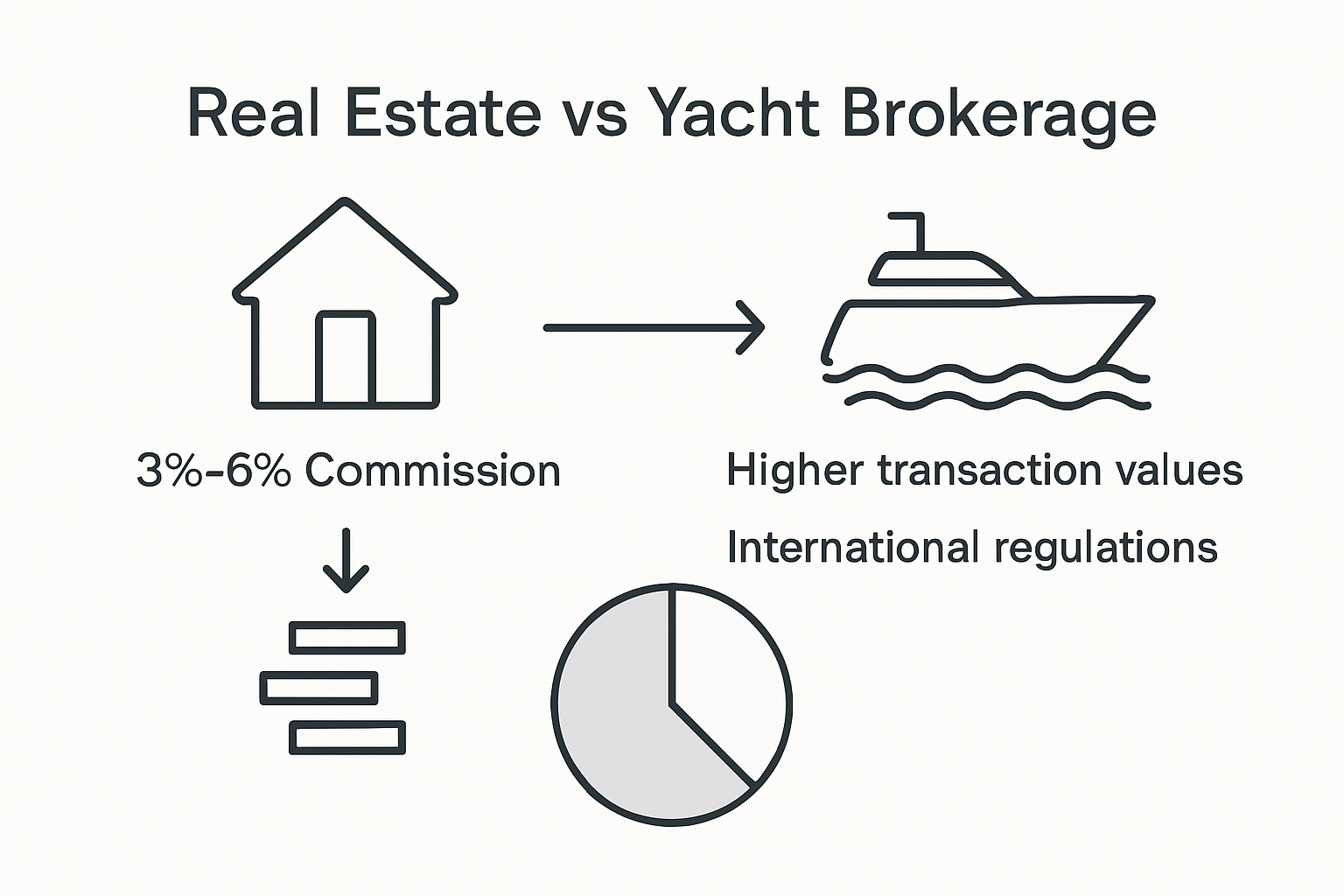
Operational costs diverge substantially between these professional domains. Real estate agents typically manage lower overhead expenses, primarily involving marketing materials, local networking, and regional advertising. Yacht brokers face considerably higher operational costs, including specialized marine expertise, international travel, technical documentation, and sophisticated marketing strategies targeting high-net-worth global clientele. These increased expenses necessitate more robust financial planning and potentially higher commission rates to sustain their business model.
Risk management and financial sustainability further distinguish these brokerage models. Yacht sales commission structures often incorporate more complex risk mitigation strategies, reflecting the higher-value transactions and international complexity of maritime asset sales. Yacht brokers must build financial reserves to manage longer sales cycles, potential transaction complications, and the inherently unpredictable luxury maritime market. These nuanced financial considerations underscore why specialized knowledge becomes crucial for professionals seeking sustainable success in these distinctly different yet equally challenging sales environments.
Common Pitfalls And Client Expectations
Yacht brokers can significantly enhance transaction success by understanding and proactively managing client expectations across complex maritime asset transactions. The fundamental challenge lies in bridging the substantial knowledge gap between sophisticated buyers and the intricate world of maritime asset sales, where technical complexity far exceeds typical real estate interactions.
Client expectations diverge dramatically between real estate and yacht brokerage. Real estate clients typically anticipate straightforward transactions involving property inspections, financing approvals, and localized market insights. Yacht brokerage clients, conversely, demand comprehensive expertise spanning technical vessel assessment, international maritime regulations, complex financial structures, and nuanced luxury market dynamics. These clients often possess advanced technical knowledge and expect brokers to demonstrate deep understanding of marine engineering, vessel maintenance history, and global maritime asset valuation.
Potential pitfalls in yacht brokerage emerge from the multifaceted nature of maritime asset transactions. Common challenges include misaligned value expectations, complex international documentation requirements, significant technical verification processes, and the inherent variability of luxury maritime markets. Yacht brokers must navigate intricate scenarios involving vessel condition assessments, potential hidden maintenance issues, international shipping logistics, and sophisticated legal frameworks that extend far beyond traditional property sales transactions.
Successful professionals in both domains must develop exceptional communication skills and manage client expectations through transparent, detailed information sharing. While real estate agents focus on local market trends and property-specific details, yacht brokers must cultivate a more holistic approach that integrates technical expertise, international market knowledge, and sophisticated client relationship management. These nuanced differences underscore the importance of specialized broker training in developing the comprehensive skill set required to excel in these distinctly challenging professional environments.
Elevate Your Brokerage Success With Specialized Tools and Expertise
Navigating the stark differences between real estate and yacht brokerage demands more than just industry knowledge. Complex technical assessments, international regulations, and high-value asset management can overwhelm even the most experienced brokers. The article highlights the importance of niche expertise and sophisticated client management to thrive in these demanding markets. You need solutions that amplify your impact without forcing you to change your proven approach.
Explore how our platform helps both real estate agents and yacht brokers streamline prospecting and sales cycles. Experience the power of tools designed specifically to handle intricate luxury asset transactions and global client communications. Understand why specialization can transform your brokerage and leverage advanced lead generation strategies built for your unique market challenges.
Unlock the confidence you need to exceed your clients’ sophisticated expectations and close deals faster with expert talent and technology that works with you.
Ready to become a power broker in any luxury market?

Visit ex.plo.re CRM now and start transforming your brokerage capabilities today.
Frequently Asked Questions
What are the main differences between real estate and yacht brokerage?
Both real estate and yacht brokerage involve selling high-value assets, but the key differences lie in the asset complexity, client interactions, and market dynamics. Yacht brokers operate in a more global market with unique technical assessments and regulations, while real estate agents focus on more standardized properties within local or regional markets.
What kind of expertise is required for yacht brokers compared to real estate agents?
Yacht brokers require specialized knowledge of maritime law, vessel maintenance, and international sales processes. In contrast, real estate agents need to understand property law, market trends, and local regulations. This specialized expertise is critical for success in the yacht brokerage field.
How do the commission structures differ between real estate agents and yacht brokers?
Real estate agents typically earn commissions ranging from 5-6% of a property’s sale price. In contrast, yacht broker commissions can fluctuate based on vessel type and value, often involving tiered structures or performance bonuses, reflecting the higher transaction values in yacht sales.
What should clients expect when working with yacht brokers as opposed to real estate agents?
Clients working with yacht brokers can expect more complex services, including technical assessments of vessels, international regulations, and intricate negotiations. In real estate, clients generally expect more straightforward transactions focusing on property inspections and financing approvals.