

Overview — You can design and launch a working referral system in as little as two weeks using three things: a clear goal, a simple two-sided offer, and a tracking method that ties referrals to real revenue.
Here is the mini-checklist to get started right now:
- Goal: Pick one primary outcome (new clients, revenue, or volume).
- Reward: Choose a two-sided offer (something for the referrer and something for the new customer).
- Tracking: Set up a unique referral link or code and connect it to your CRM or a spreadsheet.
- Launch channel: Pick one post-purchase or post-delivery moment to make the ask.
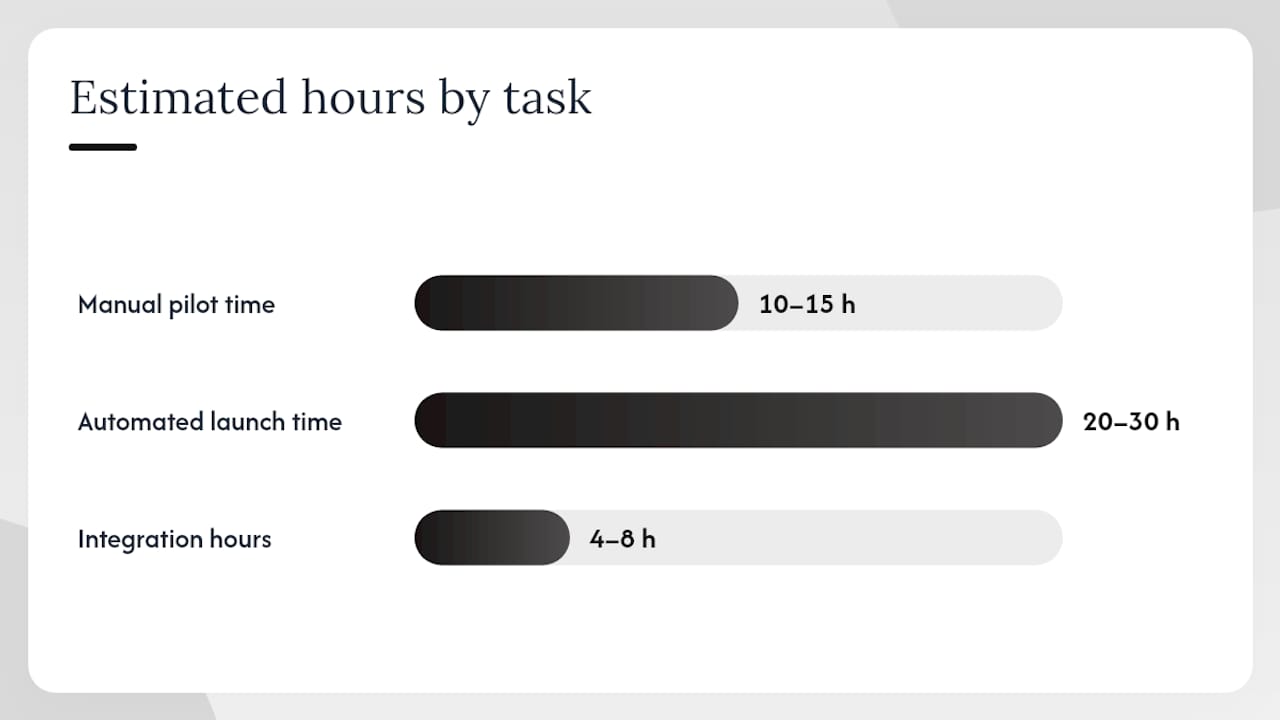
A manual pilot takes about two weeks. A fully automated launch with software integration usually takes one to two months. If you have 60 minutes right now, pick your reward structure and draft the landing page headline. That single step moves you from idea to pilot faster than any planning doc will.
Table of Contents
- Your one-page referral system setup guide checklist
- How do you design incentives that actually drive referrals?
- How do you track referrals reliably without losing attribution?
- Manual vs automated referral programs: when should you switch?
- Why timing and mechanics matter more than motivation
- Where and how to promote your referral program
- How to measure, iterate, and avoid the mistakes that sink programs
- Ready-to-use templates for your referral program
- Implementation timeline and cost guidance
- Key Takeaways
- The referral mistake most service businesses make
- Plo gives you the referral infrastructure you already need
- Useful sources and further reading
Your one-page referral system setup guide checklist
This is the operational plan. Print it, pin it to your wall, or drop it into your project management tool. Every item is ordered by dependency so nothing falls through the cracks.
Suggested alert thresholds for SMBs
| KPI | Healthy Range | Alert Signal |
|---|---|---|
| Share rate | 5–15% | Below 3% after 4 weeks |
| Referral conversion rate | 10–30% | Below 8% after 100 invites |
| Referred CLV premium | 10–25% above baseline | Flat or negative vs. baseline |
Run weekly reporting during the first four weeks of launch. Once KPIs stabilize, a monthly review is sufficient. If share rate drops below your alert threshold, the problem is almost always the ask timing or the reward clarity, not the product.
How do you design incentives that actually drive referrals?
The structure of your program matters as much as the reward amount. Research consistently shows that two-sided programs, where both the referrer and the new customer receive a reward, outperform one-sided programs in participation and perceived fairness. Start there.

Sizing your reward
Shopify’s referral bonus guidance recommends sizing the total referral bonus at 10–15% of average order value as a starting benchmark for e-commerce. For service-led businesses, a conservative rule is to keep the combined two-sided reward within 10–20% of the referred customer’s gross margin on their first transaction. If your average first-transaction gross margin is $500, a combined reward of $50–$100 is defensible.
Pro Tip: Run your pilot with the simplest possible offer before adding tiers or gamification. A clean “Give $X, get $X” offer is easier to test, easier to explain, and faster to validate than a points system you built before you knew your conversion rate.
How do you track referrals reliably without losing attribution?
Attribution is where most manual programs quietly fall apart. A customer tells a friend, the friend buys, and nobody connects the two events. The fix is a deliberate tracking architecture built before you launch.
Fraud prevention checklist
Fraud is not hypothetical. Even small programs attract self-referrals and duplicate accounts once real money is on the table.
- Block self-referrals by matching referrer email/account to the referred prospect’s email at signup.
- Require a minimum qualifying purchase before the reward triggers (not just account creation).
- Set a velocity cap: no more than a defined number of referrals per referrer per month qualify for rewards.
- Apply a reversal window: if the referred customer refunds within 30 days, the reward is voided.
- Audit for duplicate accounts using email domain, IP address, and payment method matching.
Pro Tip: Build your fraud rules into the reward approval step, not as an afterthought. A manual approval queue for the first 30 days of a new program costs a few hours but saves you from paying out rewards on fraudulent conversions that are nearly impossible to claw back.
For service-led businesses managing referrals across a local pipeline, a referral generation workflow that connects tracking to your CRM from day one prevents the attribution gaps that kill program credibility.
Manual vs automated referral programs: when should you switch?
The honest answer is that a spreadsheet and a unique code work fine until they don’t. The tipping point is usually not volume alone; it is the combination of volume, payout complexity, and fraud exposure that makes manual management untenable.
WordStream’s referral marketing guide puts the practical threshold at roughly 100 referrals per month: below that, a DIY setup is a reasonable and educational choice; above it, the administrative overhead and fraud risk typically justify a software investment.
Feature comparison by program maturity
| Feature | Manual (DIY) | Entry-level platform | Growth platform |
|---|---|---|---|
| Tracking | Spreadsheet + codes | Hosted links + dashboard | Server-side attribution |
| Automation | None | Email triggers | Full workflow automation |
| Payouts | Manual bank transfer | Gift cards, credits | Cash, ACH, multi-currency |
| Fraud controls | Manual review | Basic duplicate checks | Velocity caps, IP matching |
| CRM integration | Manual export | Zapier/webhook | Native CRM sync |
| Monthly cost | $0 (time only) | $50–$200 | $200–$800+ |
Integration checklist for software evaluation
When evaluating referral platforms, require these minimum integrations before signing: CRM sync (two-way), payment processor webhook (Stripe or equivalent), email service provider connection, and a payout SLA of 48–72 hours for standard rewards. Sales automation tools that already sit in your stack can sometimes handle referral workflows without a dedicated platform, especially for service-led businesses with lower referral volume.
Why timing and mechanics matter more than motivation
The most counterintuitive insight in referral marketing is this: your customers’ willingness to refer is rarely the bottleneck. Research shows that 83% of satisfied customers would refer but never do, because no one asked them at the right moment with a frictionless mechanism. Fix the timing and the mechanics, and the referrals follow.
Where and how to promote your referral program
A great referral program that nobody sees is just an expensive document. Visibility is a distribution problem, and the channels that convert best are the ones already embedded in your customer flow.
Shopify’s referral strategy guide identifies post-purchase flows and NPS promoter outreach as the top-performing activation channels. Layer in the following:
- Customer support touchpoints: — Train support staff to mention the program after resolving a ticket positively.
Sample CTAs and share copy
Email subject line variants:
- “You deserve $25 — here’s how to get it.”
- “Know someone who’d love [Brand]? You both win.”
- “Your referral link is waiting.”
Forwardable SMS:
Social post variant:
Pro Tip: Pair the referral ask with a review request or a social-share prompt in the same message. Customers who are willing to refer are also the most likely to leave a five-star review. One well-timed email can accomplish both.
How to measure, iterate, and avoid the mistakes that sink programs
Most referral programs do not fail at launch. They fail at week six, when the founder notices the numbers are flat and nobody has a clear diagnosis. The fix is a testing roadmap built before you need it.
Monthly audit checklist
- Share rate above alert threshold?
- Conversion rate stable or improving?
- Fraud queue reviewed and cleared?
- Reward payouts processed within SLA?
- Referrer loop closed (notification sent)?
- Eligibility rules still accurate for current offer?
Ready-to-use templates for your referral program
Copy, adapt, and deploy. These templates are built for speed, not perfection. Customize the reward amounts and brand name before sending.
Landing page template
Headline: Give $[X], Get $[X] — Share [Brand] with a Friend
Subheadline: When your friend makes their first purchase, you both win.
Body copy: You love [Brand]. Now share that with someone who matters. Your friend gets $[X] off their first order, and you get $[X] credit the moment they buy. No limits on how many friends you can refer.
CTA button: Get My Referral Link
Form fields: Name, email address, optional: “How did you hear about us?”
Reward terms (one line): Credit issued within 48 hours of your friend’s first qualifying purchase.
Email templates
Invitation to refer (sent to existing customers):
Subject: You’ve earned this — share it.
Hi [First Name], you’ve been with us for a while now, and we want to say thank you. Share your unique link with a friend and you’ll both get $[X] when they make their first purchase. Your link: [referral link]. Questions? Reply to this email.
Post-transaction ask:
Subject: One more thing — you could earn $[X].
Thanks for your order, [First Name]. While you’re here: know anyone who’d love [Brand]? Share your link and you’ll get $[X] credit when they buy. [Share now: referral link]
Reward notification:
Subject: Your $[X] credit just landed.
Great news, [First Name] — [Friend’s Name] just made their first purchase using your referral link. Your $[X] credit is now in your account. Keep sharing: [referral link]
Sales script for referrers
FTC disclosure snippet
US tax note: Cash rewards paid to a single referrer totaling $600 or more in a calendar year may require a Form 1099-NEC. Consult your accountant or tax advisor before launching a cash-reward program at scale. This is general information, not tax advice.
Building local referrals that stick requires scripts and templates adapted to your specific market, which is especially true for real estate and luxury service businesses where the introduction carries more weight than the reward.
Implementation timeline and cost guidance
Two scenarios: a lean manual pilot and a full automated launch. Both are realistic for a small team with limited resources.
Timeline table
| Week | Task | Owner | Deliverable |
|---|---|---|---|
| Week 1 | Define goal, reward, eligibility | Founder | One-page program brief |
| Week 1 | Build landing page and copy | Marketing | Live landing page |
| Week 2 | Set up tracking (links/codes) | Ops | Tracking live in CRM/spreadsheet |
| Week 2 | Pilot launch to top 20% of customers | Marketing | 50+ invites sent |
| Week 3–4 | Review pilot KPIs, fix friction | Founder + Ops | Go/no-go decision |
| Week 5–6 | Expand to full customer base or integrate software | Marketing + Ops | Full launch or platform live |
| Week 7–8 | First A/B test running | Marketing | Test variant live, KPIs tracked |
Cost model
Manual pilot (2 weeks):
- Time cost: approximately 10–15 hours total (strategy, copy, tracking setup, pilot management).
- Reward payouts: variable; budget based on expected pilot volume and reward size.
- Software: $0 (spreadsheet + existing email tool).
Automated launch (6–8 weeks):
- Time cost: approximately 20–30 hours including platform setup, integration, and testing.
- Referral software: entry-level platforms typically run $50–$200/month; growth-tier platforms run $200–$800+/month.
- Integration hours: 4–8 hours for CRM and payment processor connections, or more if custom development is needed.
As implementation guides for service-led businesses note, manual programs cost primarily time and reward payouts, while software adds monthly fees but reduces administrative overhead and provides fraud controls that are difficult to replicate manually. The ROI breakeven on a $100/month platform is roughly the administrative time saved plus the fraud losses prevented.
When to hire external help: If your CRM integration requires custom API work, or if your payout structure involves multiple currencies or tax jurisdictions, bring in a developer or a SaaS onboarding specialist for the integration phase. Most entry-level referral platforms include onboarding support in their base tier.
US tax and payout compliance: Track all cash reward payouts by referrer from day one. If any single referrer accumulates $600 or more in cash rewards within a calendar year, you are required to issue a Form 1099-NEC. Collect W-9 information from high-volume referrers before payouts reach that threshold. Consult a qualified tax professional for guidance specific to your business structure.
For a broader view of how referral systems fit into a client acquisition workflow, the integration between referral mechanics and your full sales pipeline determines how much of that referred revenue actually closes.
Key Takeaways
A working referral system requires a clear goal, a two-sided reward, reliable attribution, and a trigger that asks at peak customer satisfaction — not just a good product and a hope that customers will share.
| Point | Details |
|---|---|
| Start with two-sided rewards | Two-sided programs outperform one-sided in participation; begin with a simple “Give $X, get $X” structure. |
| Ask at peak satisfaction | 83% of satisfied customers say they would refer but do not unless prompted; automate the ask post-purchase or post-NPS. |
| Size rewards at 10–15% AOV | Use 10–15% of average order value as your starting reward benchmark, adjusted for gross margin. |
| Switch to software at 100+ referrals/month | Manual setups work below roughly 100 referrals per month; above that, automation and fraud controls justify the SaaS cost. |
| Plo accelerates the setup | Plo’s CRM, automation, and post-purchase workflow tools give service-led businesses a faster path from pilot to full launch. |
The referral mistake most service businesses make
There is a pattern that shows up in service-led businesses — real estate, luxury brokerage, professional services — that almost never shows up in e-commerce guides. The founder builds a referral program, sends one email to the entire customer list, gets a modest response, and concludes that “referrals don’t really work for our business.” Then they go back to paying for leads.
The diagnosis is almost always the same: the ask went out to everyone at once, with no regard for where each customer was in their satisfaction arc. Some received it two days after a frustrating support interaction. Others got it before they had even experienced the full value of the service. A few got it at exactly the right moment and referred enthusiastically, but those results were buried in the average.
The evidence is clear that the gap between referral intent and referral action is a timing and mechanics problem, not a motivation problem. The customers who would refer you are already in your database. They just need to be asked at the right moment, with a mechanism that requires almost no effort on their part.
For service businesses specifically, that moment is almost never “right after the contract is signed.” It is after the first meaningful result: the first closed deal, the first successful delivery, the first time the client says “this is exactly what I needed.” Build your trigger around that event, not around the calendar.
The second mistake is treating the referral program as a campaign rather than a system. Campaigns end. Systems compound. The businesses that generate consistent referral revenue are the ones that have wired the ask into their operational flow so permanently that it fires whether or not anyone is actively managing it that week.
Plo gives you the referral infrastructure you already need
Most of the friction in launching a referral program for a service-led business comes from the same three gaps: no post-purchase automation, no CRM sync to track attribution, and no reliable way to surface the ask at the right moment without manually remembering to do it.
Plo closes all three. The platform is built specifically for real estate agents, yacht brokers, and luxury sales professionals who need referral workflows, CRM integration, and post-purchase automation without stitching together five separate tools. You get a managed onboarding process, AI-assisted campaign creation, and the ability to wire your referral ask directly into your existing sales cycle. The prospecting and automation tools inside Plo are designed to amplify the work you are already doing, not add a new layer of complexity on top of it.
If you are ready to move from the checklist in this guide to a live, automated referral system, book a demo call and see how Plo fits your specific pipeline.
Useful sources and further reading
Benchmark data and research:
- Customer Referral Program Playbook 2026: Compound CLV
- Set Up a Referral Bonus Program (2026) – Shopify
- How to Build a Customer Referral Program in 2026 – Referral Factory
- How to set up a referral program: A complete 2026 guide – WiserReview
- Referral Strategy Guide: How To Build a Referral Strategy – Shopify
- Referral Marketing Guide: Strategies, Examples, & Free Tools | WordStream
- Building a Referral System for Your Business: The Complete 2026 Guide | Aviy
How-to and setup guides:
- How to Build a Customer Referral Program in 2026 — Referral Factory — Stepwise setup checklist and build-vs-buy guidance.
- How to Set Up a Referral Program: A Complete 2026 Guide — WiserReview — Manual and automated implementation steps, landing page and tracking guidance.
- Referral Marketing Guide — WordStream — DIY vs software decision framework and 8-step setup breakdown.
- Building a Referral System for Your Business — Aviy — Implementation timeline, pilot approach, and cost model for service-led businesses.
Plo guides for product-led next steps:
- Referral Marketing Examples for Real Estate Agents — Case studies and channel tactics applied to real estate.
- Referral Generation Workflow for Luxury Brokers — Process documentation for service-led referral systems.
- How to Build Local Referrals That Actually Stick — Scripts and workflows for local referral programs.