

Overview: The most effective types of prospecting methods in 2026 break into three categories: inbound, outbound, and hybrid. Each category contains specific tactics your team can deploy depending on how fast you need pipeline, how much budget you have, and who your ideal customer actually is. Here is the short list with a one-line recommendation for each:
- Cold calling — Best for immediate pipeline when you have a well-defined ICP and reps who can handle rejection; results in days to weeks.
- Cold email — High-volume, low-cost outbound; works best with strong personalization and a clear trigger event; pipeline in a few weeks.
- Social selling — LinkedIn-first relationship building; ideal for complex B2B sales with longer cycles; pipeline in 4–12 weeks.
- Referrals — Highest conversion rate of any method; activate after you have happy clients; pipeline can be immediate.
- Events and networking — Face-to-face trust building; best for high-ticket, relationship-driven sales; pipeline several weeks after the event.
- Inbound content — SEO, blogs, lead magnets; builds compounding pipeline over 9–12 months; low cost per lead at scale.
- Account-based engagement (ABM) — Coordinated, multi-channel attack on a named target list; best for enterprise deals; pipeline within a few months.
- Paid lead generation — PPC, social ads, retargeting; fast pipeline (1–3 weeks) but requires ongoing budget.
- Direct mail — Cuts through digital noise; effective for high-value local prospects; pipeline in several weeks.
- Video outreach — Personalized video messages; strong open and reply rates; pipeline in a few weeks.
- Partnerships and co-selling — Warm introductions from complementary providers; pipeline timing varies but quality is high.
Table of Contents
- What prospecting methods are and why they matter to your pipeline
- Inbound vs. outbound vs. hybrid: which approach fits your situation?
- A practical breakdown of every major prospecting method
- How to choose and combine prospecting methods for your team
- A repeatable prospecting playbook you can copy
- What to measure: KPIs, benchmarks, and timelines by method
- Which technology categories actually support prospecting?
- How these methods apply to real estate and luxury brokerage
- Key Takeaways
- The case for doing less, better
- How Plo helps you run these plays without the overhead
- Useful sources and further reading
What prospecting methods are and why they matter to your pipeline
Sales prospecting methods are the specific channels and tactics a rep or team uses to identify, contact, and qualify potential buyers before handing them to a closing conversation. They are not the same as lead generation in the broadest marketing sense. Prospecting is the active, often human-driven work of moving a stranger into a qualified sales conversation. Lead generation strategies can be automated and passive; prospecting almost always requires deliberate targeting and outreach.
The distinction matters because teams that conflate the two end up with a full CRM and an empty calendar. Your Ideal Customer Profile (ICP) is the anchor for every method you choose. Without a sharp ICP, even the best cadence produces noise.
Three concepts govern how prospecting methods work in practice:
- ICP fit — Does the prospect match the firmographic and behavioral profile of your best existing clients?
- CRM hygiene — Are contacts properly tagged, scored, and routed so no qualified lead falls through?
- ABM (Account-Based Marketing) — A coordinated approach where marketing and sales align on a named target list and run multi-channel outreach together.
The flow looks like this: Targeting (ICP definition) → Outreach method selection → Initial contact → Qualification (BANT or GPCTBA/C&I) → Handoff to AE or closing rep. Every method in this article fits somewhere in that sequence. The goal is not to run all of them at once. It is to run the right ones for your team’s stage, resources, and time horizon.
Inbound vs. outbound vs. hybrid: which approach fits your situation?
Modern prospecting groups into two primary methodologies: inbound, which pulls buyers to you through content and brand, and outbound, which pushes your message to buyers through direct contact. Hybrid runs both concurrently with clear routing rules between marketing-sourced and sales-sourced leads.
| Dimension | Inbound | Outbound | Hybrid |
|---|---|---|---|
| Best for | Long-term brand building, high-intent buyers | Immediate pipeline, named accounts | Teams with budget and bandwidth for both |
| Effort required | High upfront (content creation, SEO); lower ongoing | High per contact (research, personalization) | High across both channels |
| Lead quality | High intent when done right | Variable; depends on ICP precision | Highest when inbound warms outbound targets |
| Time to pipeline | 9–12 months to see compounding results | Days to weeks for first meetings | Weeks for outbound; months for inbound to compound |
| Scalability | Highly scalable once content engine runs | Limited by rep capacity unless automated | Scalable with the right tech stack |
| Tools required | CMS, SEO tools, email marketing, analytics | CRM, sales engagement platform, data enrichment | Full stack: CRM + engagement + content + analytics |
| Typical cost | Lower cost per lead at scale; high upfront investment | Higher cost per contact; faster ROI | Highest total investment; highest total return |
Decision rules:
- Need pipeline in the next 30 days? Prioritize outbound cold email and cold calling against a tight ICP list.
- Building for the next fiscal year? Invest in inbound marketing now so the content engine compounds.
- Have both budget and a sales team? Run hybrid. Teams needing immediate pipeline should prioritize outbound.
Teams with a 9–12 month horizon should invest in inbound content development. - Marketing-sourced leads and sales-sourced outreach should have separate routing rules in your CRM to avoid double-touching the same prospect.
High-performing teams run inbound and outbound concurrently with clear handoff logic. The two approaches are not competitors; they are complements.
A practical breakdown of every major prospecting method
The methods below are ordered roughly from fastest time-to-pipeline to slowest. Each entry covers how it works, when to use it, a sample opener, and the tool categories you need.
1. Cold calling
How it works: A rep dials a prospect with no prior relationship, opens with a relevant hook, and qualifies or books a meeting in under three minutes.

Pros: Immediate feedback, real-time objection handling, no algorithm dependency.
Cons: High rejection rate, rep burnout risk, increasingly screened by gatekeepers.
Best for: High-ticket B2B sales, local territory prospecting, and any situation where speed matters more than scale.
Sample opener: “Hi [Name], I noticed your team just expanded into [market]. I work with [role] who are trying to [specific outcome] without [common pain]. Worth 90 seconds?”
Tools needed: Power dialer, CRM with call logging, local presence software.
2. Cold email
How it works: Personalized, sequenced emails sent to a targeted list of prospects who have not opted in but match your ICP.
Pros: Scalable, measurable, asynchronous (no scheduling required).
Cons: Inbox competition is fierce; generic blasts get ignored or flagged as spam.
Best for: SaaS, professional services, and any B2B sale where the buyer researches before buying.
Sample subject line: “[Trigger event] at [Company] — quick thought”
Tools needed: Sales engagement platform, email verification tool, CRM.
Pro Tip: Tie every cold email to a single trigger event — a new hire, a funding round, a competitor exit. One well-researched trigger produces better reply rates than a perfectly written generic pitch.
3. Social selling
How it works: Reps build credibility on LinkedIn (or other platforms) by sharing insights, engaging with prospects’ content, and sending connection requests with personalized notes before pitching.

Pros: Warm by nature, builds trust before the first ask, works well for complex sales.
Cons: Slow to start, requires consistent content effort, hard to scale without automation.
Best for: Enterprise B2B, consultative sales, and any deal where the buyer needs to trust you before they’ll talk.
Sample opener (LinkedIn DM): “Saw your post on [topic] — we’re seeing the same thing with [relevant insight]. Happy to share what’s working for teams like yours if useful.”
Tools needed: LinkedIn Sales Navigator, social listening tools, CRM integration.
4. Referrals
How it works: Existing clients, partners, or colleagues introduce you to a prospect who already has some level of trust in you by association.
Pros: Highest conversion rate of any prospecting channel; shorter sales cycles; lower cost per acquisition.
Cons: Unpredictable volume; requires a deliberate ask and a system to track referrals.
Best for: Any business with happy clients. If you are not asking for referrals, you are leaving pipeline on the table. Research confirms that referrals can drive outsized returns relative to other acquisition channels.
Sample ask: “We’re growing and looking for more clients like you. If anyone in your network comes to mind, an introduction would mean a lot — and I’ll make sure they’re taken care of.”
Tools needed: CRM to track referral sources, a simple referral program or incentive structure.
5. Events and networking
How it works: Reps attend industry conferences, local meetups, trade shows, or host their own events to meet prospects face-to-face and build relationships.
Pros: High trust, memorable, often surfaces buyers who are not reachable digitally.
Cons: High cost per contact, geographically limited, slow follow-up kills momentum.
Best for: High-ticket sales, luxury markets, and any deal where personal chemistry matters.
Sample opener: “What brought you to [event]? We work with [role] on [outcome] — curious if that’s on your radar.”
Tools needed: Event management platform, business card scanner, CRM with follow-up automation.
6. Inbound content and SEO
How it works: Blog posts, videos, podcasts, lead magnets, and webinars attract buyers who are actively searching for solutions. Lead generation through content captures contact details and nurtures high-intent prospects through landing pages and gated assets.
Pros: Compounding returns, low cost per lead at scale, attracts high-intent buyers.
Cons: Slow to build; requires consistent production and technical SEO investment.
Best for: Teams with a 9–12 month runway and a content-capable marketing function.
Tools needed: CMS, SEO platform, email marketing tool, analytics dashboard, landing page builder.
Pro Tip: A catalog of inbound tactics includes landing pages, SEO, lead magnets, live chat, retargeting, social media, and webinars. Start with two or three that match your audience’s behavior, not all of them at once.
7. Account-based engagement (ABM)
How it works: Marketing and sales align on a named list of target accounts and run coordinated, multi-channel outreach (email, ads, direct mail, phone, LinkedIn) tailored to each account’s specific situation.
Pros: High relevance, strong conversion on enterprise deals, aligns sales and marketing.
Cons: Resource-intensive, requires tight coordination, not suited for high-volume low-ticket sales.
Best for: Enterprise B2B, complex multi-stakeholder deals, and situations where a small number of accounts represent a large share of potential revenue.
Tools needed: Intent data platform, CRM, ad targeting tools, sales engagement platform, content personalization tools.
8. Paid lead generation
How it works: PPC ads, social ads (LinkedIn, Meta), and retargeting campaigns drive traffic to landing pages where prospects opt in. Tactics include landing pages, lead magnets, and targeted ads designed to capture high-intent contact details.
Pros: Fast pipeline, highly targetable, measurable cost per lead.
Cons: Requires ongoing budget; stops the moment spend stops; lead quality varies by targeting precision.
Best for: Teams with budget and a proven offer; excellent for testing new markets quickly.
Tools needed: Ad platform (Google Ads, LinkedIn Campaign Manager, Meta Ads), landing page builder, CRM, lead scoring tool.
9. Direct mail
How it works: Physical mail (letters, postcards, packages) sent to a targeted list of prospects. Stands out in a digital-saturated world, especially for high-value local prospects.
Pros: Extremely low competition in most industries; high open rate; memorable.
Cons: Higher cost per contact, slower feedback loop, harder to track without a clear response mechanism.
Best for: Local prospecting, luxury markets, and re-engagement of cold prospects who have gone dark digitally.
Tools needed: Direct mail platform, CRM for list management, response tracking (QR code, dedicated URL, or phone number).
10. Video outreach
How it works: Short, personalized video messages (30–90 seconds) sent via email or LinkedIn instead of text. The rep records a quick video referencing something specific about the prospect.
Pros: Dramatically higher open and reply rates than text-only outreach; humanizes the rep instantly.
Cons: More time-consuming per contact; requires a comfortable on-camera presence.
Best for: Breaking through to cold prospects who have ignored text outreach; re-engaging stalled deals.
Sample opener: Record yourself pointing at a screenshot of the prospect’s website or LinkedIn profile. “Hey [Name], I noticed [specific detail] — here’s why I think that matters for [outcome]…”
Tools needed: Video recording and hosting platform, CRM integration for tracking views.
11. Partnerships and co-selling
How it works: Complementary service providers refer clients to each other. A mortgage broker refers a real estate agent; a CRM vendor co-sells with a sales training firm.
Pros: Warm introductions, pre-qualified by trust, zero cold outreach required.
Cons: Takes time to build; requires mutual value and clear referral agreements.
Best for: Any business where the buyer already works with a complementary provider before they need you.
Tools needed: Partner portal or CRM tracking for referral attribution, co-marketing assets.
How to choose and combine prospecting methods for your team
Picking the right mix is not about running everything. It is about matching methods to your team’s actual situation. Work through this checklist before committing to a new approach.
Choice checklist:
- ICP clarity — Can every rep describe your ideal prospect in two sentences? If not, fix this before launching any outreach.
- Sales cycle length — Short cycles (under 30 days) favor outbound speed. Long cycles (90+ days) reward relationship-building methods like social selling and events.
- Available budget — Paid lead gen and ABM require real spend. Referrals and cold calling require rep time, not budget.
- Rep skillset — Cold calling requires phone confidence. Social selling requires content comfort. Match the method to the rep, not the other way around.
- Tooling maturity — Do not run a sophisticated ABM play without a CRM and intent data. Start with the tools you have.
- Time-to-pipeline need — Need revenue this quarter? Outbound. Building for next year? Inbound.
Sample method mixes by team type:
Small SDR team (1–3 reps):
Focus on cold email + cold calling against a tight ICP list. Add referral asks to every closed deal. Skip ABM until you have more resources. Allocate roughly 60% of outreach effort to email sequences, 30% to phone, 10% to LinkedIn engagement.
Growth-stage AE team (4–10 reps):
Layer social selling on top of outbound. Start a content program (even one blog post per week). Run short paid ad experiments to test new segments. Use lead generation strategies that match your ICP’s digital behavior.
Enterprise ABM play:
Identify 25–50 named accounts. Align marketing on account-specific content. Run coordinated email, LinkedIn, direct mail, and phone sequences. Measure account engagement scores, not just individual reply rates. This is a 90–180 day play, not a 30-day sprint.
Validation experiment before wide rollout: Pick a narrow ICP segment, run a 200–500 contact sequence over 4–6 weeks, measure reply rate and meetings booked, then decide whether to scale or pivot. This approach prevents over-investment in a method that does not fit your market.
A repeatable prospecting playbook you can copy
This six-step process works for any method. Assign clear owners at each stage and the handoff becomes predictable.
-
Build your target list (Owner: SDR/BDR + Marketing) — Pull contacts from your CRM, enrichment tools, and intent data. Filter against your ICP. Aim for quality over quantity: a list of 200 well-researched contacts outperforms a list of 2,000 generic ones.
-
Research each prospect (Owner: SDR/BDR) — Identify one trigger event per prospect (new role, company news, recent content they published). This is the raw material for personalization. Personalized, researched touches generate higher reply and conversion rates than mass outreach.
-
Craft your offer (Owner: SDR/BDR + AE) — Write a value proposition tied to the trigger event. Keep it to two sentences: what you do and why it matters to them right now.
-
Execute the outreach cadence (Owner: SDR/BDR) — Follow the sequence below. Do not compress the timing; spacing matters.
-
Qualify and score (Owner: SDR/BDR) — Use BANT (Budget, Authority, Need, Timeline) or GPCTBA/C&I for more complex deals. Pass only prospects who meet your minimum qualification threshold.
-
Hand off to AE (Owner: SDR/BDR → AE) — Document the trigger event, the prospect’s stated pain, and any objections raised. A warm handoff with context closes faster than a cold calendar invite.
Sample 7-touch outreach cadence:
| Touch | Day | Channel | Message type |
|---|---|---|---|
| 1 | Day 1 | Personalized opener tied to trigger event | |
| 2 | Day 3 | Connection request with brief note | |
| 3 | Day 5 | Value-add (relevant resource or insight) | |
| 4 | Day 8 | Phone | Short voicemail referencing email |
| 5 | Day 11 | Social proof or case study | |
| 6 | Several weeks | Engage with their content or send DM | |
| 7 | Several weeks | Breakup email with a soft ask |
For warm targets (referrals, inbound leads), compress the sequence to 3–4 touches and lead with the relationship or shared context rather than a cold opener.
Qualification checklist before handoff:
- Fit: Does the prospect match your ICP on firmographics and role?
- Need: Have they expressed a problem your solution addresses?
- Authority: Are they a decision-maker or a strong influencer?
- Timeline: Is there a reason to act in the next 90 days?
- Budget: Do they have the resources to buy, or access to someone who does?
What to measure: KPIs, benchmarks, and timelines by method
Tracking the right metrics tells you whether a method is working or just keeping reps busy. Here are the primary KPIs by role and method, along with realistic timing expectations.
Core metrics to track:
- Reply rate — The first signal of message relevance. Cold email reply rates typically run in the single digits for generic outreach; well-personalized sequences with trigger-event hooks perform meaningfully higher.
- Meetings booked per rep per week — The most direct measure of prospecting productivity. Track by method to see which channel is actually filling the calendar.
- MQL to SQL conversion rate — Measures how well your qualification criteria filter out poor-fit leads before they reach an AE.
- Pipeline value created — The dollar value of opportunities sourced by prospecting activity in a given period.
- Pipeline velocity — How fast deals move from first contact to close. Methods that produce higher-quality leads tend to accelerate velocity.
Expected time-to-pipeline by method:
- Cold calling and cold email: 2–4 weeks to first meetings
- Paid lead gen: 1–3 weeks to first leads; 3–6 weeks to qualified pipeline
- Referrals: Can be immediate; depends on the referrer’s relationship with the prospect
- Events: 4–8 weeks post-event for follow-up to convert
- Social selling: 4–12 weeks depending on relationship depth
- Inbound content: 9–12 months to see compounding pipeline from SEO and content
Simple ROI formula:
Pipeline value generated ÷ Total prospecting cost (rep time + tools + ad spend) = Prospecting ROI
Example: If a cold email campaign costs $2,000 in rep time and tools and generates $40,000 in pipeline, the ROI is 20x. Not all of that pipeline will close, so apply your average win rate to get expected revenue. A team with a 25% win rate on that $40,000 pipeline expects $10,000 in closed revenue, a 5x return on the $2,000 investment.
Nurturing qualified leads through the pipeline with consistent follow-up is what separates teams that hit quota from those that generate meetings but lose deals in the middle of the funnel.
Which technology categories actually support prospecting?
Tools do not replace a good process, but the right categories remove friction at every stage. Here is how to think about tooling as your team grows.
Core tool categories:
- CRM (Customer Relationship Management) — The system of record for all prospect data, activity, and pipeline. Every other tool feeds into or pulls from the CRM. Adopt this on day one, regardless of team size.
- Sales engagement platforms — Automate and sequence multi-channel outreach (email, phone, LinkedIn). Essential for any team running more than 50 contacts per rep per week.
- Lead enrichment tools — Append firmographic and contact data to raw lists. Reduces research time per contact and improves ICP filtering.
- Intent and signal vendors — Surface accounts that are actively researching solutions like yours based on web behavior. High-value for ABM plays and for prioritizing outbound lists.
- Ad and landing page stacks — Run paid campaigns and capture leads through optimized pages. Needed for any team investing in paid lead gen.
- Automation and workflow tools — Connect your CRM, engagement platform, and marketing tools so data flows without manual entry. Adopt once your process is proven; automating a broken process just breaks it faster.
- Meeting schedulers — Eliminate back-and-forth on booking. A direct link in a cold email or follow-up reduces friction and increases show rates.
- Video recording and hosting tools — Enable personalized video outreach. Adopt when reps are comfortable on camera and text outreach response rates have plateaued.
Tooling guidance by team stage:
Small teams (1–5 reps) should start with a CRM, a sales engagement platform, and a meeting scheduler. That stack handles 80% of prospecting needs without complexity.
Growing teams (6–20 reps) add lead enrichment and intent data to sharpen ICP targeting and prioritize the highest-probability accounts. Automating prospecting at this stage compounds rep productivity without adding headcount.
Enterprise teams layer in full ABM infrastructure: intent platforms, ad targeting, content personalization, and a dedicated operations function to manage the stack. AI adoption works best when introduced incrementally: define your ICP first, add lead scoring, then expand automation based on actual conversion data.
How these methods apply to real estate and luxury brokerage
Real estate and luxury brokerage are relationship businesses at their core, which means the methods that prioritize personal relevance over volume win every time. Here are three templates your team can use immediately, tied to the trigger events that matter most in this market.
Template 1 — Cold email (new listing in prospect’s neighborhood):
Template 2 — Voicemail script (post-open house follow-up):
Template 3 — Follow-up SMS (after initial email, no reply):
Sample 6-touch cadence for brokers:
| Touch | Timing | Channel | Content |
|---|---|---|---|
| 1 | Day 1 | Personalized opener tied to neighborhood activity or listing trigger | |
| 2 | Day 3 | SMS | Brief follow-up referencing the email |
| 3 | Day 5 | Phone | Short voicemail with a specific property or market insight |
| 4 | Day 8 | Market update or visual asset (listing photos, neighborhood report) | |
| 5 | Day 12 | LinkedIn/Social | Engage with prospect’s content or send a relevant article |
| 6 | Several weeks | Soft breakup with an open door (“If timing changes, I’m here”) |
Strong listing visuals are a prospecting asset in their own right. Professional photo editing for listings raises the perceived value of your outreach and gives prospects a reason to respond. A visually compelling email attachment or social post does work that words alone cannot.
Plo’s platform at ex.plo.re is built specifically for this kind of multi-channel broker cadence. The CRM tracks every touch across email, SMS, and phone; the AI ad creation tool generates listing-specific campaigns; and the managed Google ad service puts your listings in front of buyers who are actively searching in your market. For yacht brokers and luxury sales professionals, the platform handles the same plays at the price points and relationship depths those markets demand.
Key Takeaways
The single most important rule in prospecting is this: relevance beats volume every time, and the method you choose matters far less than how precisely you match it to your ICP and the moment you reach them.
| Point | Details |
|---|---|
| Match method to time horizon | Outbound (cold email, cold calling) fills pipeline in weeks; inbound content takes 9–12 months to compound. |
| Referrals are underused | The highest-converting prospecting channel requires only a deliberate ask after every successful close. |
| Personalization over volume | Tying outreach to a single trigger event produces better reply rates than any high-volume generic sequence. |
| Measure what moves pipeline | Track reply rate, meetings booked, MQL-to-SQL conversion, and pipeline velocity — not just activity volume. |
| Plo for real estate and luxury | Plo’s ex.plo.re platform runs multi-channel broker cadences with CRM, AI ads, and managed campaigns in one place. |
Legal and ethical note: Cold email must comply with the CAN-SPAM Act; cold calling must respect the FTC’s National Do Not Call Registry. Always include an unsubscribe mechanism in email sequences and scrub your lists against the DNC registry before dialing. This is general information, not legal advice — confirm current requirements with a qualified compliance professional for your specific situation.
The case for doing less, better
Here is an opinion that most prospecting guides will not give you: the biggest mistake sales teams make is not choosing the wrong method. It is running too many methods at once without the discipline to measure any of them properly.
I have watched teams add video outreach, ABM, and a new paid channel in the same quarter, then wonder why nothing is working. The answer is almost always that they spread effort so thin that no single method got enough volume or consistency to produce a signal. You cannot learn from a 20-contact experiment. You cannot optimize a cadence you ran for two weeks.
The teams that consistently outperform are the ones who pick two or three methods, run them with genuine discipline for 6–8 weeks, measure the outputs honestly, and then decide what to scale or cut. That sounds obvious. Almost nobody does it.
The other thing worth saying: relevance over volume is not a platitude. It is a structural advantage. When a rep sends 20 highly personalized emails tied to real trigger events, they will book more meetings than a rep who sends 200 generic ones. The math is counterintuitive until you see it play out in your own data. Then it becomes the only way you want to work.
Start with your ICP. Pick one outbound method and one inbound play. Run them seriously. Measure them honestly. Then build from there.
How Plo helps you run these plays without the overhead
Real estate agents, yacht brokers, and luxury sales professionals face a specific problem: the prospecting methods that work best in their markets (personalized outreach, visual assets, local targeting, relationship cadences) are also the most time-consuming to execute manually.
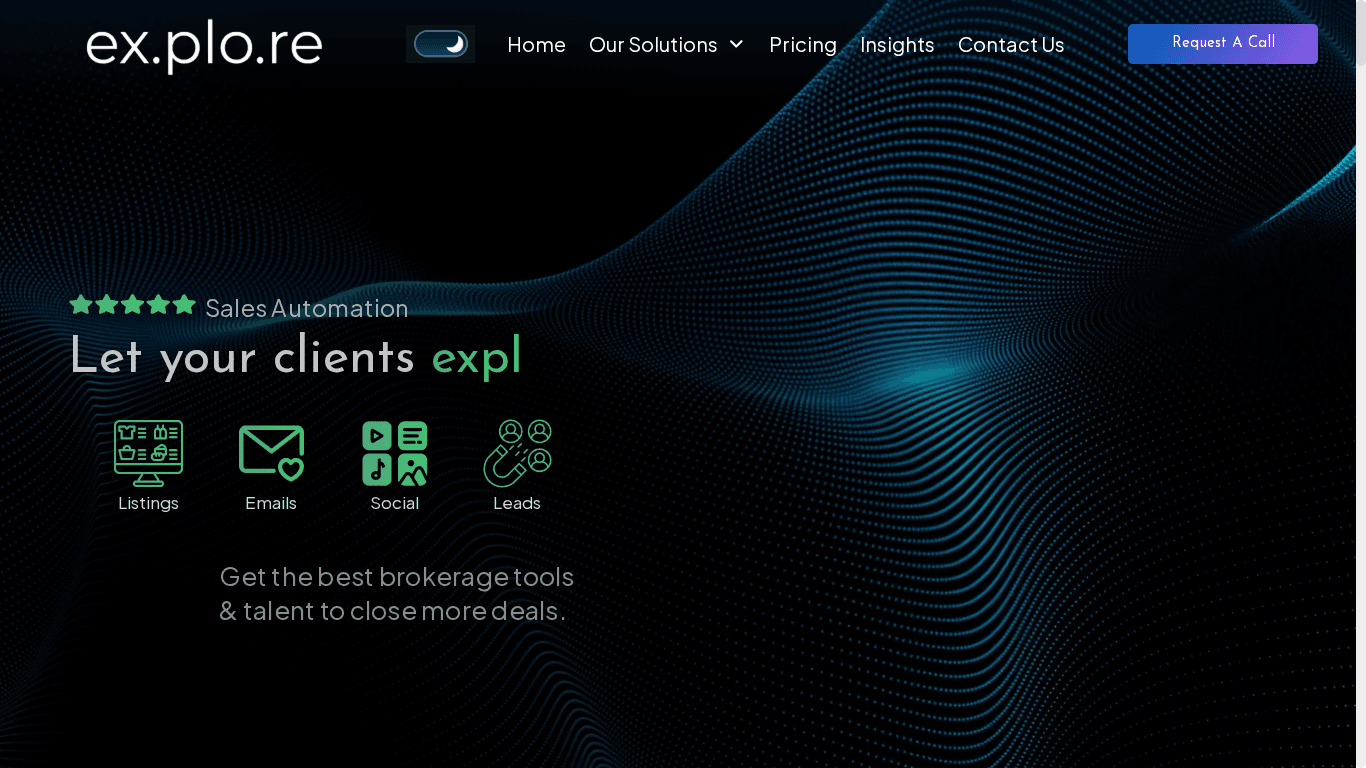
Plo’s ex.plo.re platform is built to close that gap. The CRM tracks every prospect interaction across email, SMS, phone, and social. The AI ad creation tool generates listing-specific campaigns in minutes. Managed Google ad campaigns put your brand in front of buyers actively searching in your market, without you having to manage bids and creative. For teams running the 6-touch broker cadence above, the platform handles sequencing and follow-up automatically, so reps spend time on conversations, not admin.
If you are evaluating your current tool stack or starting from scratch, the top prospecting tools for real estate comparison on ex.plo.re walks through the categories and options in detail. For brokers ready to put a managed program in place, the real estate prospecting guide is the logical next step.
Useful sources and further reading
- HubSpot: Sales Prospecting Skills, Tips, and Templates — The most comprehensive practitioner guide available; covers qualification frameworks (GPCTBA/C&I, BANT), batching strategies, and template libraries.
- Gartner: Sales Development Technology — Authoritative analysis of the sales development tech stack and how enterprise teams are structuring their tooling.
- HBR: Why Customer Referrals Can Drive Stunning Profits — The foundational research on referral economics; essential reading for any team underinvesting in this channel.
- Sender.net: Lead Generation Guide — Detailed breakdown of lead types (MQL, SQL, PQL), capture mechanisms, and nurture workflows.
- Salesforce: What Is Lead Generation? — Clear definitions of lead qualification stages and common generation methods from a primary CRM authority.
- Cognism: What Is Prospecting in Sales? — Practical coverage of inbound/outbound hybrid strategies and routing logic between marketing and sales.
- Leadfeeder: B2B Sales Prospecting Strategies — Practitioner-level advice on trigger-event personalization and consistency over volume.
- SEMrush: 13 Lead Generation Strategies — A useful catalog of inbound and outbound tactics including landing pages, SEO, retargeting, and webinars.
- DemandNexus: B2B Lead Generation Guide — Covers the distinction between lead gen and demand gen, plus validation experiment frameworks for testing new methods.
- Ciente: Types of Sales Prospecting — Clear overview of inbound vs. outbound classification and how modern teams structure their prospecting approach.
- Plo / ex.plo.re: Real Estate Visual Marketing Guide — Practical guidance on visual marketing for agents; directly relevant to inbound content and event promotion tactics.