

Nearly 4 out of 10 home sellers find their agents through referrals from friends or family, making networking one of the most powerful tools for client acquisition in real estate. Yet many agents struggle to harness this opportunity effectively. This article reveals proven strategies to transform your networking efforts into a consistent sales pipeline, from understanding the dual network concept to leveraging modern digital platforms alongside traditional methods for maximum impact.
Table of Contents
- Understanding The Role And Impact Of Networking On Real Estate Sales
- Networking Mechanisms And Types Of Connections
- Common Misconceptions About Networking In Real Estate
- Modern And Traditional Networking Strategies For Real Estate Agents
- Collaborative Networking With Related Industry Professionals
- Effective Networking Events And Venues For Real Estate Agents
- Bridging Networking To Practical Sales Application
- Enhance Your Real Estate Prospecting With Specialized Tools
- Frequently Asked Questions About Networking In Real Estate Sales
Key takeaways
| Point | Details |
|---|---|
| Referral networking drives sales | 38% of home sellers and 39% of buyers find agents through trusted referrals. |
| Two network types matter | Peer networks provide market intelligence while client networks generate direct referrals and repeat business. |
| Myths limit effectiveness | Believing networking produces instant sales or that digital methods are inferior prevents agents from building sustainable pipelines. |
| Hybrid strategies win | Combining traditional events with LinkedIn and social media maximizes reach and personal connection. |
| Strategic partnerships multiply referrals | Collaborating with mortgage brokers, inspectors, and contractors creates mutual referral streams and speeds transactions. |
Understanding the role and impact of networking on real estate sales
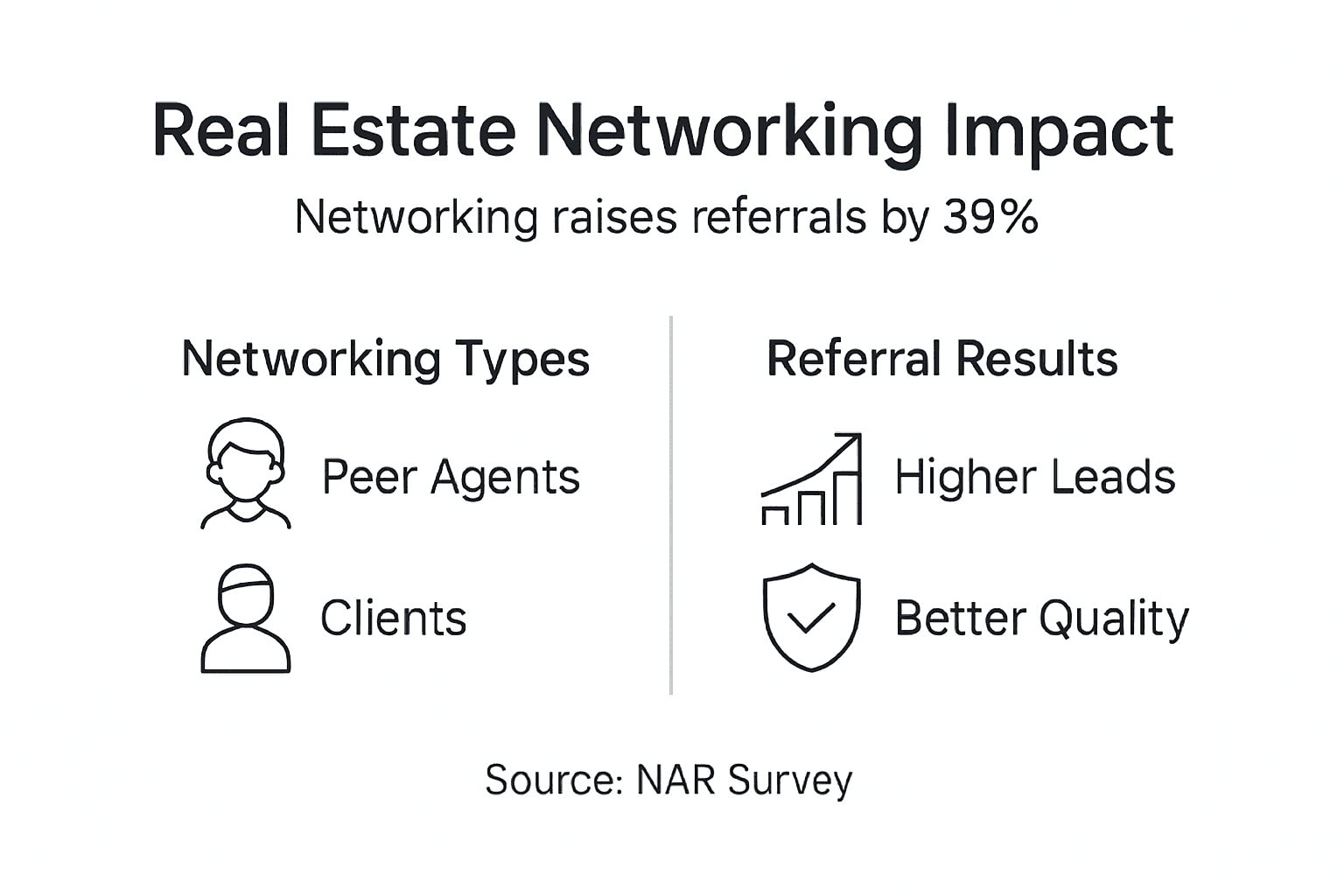
Referral networking stands as the foundation of successful client acquisition in real estate. 38% of home sellers found their agents through personal referrals, while 39% of buyers relied on recommendations from friends or family. These statistics reveal networking’s dominance over cold calling, paid advertising, and other lead generation methods.
Trusted relationships from networking deliver higher quality leads than impersonal marketing. When someone vouches for your expertise, you enter the conversation with credibility already established. This advantage becomes critical in competitive markets where dozens of agents compete for the same clients.
Successful agents treat networking as a core sales strategy, not an occasional activity. They understand that networking is not just who you know but who trusts you enough to stake their reputation on your service. Building this trust requires consistent engagement, value delivery, and genuine relationship building over time.
The competitive advantage from networking extends beyond immediate transactions. Your network provides market insights, partnership opportunities, and long-term referral streams that sustain your business through market fluctuations. Agents who master real estate networking tips report more stable income and higher client satisfaction than those relying solely on paid leads.
Pro Tip: Track which networking sources generate the most qualified leads and double down on those channels while maintaining presence in others for diversification.
Networking mechanisms and types of connections
Real estate agents benefit from cultivating two distinct yet complementary networks. Your peer network includes other agents, brokers, and industry professionals who share market intelligence and collaboration opportunities. Your client network encompasses past clients, prospects, and community members who generate direct referrals and repeat business.
Networking connections include industry peers and clients, both critical to building sustainable sales pipelines. Peer networks offer access to off-market listings, co-brokerage deals, and insider knowledge about neighborhood trends and regulatory changes. These relationships help you serve clients better and close deals faster.

Client networks develop through exceptional service delivery, community engagement, and consistent communication. A satisfied client who refers you to three friends delivers more value than a single transaction. These referrals convert at higher rates because they arrive pre-qualified and pre-sold on your abilities.
Successful agents invest time in both network types:
- Peer connections through industry events, broker opens, and professional associations
- Client relationships via personalized follow-ups, market updates, and community involvement
- Cross-network opportunities where peers become clients or introduce you to prospects
- Strategic balance ensuring neither network dominates your time investment
Balancing both networks creates resilience. When market conditions slow buyer activity, your peer network provides referrals and partnership income. When inventory tightens, your client network generates seller leads. This dual approach to networking tips for agents ensures consistent business flow regardless of external conditions.
Common misconceptions about networking in real estate
Three pervasive myths prevent agents from maximizing networking effectiveness. Understanding and correcting these misconceptions unlocks better results and sustainable growth.
Myth number one claims networking immediately produces sales. Reality shows that agents often overestimate immediate sales impact and underestimate the long-term compounding value of relationship building. Networking is investment, not instant gratification. The contacts you make today may refer clients months or years later when circumstances align.
Myth number two suggests networking only matters for finding new client leads. This narrow view ignores how peer networking enhances market knowledge, provides transaction support, and creates partnership revenue streams. Your network delivers competitive intelligence about pricing trends, buyer preferences, and emerging neighborhoods that sharpen your market positioning.
Myth number three dismisses digital networking as inferior to traditional face-to-face methods. Modern successful agents recognize that a hybrid approach combining both delivers superior results:
- Digital platforms extend reach beyond geographic limitations
- Traditional events build deeper personal connections and trust
- Each method serves different networking goals and audience preferences
- Integration creates touchpoints that reinforce relationships across channels
“The most successful agents don’t choose between digital and traditional networking. They master both and use each where it delivers the most value.”
These misconceptions limit agents who believe networking should produce instant results, focus only on client acquisition, or dismiss proven digital strategies. Educating yourself on realistic expectations and comprehensive approaches builds the foundation for essential networking tips that actually work.
Modern and traditional networking strategies for real estate agents
Effective networking blends time-tested traditional methods with modern digital platforms. Each approach offers unique advantages that complement the other when used strategically.
Traditional networking builds the deep personal connections that generate trust and referrals. Local chamber of commerce meetings position you as a community business leader. Real estate conferences provide peer learning and industry relationship building. Charity events and community sponsorships create goodwill while expanding your visibility among potential clients.
Modern networking leverages digital platforms like LinkedIn to significantly extend reach and efficiency. Social media storytelling showcases your expertise and personality to hundreds of connections simultaneously. Email marketing maintains consistent contact without requiring physical presence. Virtual events and webinars attract geographically diverse audiences interested in your market.
| Method | Advantages | Limitations |
|---|---|---|
| Traditional networking | Builds deep trust, memorable interactions, local community presence | Time-intensive, limited geographic reach, higher per-contact cost |
| Digital networking | Scalable reach, efficient follow-up, data tracking, 24/7 engagement | Less personal initially, requires content creation skills, platform algorithm changes |
| Hybrid approach | Combines depth and scale, multiple touchpoints, diverse audience access | Requires managing both skill sets, time allocation across channels |
The most effective agents use traditional methods to deepen key relationships while digital platforms maintain broader network engagement. You might attend monthly chamber meetings for face-to-face connections, then share insights from those meetings via LinkedIn to demonstrate thought leadership to your wider network.
Pro Tip: Use CRM tools to track both digital and in-person contacts, logging interaction details and scheduling follow-ups so no relationship falls through the cracks.
Your networking mix should reflect your target market preferences. Luxury buyers may respond better to exclusive in-person events, while first-time buyers often discover agents through digital marketing for real estate and social media presence. Test both channels and measure which produces qualified leads for your specific niche.
Collaborative networking with related industry professionals
Expanding your network beyond fellow agents multiplies referral opportunities and transaction efficiency. Strategic partnerships with complementary real estate professionals create mutual benefit streams that strengthen everyone’s business.
Networking with related professionals creates referral partnerships and insider market knowledge advantages. Mortgage brokers need agents to refer pre-qualified buyers. Home inspectors depend on agent relationships for consistent business. Contractors seek agents who recommend their services to clients planning renovations before listing.
These partnerships speed up transactions and improve client experiences. When you have trusted mortgage broker relationships, your buyers get faster pre-approvals. Inspector partnerships ensure scheduling flexibility during tight timelines. Contractor connections help sellers prepare properties efficiently for maximum sale prices.
Build collaborative networks with:
- Mortgage brokers and loan officers for buyer financing expertise
- Home inspectors who deliver thorough reports on realistic timelines
- Contractors and handymen for pre-listing repairs and staging
- Title companies and real estate attorneys for smooth closings
- Property managers for investor client referrals
Cross-industry connections provide insider information unavailable to agents working in isolation. Mortgage brokers share financing trend insights that help you advise clients on timing. Inspectors alert you to common issues in specific neighborhoods. Contractors reveal which renovations deliver the best return on investment for sellers.
Pro Tip: Attend related professionals’ events and offer genuine value before asking for referrals. Introduce your mortgage broker to potential clients, recommend your inspector in community forums, or share your contractor’s work on social media to strengthen reciprocal ties.
Collaborative networking broadens your influence beyond direct buyers and sellers. When five industry professionals each refer you two clients annually, that is ten additional transactions from partner networking tips alone.
Effective networking events and venues for real estate agents
Choosing the right networking venues dramatically impacts your return on time investment. Not all events deliver equal value, so strategic selection based on your goals and target market is essential.
Chamber of commerce meetings and local industry conferences provide effective networking opportunities for building community visibility and professional relationships. Chamber events attract local business owners and community leaders who become clients or referral sources. These gatherings position you as a committed community member, not just someone selling services.
Industry conferences offer concentrated peer learning and referral network expansion. National and regional real estate conferences gather top performers sharing strategies and best practices. The relationships formed at these events often develop into long-term mastermind groups and referral partnerships spanning multiple markets.
Charity events and community fundraisers build goodwill while broadening your network among demographically diverse audiences. Sponsoring a local youth sports team or volunteering at food banks demonstrates community commitment that resonates with potential clients seeking agents who care about more than commissions.
Maximize event networking effectiveness:
- Research attendee lists beforehand to identify priority connections
- Set specific goals for each event such as meeting three mortgage brokers or connecting with five potential seller leads
- Prepare a compelling 30-second introduction highlighting your unique value
- Follow up within 48 hours while you remain memorable
- Balance frequency and quality by attending fewer events but engaging more deeply
Your networking event recommendations should align with your target market. Agents focusing on luxury properties might prioritize country club events and high-end charity galas. Those serving first-time buyers benefit more from young professional networking groups and financial literacy workshops.
Quality trumps quantity in event selection. Attending one monthly chamber meeting where you build genuine relationships delivers better results than superficial appearances at five random events. Consistency at the same venues helps people recognize you and reinforces your community presence.
Bridging networking to practical sales application
Transforming networking knowledge into closed deals requires systematic implementation and consistent execution. Follow these actionable steps to convert connections into clients and referrals.
-
Define clear networking goals based on your business plan. Target specific numbers such as meeting 20 new industry professionals quarterly or reconnecting with 50 past clients monthly. Quantifiable goals create accountability and measurement.
-
Research and select networking venues matching your target market and goals. If you serve luxury sellers, prioritize upscale community events and high-end professional associations. First-time buyer specialists benefit from young professional groups and financial planning seminars.
-
Craft a compelling personal brand and elevator pitch for introductions. Your 30-second introduction should communicate who you serve, what problems you solve, and what makes your approach unique. Practice until it sounds natural, not rehearsed.
-
Follow up promptly and systematically with CRM tools to maintain momentum. Enter new contacts immediately with notes about conversation context. Schedule follow-up tasks within 48 hours while you remain memorable. Automate reminder sequences for periodic check-ins.
-
Balance online and offline efforts for broader impact and relationship depth. Use LinkedIn to maintain visibility between in-person meetings. Share valuable market insights via email to demonstrate expertise. Post client success stories on social media to showcase results.
-
Provide value before requesting referrals or business. Share relevant articles, make introductions between contacts who could help each other, or offer market analysis for their properties. Generosity builds goodwill that naturally generates reciprocity.
Pro Tip: Schedule regular quarterly reviews of your network to identify which relationships need nurturing and set outreach reminders to stay top of mind without being pushy.
The agents who excel at improving networking skills treat relationship building as a core business discipline requiring consistent time investment. They block calendar time for networking activities just as they schedule listing appointments and client showings. This systematic approach prevents networking from becoming an afterthought squeezed into spare moments.
Measure your networking ROI by tracking lead sources in your CRM. Tag contacts by how you met them and which referral source generated each transaction. This data reveals which networking investments deliver the highest returns, allowing you to optimize your strategy based on actual results rather than assumptions.
Enhance your real estate prospecting with specialized tools
Networking effectiveness multiplies when you combine relationship building with purpose-built technology designed for real estate professionals. Modern prospecting tools streamline the client acquisition process while your personal connections provide the trust that closes deals.

Advanced real estate prospecting tools help you identify high-potential leads within your network and surrounding community. These platforms analyze property data, ownership records, and market signals to pinpoint prospects most likely to list or buy soon. When you combine this intelligence with your networking relationships, you approach potential clients at exactly the right moment with relevant solutions.
CRM software integration tracks every networking contact and automates personalized follow-ups that maintain relationships without consuming your entire day. Set up drip campaigns delivering valuable market updates to past clients and prospects. Schedule birthday and anniversary messages that keep you top of mind. Log interaction notes from networking events so you remember conversation details months later when opportunities arise.
The most successful agents use lead generation tools for realtors to complement their networking efforts, not replace them. Technology handles repetitive tasks like data entry, email sequences, and lead scoring while you focus on high-value activities like meaningful conversations and relationship deepening. Smart real estate lead sources blend personal networking with digital efficiency for consistent client acquisition pipelines.
Frequently asked questions about networking in real estate sales
What is the most effective networking method for new real estate agents?
New agents should prioritize local chamber of commerce meetings and community events where you can build face-to-face relationships quickly. These venues offer regular attendance opportunities that help people recognize you as a committed community member, which generates trust faster than purely digital approaches.
How can digital platforms complement in-person networking?
Digital platforms maintain visibility between in-person meetings and extend your reach beyond geographic limitations. Use LinkedIn to share insights from events you attend, reinforcing your expertise with people who could not be there physically while staying connected to those you met.
How long does it usually take to see results from networking efforts?
Expect three to six months before networking generates consistent referrals, though occasional quick wins happen sooner. Relationship-based lead generation compounds over time as your network grows and people experience your expertise firsthand, making patience essential for long-term success.
What professionals should I prioritize for collaborative networking?
Mortgage brokers and loan officers deliver the highest immediate value through buyer referrals and financing expertise. Follow with home inspectors and contractors who speed transactions and improve client experiences, then expand to title companies and attorneys as your business grows.
How do I maintain and grow my networking contacts over time?
Use CRM systems to schedule quarterly check-ins with key contacts and monthly touches for broader network segments. Provide consistent value through market updates, relevant articles, and helpful introductions rather than only reaching out when you need something, which builds authentic relationships that naturally generate referrals.