

Most American real estate transactions over one million dollars involve some form of co-brokerage, making collaboration fundamental for agents worldwide. Misunderstandings about commission splits or complicated processes often discourage real estate professionals from using these partnerships effectively. Learning to master co-brokerage transforms potential competition into strategic opportunity, expands your client network, and enhances sales performance through shared expertise and transparent practices.
Table of Contents
- Co-brokerage Defined And Common Misconceptions
- Types Of Co-brokerage Arrangements Explained
- How Co-brokerage Works In Practice
- Legal Framework And Global Best Practices
- Commission Splits, Costs, And Risk Factors
- Critical Responsibilities And Common Pitfalls
Key Takeaways
| Point | Details |
|---|---|
| Co-brokerage Collaboration | Co-brokerage involves a partnership between brokers to effectively manage real estate transactions, enhancing efficiency and expanding market reach. |
| Clear Communication is Essential | Successful co-brokerage relies on transparent and timely communication to align objectives and prevent misunderstandings. |
| Understanding Commission Structures | Real estate professionals must negotiate clear commission splits and understand the legal implications of their co-brokerage agreements. |
| Navigating Ethical Standards | Adhering to ethical guidelines is crucial in maintaining trust and integrity within co-brokerage relationships. |
Co-brokerage Defined and Common Misconceptions
Co-brokerage represents a strategic collaboration between real estate professionals where multiple brokers work together to facilitate property transactions. At its core, this approach involves two agents representing different parties—typically one for the buyer and another for the seller—who cooperate to successfully close a real estate deal. Cooperative brokerage practices are fundamentally designed to expand market opportunities and enhance transaction efficiency.
Many real estate professionals misunderstand co-brokerage, assuming it complicates transactions or reduces individual commissions. In reality, this collaborative model creates significant advantages. Agents can access broader buyer networks, increase property visibility, and leverage each other’s expertise. The commission is typically split according to pre-established agreements, ensuring both parties are fairly compensated for their contributions to the sale.
Effective co-brokerage requires clear communication, mutual respect, and adherence to professional standards. The National Association of Realtors (NAR) Code of Ethics explicitly encourages cooperative practices that prioritize client interests. Successful co-brokers maintain transparent relationships, share relevant property information promptly, and work towards mutually beneficial outcomes. This approach transforms potential competition into strategic partnership.
Pro tip: Develop a standardized communication protocol with co-brokers to streamline information exchange and maintain professional relationships.
Types of Co-brokerage Arrangements Explained
Real estate professionals utilize several distinct co-brokerage arrangements that determine how brokers collaborate and share responsibilities. Different co-brokerage models fundamentally shape transaction dynamics, with each type offering unique advantages for agents and clients. The primary arrangements include listing broker and selling broker representations, which establish clear roles and expectations during property transactions.
The most common co-brokerage arrangements involve specific agency structures. Exclusive agency agreements limit the seller to working with a single designated broker, while open agency agreements provide more flexibility by allowing multiple brokers to market and sell a property. Dual agency represents a more complex scenario where one broker represents both the buyer and seller, requiring heightened ethical standards and transparent communication to manage potential conflicts of interest.
Each co-brokerage arrangement comes with specific commission structures and legal implications. Listing brokers typically offer a predetermined commission percentage to selling brokers, incentivizing cooperation and market exposure. The percentage can vary based on regional practices, property type, and negotiated terms. Successful real estate professionals understand these nuanced arrangements, strategically selecting collaboration models that maximize transaction potential while maintaining professional integrity.
Here’s a summary of key co-brokerage arrangements and their unique impacts:
| Arrangement Type | Broker Roles | Main Advantage | Ethical Considerations |
|---|---|---|---|
| Exclusive Agency | One listing broker only | Maximized focus | Clear client representation |
| Open Agency | Multiple brokers involved | Increased visibility | Prevent client confusion |
| Dual Agency | One broker for both parties | Streamlined negotiation | Avoid conflicts of interest |
Pro tip: Always draft clear written agreements outlining commission splits and responsibilities before initiating any co-brokerage collaboration to prevent potential misunderstandings.
How Co-brokerage Works in Practice
Co-brokerage represents a strategic partnership where real estate professionals collaborate to streamline property transactions. At its core, the process involves two distinct brokers sharing critical responsibilities: one managing property listing and marketing, while the other identifies and represents potential buyers. This division of labor allows each professional to leverage their specific strengths, creating a more efficient and comprehensive approach to real estate sales.
The mechanics of co-brokerage typically follow a structured workflow. The listing broker prepares comprehensive property marketing materials, develops strategic promotional campaigns, and sets initial pricing parameters. Simultaneously, the selling broker actively searches for qualified buyers, conducts property showings, and facilitates initial client negotiations. Communication between these professionals becomes paramount, with regular information exchanges ensuring both parties remain aligned on transaction goals, potential challenges, and emerging opportunities.
Commission structures in co-brokerage are carefully predefined through formal agreements that outline each broker’s compensation and specific responsibilities. These agreements typically specify precise percentage splits, often ranging between 50/50 and 60/40 arrangements, depending on the amount of work and market complexity. Successful co-brokerage demands transparent communication, mutual respect, and a commitment to professional ethics that prioritizes client interests above individual gain.
Pro tip: Document every aspect of your co-brokerage agreement in writing to prevent potential misunderstandings and establish clear expectations from the beginning.
Legal Framework and Global Best Practices
Co-brokerage operates within a complex legal landscape that varies significantly across different jurisdictions. Global regulatory standards emphasize the critical importance of establishing clear legal frameworks that protect both brokers and clients. Real estate professionals must navigate intricate compliance requirements, ensuring that collaborative agreements meet local and national regulatory standards while maintaining ethical business practices.
The fundamental legal principles governing co-brokerage focus on three primary areas: transparency, confidentiality, and fair compensation. Brokers must develop comprehensive written agreements that explicitly outline each party’s responsibilities, commission structures, and potential liability limitations. These agreements serve as critical legal documents that prevent misunderstandings and provide clear recourse in case of disputes. Professional organizations like the National Association of Realtors play a crucial role in establishing ethical guidelines and recommended legal practices that help standardize co-brokerage interactions.
International co-brokerage practices demonstrate significant variations in legal approaches. Some regions implement strict regulatory frameworks that mandate detailed disclosure requirements, while others maintain more flexible guidelines. Successful real estate professionals must remain adaptable, understanding local legal nuances and maintaining a proactive approach to compliance. This includes continuous professional education, staying updated on regulatory changes, and developing robust communication protocols that prioritize client interests and professional integrity.
Pro tip: Consult with a local real estate attorney to review and validate your co-brokerage agreements, ensuring they meet specific jurisdictional legal requirements.
Commission Splits, Costs, and Risk Factors
Co-brokerage commission structures represent a nuanced financial arrangement that demands careful negotiation and strategic planning. Commission distribution practices typically revolve around an equitable 50/50 split between listing and selling brokers, though actual percentages can vary widely based on individual contributions, market conditions, and specific agreement terms. Experienced real estate professionals understand that these splits are not one-size-fits-all but require tailored approaches that reflect each broker’s specific role and investment in the transaction.
Beyond basic commission splits, brokers must carefully evaluate the associated costs and potential financial risks inherent in collaborative arrangements. Marketing expenses, administrative fees, and potential legal costs can significantly impact the overall financial equation. Successful co-brokerage partnerships develop transparent cost-sharing mechanisms that allocate expenses fairly while maintaining clear accountability. This approach requires detailed documentation, open communication, and a willingness to negotiate terms that balance individual and collective interests.

Risk management becomes paramount in co-brokerage scenarios, with potential challenges ranging from commission disputes to liability concerns. Brokers must proactively address potential conflicts by establishing comprehensive written agreements that clearly define responsibilities, outline dispute resolution mechanisms, and protect each party’s professional and financial interests. This includes detailed provisions addressing fiduciary duties, confidentiality requirements, and potential scenarios that might create ethical or legal complications.
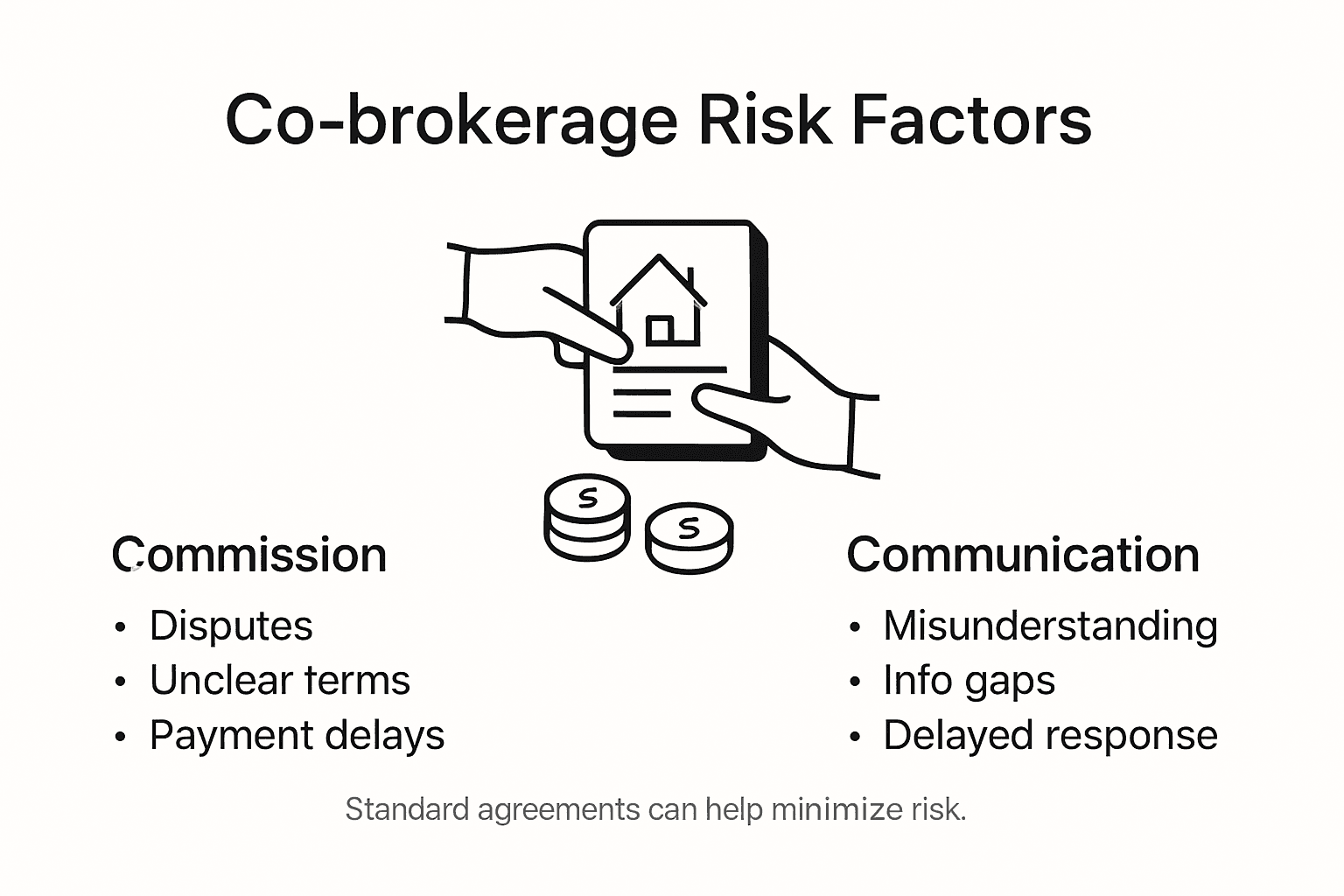
This table outlines common co-brokerage risks and proactive solutions:
| Risk Factor | Example Scenario | Suggested Prevention |
|---|---|---|
| Commission Disputes | Unclear split agreement | Use written agreements |
| Role Overlap | Both brokers market same buyer | Define responsibilities upfront |
| Confidentiality Breach | Info shared without consent | Control sensitive data access |
| Liability Issues | Legal challenges post-sale | Review contracts with attorney |
Pro tip: Create a standardized co-brokerage agreement template that includes specific language addressing commission splits, cost allocations, and risk mitigation strategies.
Critical Responsibilities and Common Pitfalls
Co-brokerage success hinges on understanding and executing critical professional responsibilities with precision and integrity. Broker collaboration requires meticulous attention to core professional obligations, including transparent communication, accurate client disclosure, and unwavering commitment to fiduciary duties. Each broker must maintain exceptional standards of professional conduct, ensuring that client interests remain paramount throughout the transaction process.
The landscape of co-brokerage is fraught with potential pitfalls that can derail even the most promising collaborative efforts. Common challenges include miscommunication between brokers, poorly defined role boundaries, and unresolved conflicts of interest. Successful professionals proactively address these risks by establishing clear communication protocols, developing comprehensive written agreements, and maintaining ongoing dialogue that promotes mutual understanding and trust. This approach requires brokers to be both strategic and emotionally intelligent, balancing professional objectives with collaborative spirit.
Navigating the complex ethical terrain of co-brokerage demands continuous professional development and a commitment to best practices. Brokers must remain vigilant about potential conflicts, maintain strict confidentiality, and ensure complete transparency in all interactions. This includes thorough documentation of agreements, prompt and honest communication with both cooperating brokers and clients, and a willingness to address potential issues before they escalate into significant problems. Sophisticated brokers view these challenges as opportunities to demonstrate professionalism and build long-term collaborative relationships.
Pro tip: Develop a standardized communication checklist for co-brokerage interactions that outlines key communication touchpoints, confidentiality requirements, and conflict resolution protocols.
Elevate Your Co-brokerage Success with Tools Designed for Real Estate Pros
Co-brokerage in real estate requires seamless communication, clear agreements, and efficient collaboration to turn potential challenges into profitable partnerships. If you are looking to overcome common pitfalls like commission disputes, miscommunication, or unclear responsibilities while maximizing your impact as a power broker, our platform is built to support exactly that. By integrating the latest technology with expert guidance, we help you streamline your prospecting and sales cycle so you can focus on what matters most—closing deals together.

Discover how ex.plo.re CRM empowers you to manage complex co-brokerage arrangements with confidence. Use our cutting-edge tools to improve client acquisition, organize your communications, and easily document agreements to prevent misunderstandings. Don’t let collaboration be your obstacle. Act now to amplify your role as a trusted co-broker and attract more clients locally. Visit ex.plo.re CRM today and transform your approach to real estate partnerships.
Frequently Asked Questions
What is co-brokerage in real estate?
Co-brokerage in real estate refers to the collaboration between multiple real estate brokers to facilitate property transactions, where one broker typically represents the seller and another represents the buyer.
How do commission splits work in co-brokerage agreements?
Commission splits in co-brokerage agreements are generally predefined and can vary based on the arrangement, with common splits being 50/50 or 60/40 depending on the work involved and the terms negotiated between the brokers.
What are the types of co-brokerage arrangements available?
Common types of co-brokerage arrangements include exclusive agency agreements, open agency agreements, and dual agency, each with different roles and implications for brokers and clients.
How can effective communication improve co-brokerage partnerships?
Effective communication enhances co-brokerage partnerships by ensuring both brokers are aligned on transaction goals, share relevant information promptly, and maintain a transparent relationship, which can lead to successful property sales.