

Over 80 percent of American yacht buyers say the onboarding experience shapes their trust in a brokerage. For anyone in the competitive world of yacht sales, delivering a well-organized and personalized client journey is not just a formality but a powerful way to build lasting relationships. This guide breaks down each actionable step needed to create a smooth onboarding process that elevates your professional reputation with every American client.
Table of Contents
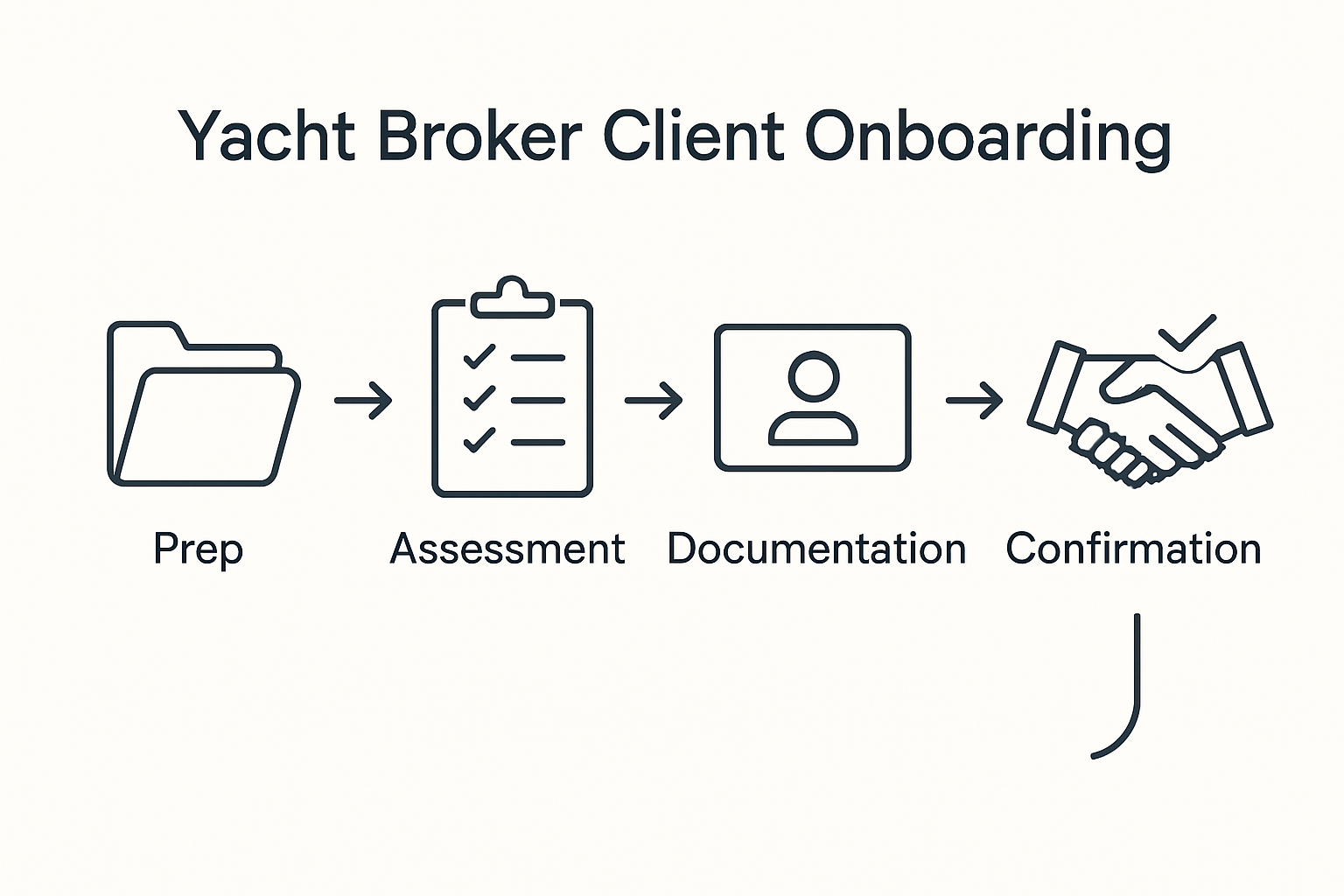
- Step 1: Prepare Essential Onboarding Materials
- Step 2: Define Client Expectations And Requirements
- Step 3: Collect And Verify Client Documentation
- Step 4: Set Up Personalized Client Communications
- Step 5: Confirm Successful Onboarding And Follow-Up
Quick Summary
| Key Insight | Explanation |
|---|---|
| 1. Prepare Personalized Onboarding Materials | Create a comprehensive welcome packet with documents that set clear expectations for the client experience. |
| 2. Clearly Define Client Needs | Conduct in-depth discussions to understand the client’s yacht preferences, budget, and long-term goals for personalized service. |
| 3. Collect and Verify Client Documentation | Use a strategic checklist to gather and validate essential documents, ensuring compliance and building trust. |
| 4. Implement Tailored Communication Strategies | Develop a multichannel communication approach that caters to individual client preferences for consistent engagement. |
| 5. Conduct Post-Onboarding Reviews | Schedule follow-up meetings to assess client satisfaction and outline future interactions, reinforcing ongoing support and trust. |
Step 1: Prepare essential onboarding materials
When launching your yacht brokerage client onboarding process, assembling the right documentation is your first critical move. You want to create a comprehensive package that not only meets professional standards but also sets the stage for a smooth client relationship.
Start by gathering core documents that streamline client registration and communication. This typically includes a client intake form, service agreement, confidentiality documents, and preliminary questionnaires about their specific yacht preferences and transaction goals. Pro tip: Design these materials to feel personalized and professional. Use clean layouts with your brokerage branding and include clear instructions for completion.
Consider creating a digital welcome packet that clients can review before your first meeting. This packet should outline your brokerage process, highlight your unique value proposition, and provide clear expectations about what working with you will entail. By preparing these materials thoughtfully, you transform the onboarding experience from a mundane administrative task into an opportunity to showcase your professionalism and commitment to exceptional client service.
Your next step will involve scheduling an initial consultation where you can walk through these materials and begin building a strong client relationship.
Step 2: Define client expectations and requirements
In yacht brokerage, setting crystal clear expectations upfront is the difference between a smooth transaction and potential misunderstandings. Your goal is to create a comprehensive understanding of what both you and your client want from the yacht purchasing or selling experience.
Conducting a thorough initial assessment allows you to map out precise client needs. Begin with an in depth discovery conversation that explores their specific yacht requirements such as budget, preferred yacht type, intended usage, and long term maritime goals. Ask strategic questions that reveal not just surface level preferences but deeper motivations behind their yacht investment. For instance determine whether they want a racing vessel recreational cruiser or a luxurious entertainment platform.

A powerful technique is creating a customized client profile that captures both quantitative and qualitative details. Pre onboarding client evaluations help you understand their risk tolerance financial capacity and personal expectations. Document these insights meticulously creating a reference point that will guide your entire engagement. Pro tip: Use a standardized yet flexible template that allows personalization while maintaining professional consistency.
Your next step involves translating these defined expectations into a formal proposal that demonstrates your understanding and commitment to meeting their specific yacht acquisition or sales objectives.
Step 3: Collect and verify client documentation
In yacht brokerage, collecting and verifying client documentation is a critical step that protects both you and your client while establishing a foundation of trust and professionalism. Your objective is to gather comprehensive documentation that validates client identity financial capabilities and transaction readiness.
Systematic documentation collection requires a strategic approach. Start by creating a comprehensive checklist of required documents such as proof of funds proof of identity maritime certifications personal references and any relevant financial statements. Request these materials early in the onboarding process and provide clear instructions about acceptable document formats and submission methods. Digital upload platforms can streamline this process reducing friction and making document submission convenient for your clients.
Pre onboarding verification protocols are essential for maintaining regulatory compliance and minimizing potential risks. Carefully review each submitted document for completeness accuracy and authenticity. Cross reference information verify signatures and ensure all documentation meets industry standards. Pro tip: Develop a standardized verification workflow that includes multiple checkpoints and allows for quick resolution of any documentation discrepancies. This meticulous approach demonstrates your commitment to professional excellence and helps build client confidence.
Your next step involves analyzing these collected documents to confirm the client meets all necessary requirements for proceeding with their yacht transaction.
Step 4: Set up personalized client communications
Personalized client communications are the heartbeat of successful yacht brokerage relationships. Your goal is to create a communication strategy that makes each client feel uniquely understood and consistently supported throughout their yacht acquisition journey.
Crafting tailored onboarding communications requires a thoughtful multichannel approach. Begin by developing a welcome packet that goes beyond generic information. Segment your communication methods based on client preferences some might prefer detailed email updates while others appreciate quick text messages or personalized video briefings. Create communication templates that can be easily customized to reflect each client specific yacht interests maritime background and transaction goals.
Innovative client engagement techniques can dramatically enhance your client experience. Consider implementing a mix of digital touchpoints such as personalized welcome videos milestone update emails and even occasional social media interactions that demonstrate your commitment to their unique yacht journey. Pro tip: Use a client relationship management system that allows you to track communication preferences track interaction history and ensure no client feels overlooked. This strategic approach transforms standard communication into a relationship building opportunity that sets you apart in the competitive yacht brokerage market.
Your next step involves scheduling your first substantive client consultation where you will begin translating these communication strategies into meaningful interactions.
Step 5: Confirm successful onboarding and follow-up
The final stage of client onboarding is about solidifying your relationship and ensuring the client feels fully supported and valued. Your objective is to transform the initial onboarding process into an ongoing partnership that builds long term trust and potential future transactions.
Strategic post onboarding communication requires a systematic and thoughtful approach. Schedule a comprehensive review meeting within the first 30 days to assess the clients initial experience discuss their ongoing yacht transaction goals and address any emerging questions or concerns. During this meeting create a clear roadmap for future interactions including anticipated communication frequencies preferred contact methods and specific milestones you will track together.
Client satisfaction validation techniques can significantly enhance your relationship building efforts. Implement a structured feedback mechanism such as a brief digital survey or personal follow up call that allows clients to share candid insights about their onboarding experience. Pro tip: Design your feedback collection to be quick and straightforward ensuring high response rates. Use these insights not just as a performance metric but as a continuous improvement tool for refining your yacht brokerage onboarding process. This proactive approach demonstrates your commitment to exceptional client service and sets the foundation for potential referrals and repeat business.
Your next phase involves maintaining consistent engagement and looking for opportunities to provide additional value throughout the clients yacht ownership journey.
Elevate Your Yacht Broker Client Onboarding Today
The art of client onboarding for yacht brokers is filled with challenges from gathering and verifying essential documents to delivering personalized communications that build lasting trust. Your goal is to turn complex processes like setting clear client expectations and confirming transaction readiness into seamless, professional experiences. Many brokers struggle with manual workflows that slow down onboarding and reduce client satisfaction. This is where the right technology can transform every step of your onboarding journey.
Discover how to streamline client intake, standardize documentation verification, and personalize communications with powerful tools designed specifically for brokers. At ex.plo.re CRM, we specialize in empowering yacht brokers to amplify their impact without changing their core approach. Our platform supports your expert processes by automating client profiles, managing document checklists, and tracking every communication detail. This helps you deliver exceptional experiences faster while keeping your unique maritime expertise front and center.
Ready to bridge expert client onboarding with cutting edge technology Let ex.plo.re CRM help you refine every interaction and secure more high value yacht clients. Visit our main CRM page now and take the next step toward becoming a power broker who drives seamless transactions and lasting relationships.
Frequently Asked Questions
What documents do I need to prepare for yacht client onboarding?
To prepare for yacht client onboarding, you should gather key documents such as a client intake form, service agreement, confidentiality documents, and preliminary questionnaires. Ensure these materials are organized and presented professionally to enhance the onboarding experience.
How can I establish clear client expectations during the onboarding process?
You can establish clear client expectations by conducting an in-depth discovery conversation that delves into their specific yacht requirements. This includes discussing their budget, preferred yacht type, and long-term goals, helping you tailor your services to meet their needs.
What steps should I take to verify client documentation?
To verify client documentation, create a comprehensive checklist of required documents and establish a systematic verification process. Review each document for accuracy and completeness, ensuring all submissions meet industry standards.
How do I create personalized client communications?
To create personalized client communications, develop a welcome packet that reflects the client’s unique interests and transaction goals. Use customized templates and multiple communication channels to engage clients effectively and ensure they feel supported throughout the onboarding process.
What is the best way to follow up with clients after onboarding?
The best way to follow up with clients after onboarding is to schedule a review meeting within the first 30 days. Use this time to assess their initial experience, discuss ongoing goals, and gather feedback to improve your onboarding process while strengthening your relationship.
How can I measure client satisfaction after the onboarding process?
You can measure client satisfaction by implementing a structured feedback mechanism such as a simple survey or follow-up call. This will allow clients to share their insights about the onboarding experience and help you identify areas for improvement.