
If you are searching for a Follow Up Boss alternative, the first thing worth doing is separating the complaint from the cure. Most people start looking because of price, missing lead generation, or shallow marketing automation, and only one of those problems is actually solved by swapping customer relationship management tools.
This guide leads with the criteria, groups the named options by the problem they solve, puts a number on the switching cost nobody quotes, and is honest about where our own platform is and is not the right answer.
Why Agents and Brokers Start Looking for a Follow Up Boss Alternative
Follow Up Boss is a well-built contact and follow-up system with a dialer attached. The reasons people leave it are remarkably consistent across reviews, and they fall into four buckets.
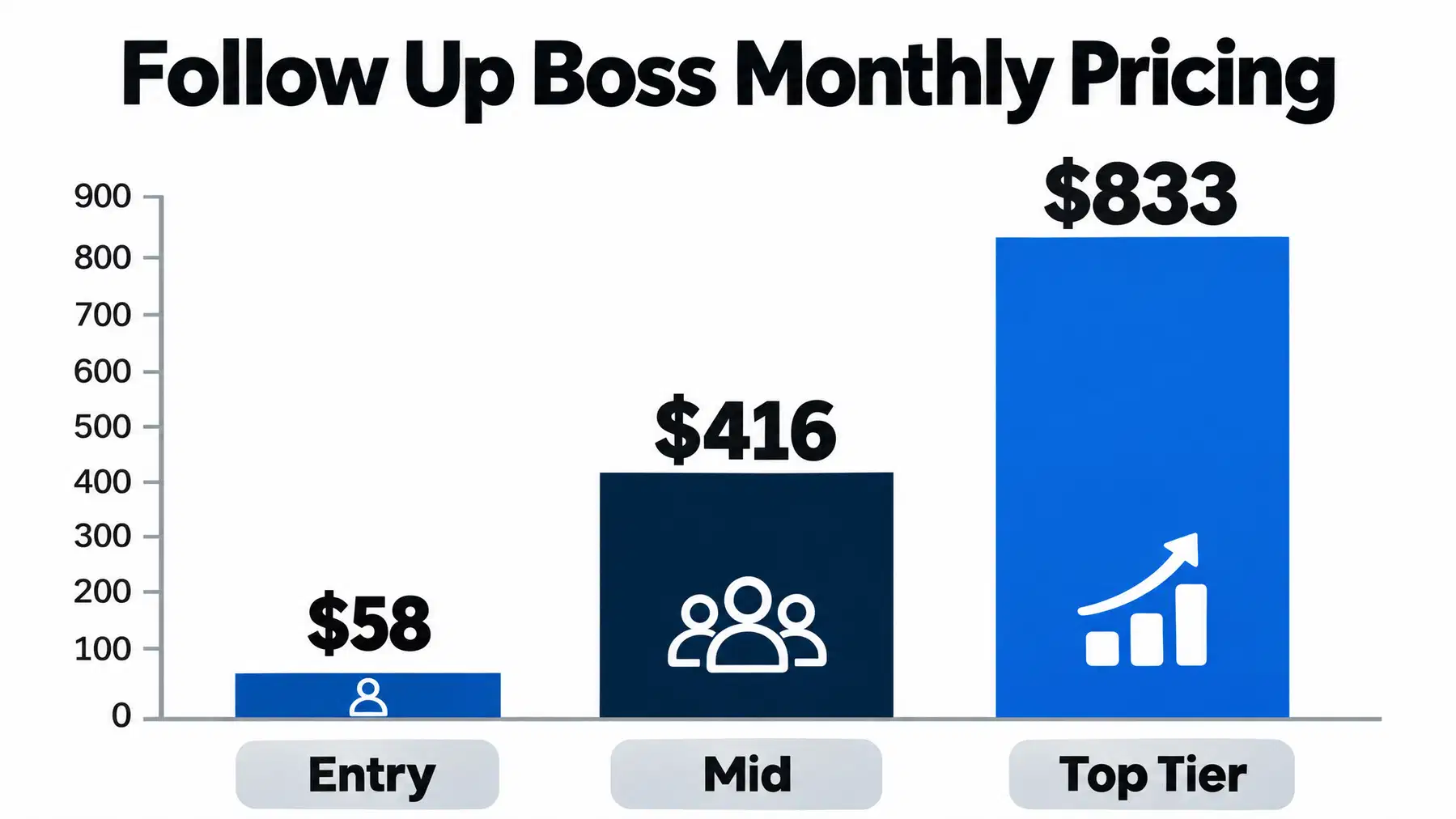
- Cost that climbs with the team. Entry plans sit at the low end, but pricing scales fast with seats, tiers and add-ons. One pricing breakdown lists Follow Up Boss plans at $58, $416 and $833 per month depending on tier, with further add-ons available.
- No built-in lead generation. The CRM organizes leads you already have. It does not create them. Brokers paying separately for portals, ads and websites start asking why the stack is so fragmented.
- Thin marketing automation. Follow-up sequences and reminders are strong. Listing launches, multichannel campaigns, print and brochure work are not what the tool was built for.
- No transaction management. Deals get tracked in a second system, which means duplicate data entry and a pipeline view nobody fully trusts.
These are different problems with different fixes. If your complaint is price, a cheaper CRM solves it. If your complaint is that nothing in your stack markets a $6M listing or a 38m yacht, a cheaper CRM solves nothing at all.
Before you shortlist anything, write down the one sentence that describes what is actually broken. Almost every bad switch starts with a vague answer to that question.
What to Consider Before You Switch: The Real Decision Criteria
A buying decision made on a feature grid tends to reproduce the same problem in a new interface. These six criteria decide the outcome more reliably than any feature count.
1. Pricing transparency
Published per-seat pricing lets you model three years of growth. Quote-only pricing means you will negotiate annually and rarely know whether you are paying a fair rate. Neither is automatically wrong, but quote-only vendors usually come with annual contracts, so read the term before the demo.
2. Built-in lead generation versus CRM-only
Some platforms sell you software; others sell you software plus a lead pipeline. Bundled lead generation looks efficient until you notice the leads are mass-market portal leads with mass-market conversion rates. Ask what the leads actually are and where they come from before valuing the bundle.
3. Automation depth
There is a wide gap between follow-up automation (reminders, drip emails, task assignment) and marketing automation (a listing that fans out into a website page, social posts, an email campaign, ads and print). If your gap is the second one, test it in the trial rather than taking the feature list at face value.
4. Transaction management
If your team runs deals through a separate transaction platform, decide whether consolidating is worth switching for. For many brokerages the answer is no, because the transaction tool is the one piece everyone already knows how to use.
5. Support model
This is the criterion most comparisons skip. Software-only vendors give you a tool and a help centre. Service models give you people who do the work. If marketing output is your bottleneck, more software will not fix a staffing problem.
6. Deal volume versus deal value
A team closing 200 transactions a year needs speed-to-lead and routing. A broker closing 12 transactions a year at high values needs depth per relationship. Tools optimised for the first case actively get in the way of the second.
Follow Up Boss Alternative Options, Grouped by What You’re Actually Solving For
Flat rankings are not useful, because the number one pick on a generic list is only number one for one kind of buyer. Here are the common options sorted by the problem they address.
If the problem is budget
Wise Agent and the HubSpot free tier cover contacts, basic pipelines and simple email. They fit solo agents and very small teams who need organization more than horsepower. The catch is that you will outgrow the automation quickly, and HubSpot’s useful marketing features sit in paid tiers that get expensive.
If the problem is lead volume
BoldTrail, Sierra Interactive, CINC and Boomtown bundle CRM with websites and paid lead generation. They suit high-volume teams with the staff to work a large inbound pool. The catch is pricing opacity and scale: one industry roundup lists CINC from $899 per month for solo agents and $1,500 for teams. The leads are also mass-market by design, which is a poor match for high-net-worth buyers.
If the problem is manual work
Lofty leans heavily on AI for lead scoring, nurture and ad management. It fits teams who want automation across the whole funnel in one place. The catch is complexity: the feature surface is large, adoption takes time, and pricing is usually quoted rather than published.
If the problem is rigidity
HubSpot and Pipedrive are general-purpose CRMs that bend to any sales process, including unusual ones. They suit brokers whose workflow does not look like residential real estate. The catch is that nothing is real-estate-specific out of the box, so you build the industry logic yourself.
What Nobody Tells You: Why Luxury and Yacht Sales Break the Standard CRM Comparison
Here is the part the roundups leave out. Follow Up Boss and nearly every alternative on that list share one design assumption: a steady stream of inbound leads, worked fast, with high churn. Speed-to-lead, mass texting, round-robin routing and drip sequences all exist to serve that model.
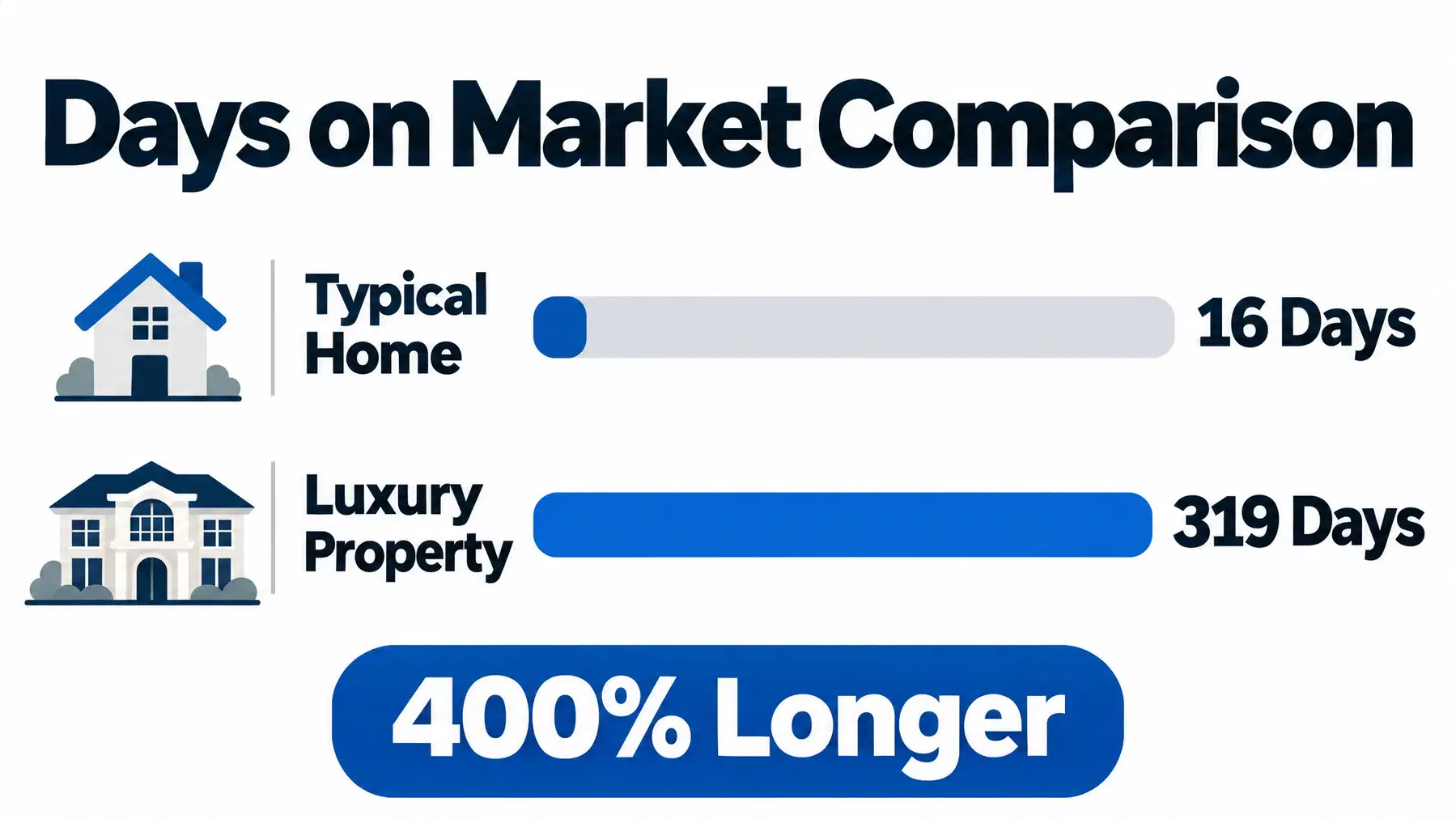
Luxury and yacht sales do not work that way. A typical home sits on the market for a matter of weeks before going pending, with sellers in the U.S. spending roughly 16 days on market plus a 30 to 45 day close. Multimillion-dollar properties operate on a different clock entirely: one luxury index found they average 319 days on market, about 400 percent longer than median-priced homes, with more than half spending over 180 days listed.
Now add the nature of the lead. In this segment the buyer is often a referral, a contact inside a broker network, or a wealthy prospect who will never fill in a form. There is no portal lead to respond to in five minutes. There is a relationship to maintain for eighteen months while the right asset appears.
So the real question for a luxury broker or yacht brokerage is not which CRM. It is does this platform market the property and the brand, or does it only store the contact? A CRM that cannot turn a single listing into a website page, a social campaign, an email sequence and a brochure is leaving the actual work to you.
That is why a Follow Up Boss alternative for luxury real estate often ends up being a different category of product, not a competing CRM. Our AI-powered buyer engagement platform for yacht brokerages exists for exactly that gap: one central listing feeding coordinated website, social, email, advertising, print and brochure campaigns.
The Switching Cost Reality Check
Comparison pages quote monthly subscriptions. They almost never quote the cost of the move itself, which is where switches go wrong.
- Data migration. Contacts usually transfer. Notes, call history, tags, custom fields and attachments often do not, or arrive mangled. Budget time for cleanup, and expect to lose some context permanently.
- Rebuilding automations. Every drip sequence, routing rule, lead-source mapping and template has to be recreated and tested. For an established team this is commonly weeks of work, not an afternoon.
- Retraining. Adoption, not installation, is the real deadline. Agents who dislike a new system quietly keep using their phone and a spreadsheet, and your pipeline data degrades.
- Lead loss during transition. The riskiest window is the two to six weeks where routing is half-configured. Leads that arrive and go unanswered during a migration are the most expensive line item and the one nobody puts in the business case.
Run the arithmetic honestly. If a switch saves $300 a month but costs sixty hours of staff time and one missed opportunity, the payback period is longer than most people assume. Switching for price alone is rarely worth it; switching because the tool cannot do the job usually is.
Follow Up Boss Alternative Comparison at a Glance
A skimmable summary of the options above. “Built for high-value deals” means the product is designed around long, relationship-led cycles rather than volume lead flow.
| Option | Best-fit buyer | Pricing transparency | Lead gen included | Built for luxury / high-value deals |
|---|---|---|---|---|
| Follow Up Boss | Residential teams wanting strong follow-up and a dialer | Published | No | No |
| Wise Agent | Solo agents on a tight budget | Published | No | No |
| HubSpot (free to paid) | Teams wanting a flexible, non-real-estate-specific CRM | Published | No | Partly (if you build it) |
| Pipedrive | Brokers with an unusual or custom sales process | Published | No | Partly (if you build it) |
| BoldTrail | Volume teams wanting CRM plus website plus leads | Mostly quote-only | Yes | No |
| Sierra Interactive | Teams prioritising IDX websites and lead conversion | Published tiers | Yes | No |
| CINC | Large teams buying mass-market lead flow | Published from high entry point | Yes | No |
| Boomtown | Established teams wanting lead gen plus coaching | Quote-only | Yes | No |
| Lofty | Teams wanting AI automation across the funnel | Mostly quote-only | Yes | No |
| ex.plo.re | Luxury, yacht and high-value brokerages needing marketing and lead generation, not contact storage | Quote-based by scope | Yes, generated through campaigns | Yes |
Treat quote-only as a prompt to ask harder questions, not as a disqualifier. Ask for the number in writing, with the contract term attached.
When a CRM Alone Isn’t the Alternative You Need
If you read the criteria section and your honest answer was “the CRM is fine, the marketing is the bottleneck,” then no entry on the comparison table above will fix it. You do not need better contact management. You need listings marketed properly and relationships kept warm for a year or more.
That is the model we built ex.plo.re around: marketing automation and lead generation delivered by expert humans, supported by AI, for real estate, yacht and luxury sales professionals. In practice it works as four connected parts.
- Campaign execution with people attached. Our embedded marketing team for brokerages helps launch listings, support agents and strengthen client-facing promotion, which gives owners a way to empower agents and retain top talent.
- Long-cycle nurturing. Buyer engagement turns a central listing into coordinated website, social, email, advertising, print and brochure campaigns with brand-approved AI and one-click workflows, so relationships stay active across months, not days.
- Pipeline visibility. Our lead tracking across campaigns captures interest through simple forms and shows which pages and offers generate inquiries, connecting marketing activity to trackable leads.
- Industry-specific workflows. Specialized sales systems adapt the platform to sectors where trust, education, inventory and persistent follow-up matter, including brokerages, expert services, finance and travel.
Being fair about fit: if you run a high-volume residential team that needs speed-to-lead routing and a dialer across twenty agents, Follow Up Boss or a bundled lead-gen platform is the better buy, and we would say so. If you need transaction management, you still need a transaction tool.
We also work alongside an existing CRM rather than replacing it, which is often the cheapest path. If you want to see how the real estate marketing platform connects MLS listings to campaigns, that is the layer most brokers are actually missing.
How to Run a Short Evaluation Before You Commit
Four weeks of structured testing will tell you more than four hours of demos. Run it like this.
- Define the one failure you are fixing. Write it down before any call. Measure every vendor against that sentence only.
- Trial with real leads for two to four weeks. Route a genuine slice of inbound and referral activity into the trial. Demo data proves nothing, because demo data always behaves.
- Test the automations yourself. Submit a form as a prospect. Time the response. Read the email that arrives. Check whether a listing can genuinely produce a campaign or just a saved template.
- Get pricing in writing. Ask for per-seat cost, add-ons, onboarding fees, contract length and the renewal increase. Vague answers at this stage become expensive answers at renewal.
- Check niche-specific feedback. Reviews from a 40-agent residential team tell you little about a six-person yacht brokerage. Ask peers in your exact niche and team size what they switched to and, more usefully, what they switched away from.
- Price the migration. Estimate hours for data cleanup, rebuilding automations and training, then compare that to twelve months of savings before you sign.
CRM spending keeps rising across every industry, with the global market valued at $79.6 billion in 2025 and projected to reach $86.4 billion in 2026. Spending more is easy. Spending on the thing that is actually broken is the harder and more valuable discipline. If you want to talk through whether your bottleneck is the CRM or the marketing, our team is reachable here.
Frequently asked questions
What is the best alternative to Follow Up Boss?
There is no single best alternative, because the right pick depends on what is broken. Budget-driven buyers tend to look at Wise Agent or HubSpot, volume teams at BoldTrail, Sierra Interactive, CINC or Boomtown, and automation-focused teams at Lofty. Luxury and yacht brokers often find the real gap is marketing and lead generation rather than contact management.
Is there a free alternative to Follow Up Boss?
Yes, HubSpot’s free tier covers contacts, basic pipelines and simple email, which is enough for a solo agent getting organized. The limitation is that useful automation and marketing features sit in paid tiers, and nothing in the free plan is real-estate-specific. Most teams outgrow it within a year.
What are the biggest complaints about Follow Up Boss?
The recurring themes in reviews are cost that scales quickly with seats and add-ons, no built-in lead generation, marketing automation that stops at follow-up sequences, and no transaction management. None of these mean it is a bad product; they mean it is a focused one. The question is whether its focus matches yours.
Is Follow Up Boss good for luxury real estate?
It is good at the follow-up side of luxury work, including organized contact records and consistent touchpoints across a long cycle. It is weak at the marketing side, because it does not turn a listing into website, social, email, advertising and print campaigns. Many luxury brokers keep it and add a marketing layer rather than replacing it.
How much does it cost to switch CRMs?
The subscription difference is usually the smallest part. Budget for data migration and cleanup, rebuilding every automation and template, retraining the team, and the risk of leads going unanswered during a two to six week transition window. For an established team this routinely adds up to dozens of staff hours.
What should I look for in a Follow Up Boss alternative?
Focus on six things: pricing transparency, whether lead generation is included and what kind, the depth of marketing automation versus simple reminders, transaction management, the support model, and whether the tool is built for deal volume or deal value. Score every vendor against the specific problem you wrote down first. Features you will never use should not influence the decision.
Do luxury and yacht brokers need a different kind of CRM?
Often they need a different category of product altogether. Mass-market real estate CRMs assume fast, high-volume inbound lead flow, while luxury and yacht deals run on referrals, broker networks and cycles measured in many months. What usually helps more is a platform that markets the listing and the brand continuously, with human support behind it.