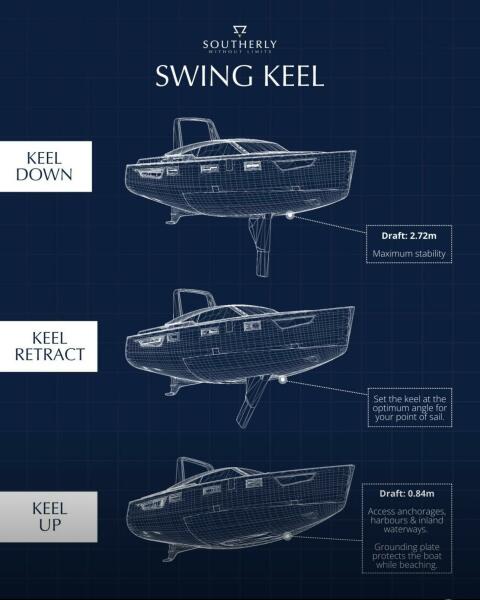
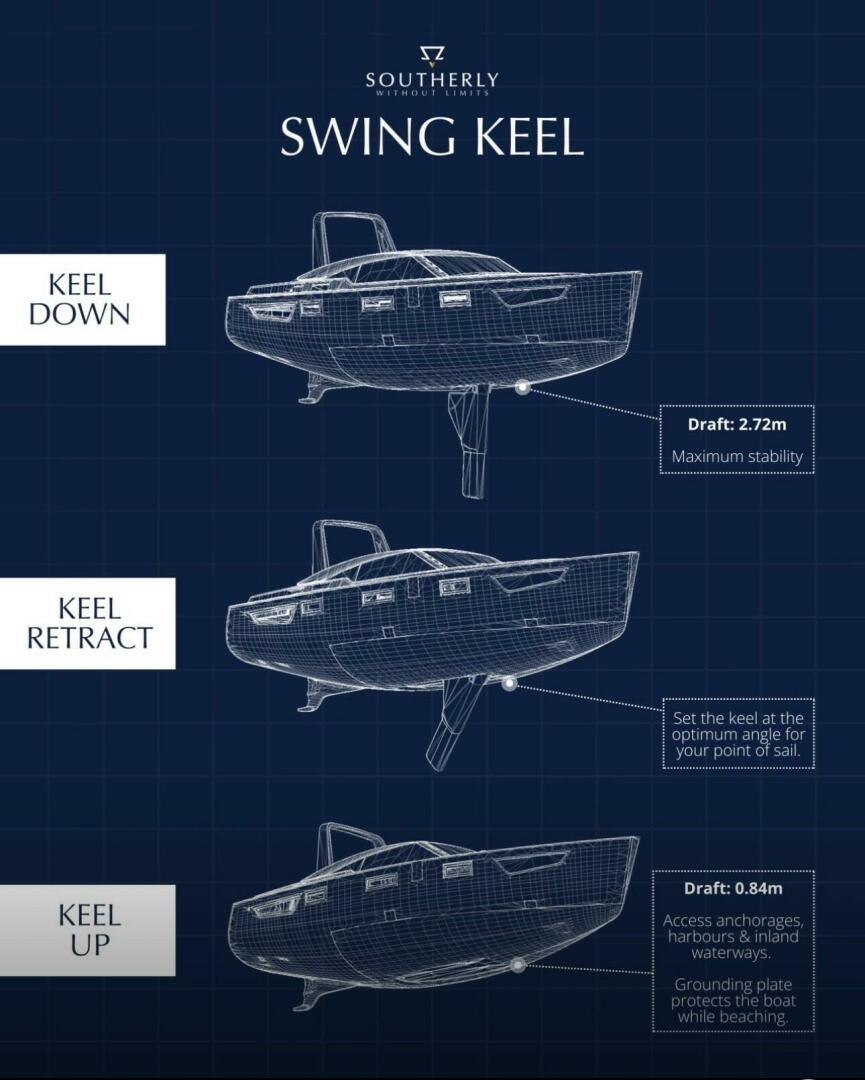
The fixed ballast is an iron casting that acts as a grounding plate and stiffener for the keel and housing assembly. It is fitted into a recess in the hull in the area of the keel box with stainless steel bolts. The aerofoil-shaped keel is cast iron and incorporates a stainless-steel pivot at the leading edge. The keel is raised and lowered by a Dyneema pennant and hydraulic ram powered by an electrically driven pump with a hand-operated backup. All hydraulics are easily accessible for maintenance.
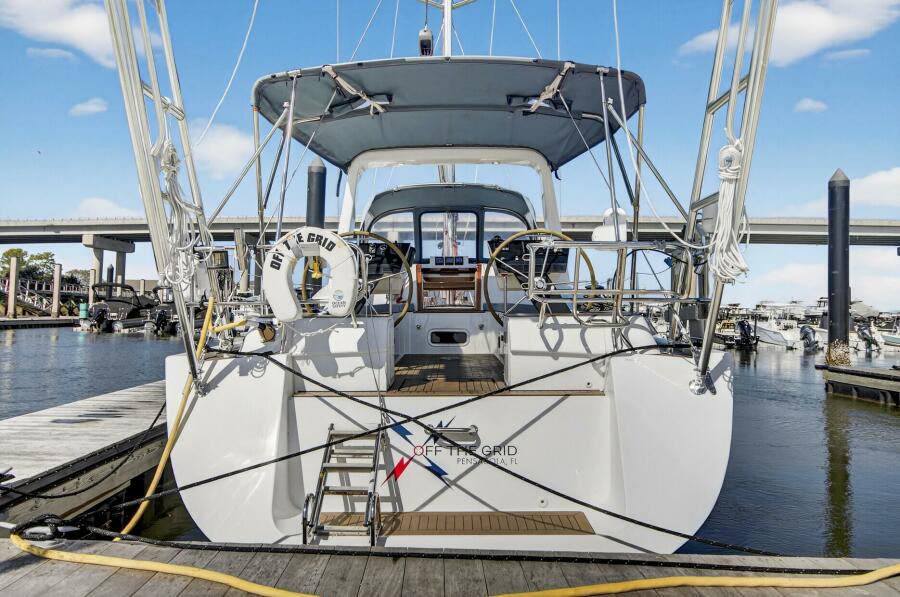
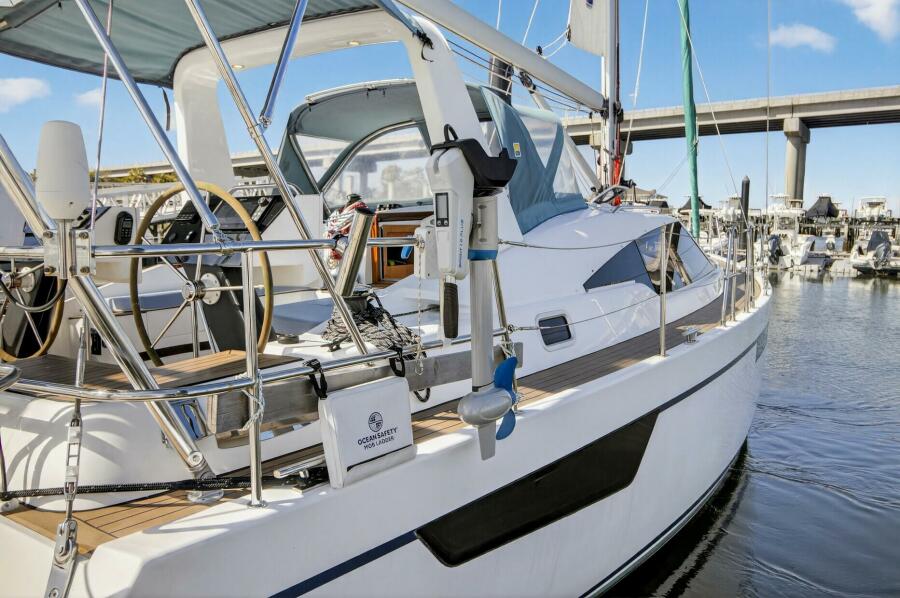
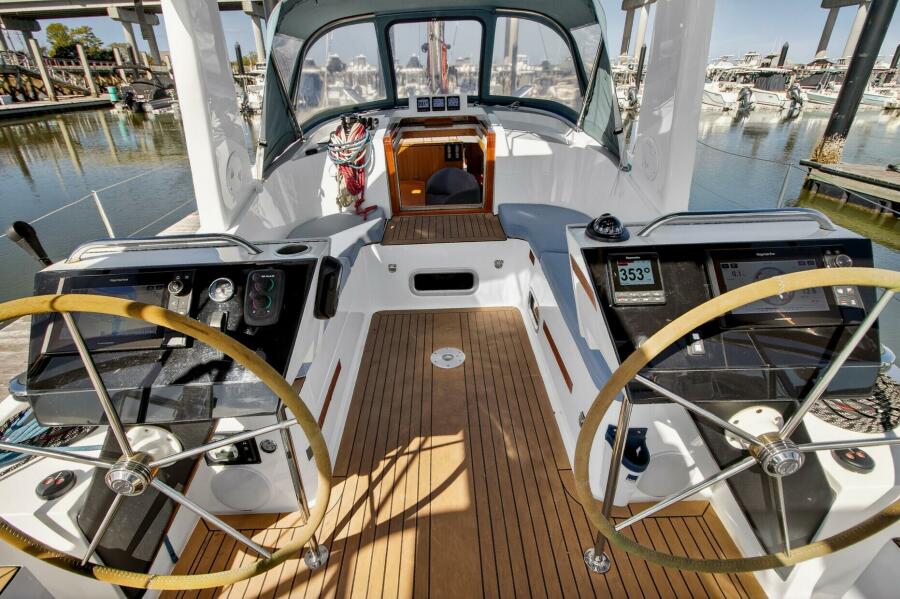
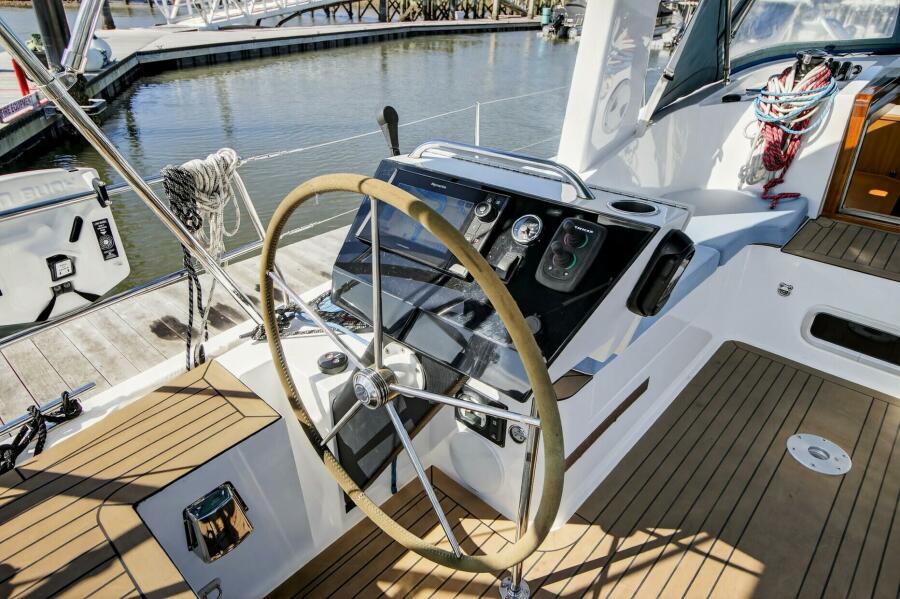
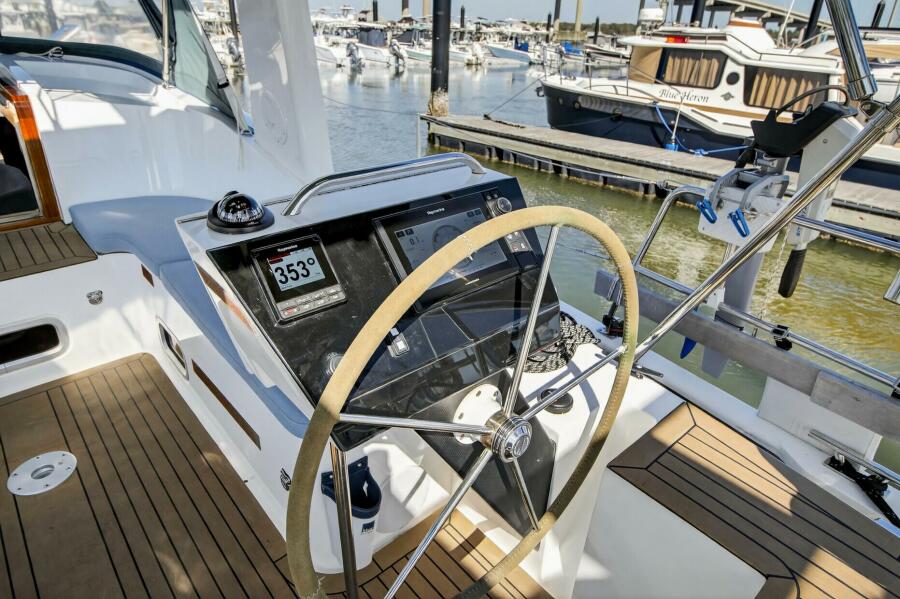
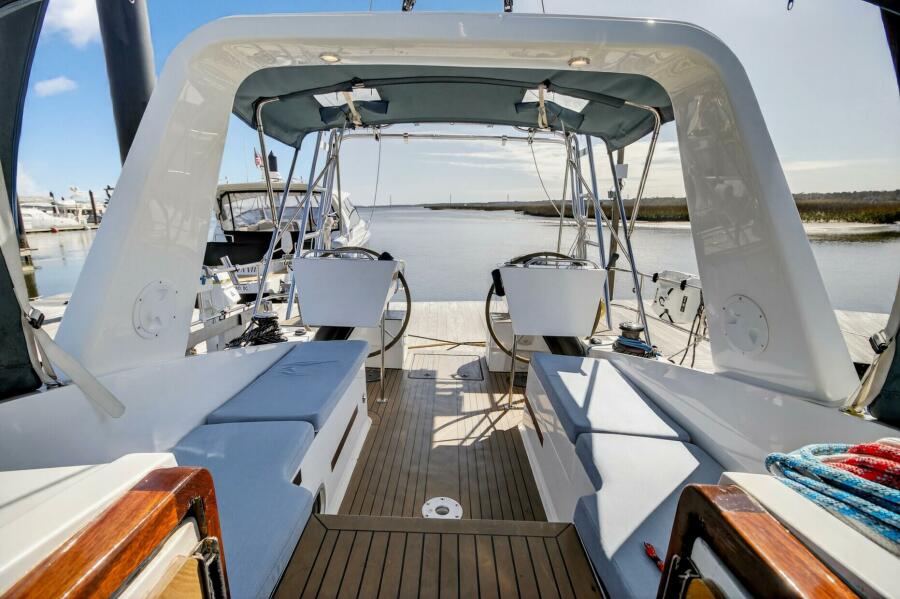
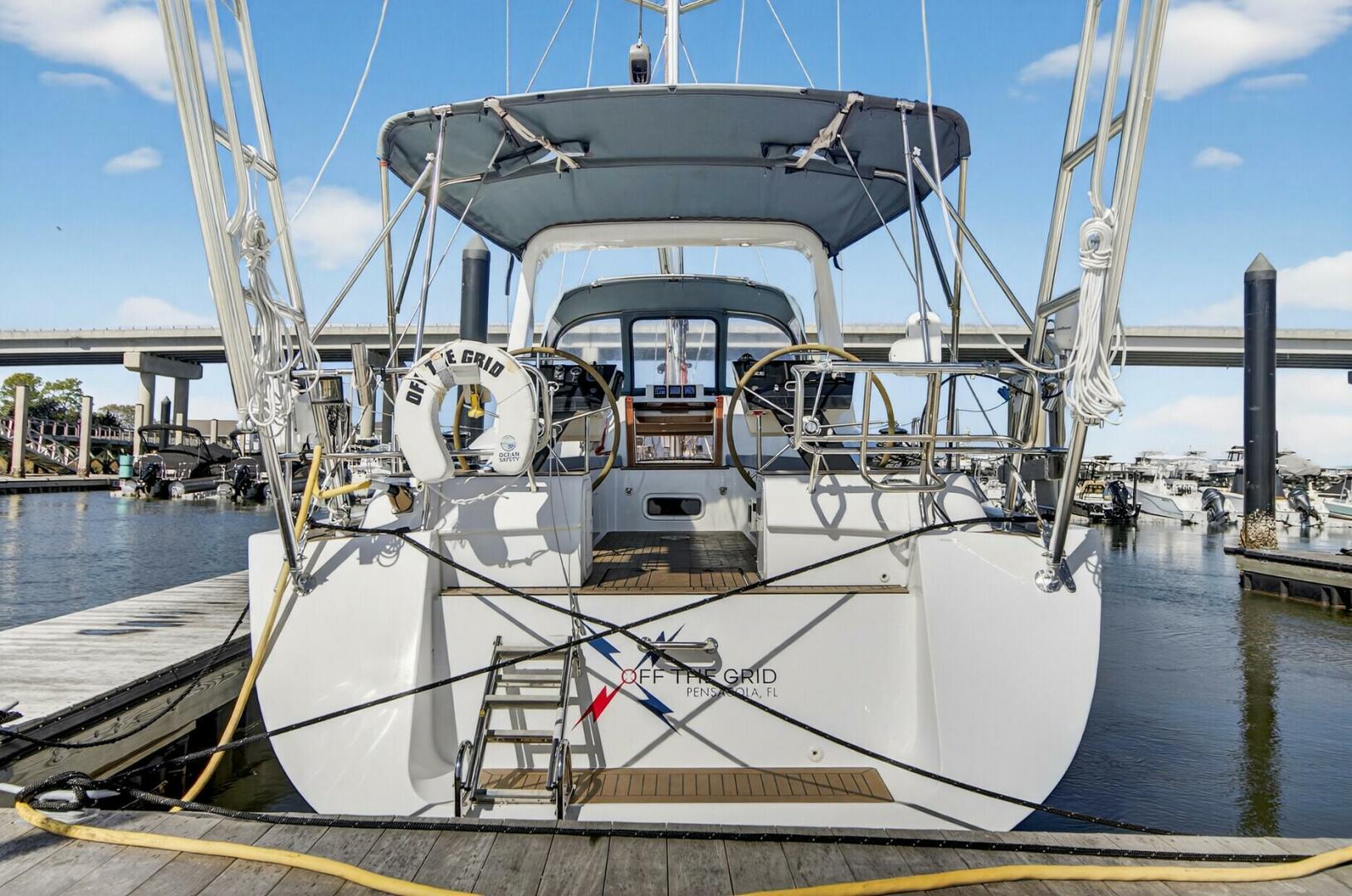
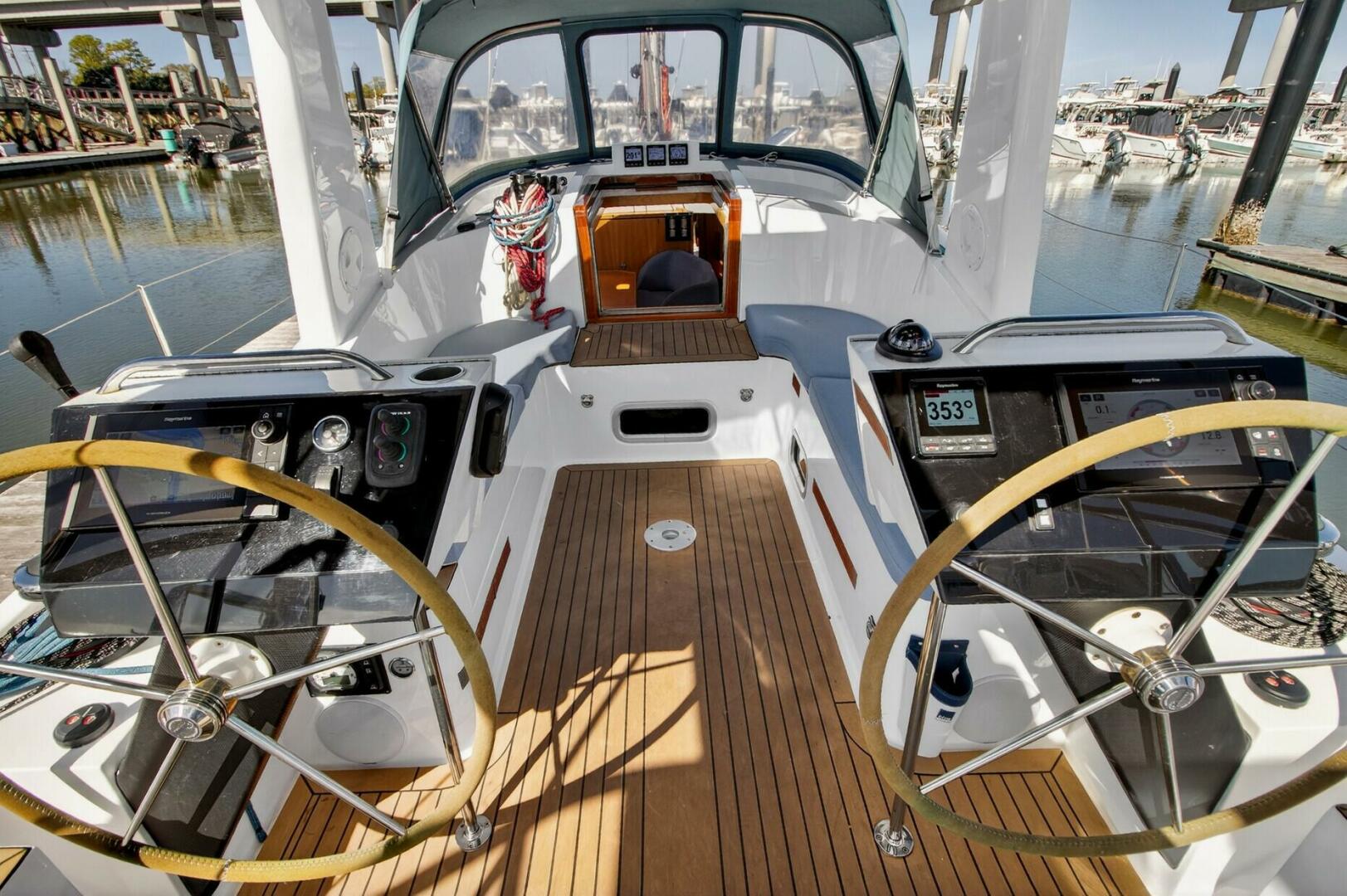
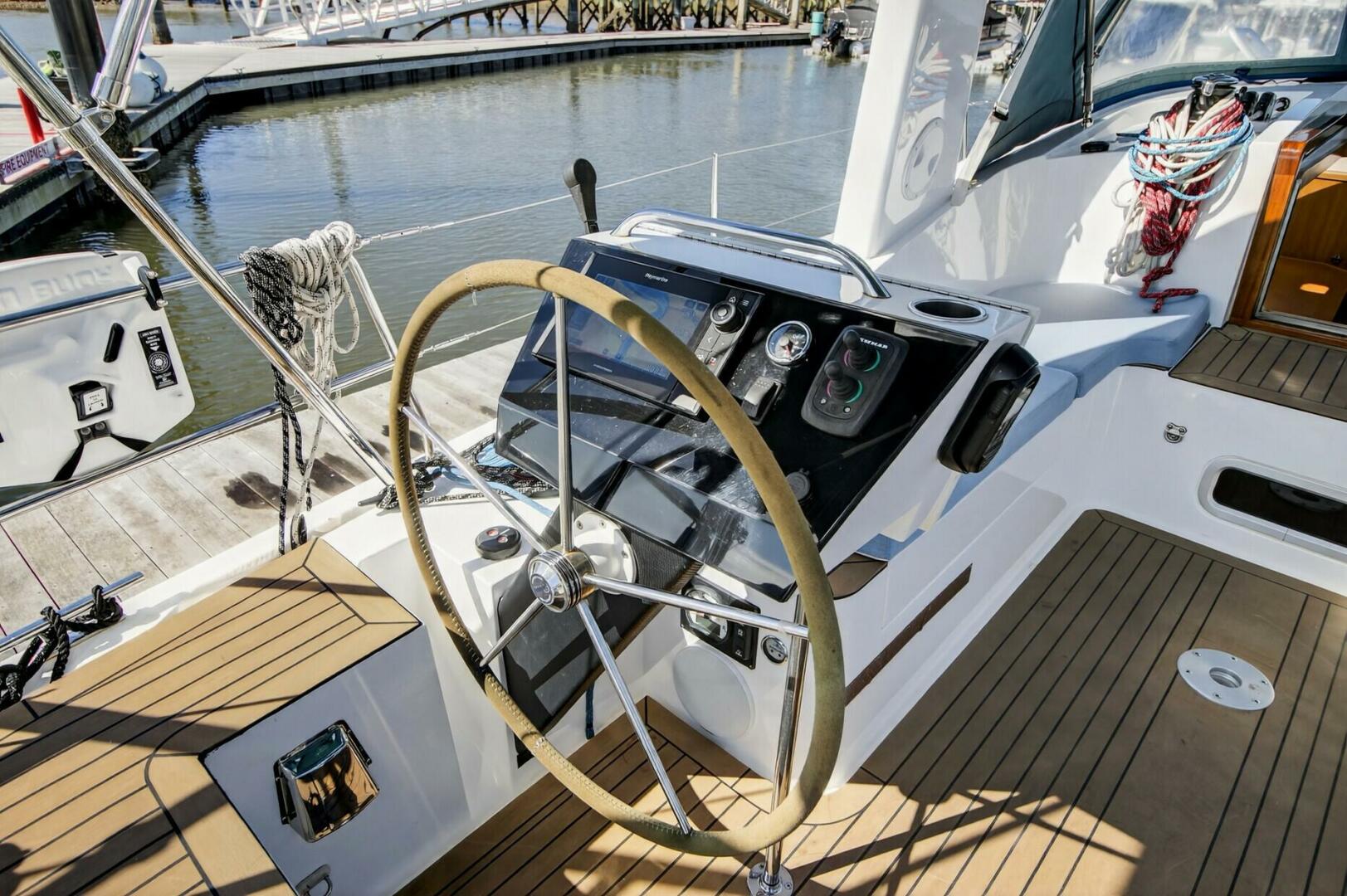
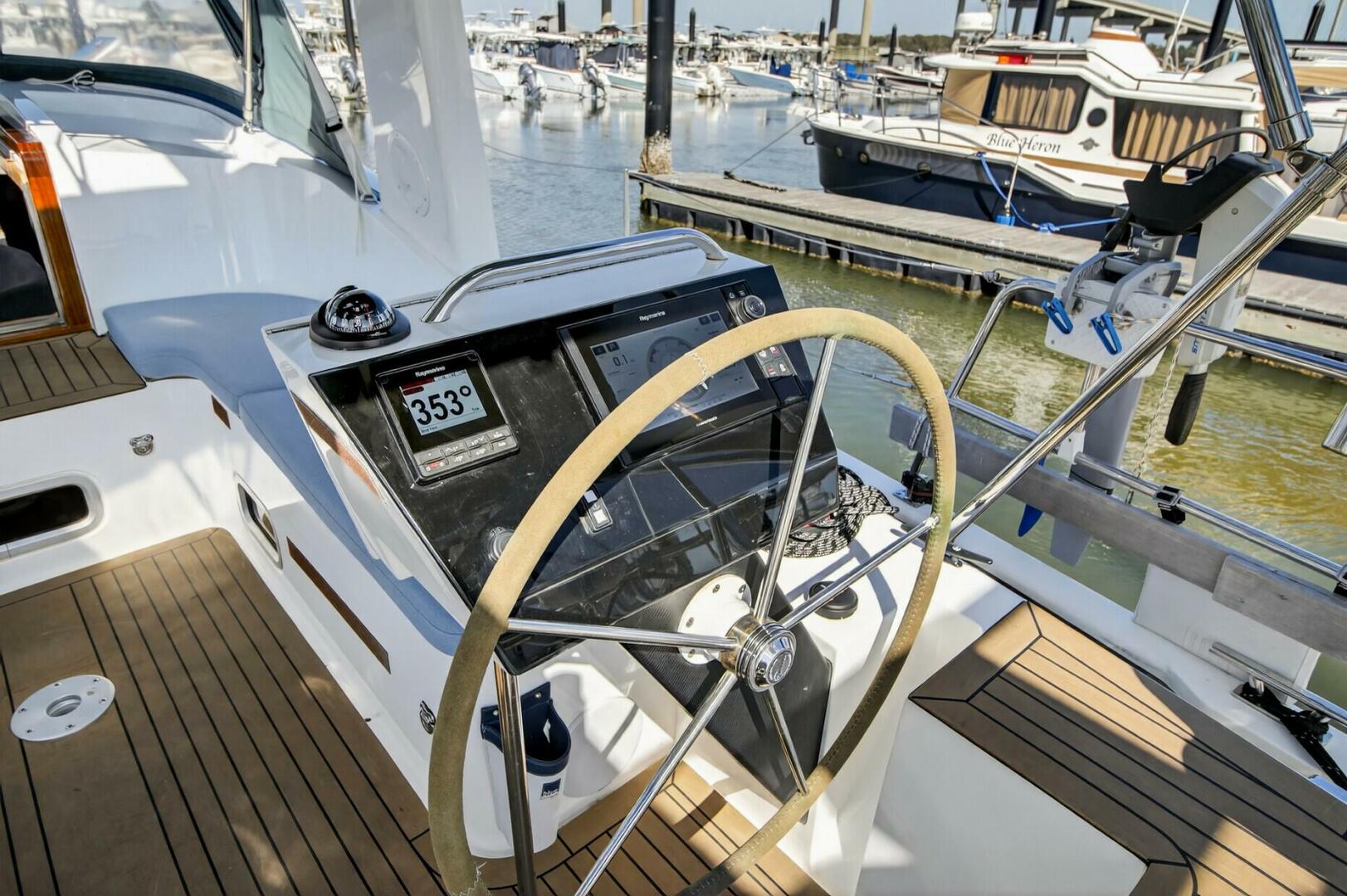
The steering is direct with minimum backlash and semi-balanced twin rudders, giving instantly responsive steering and precise directional stability. The transom is open with integral steps to give easy access to the cockpit.
- Semi-balanced twin rudders
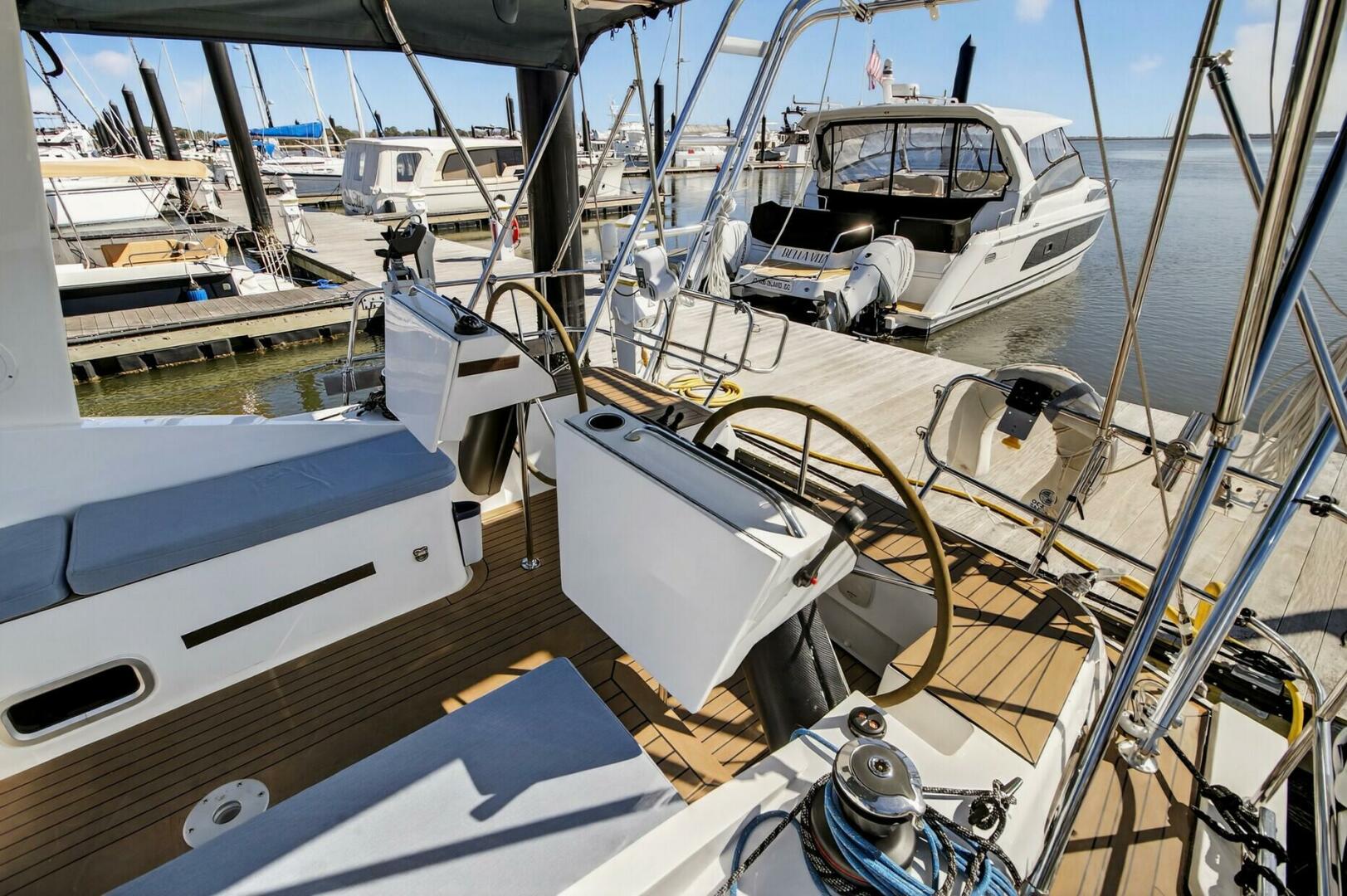
- Twin 30" stainless steel cockpit wheels
- Single-level engine control
- Emergency steering system
- Auto pilot
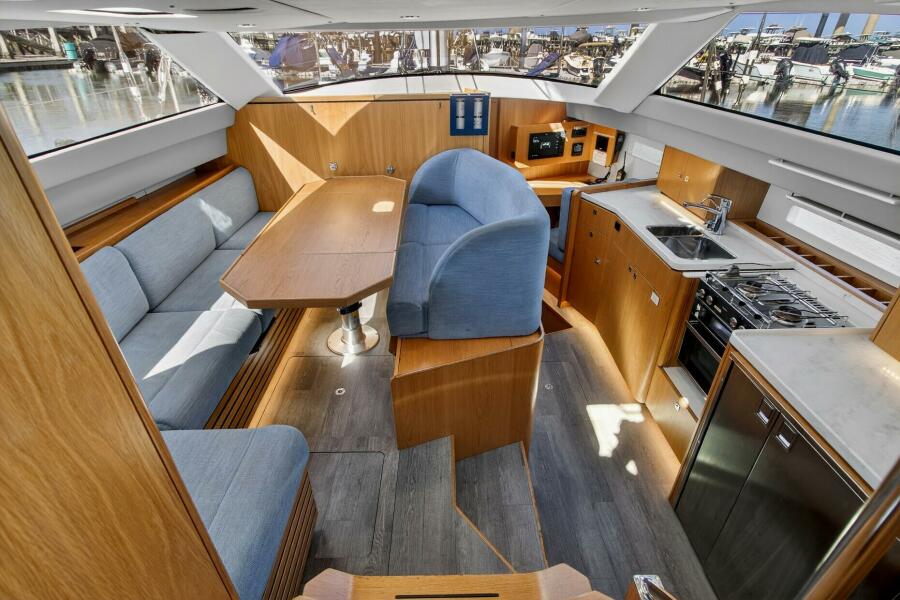
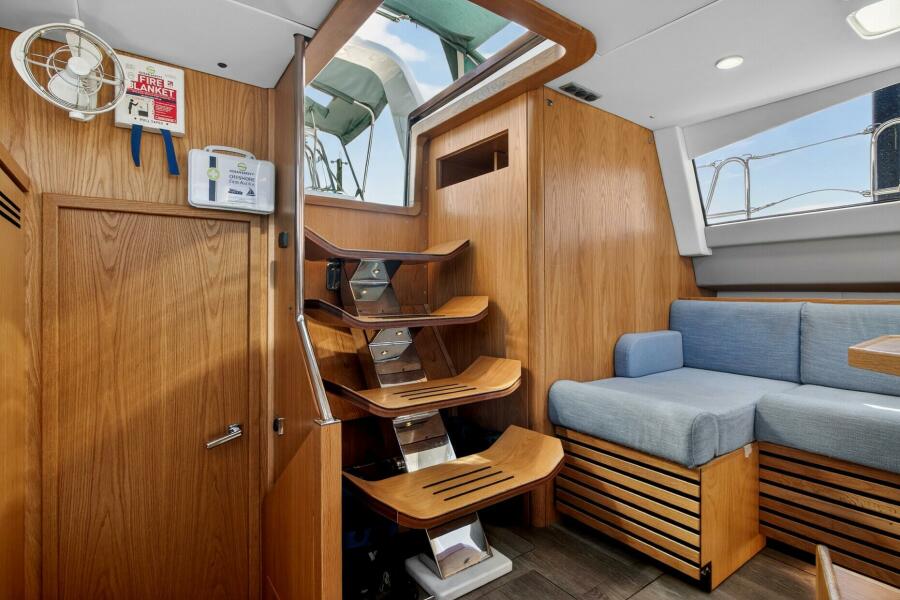
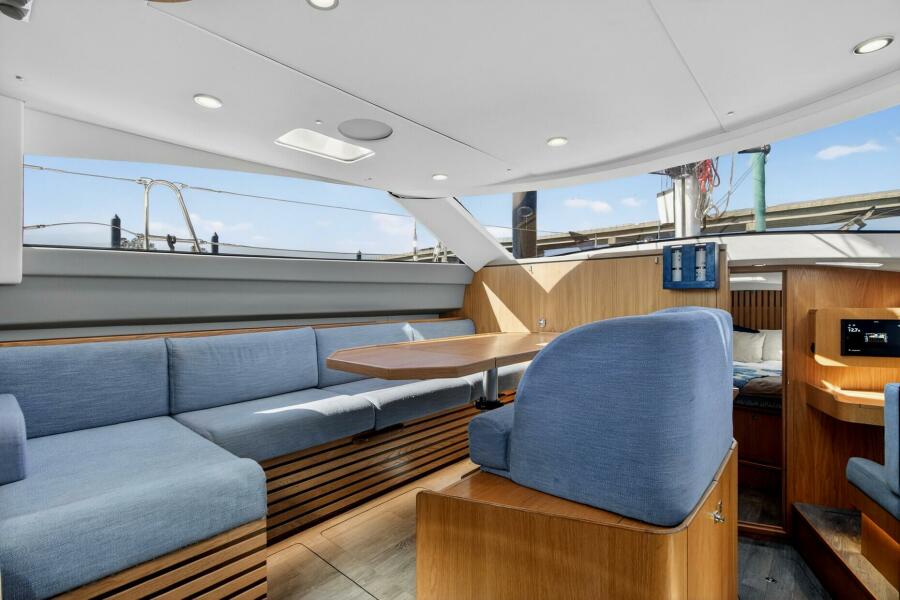
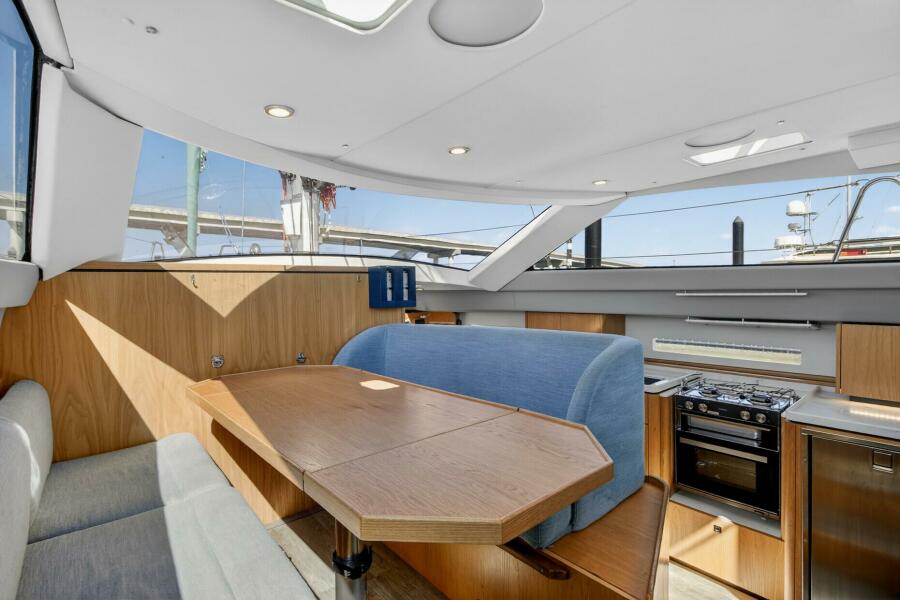
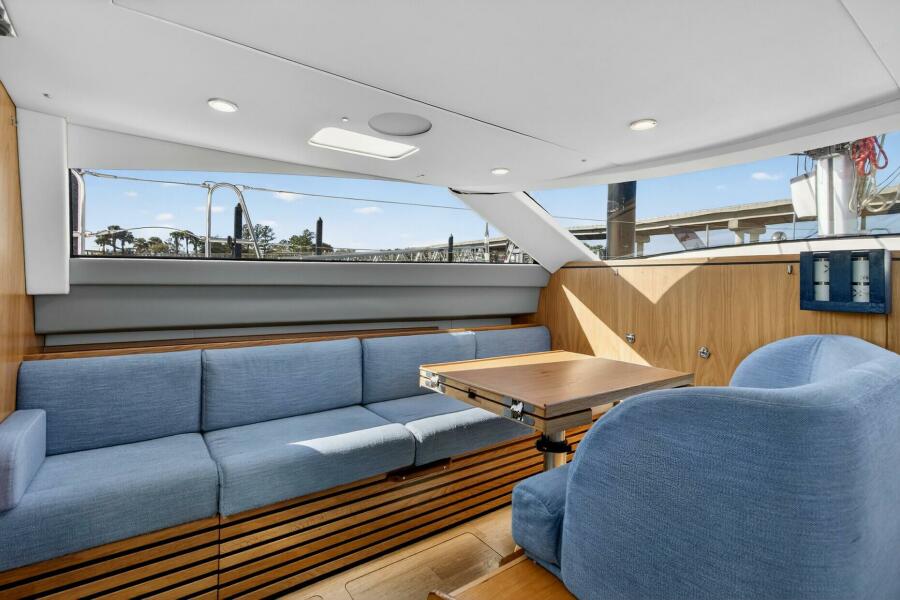
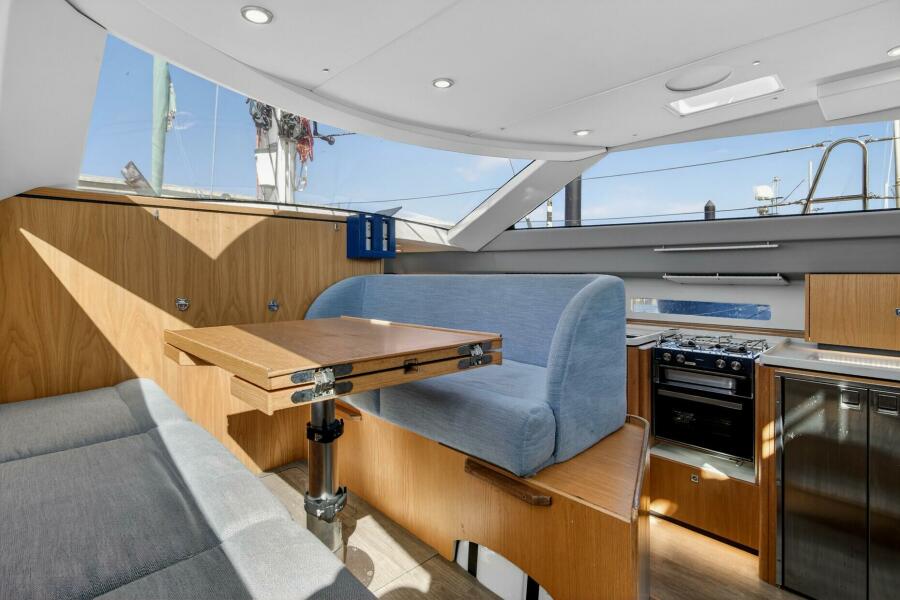
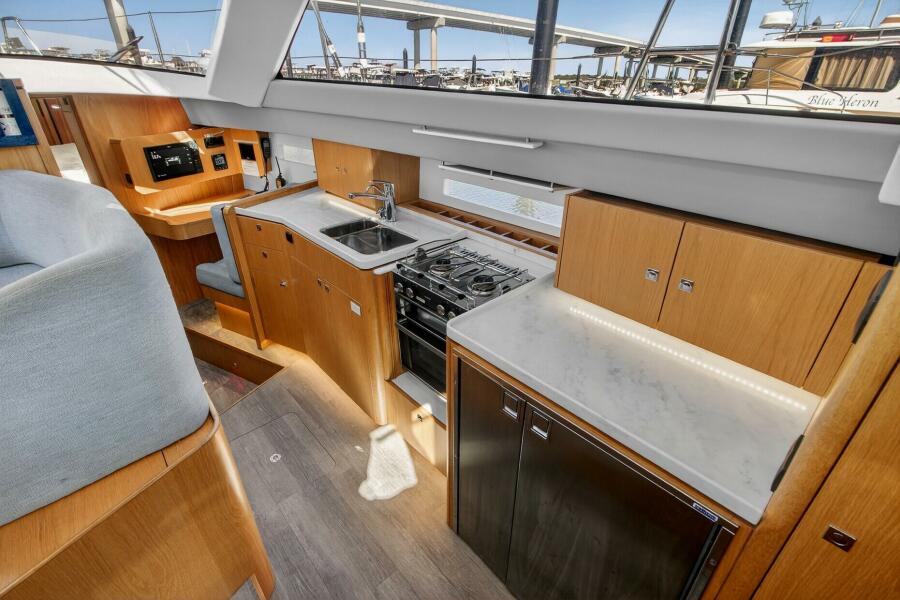
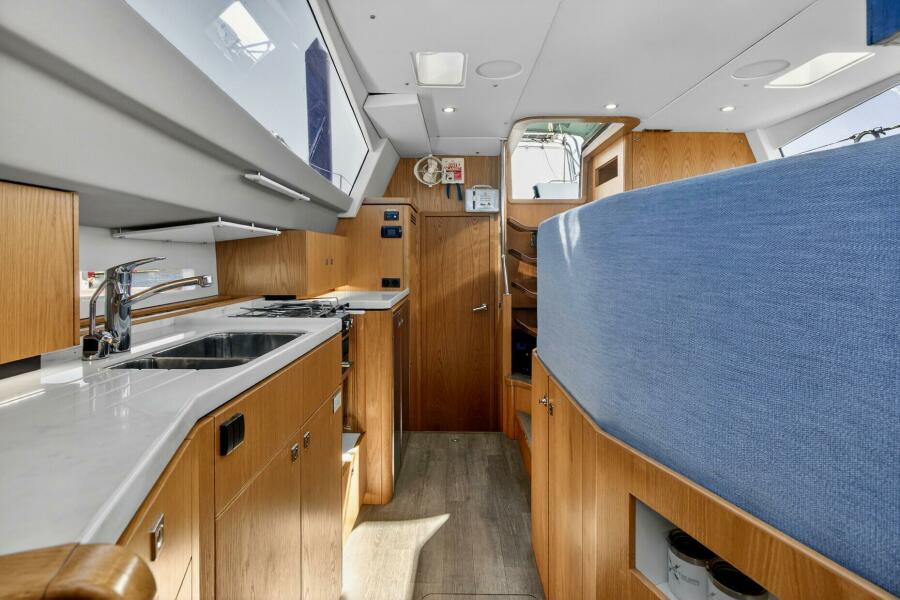
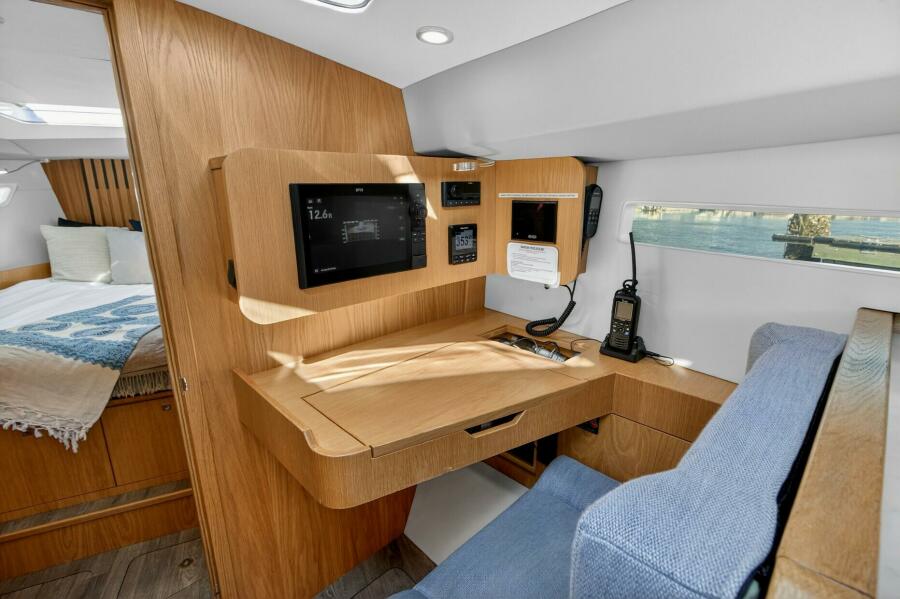
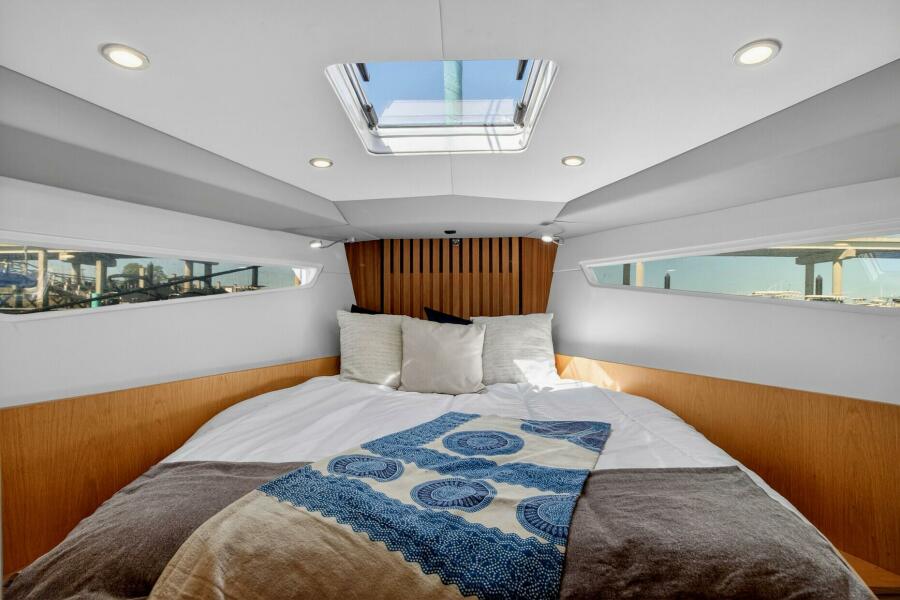
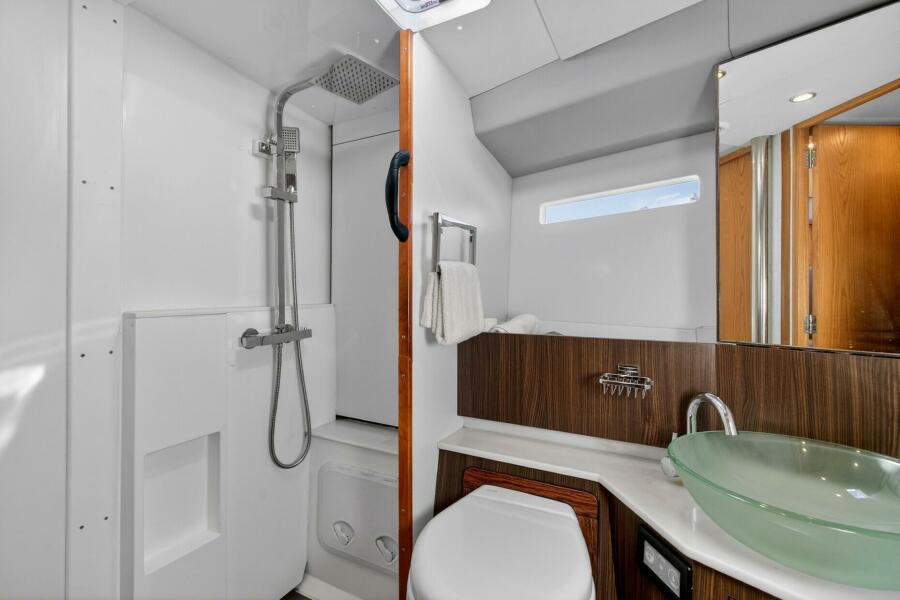
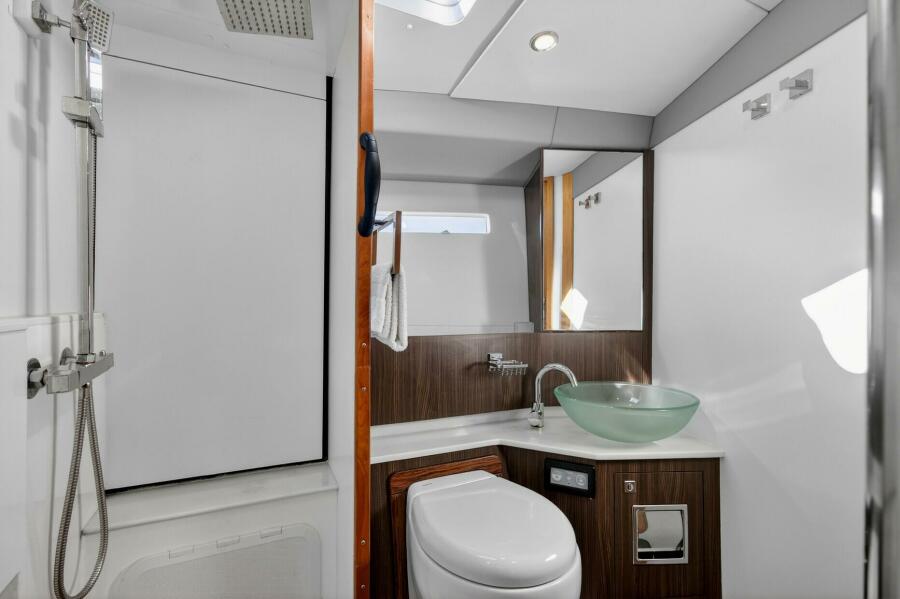
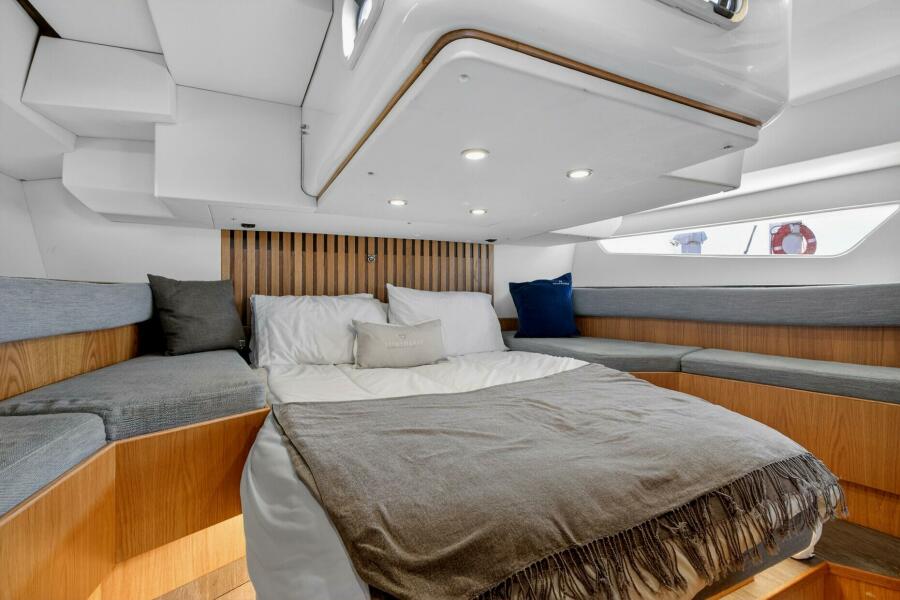
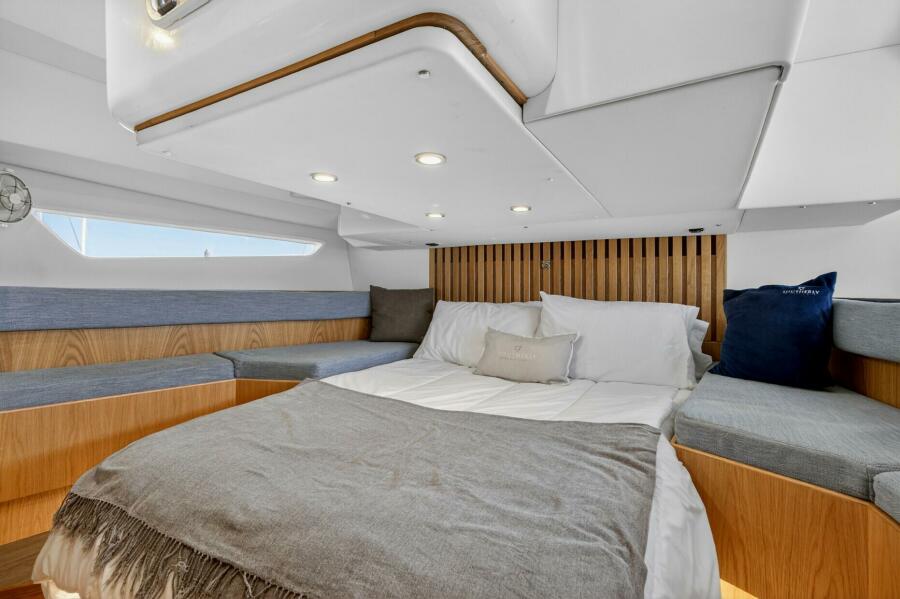
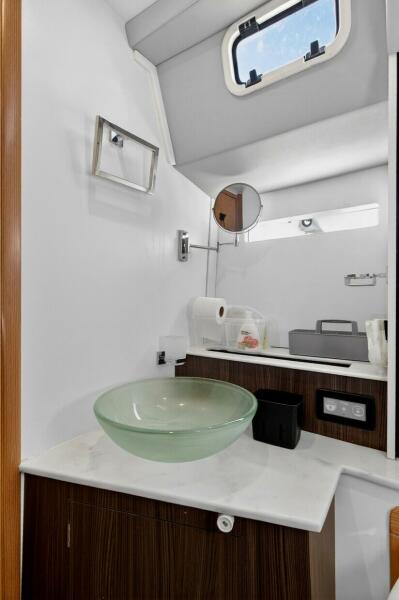
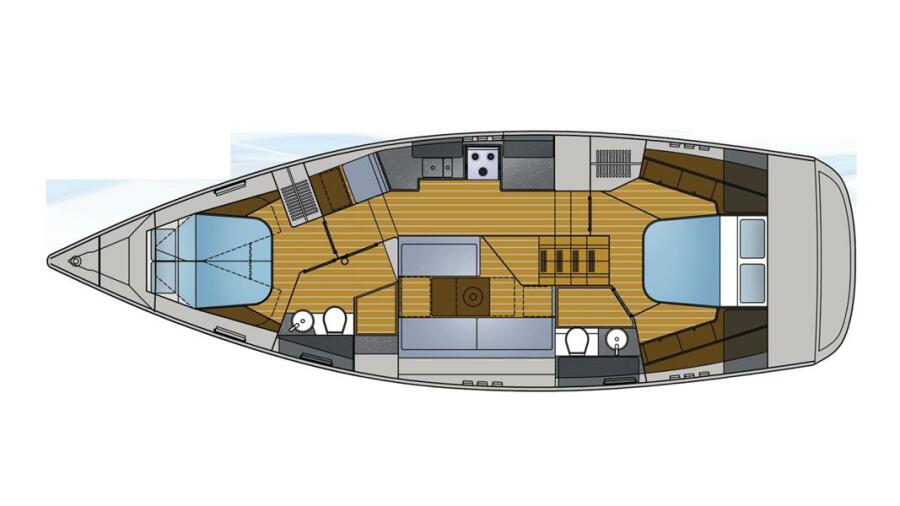
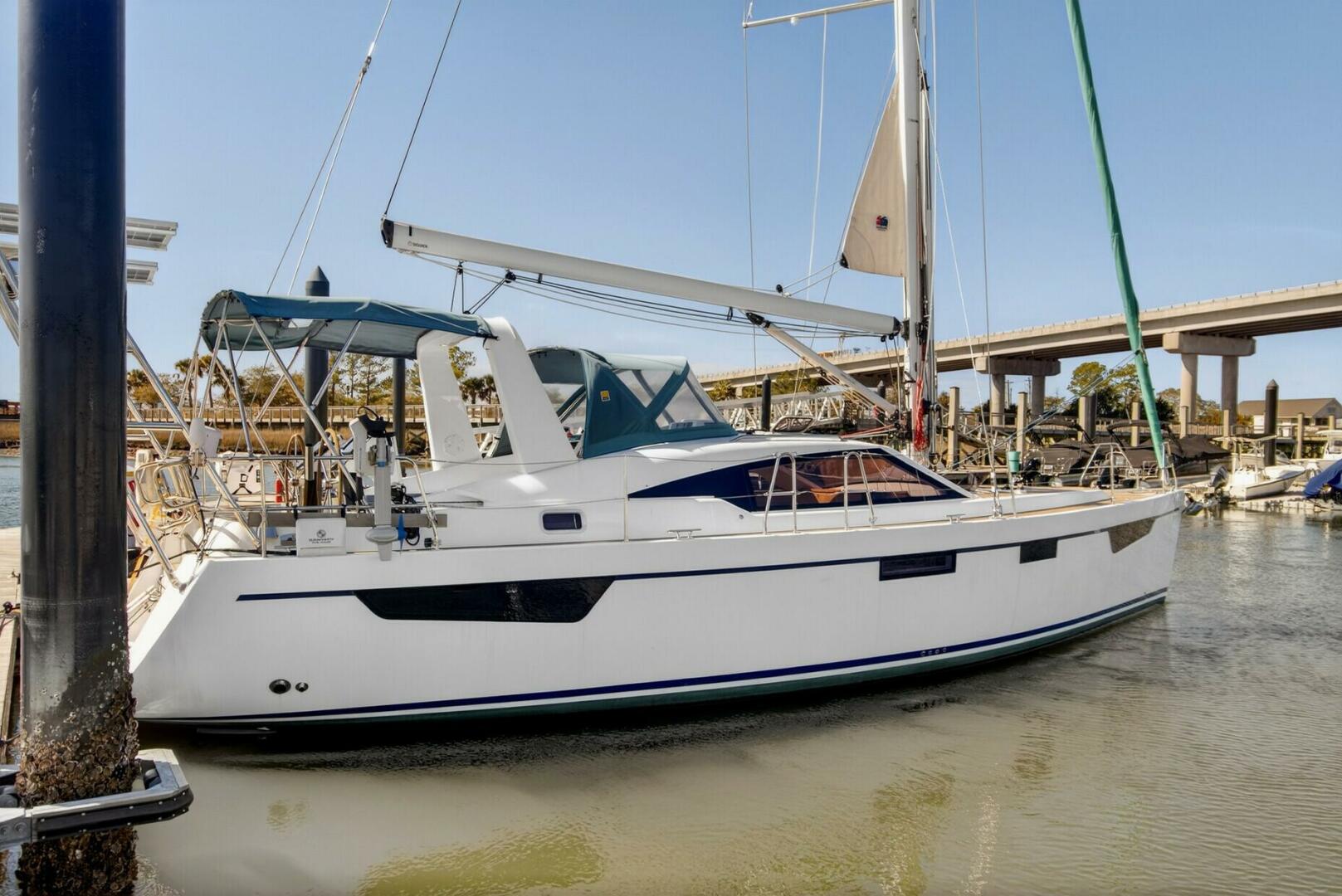
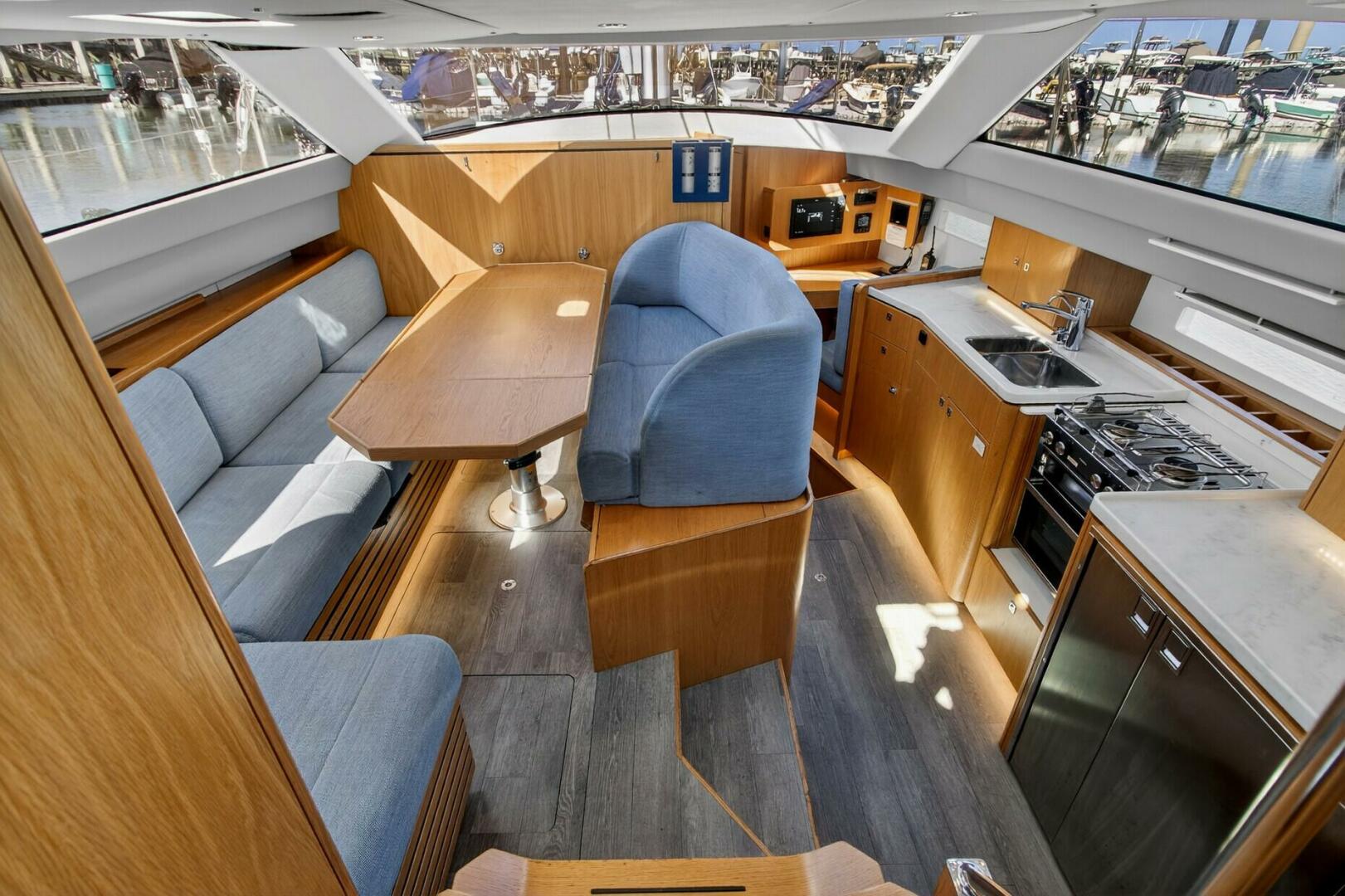
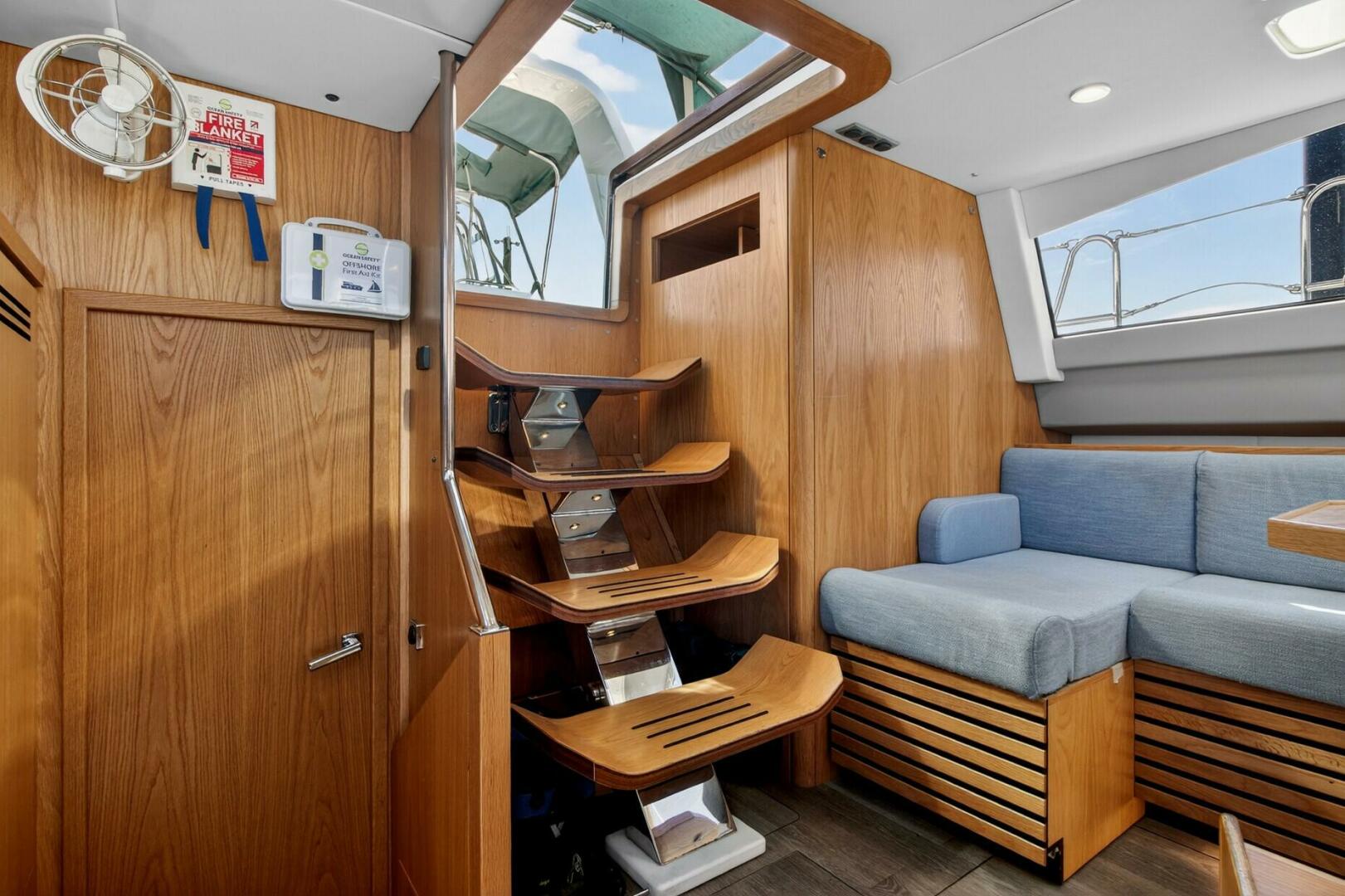
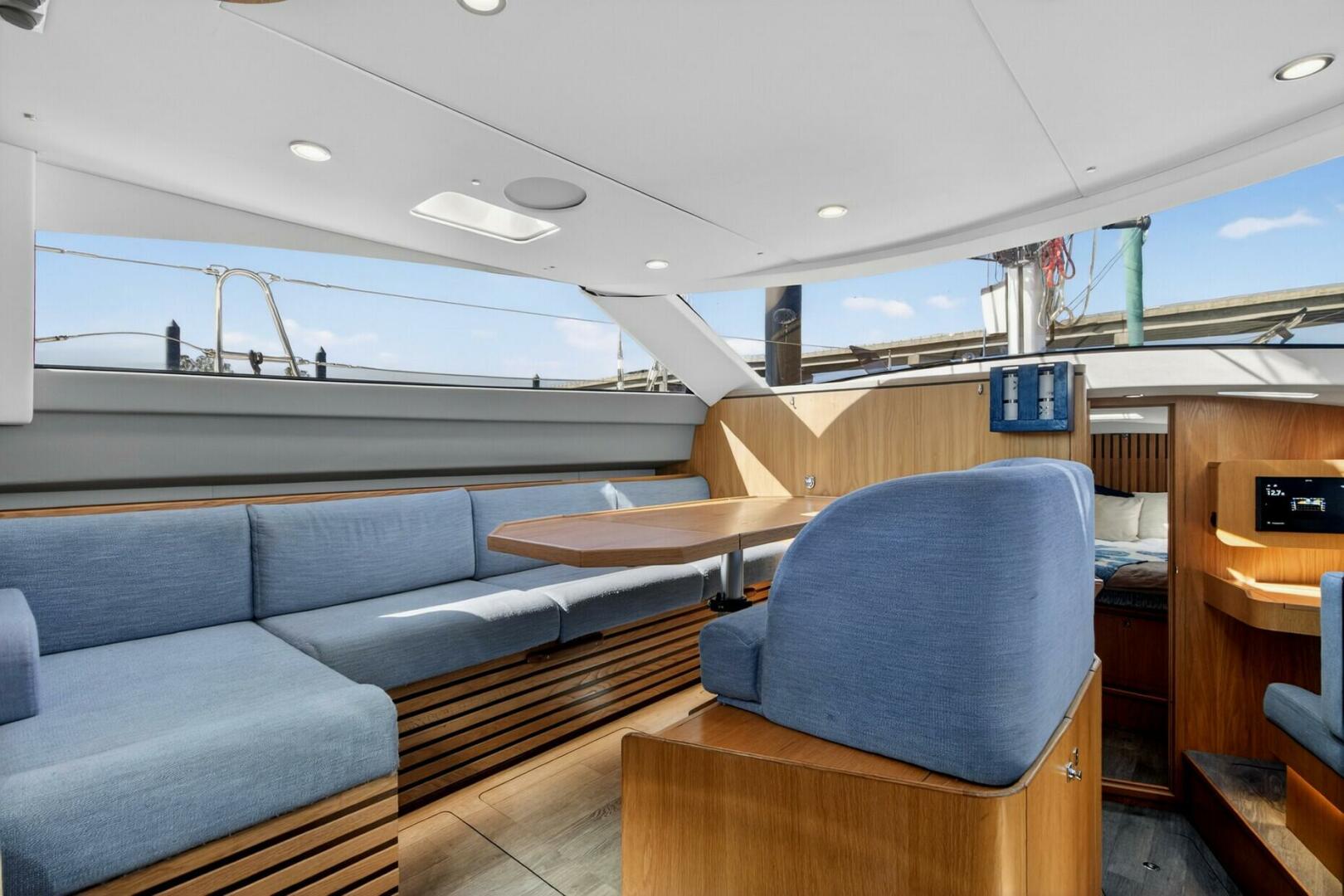
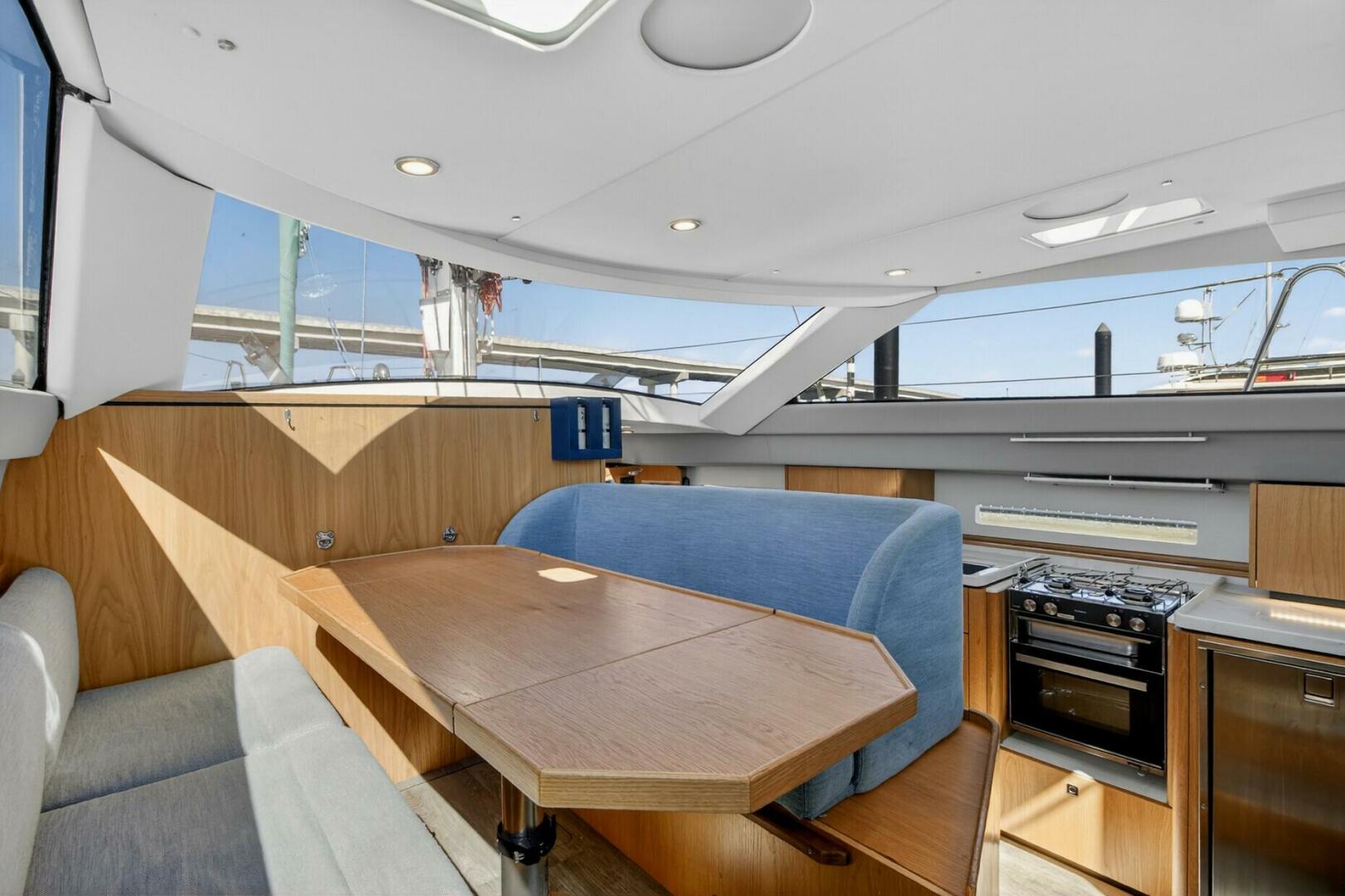
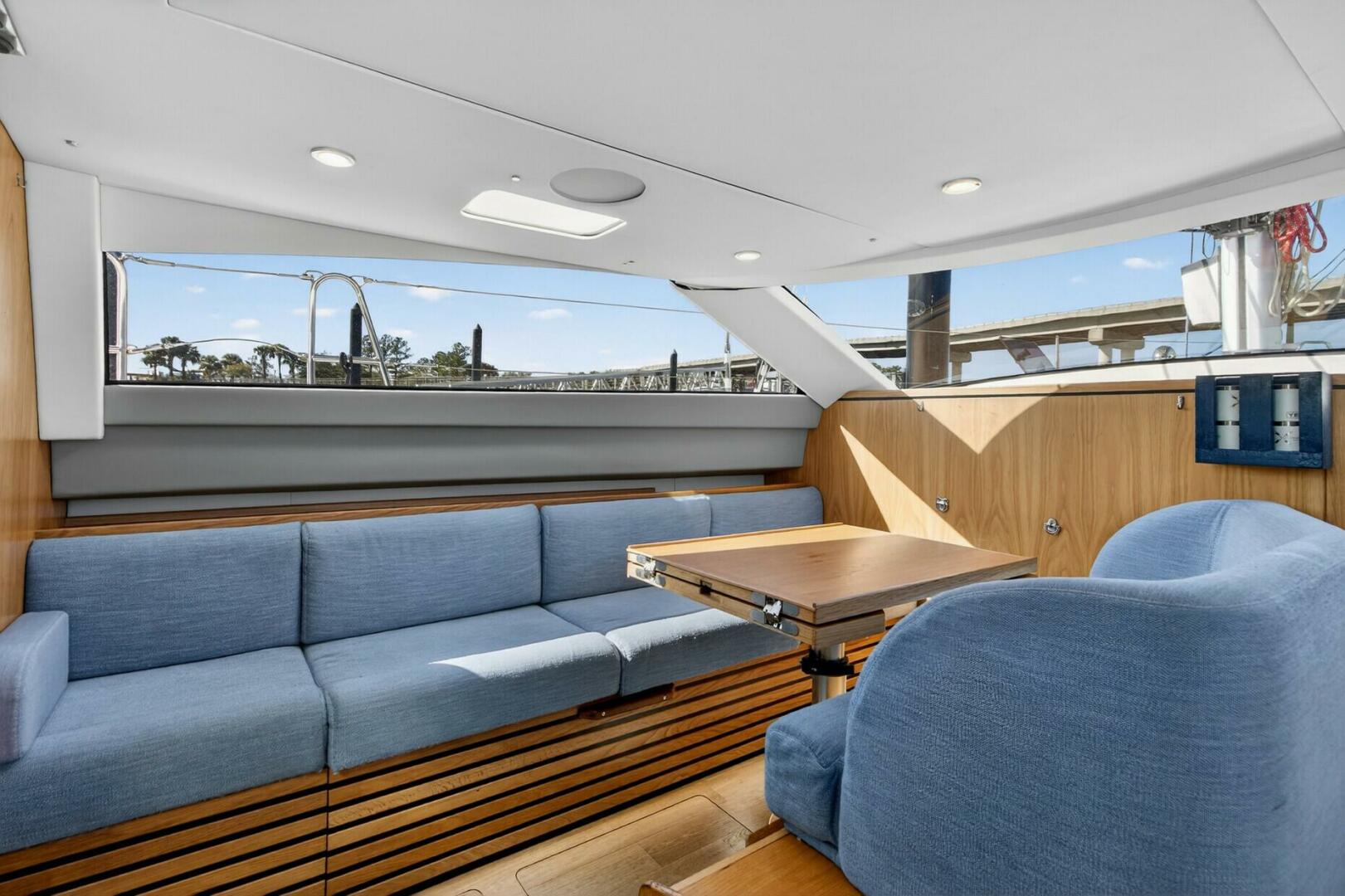
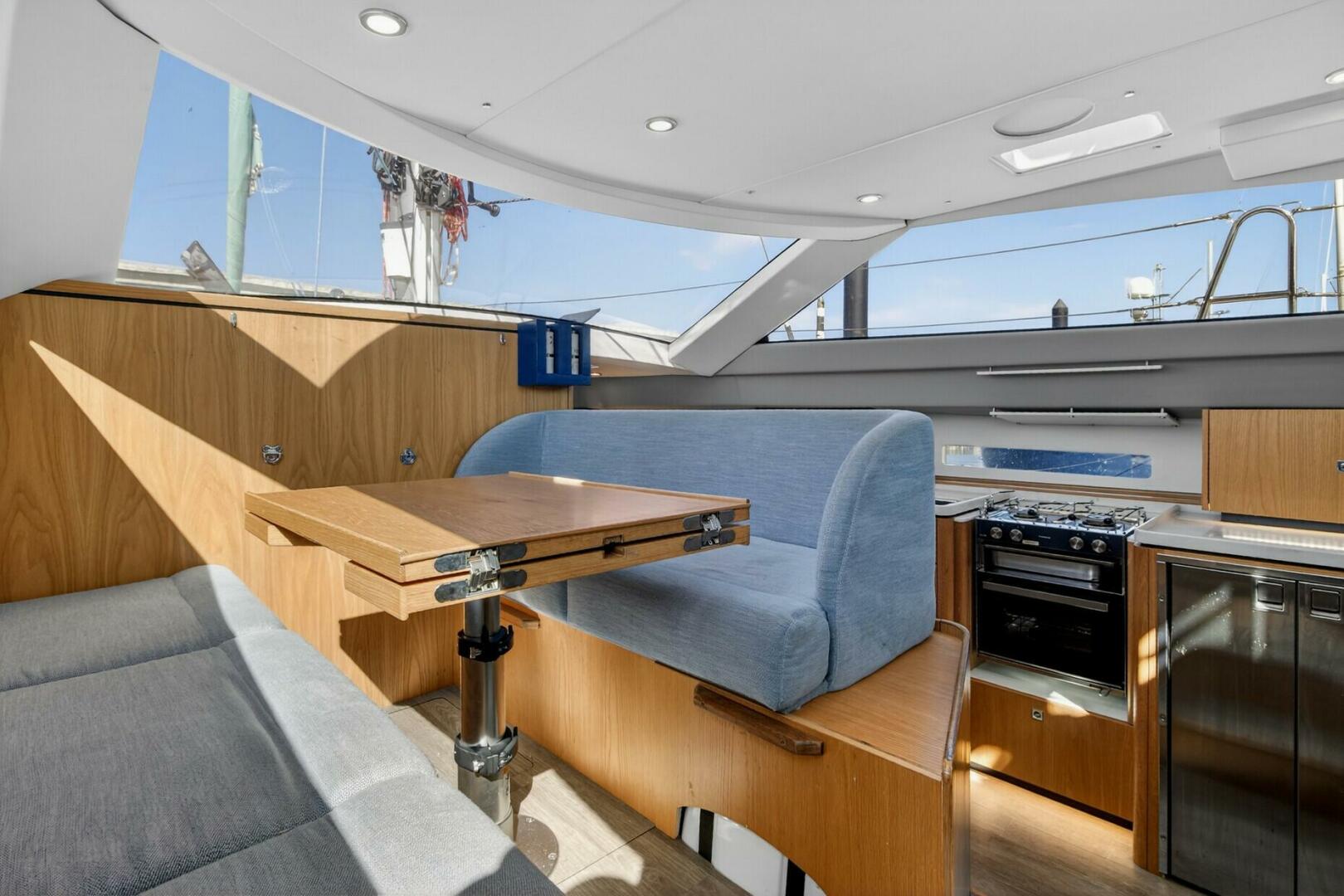
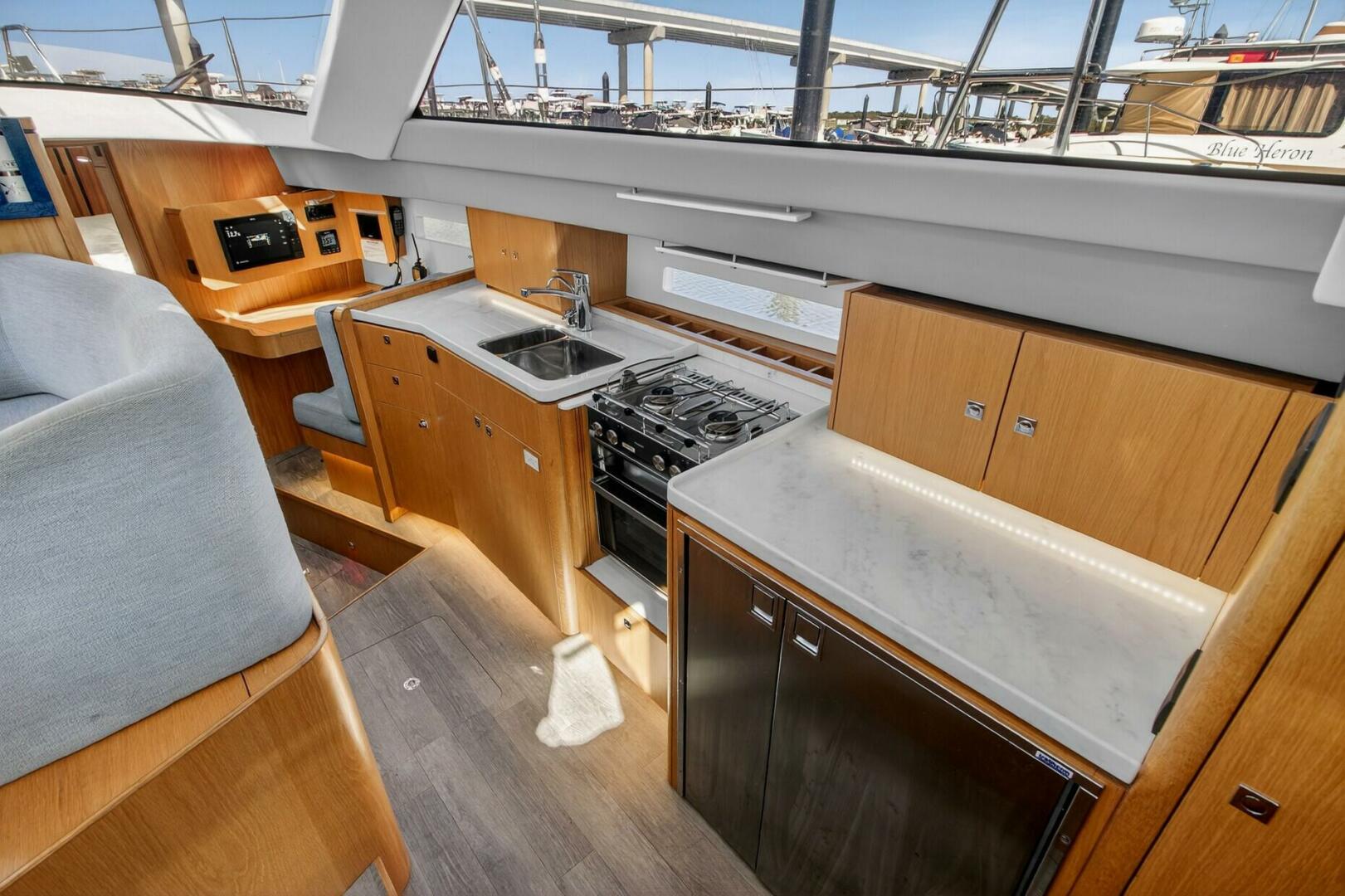
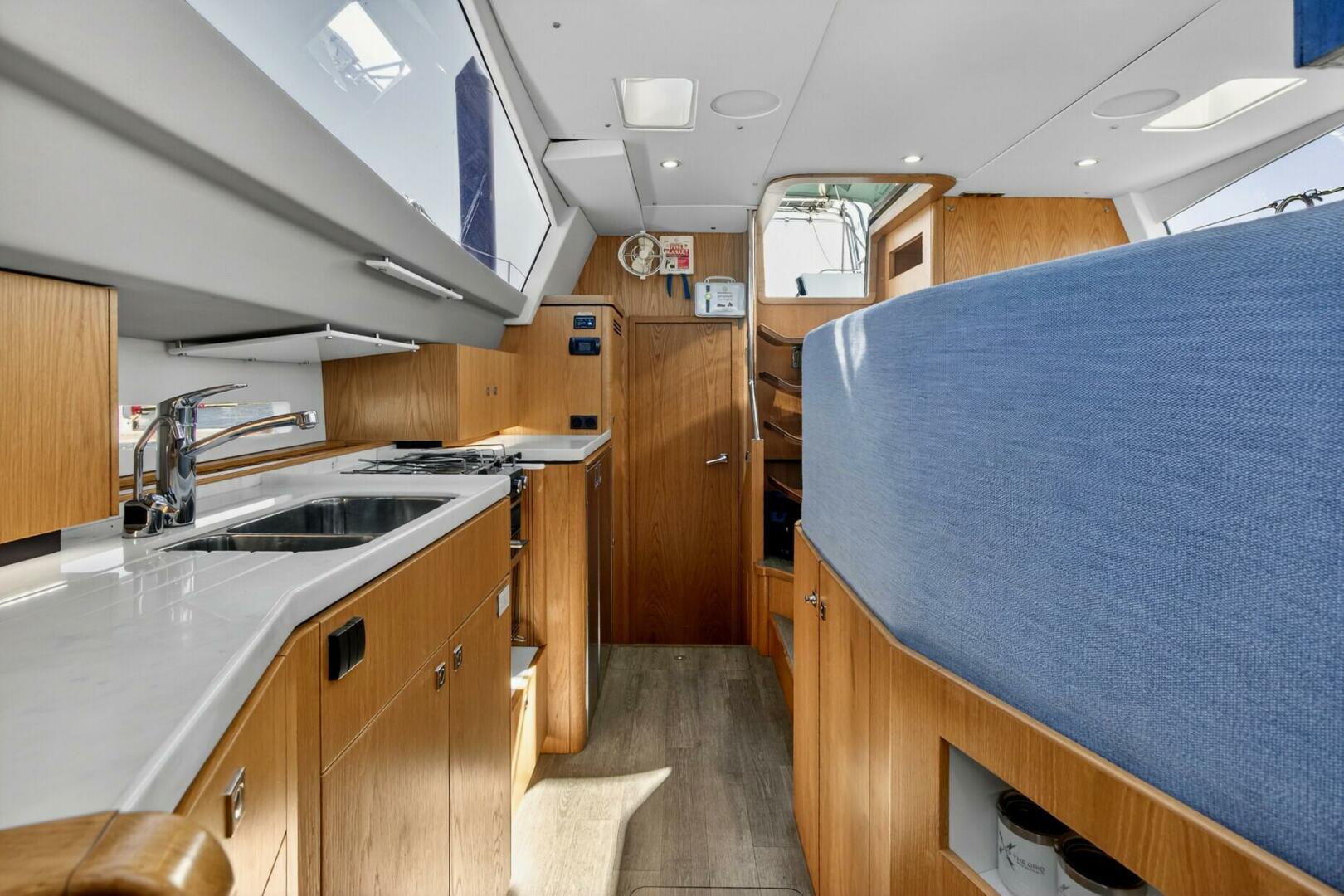
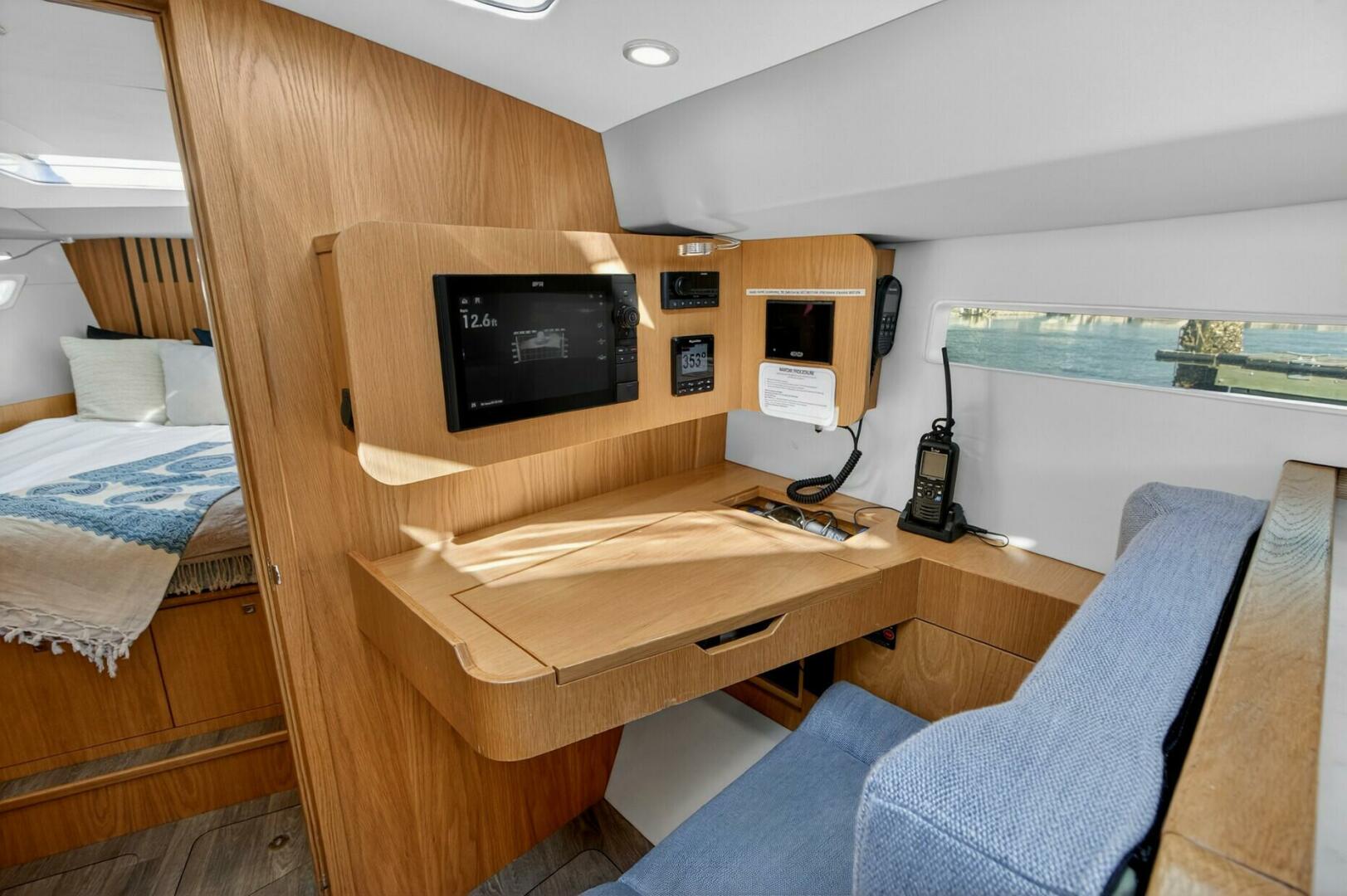
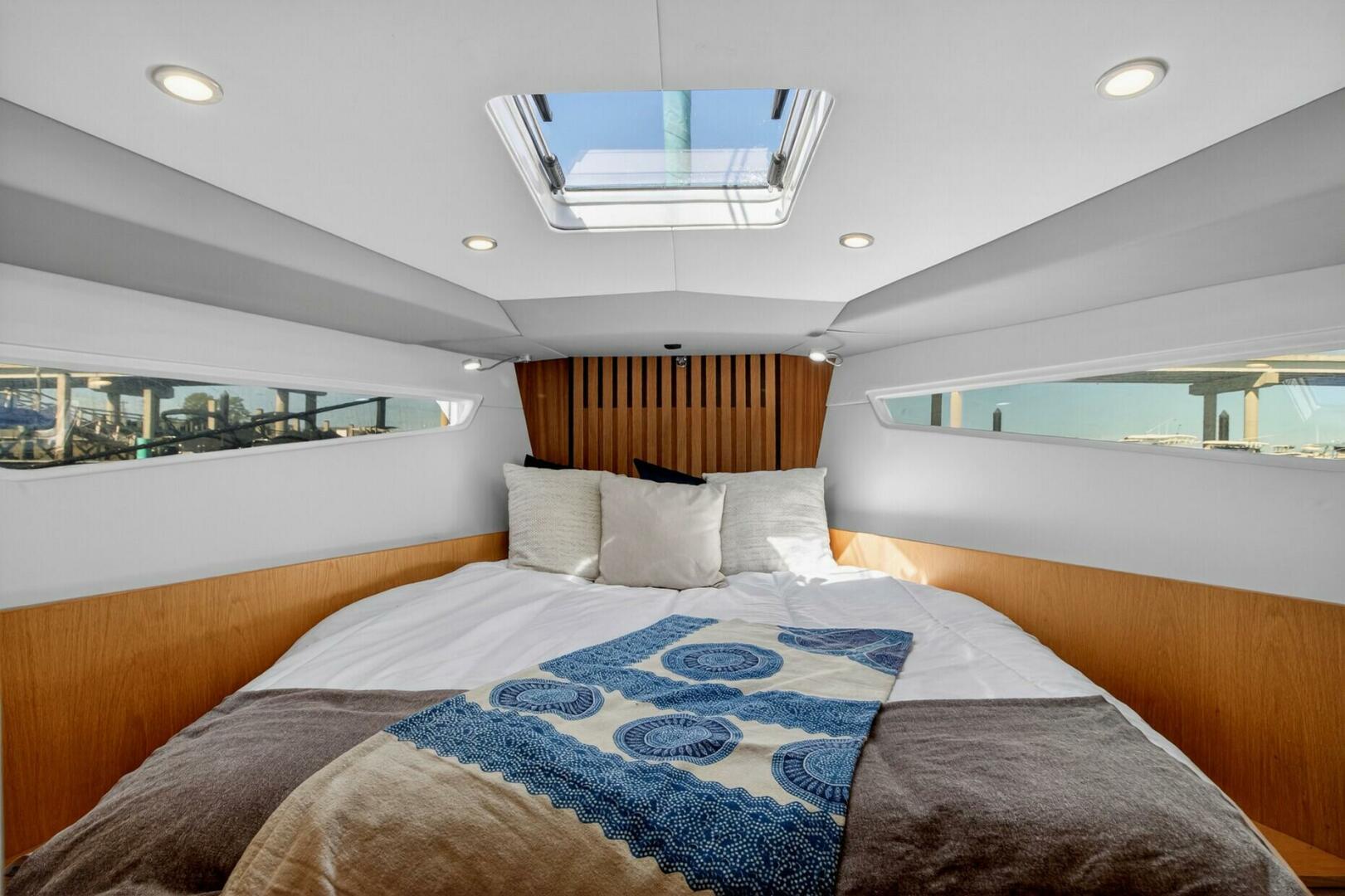
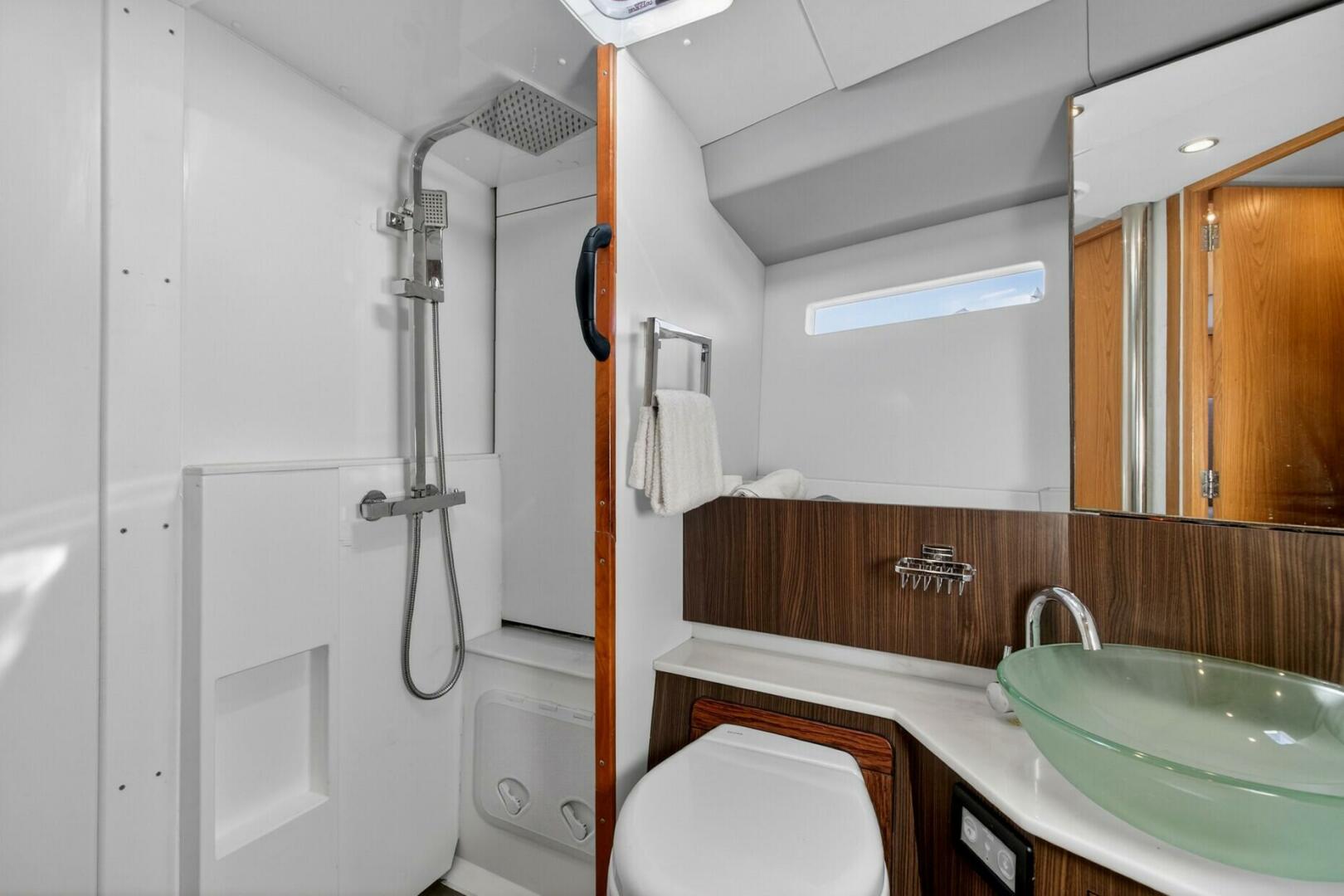
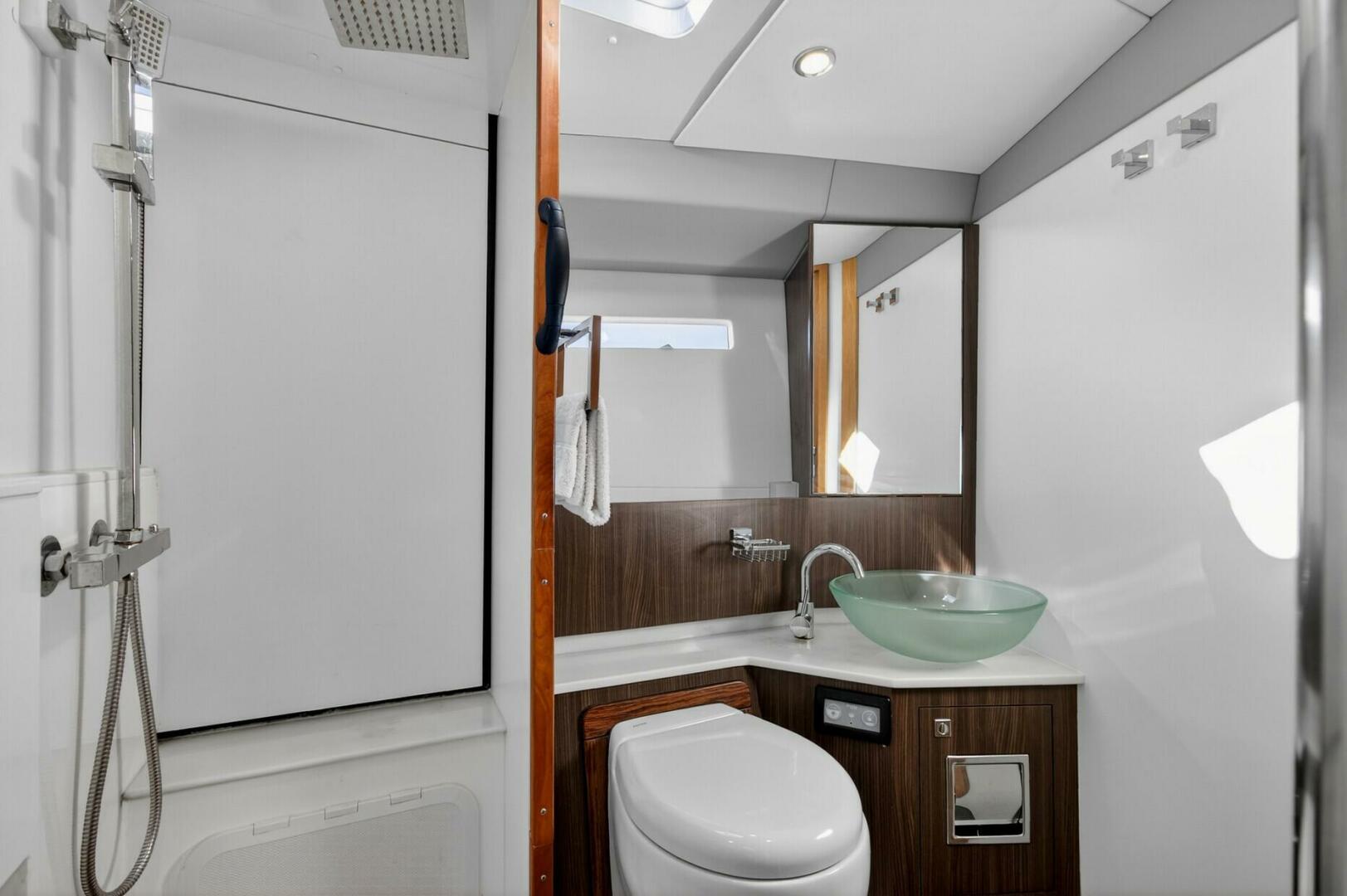
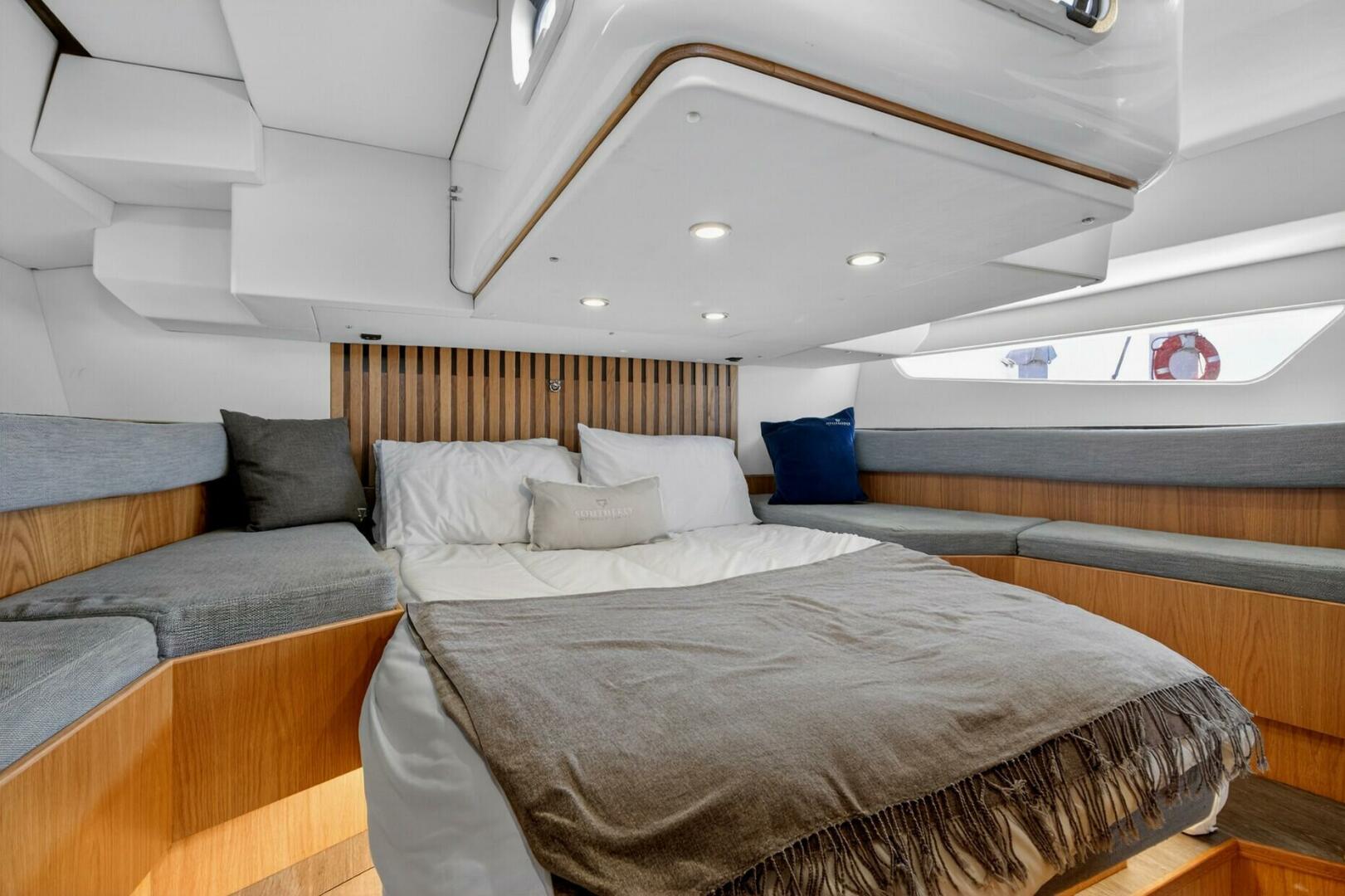
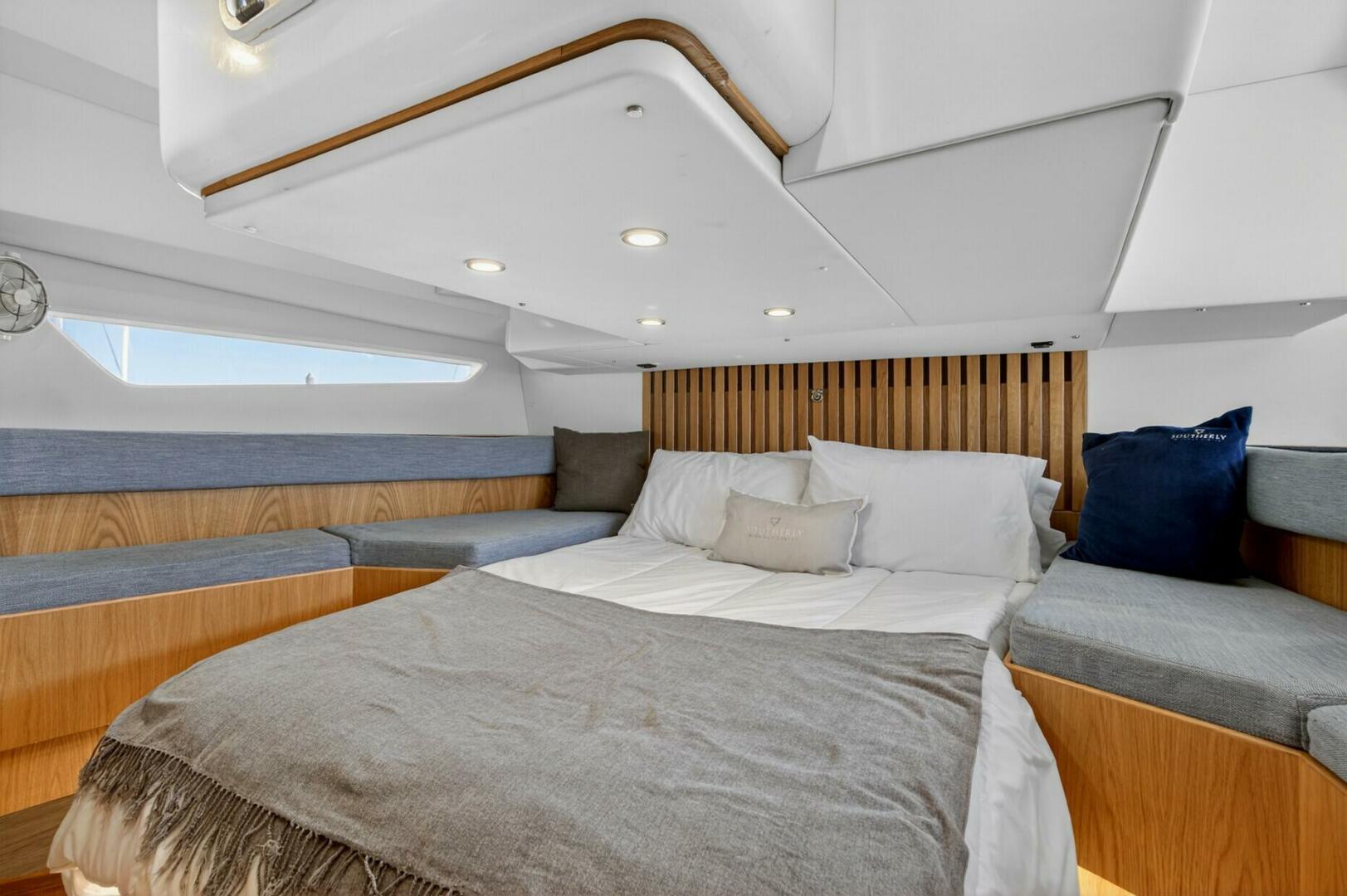
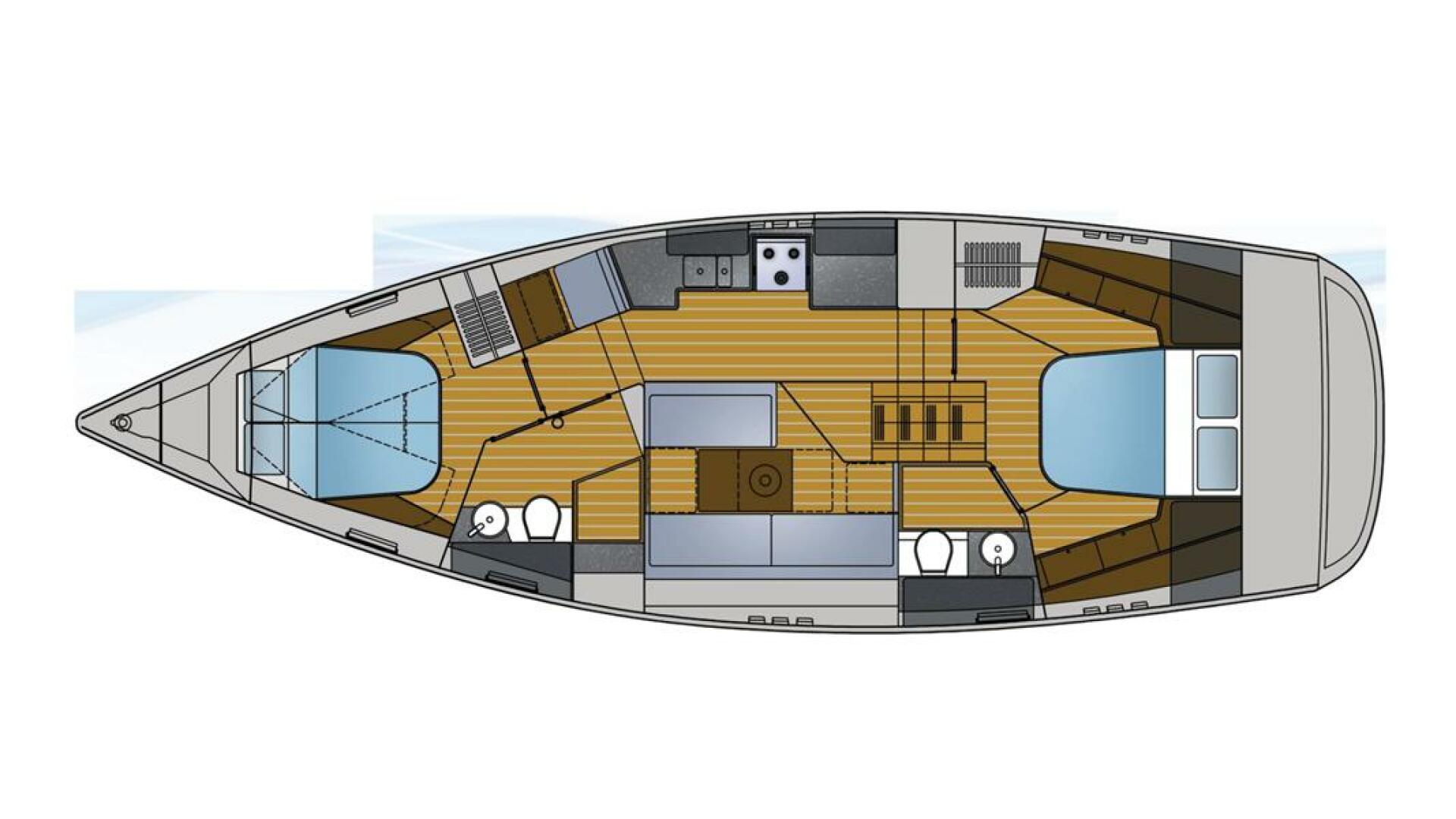
The interior features two private cabins, two heads, a raised salon, a linear galley to starboard, and a nav station forward of the galley.
- Aft cabin with a centerline bed and an en-suite head
- Forward cabin with a centerline bed and direct access to the forward head
- Raised salon seating area with a dining table. Converts to a berth.
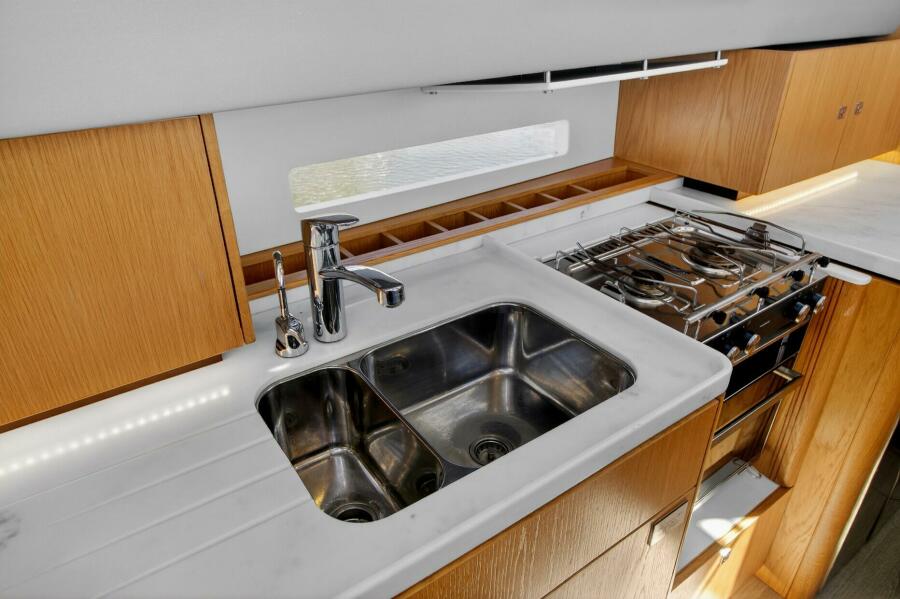
- Nicely equipped linear galley on the starboard side with a front-loading refrigerator and freezer
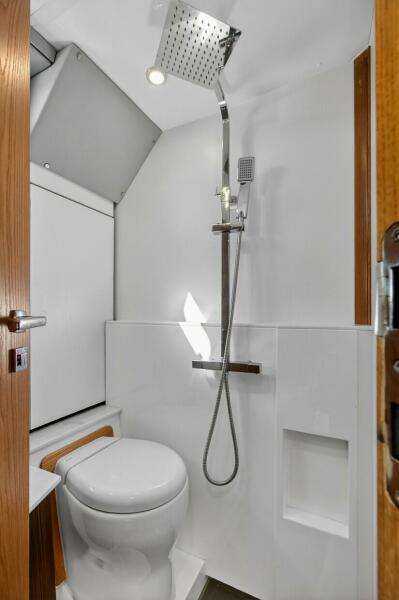
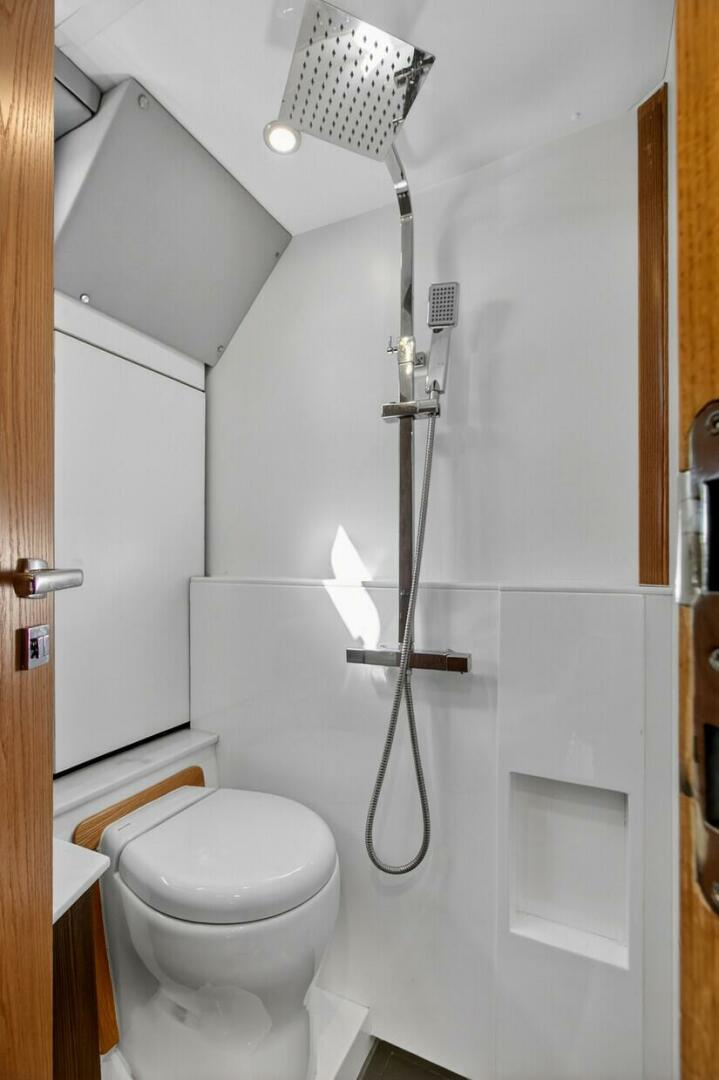
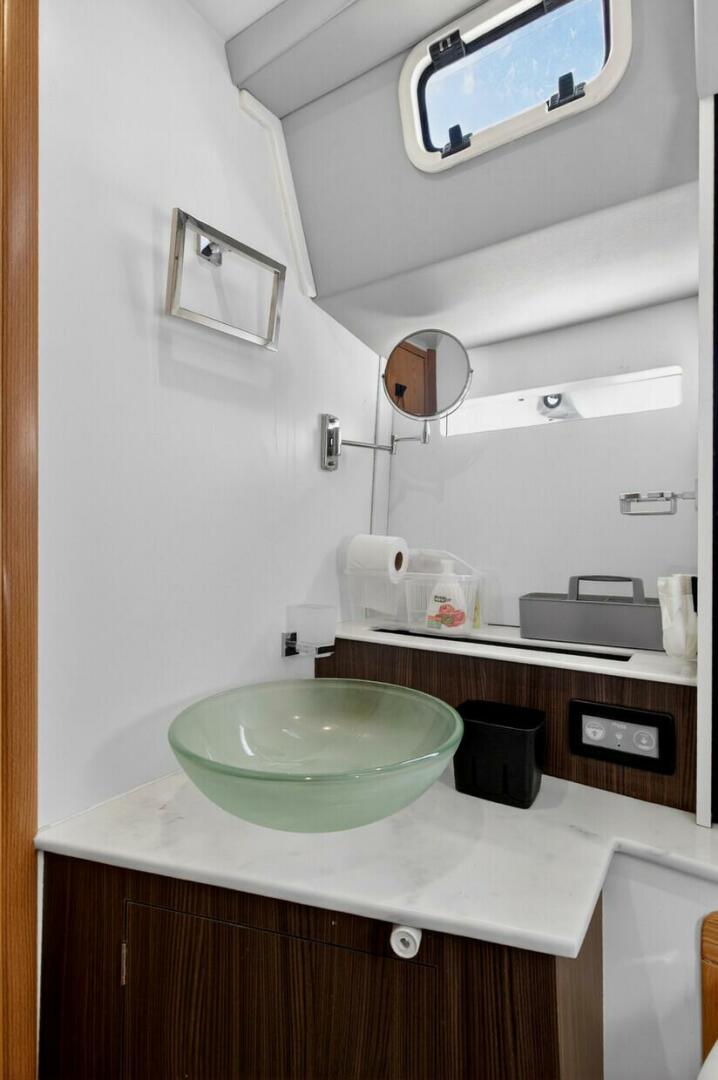
- Electric flush toilets
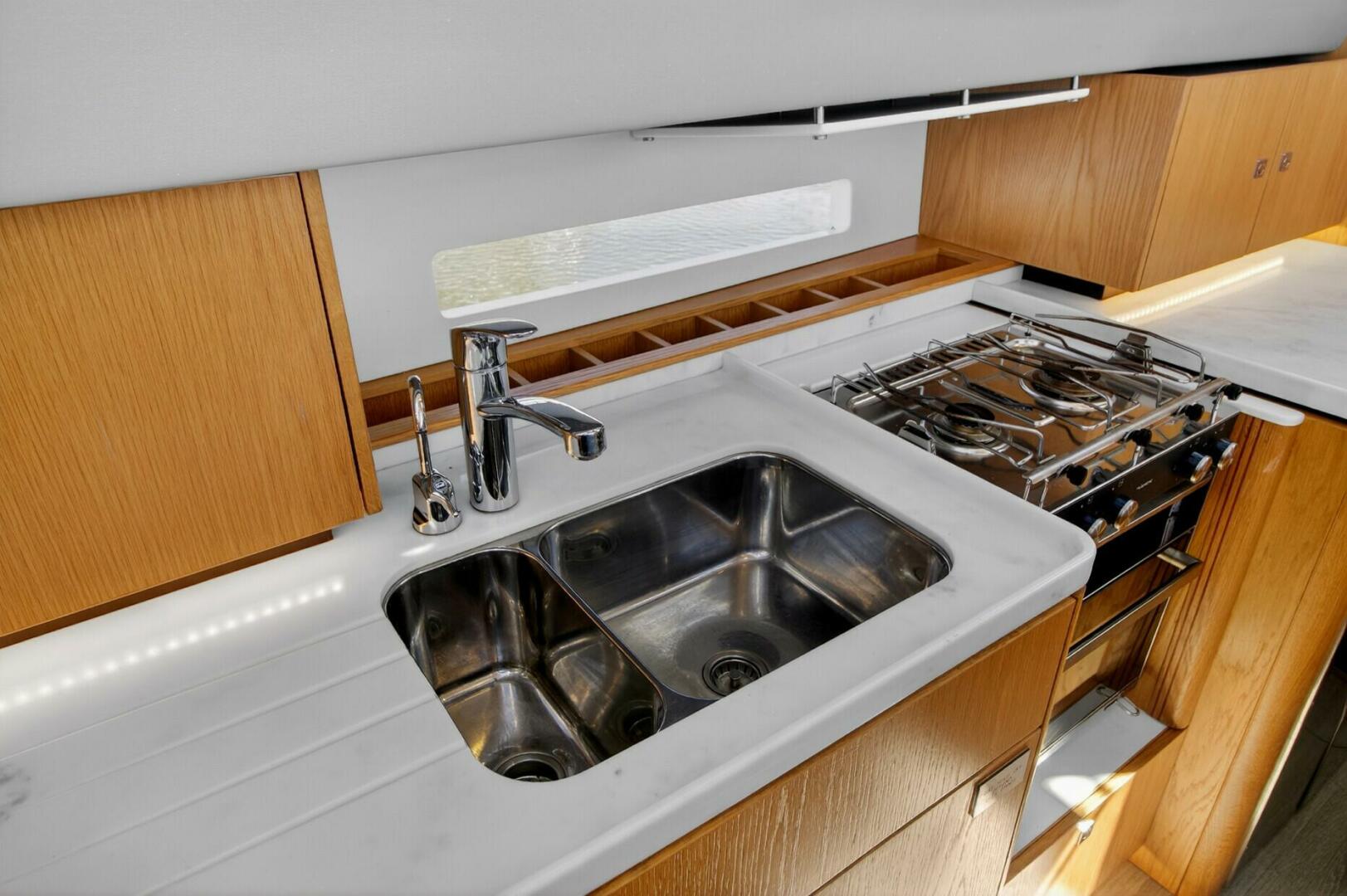
- The galley has a double sink, a two-burner stove with an oven, a front-opening refrigerator, and a front-opening freezer.
- (3) AC units (aft cabin, salon, and forward cabin)
- (3) Fans
- Lee cloths for all berths
- LED lighting and red courtesy lighting
- The owner modified the configuration of the forward head following delivery. The shower stall was removed, and the floor was modified to create a large wet head.
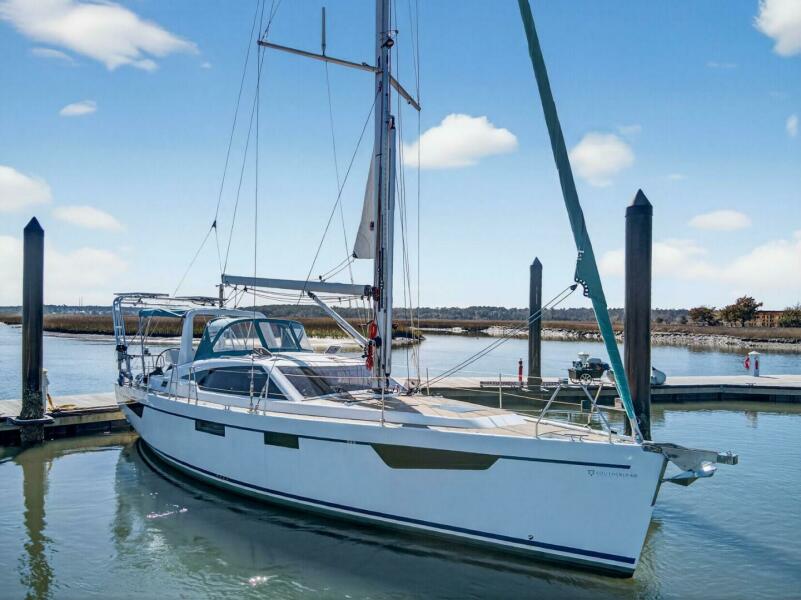
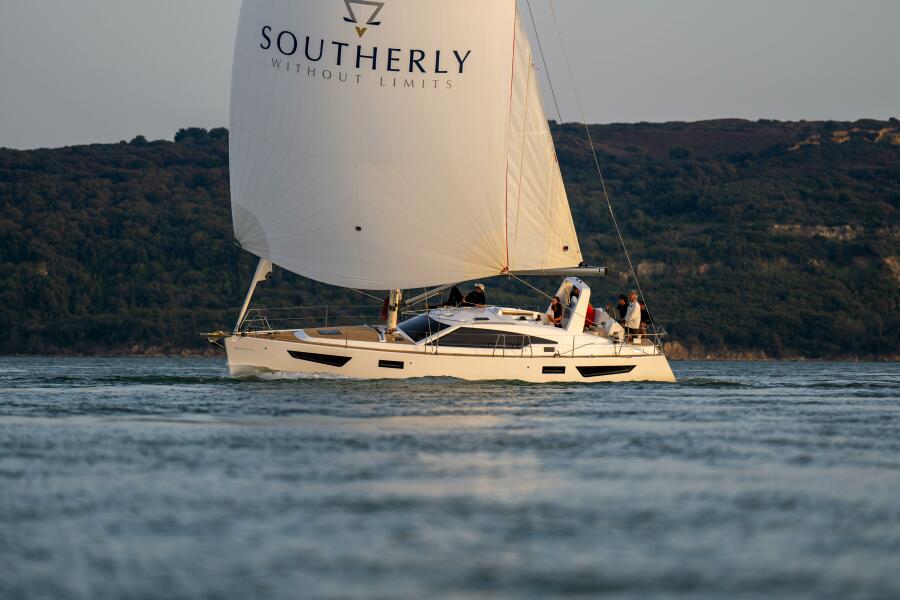
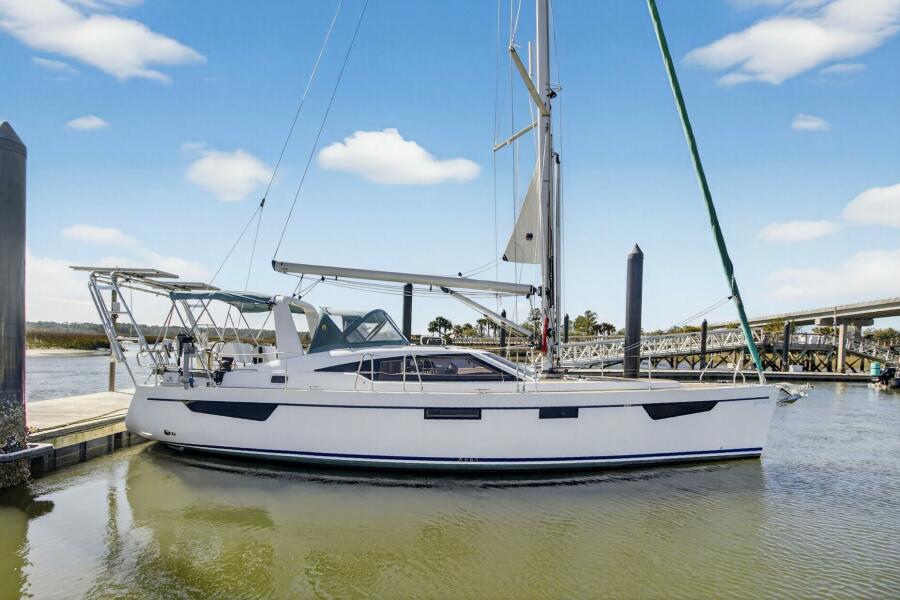
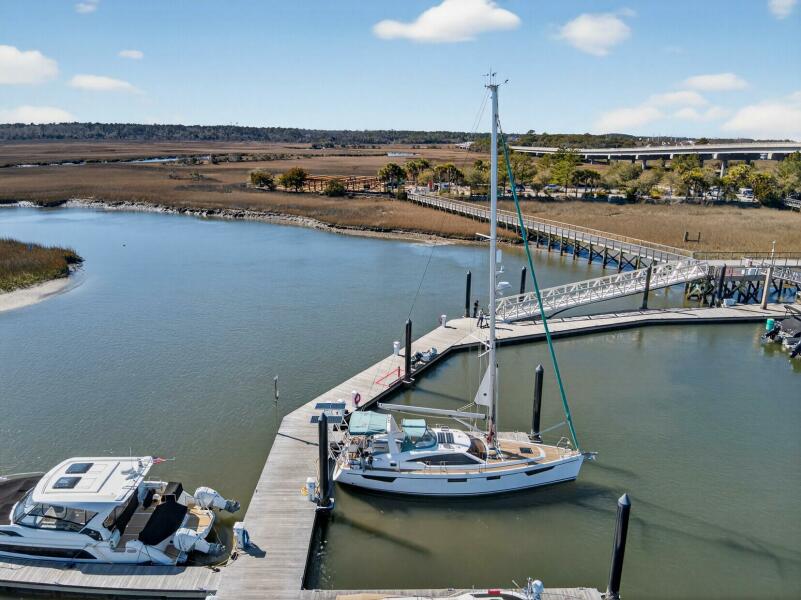
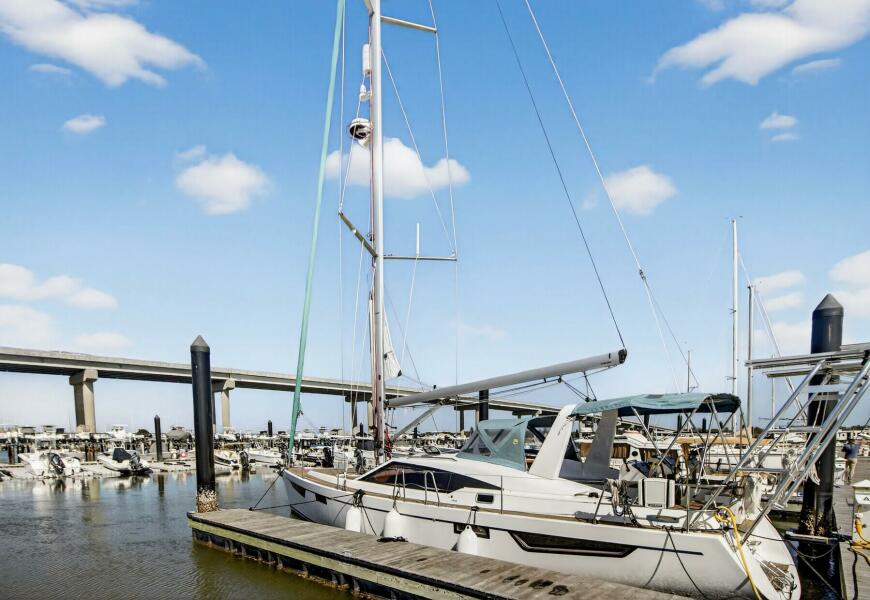
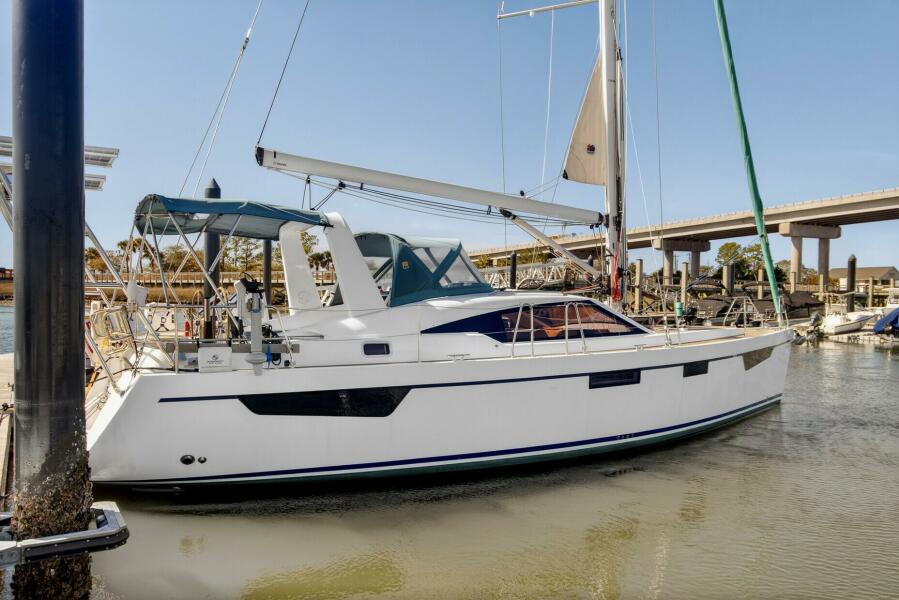
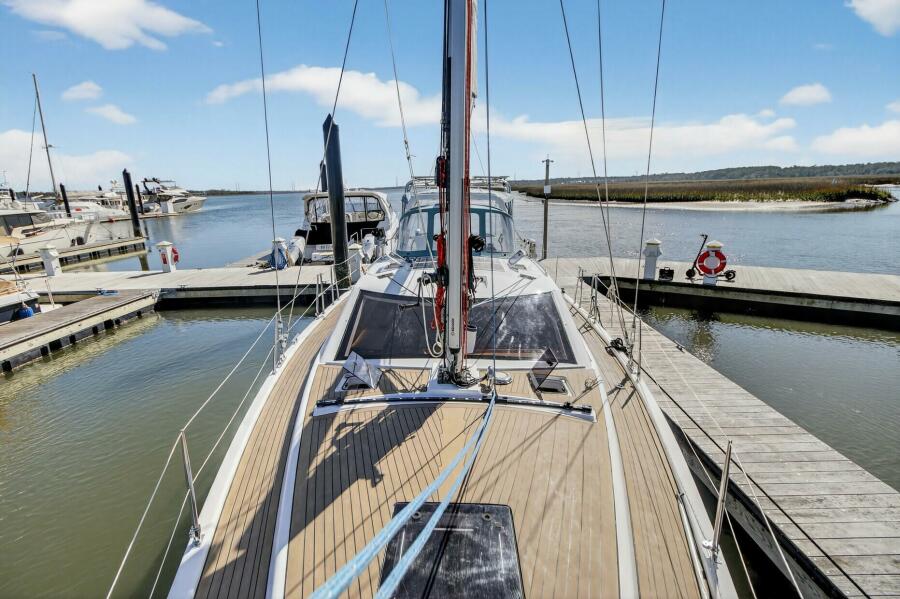
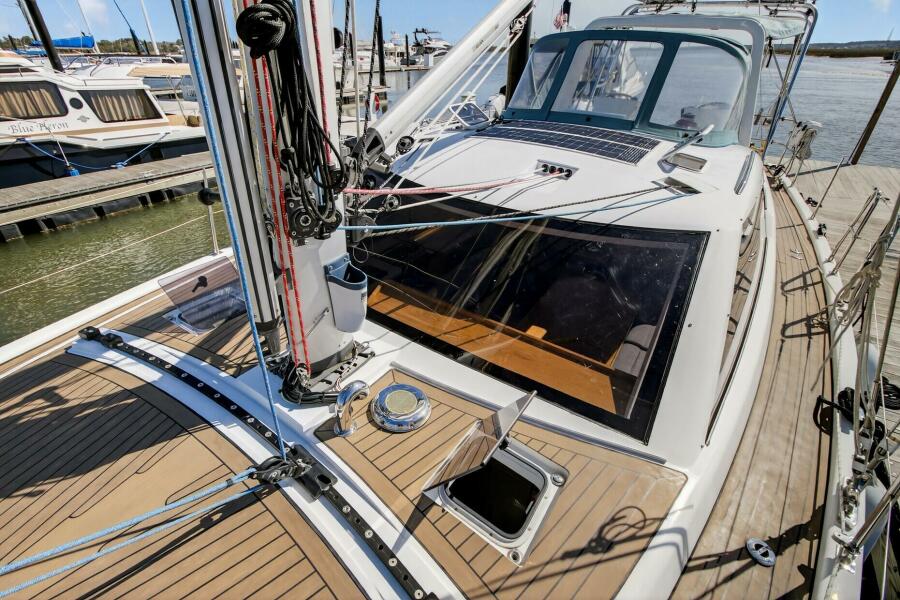
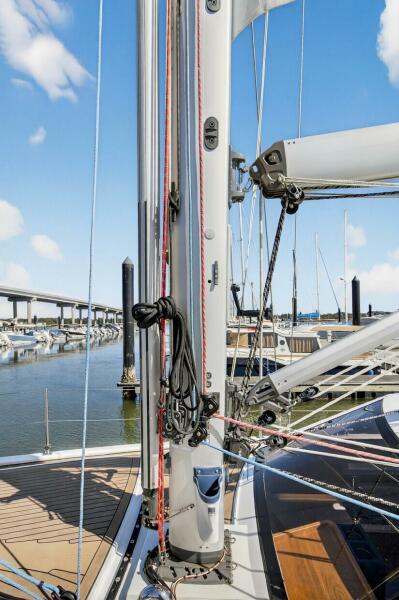
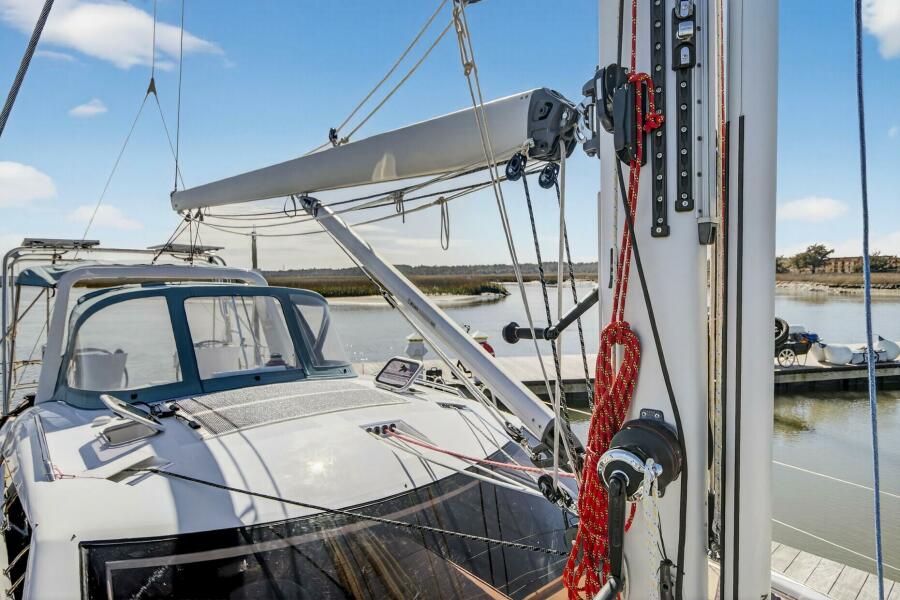
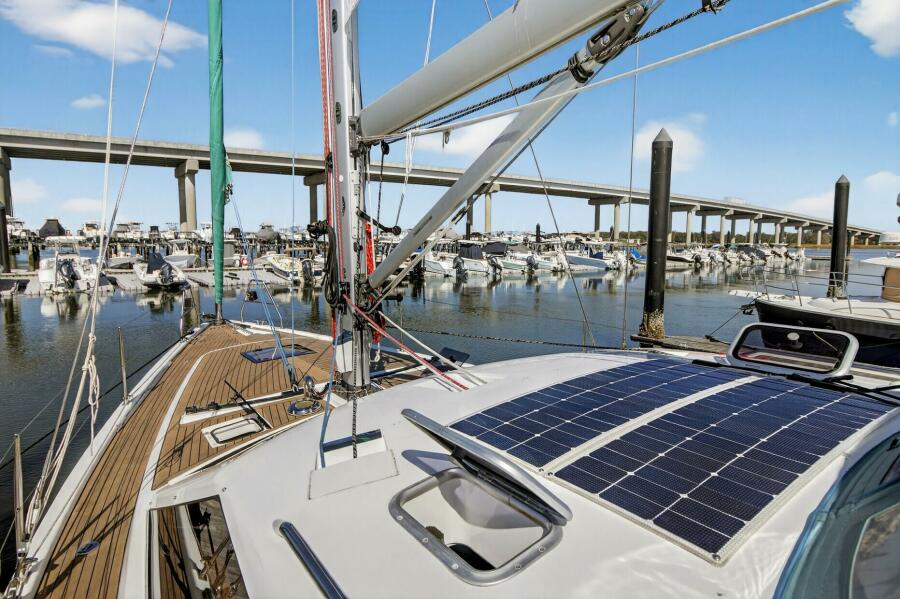
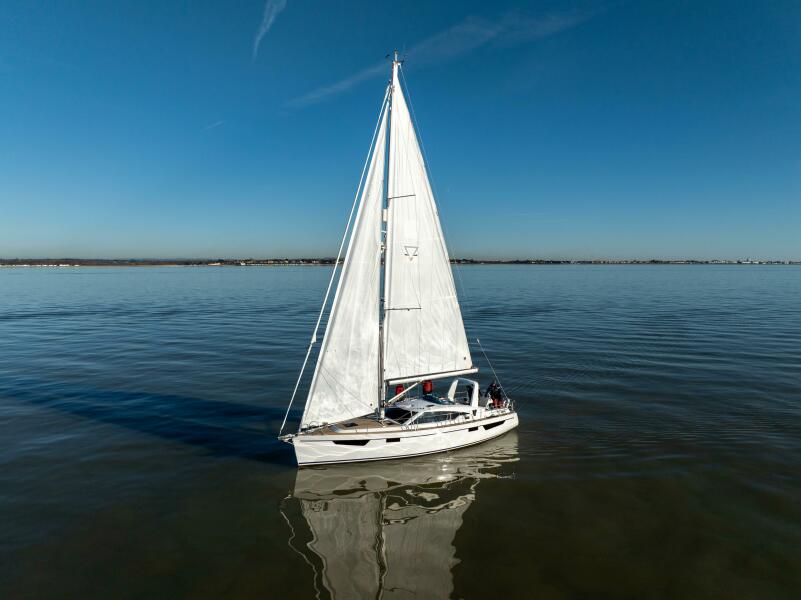
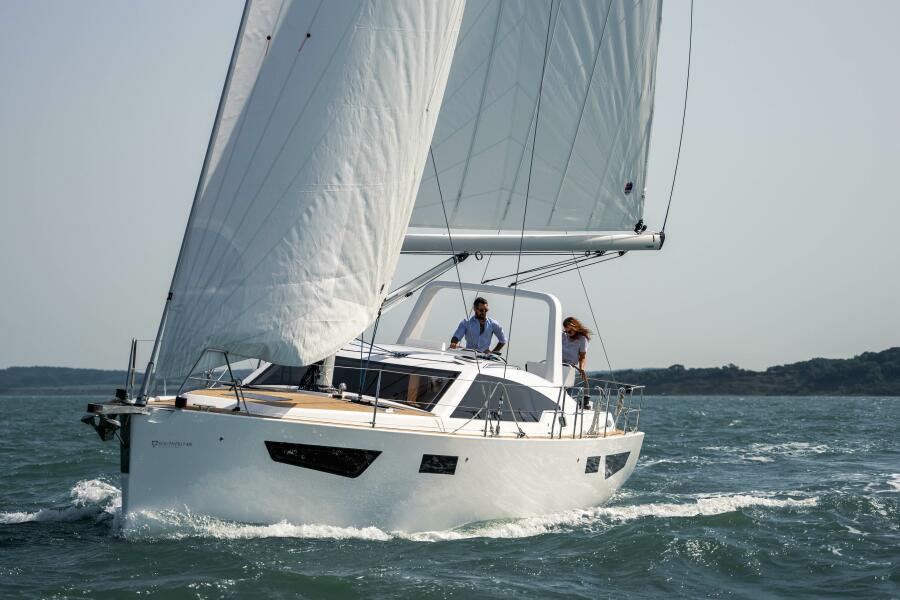
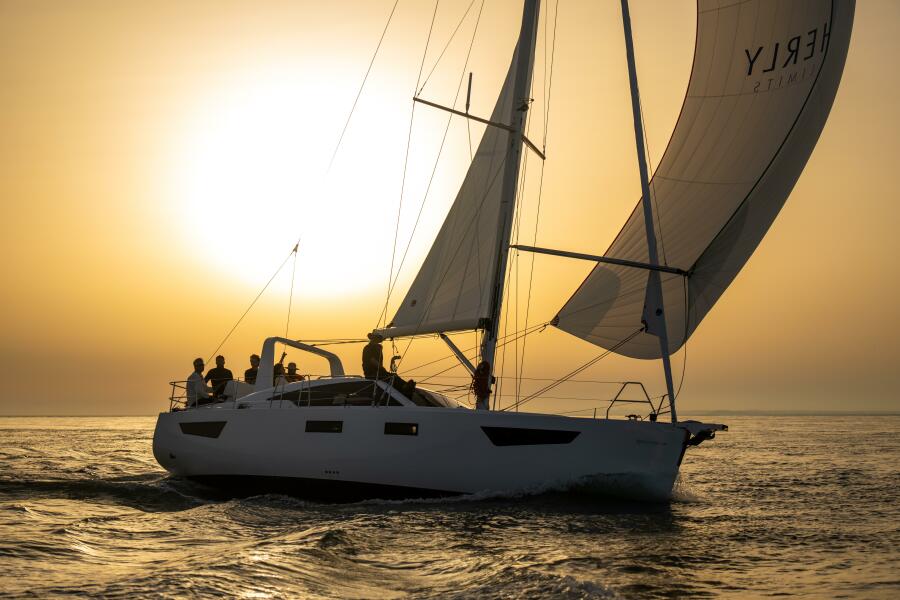
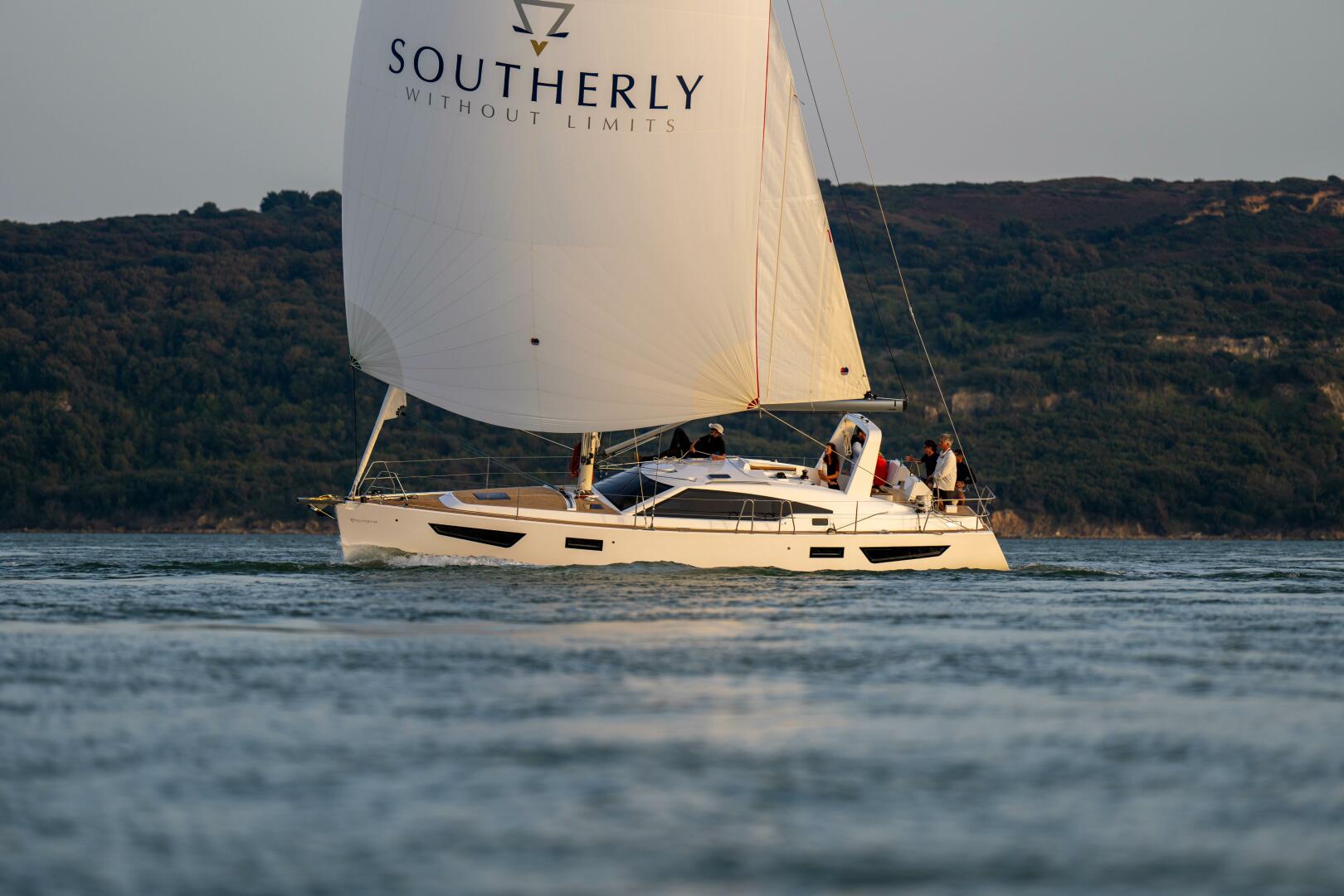
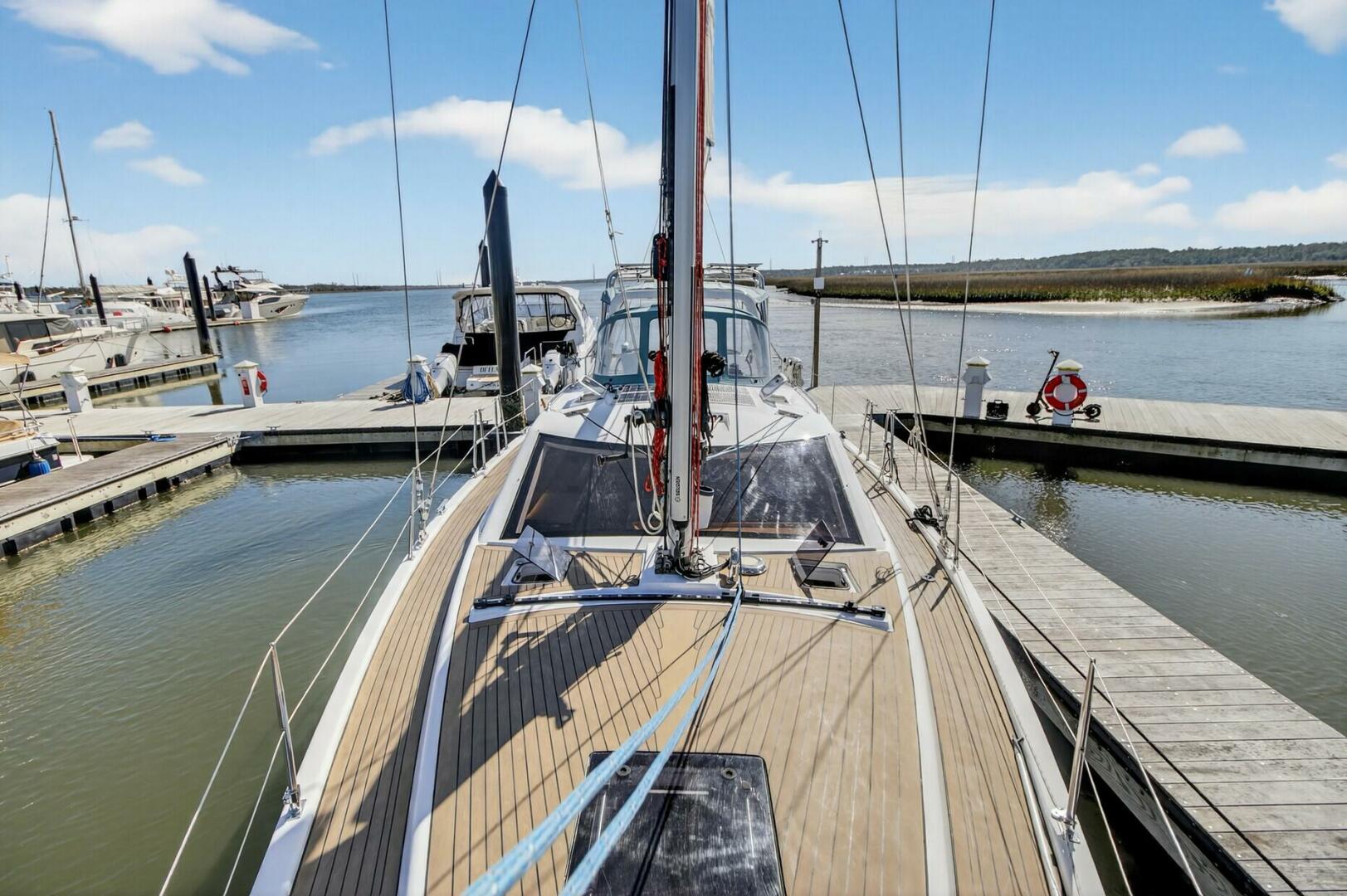
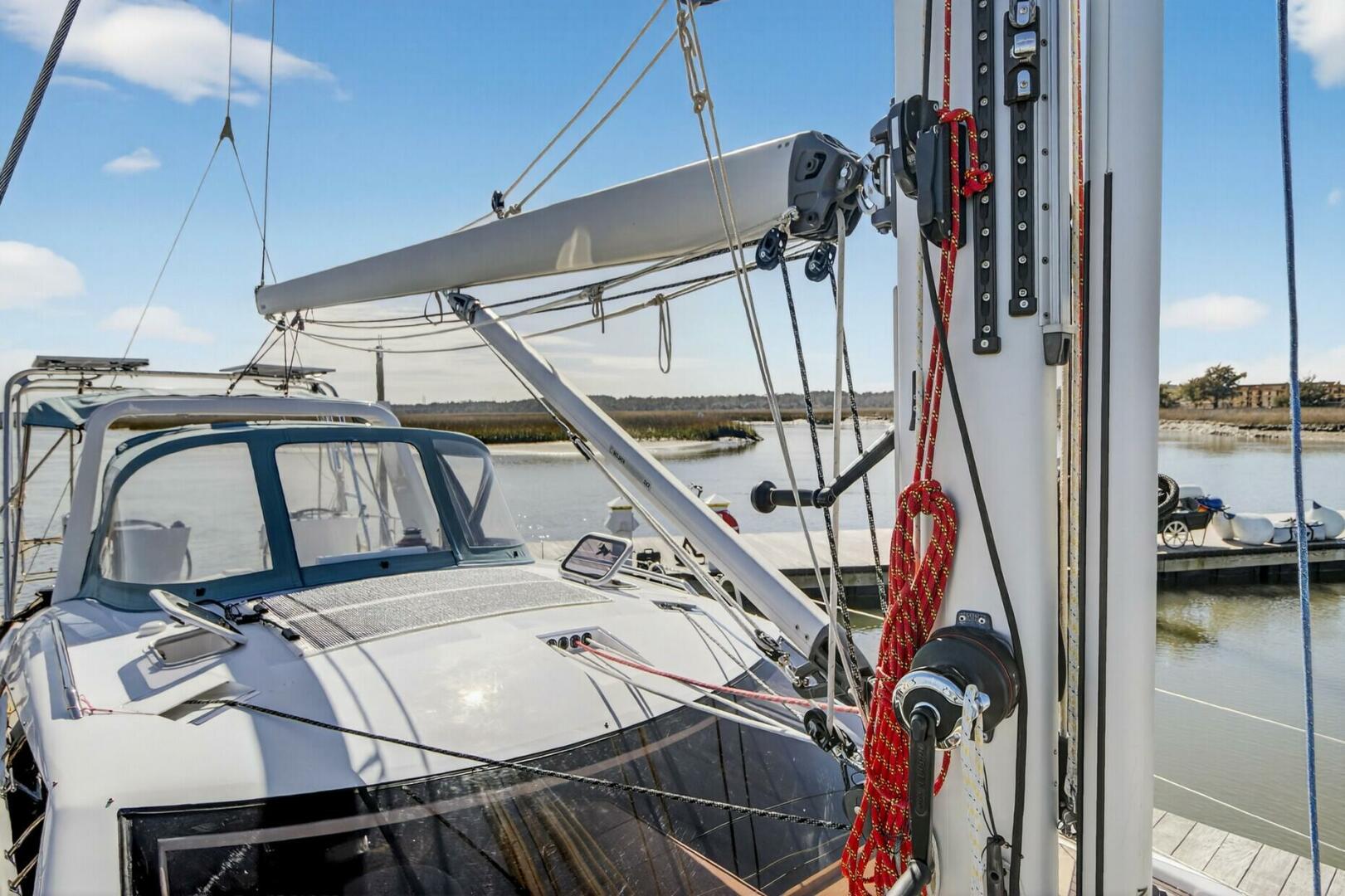
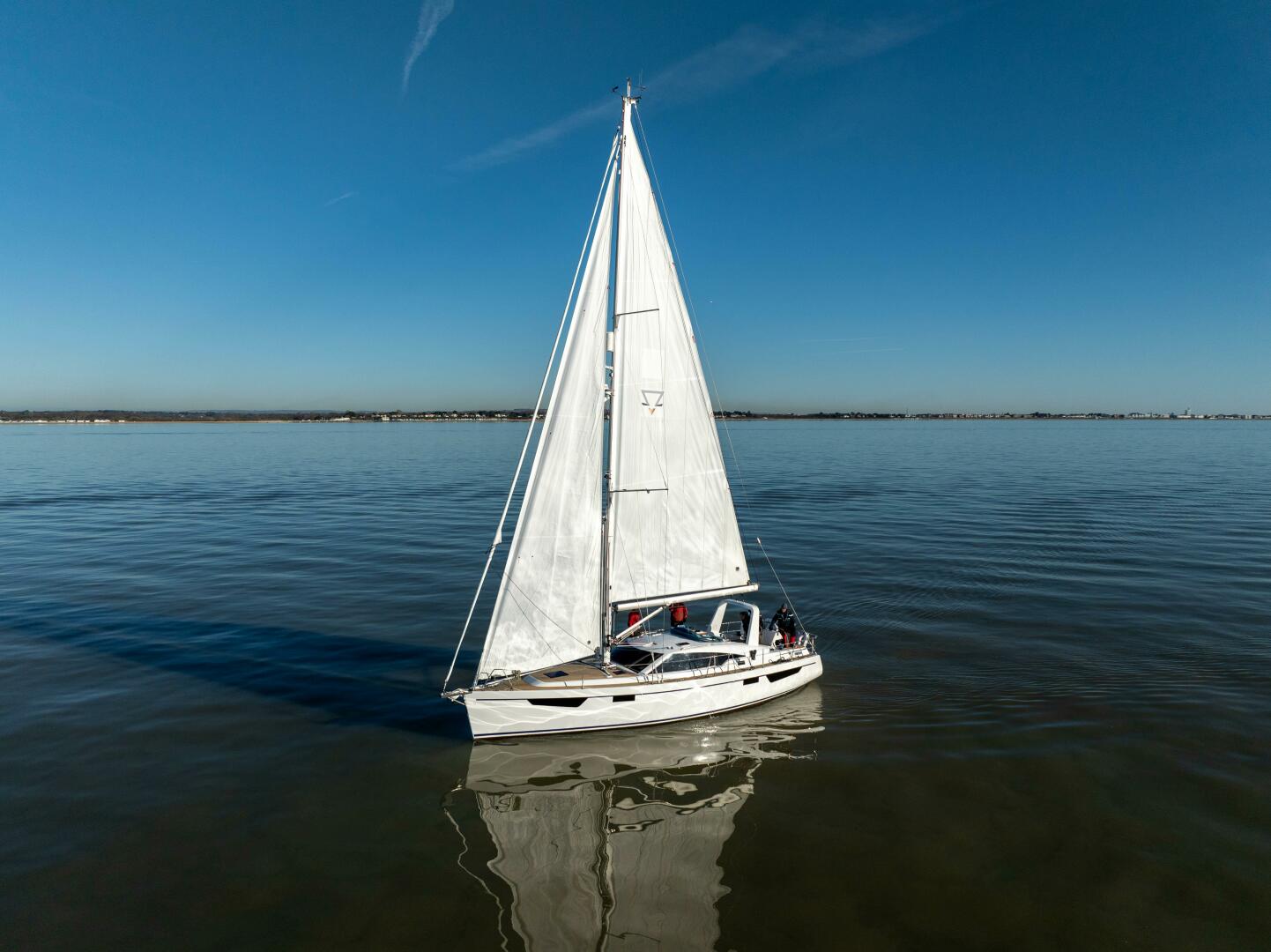
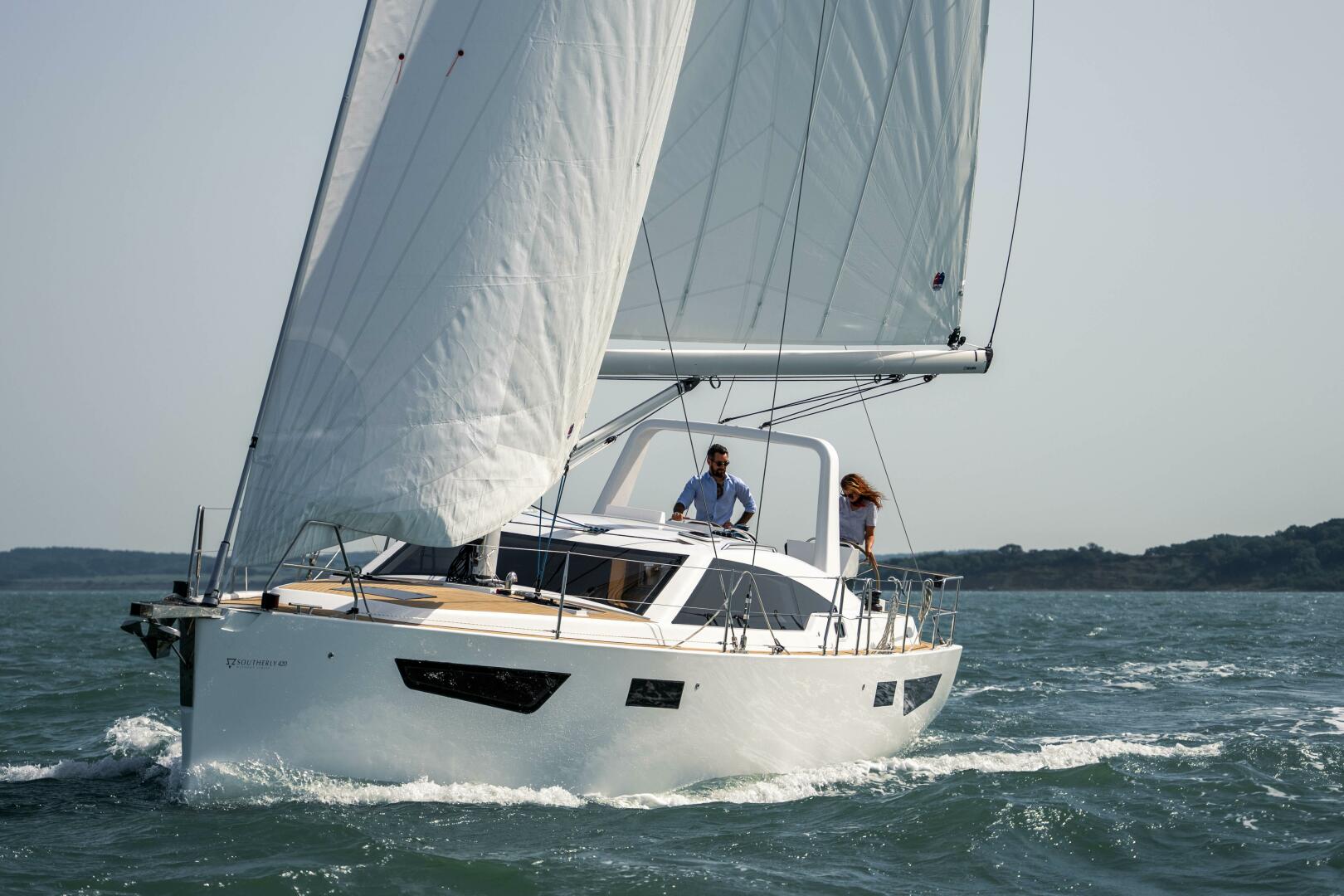
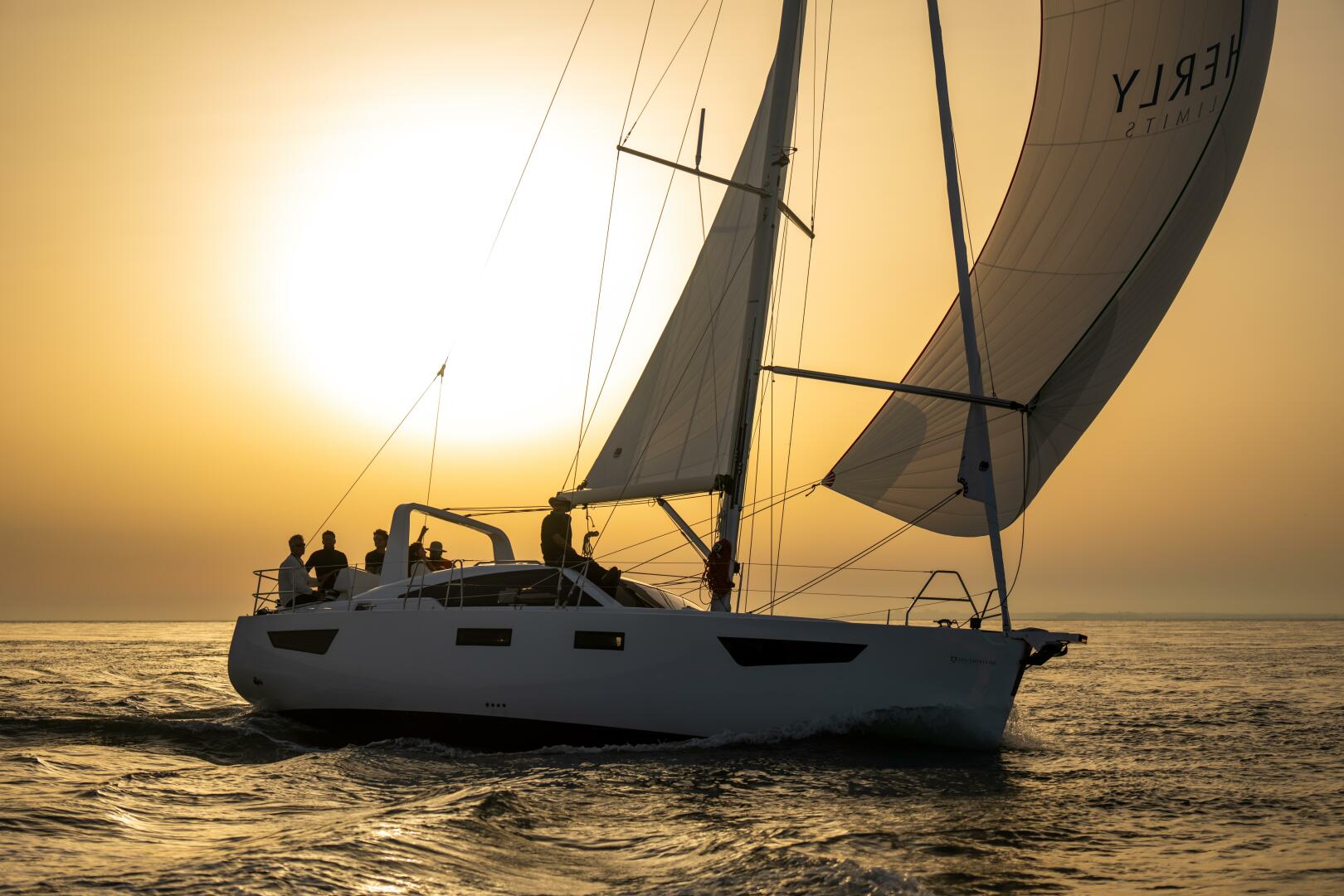
The Southerly 420 boasts an impressive sail plan for powerful windward performance. The tall fractional rig, with swept-back double spreaders, combines a self-tacking jib and in-mast furling mainsail. The Code 0 and Tradewind Runner can be flown from the bowsprit for off-wind sailing.
- Sanders mainsail made of HydraNet
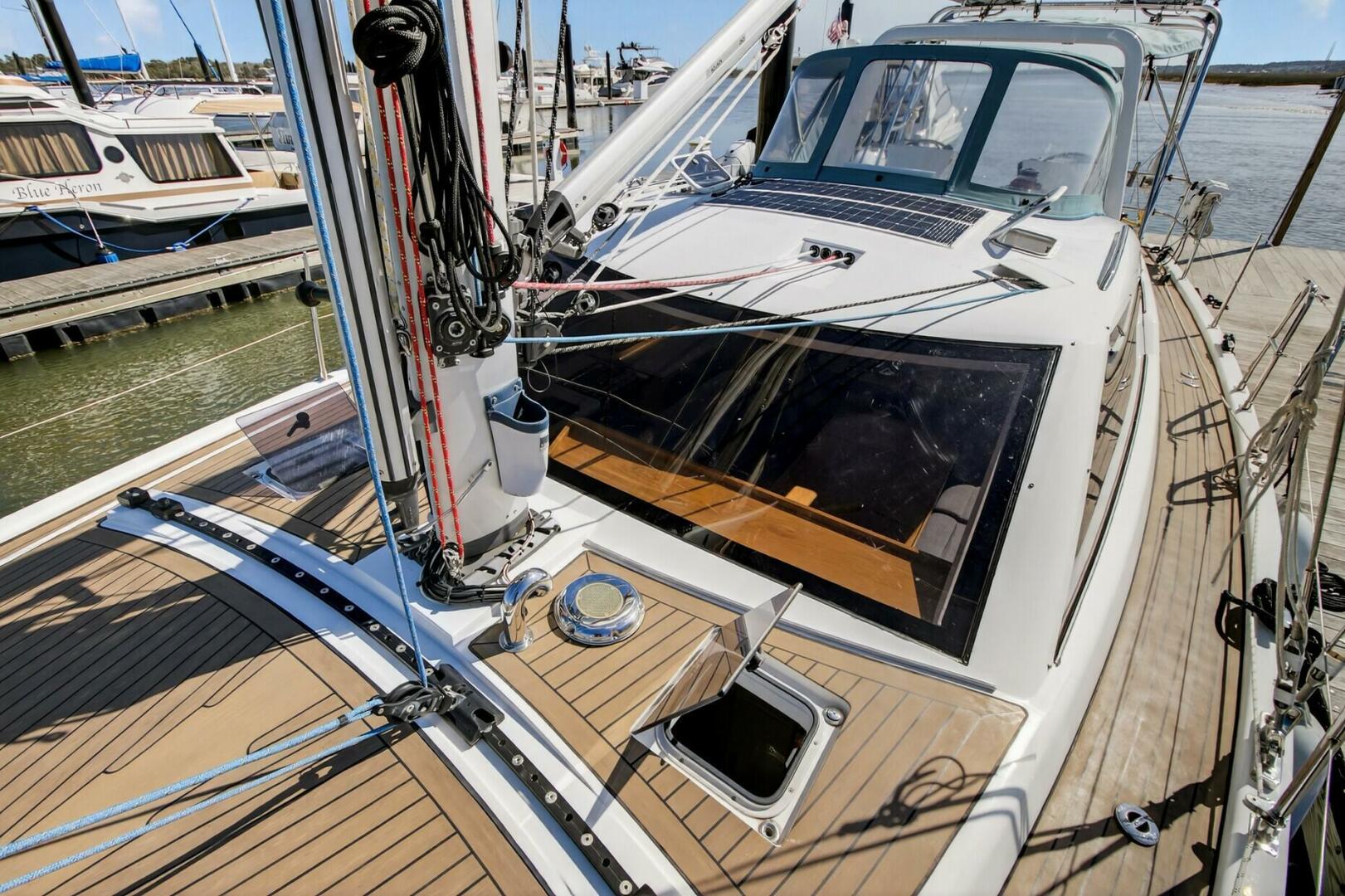
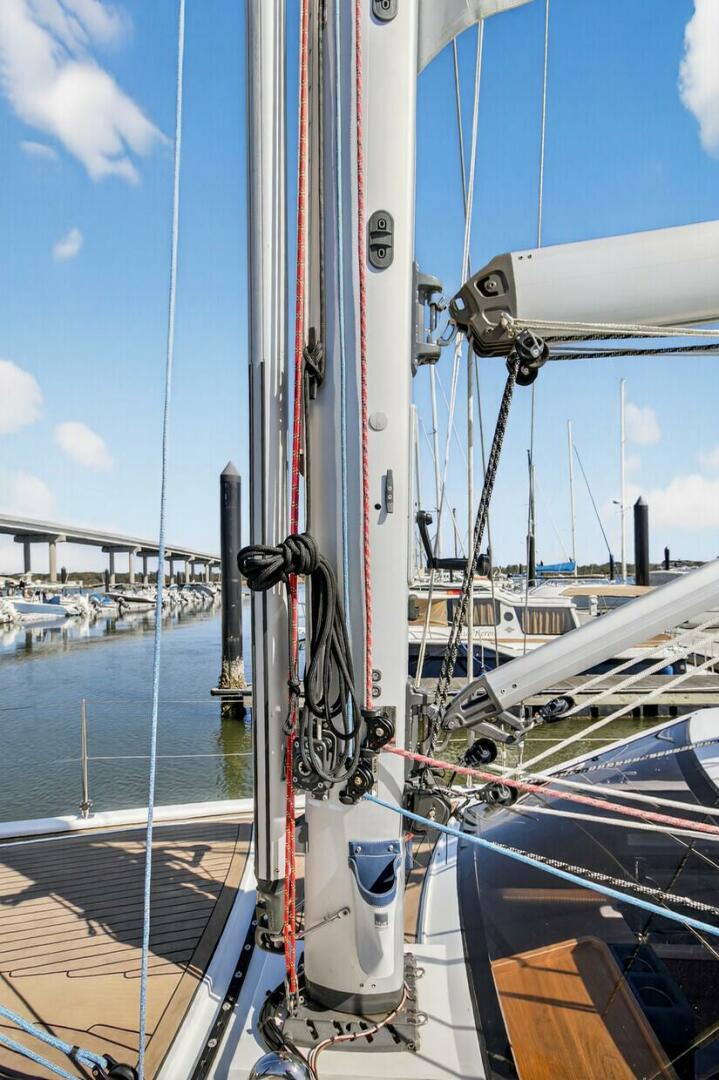
- Selden electric in-mast furling system
- Sanders self-tacking jib made of HydraNet
- Furlex below deck headsail furling drum
- Sanders HydraNet Code-O
- Sanders HydraNet Tradewind Runner with Karver KR2.5 bottom-up furler
- Aluminum whisker pole mounted on a mast track
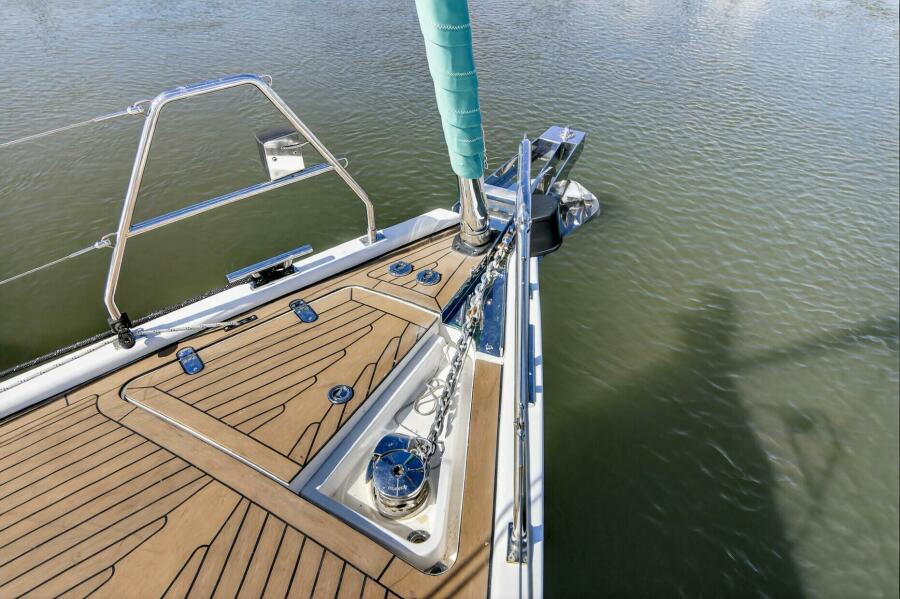
- Stainless steel bowsprit
- Solid kicker with gas strut
- Double swept back spreaders
- 1x19 stainless steel wire standing rigging with swage toggle-fork chrome bronze rigging screws
- Split Backstay
- Self-tacking foresail track with sheets led to the cockpit
- Mainsheet led to both helm stations
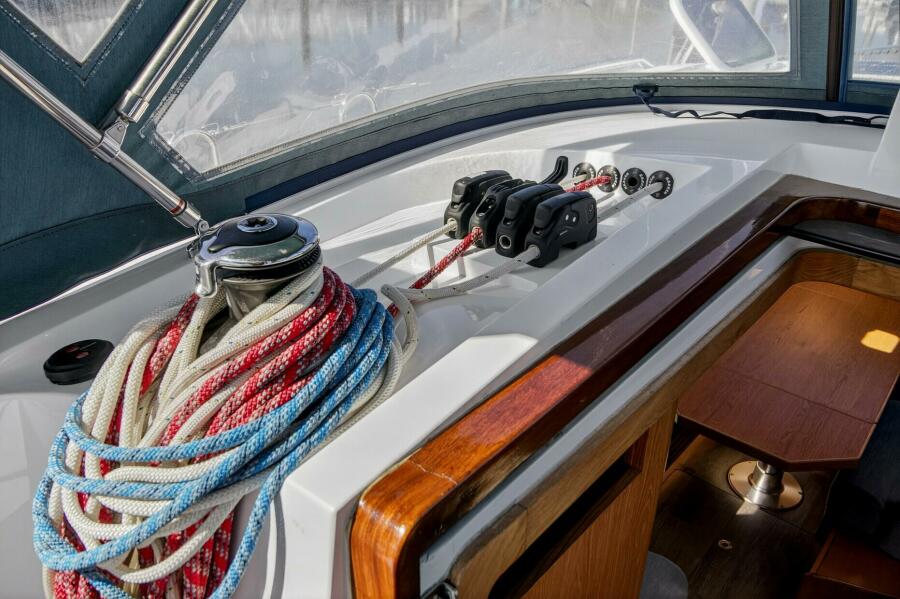
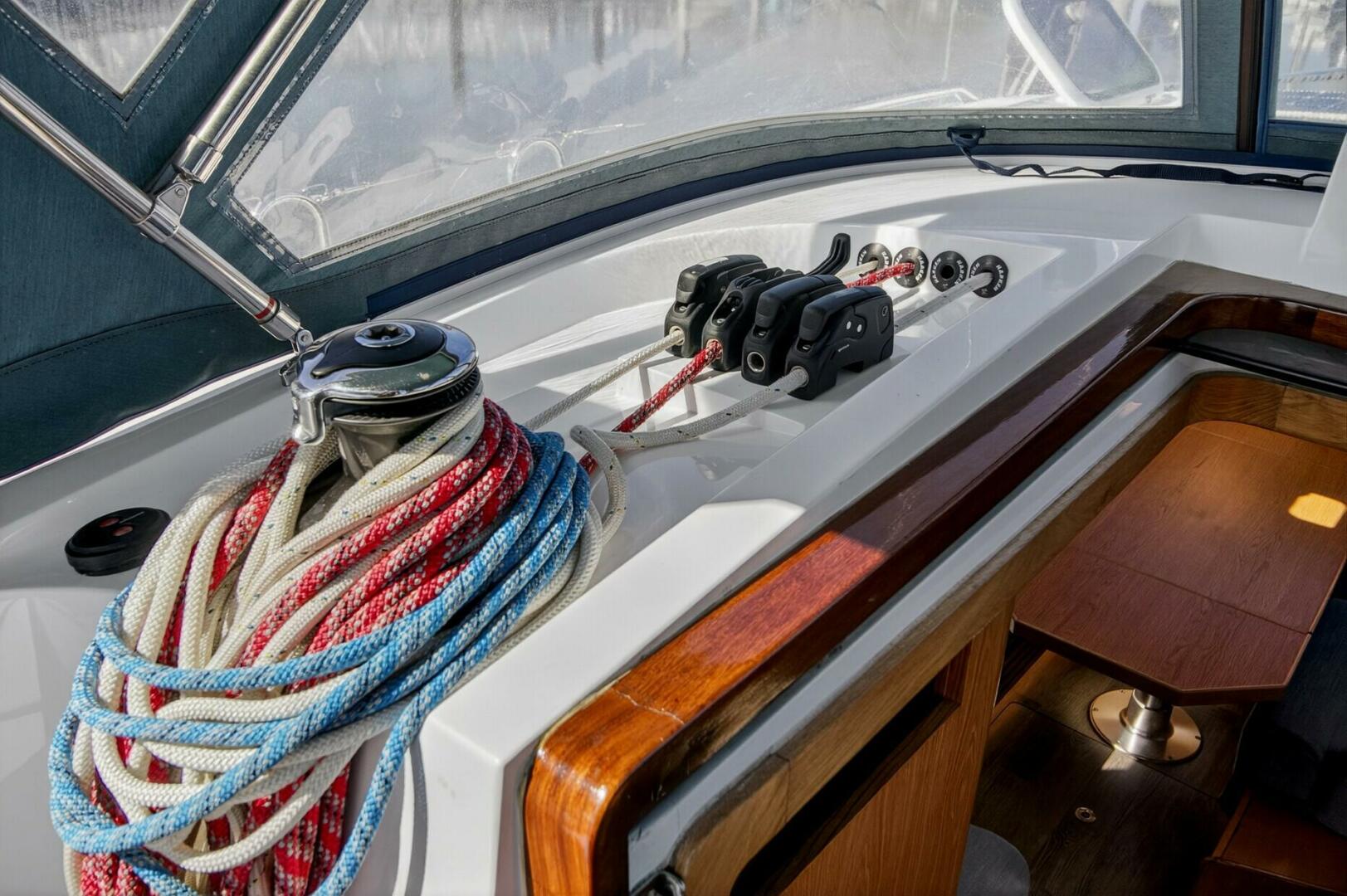
- Rope clutches as required for running rigging
- One electric Harken winch at companionway
- Two electric Harken winches for mainsheet/jib sheet
- Raymarine Axiom 12 Pro-S Hybrid touch, RVM at the Nav
- Autopilot: Raymarine Evolution Autopilot with a Jefa DD2 drive and Raymarine P70s autopilot control heads mounted at the port helm and Nav.
- Raystar 150GPS Sensor
- VHF: Ray 90 VHF with wired handset, passive speaker cable, and antenna
- Loud Hailer
- AIS 700 Class B Transceiver
- Radar: Quantum Q24D Doppler 18" radar
- Echomax Active XS RTE
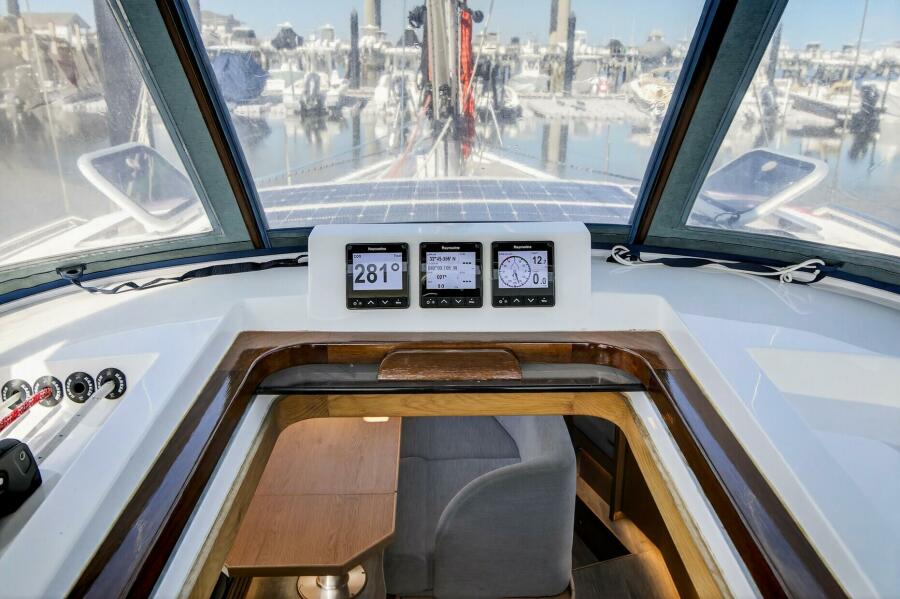
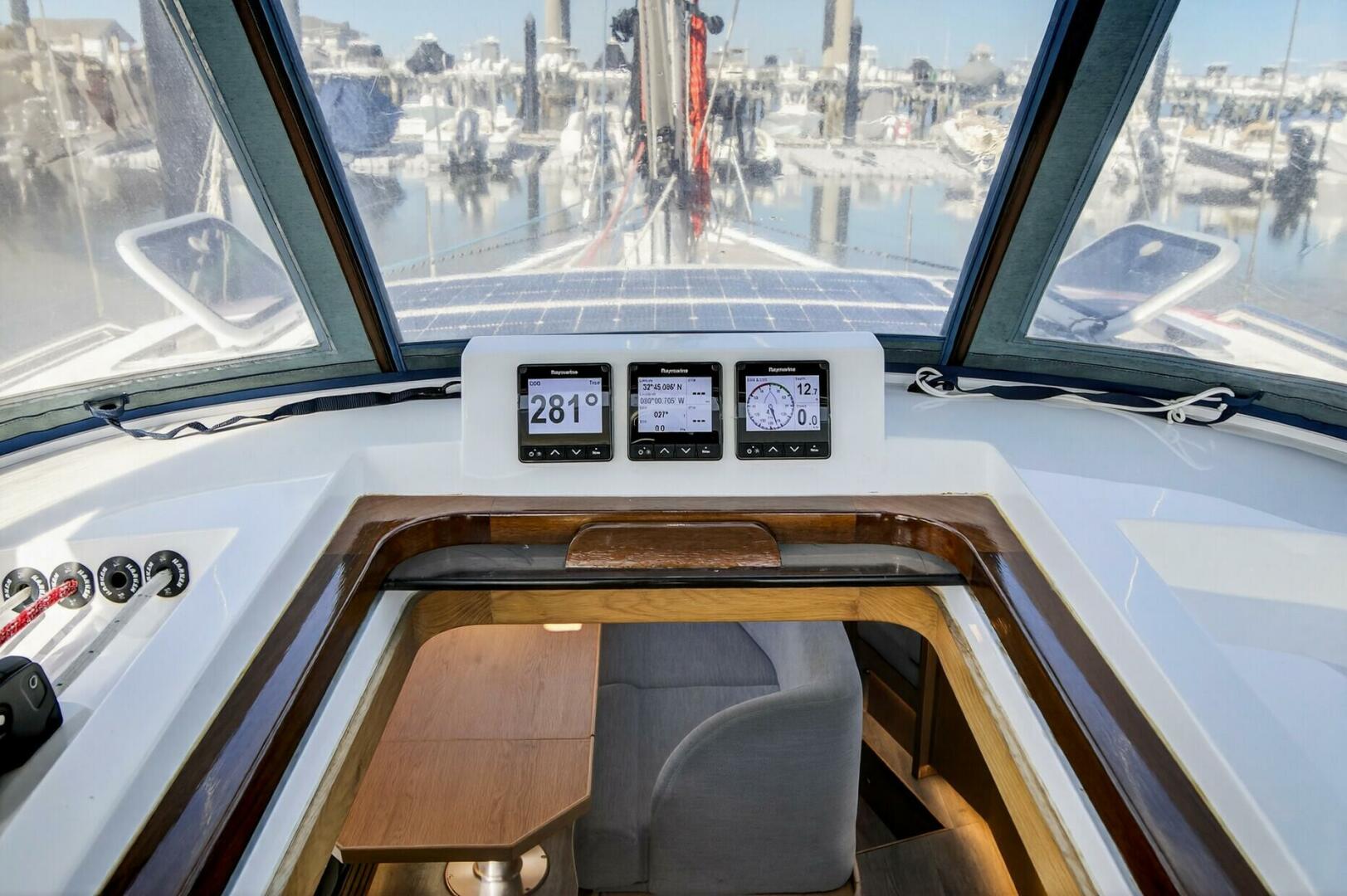
- (3) Raymarine i70 instrument displays
- Raymarine Axiom 9 Pro MFD at the port helm
- Raymarine Axiom 9 Pro MFD at the starboard helm
- Ray 90 VHF second station, including wireless handset and active speaker at the starboard helm
- FLIR Thermal camera (M232)
- AR200 IP Camera stabilization module
- CAM 220
- RV200 Sonar Transducer
- Pepwave Max-TST-5GD-T-PRM Max Transmit 5G router
- IridiumGo exec with antenna and datahub
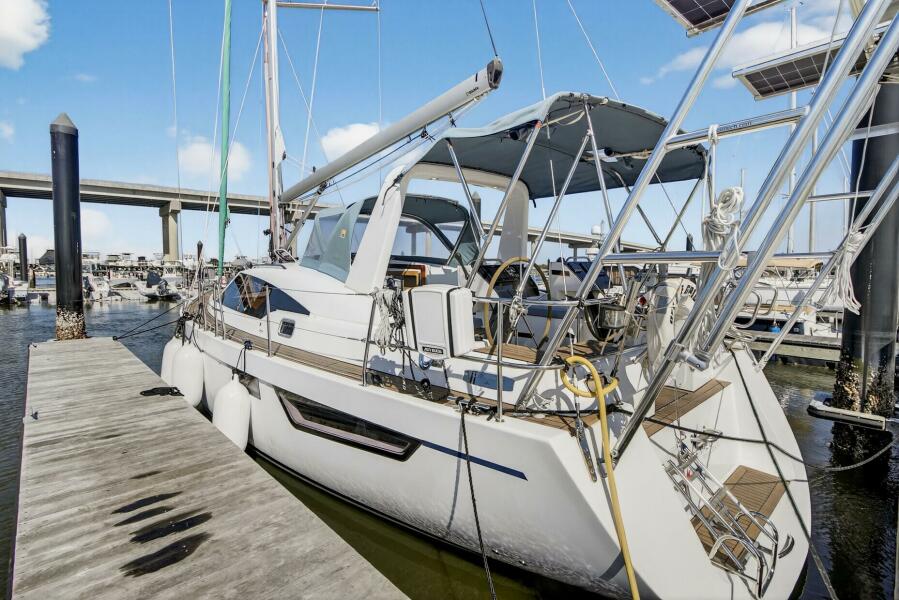
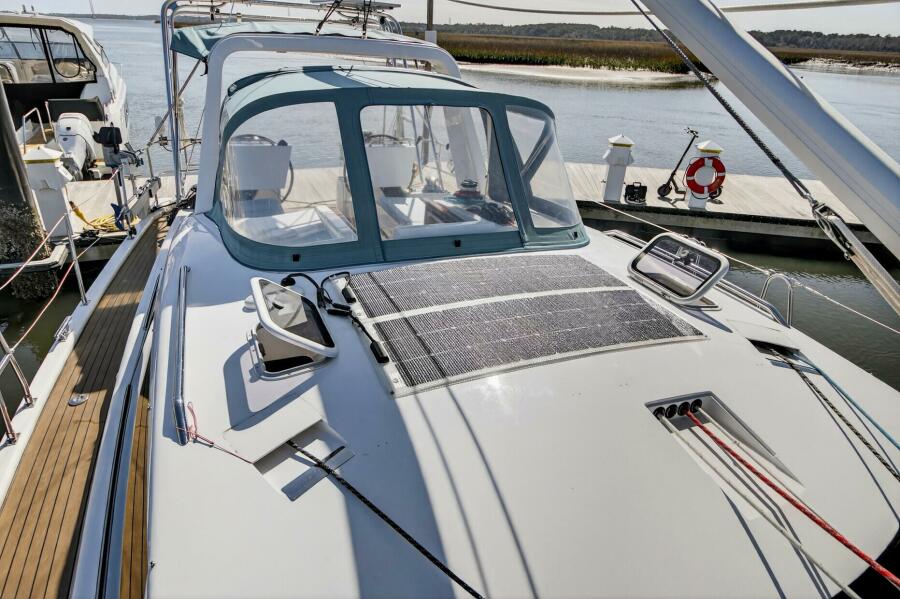
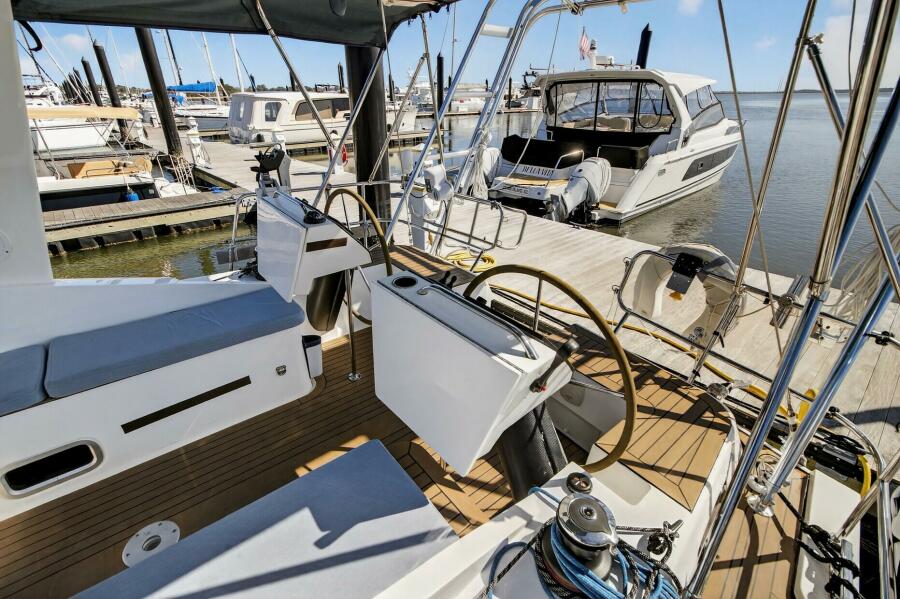
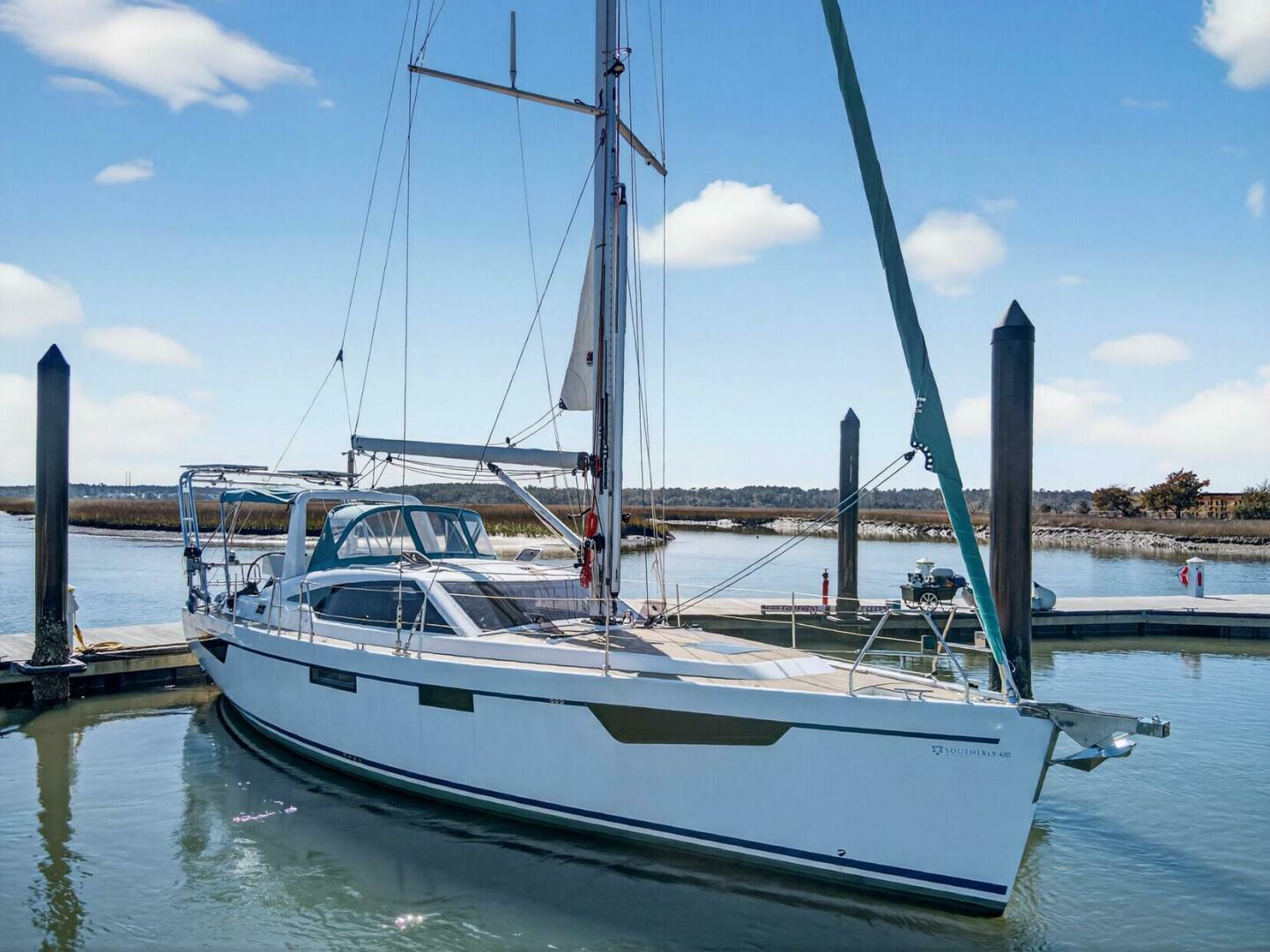
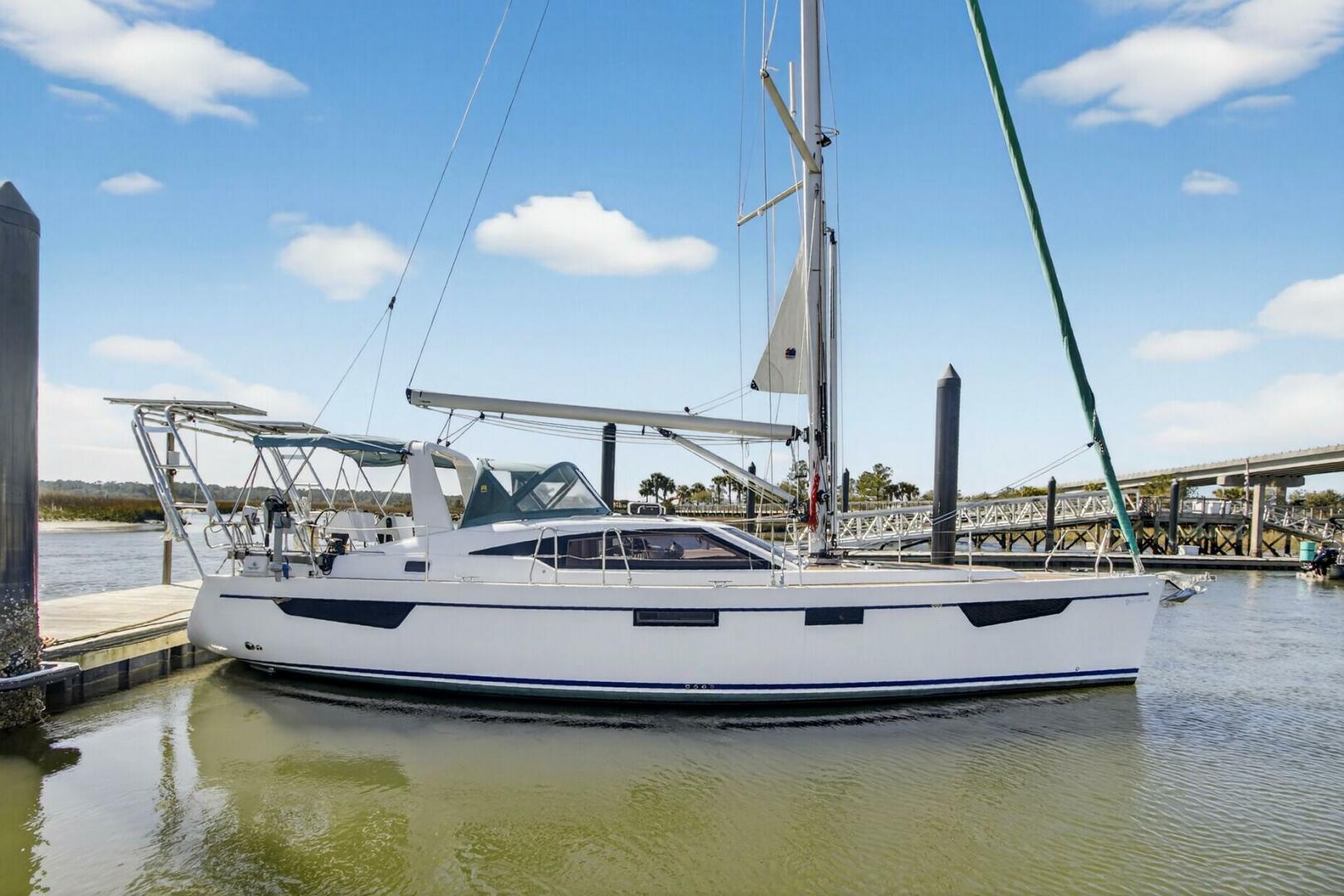
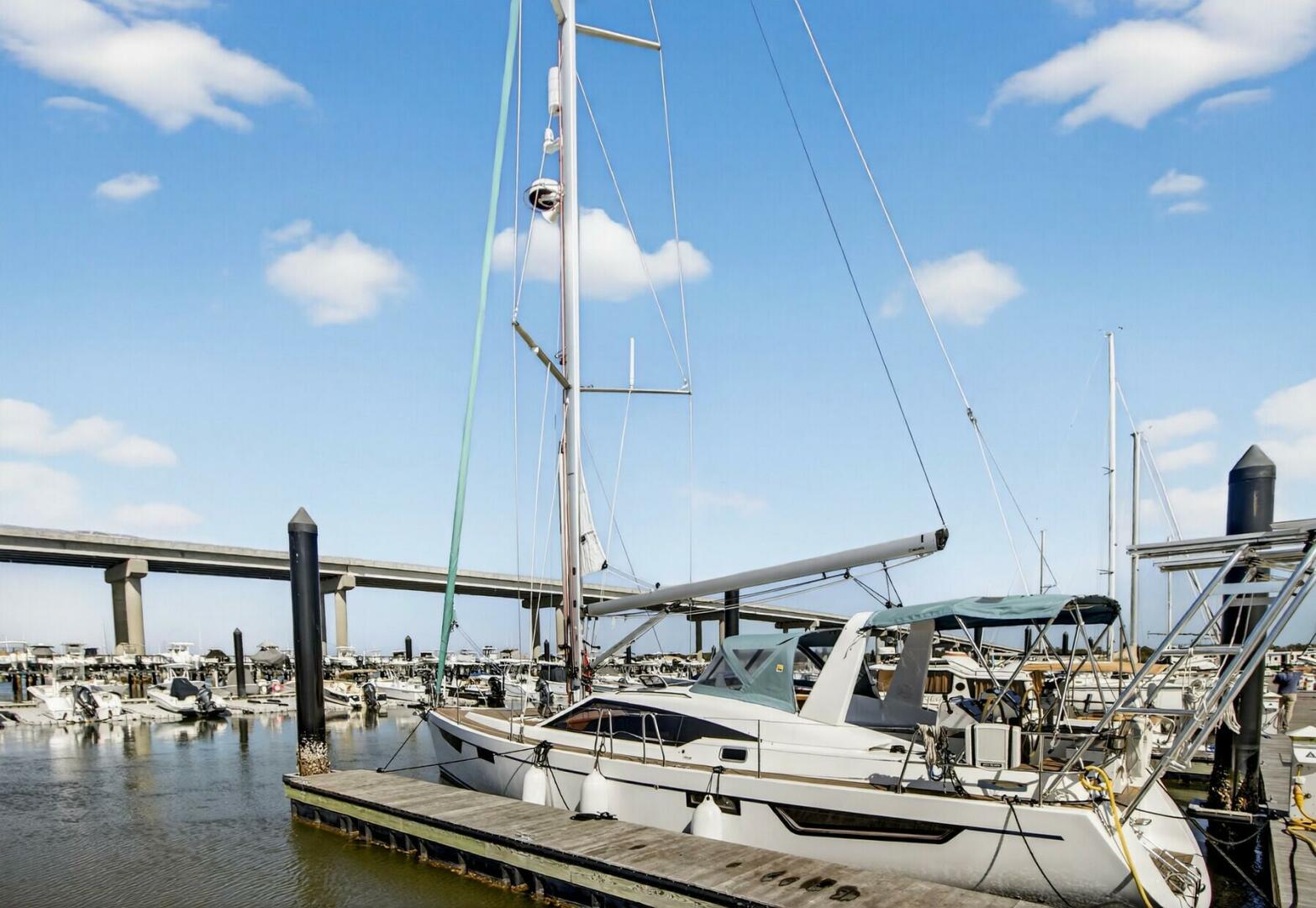
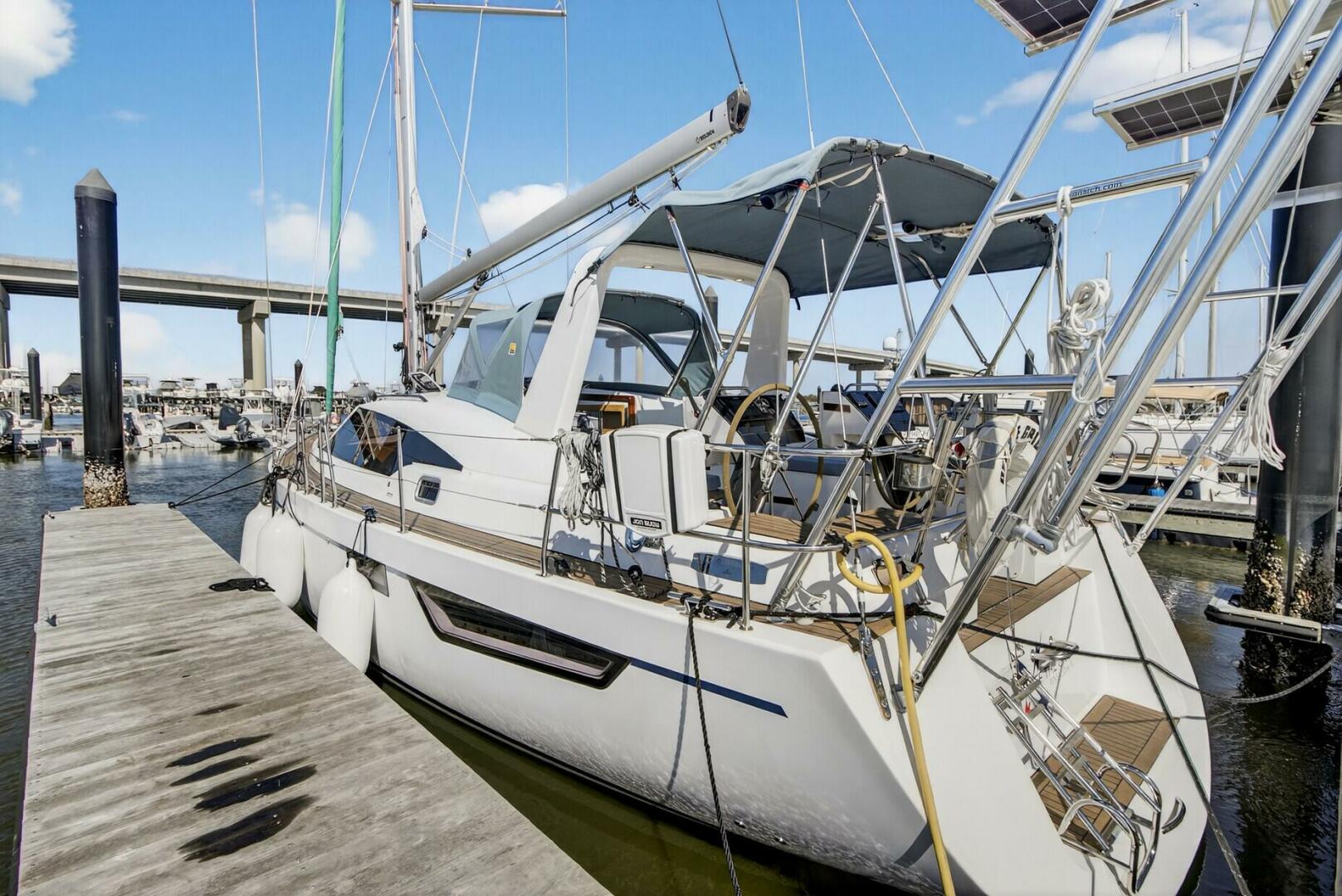
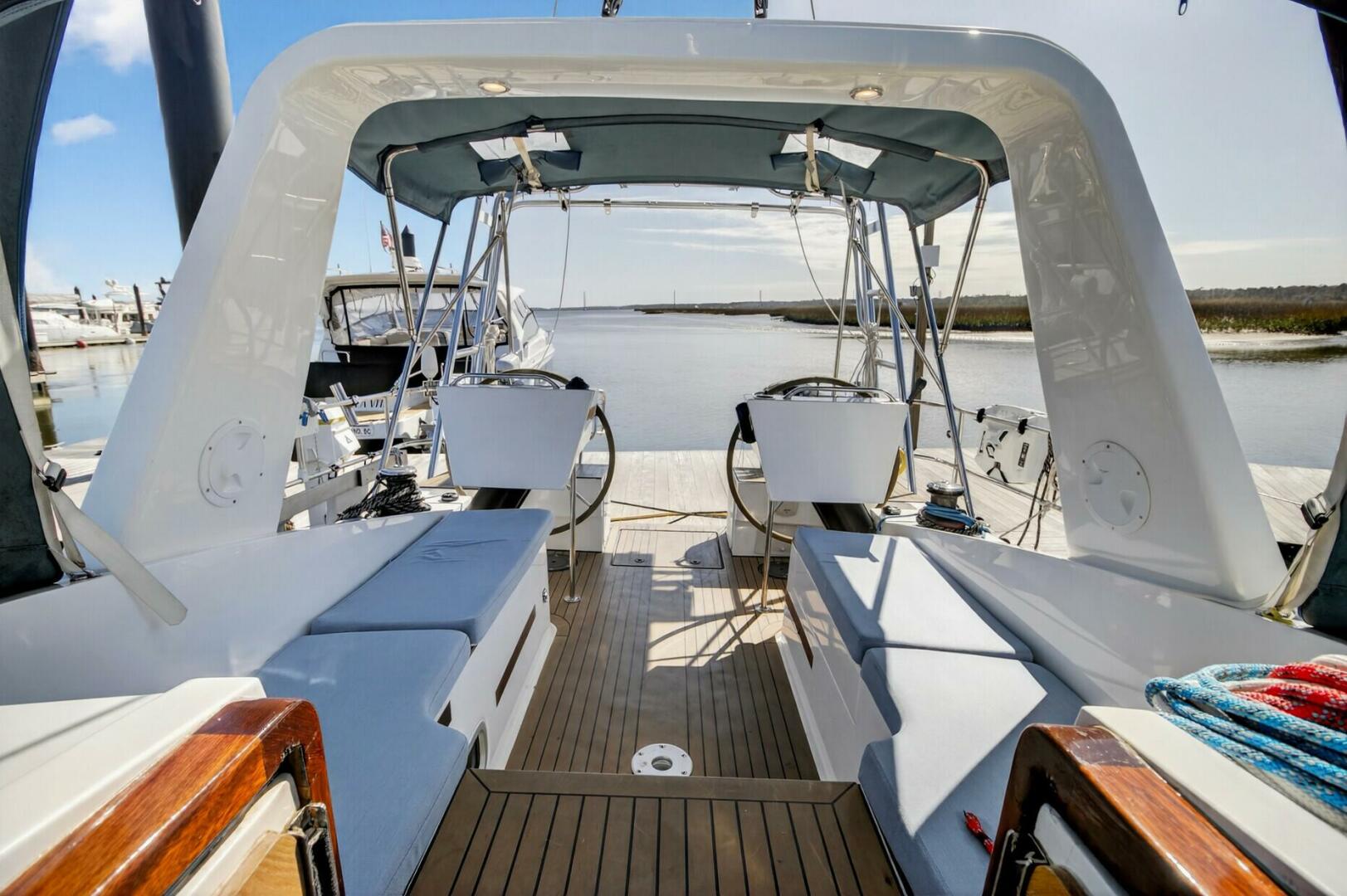
The aft cockpit is deep and wide, with comfortable seating and a cockpit table. The table has two leaves and storage. There are twin helm stations, with seats outboard and behind each wheel.
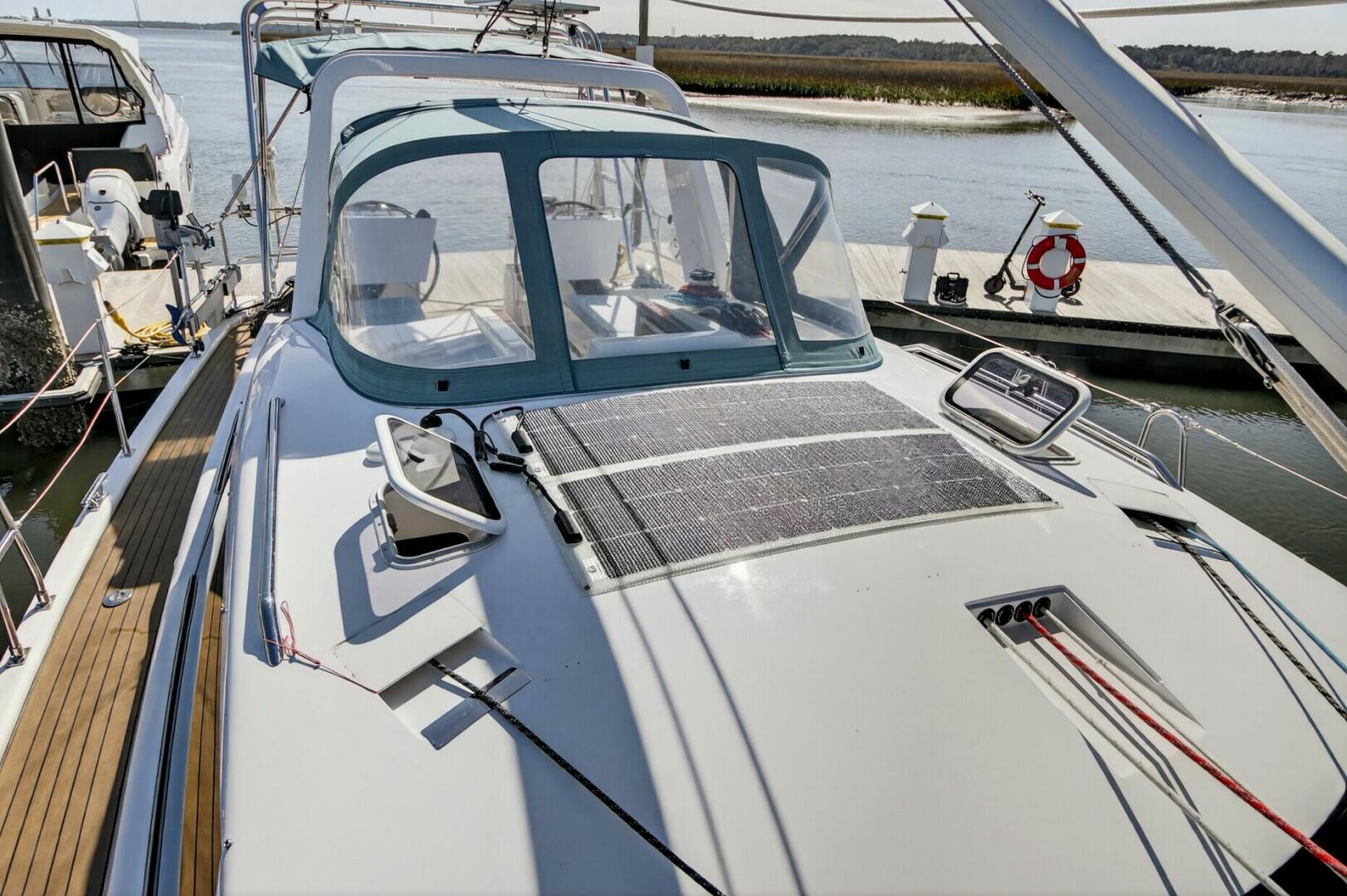
- Dodger and bimini with a connector
- Cockpit cushions
- Self-draining with two Stainless drains at helm positions
- The transom is open with integral steps to give easy access to the cockpit
- Telescopic stern boarding ladder
- Cockpit locker to port
- Large aft locker
- Gas bottle storage
- Liferaft/fender stowage in cockpit locker
- Perspex main hatch with washboard
- The instrument panel above the companionway
- Two winch handle pockets
- Three safety harness eyes
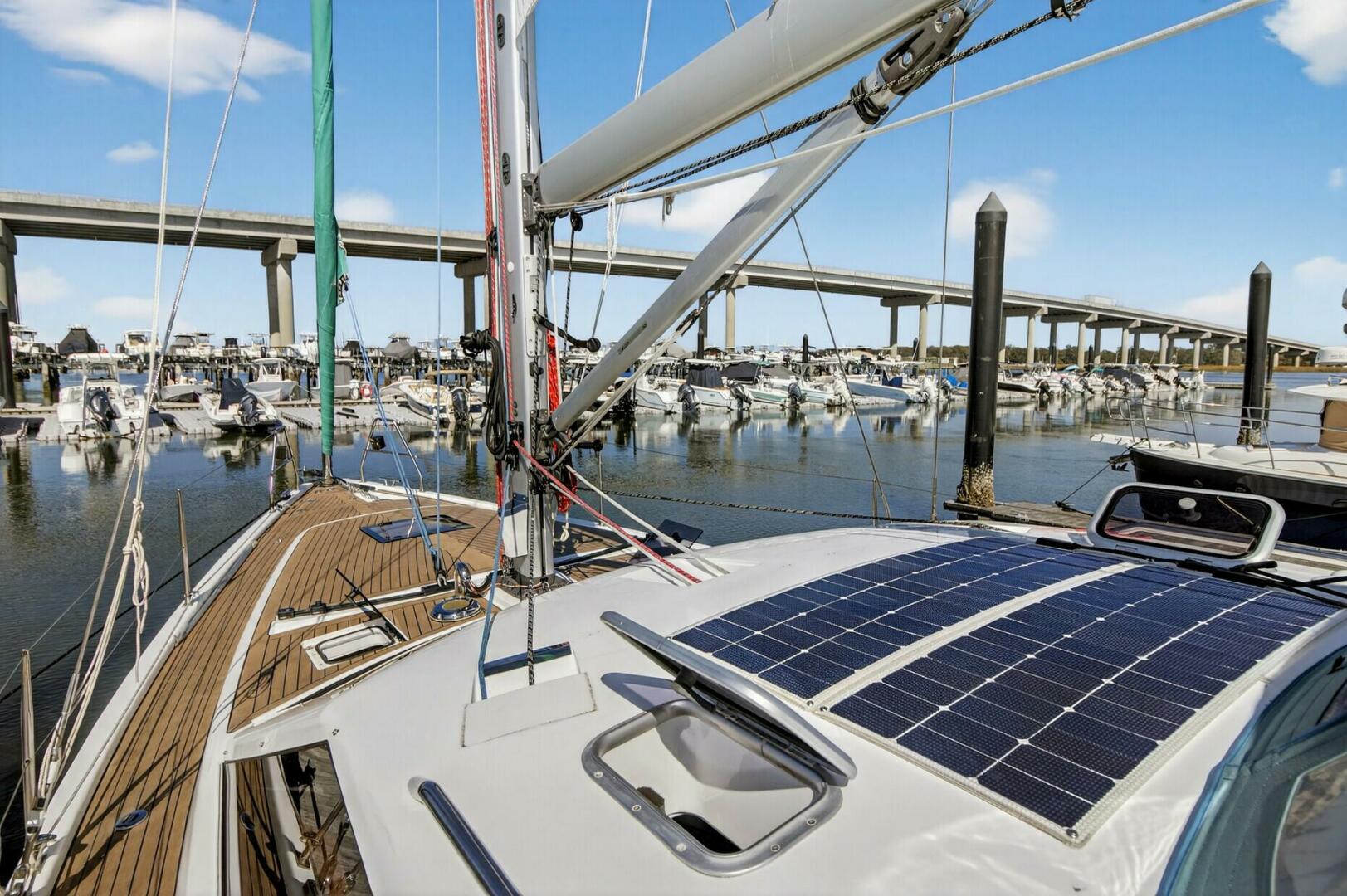
- Flexiteek on the deck and cockpit (seats, sole, and transom step)
- Aluminum Arch and Dinghy Davits (Oct. 2025)
- Starlink Mini mount on the arch (Oct. 2025)
- Cleats forward and aft raised with stainless chafe guard
- Spring cleats amidships with stainless steel chafe guard
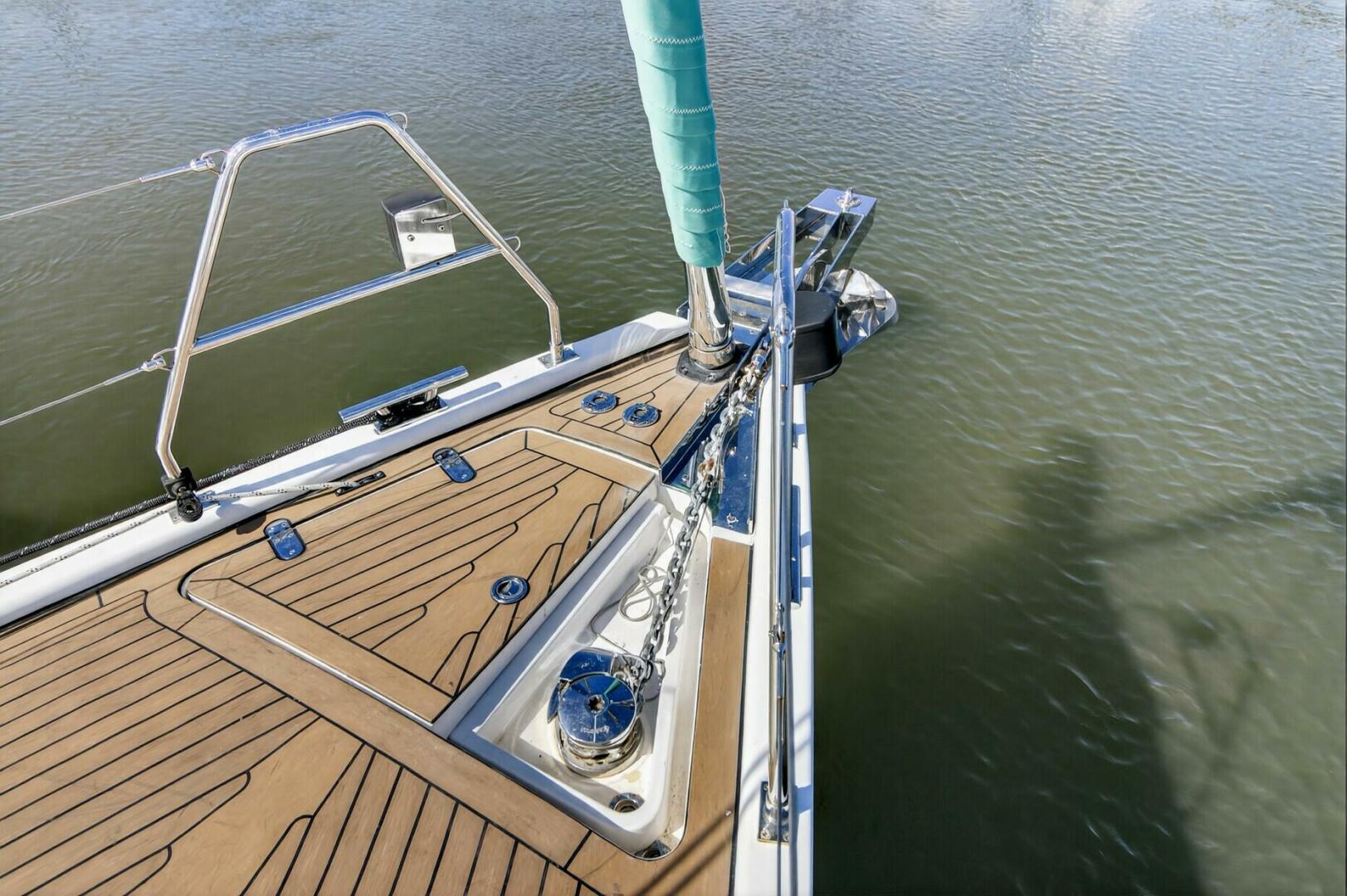
- Stainless steel stem head fitting with twin bow roller and fairing
- GRP foredeck anchor locker with re-enforced shelf to take anchor windlass
- Stainless steel pulpit incorporating navigation light bracket
- Stainless steel stanchions and guard wires
- Stainless steel aft pulpit incorporating stern gate, navigation light bracket, and ensign staff socket
- Fuel and water deck fillers
- Waste pump-out deck fitting
- Stainless steel grab handles on either side of the coach roof
- External sunshades for the pilot house windows
- Anchor windlass with a control and chain counter at the helm
- Lewmar Epsilon Stainless Steel Anchor
- Anchor Chain: 262'
- (6) Fenders
- Mooring lines
- Dinghy: Takacat LX 260
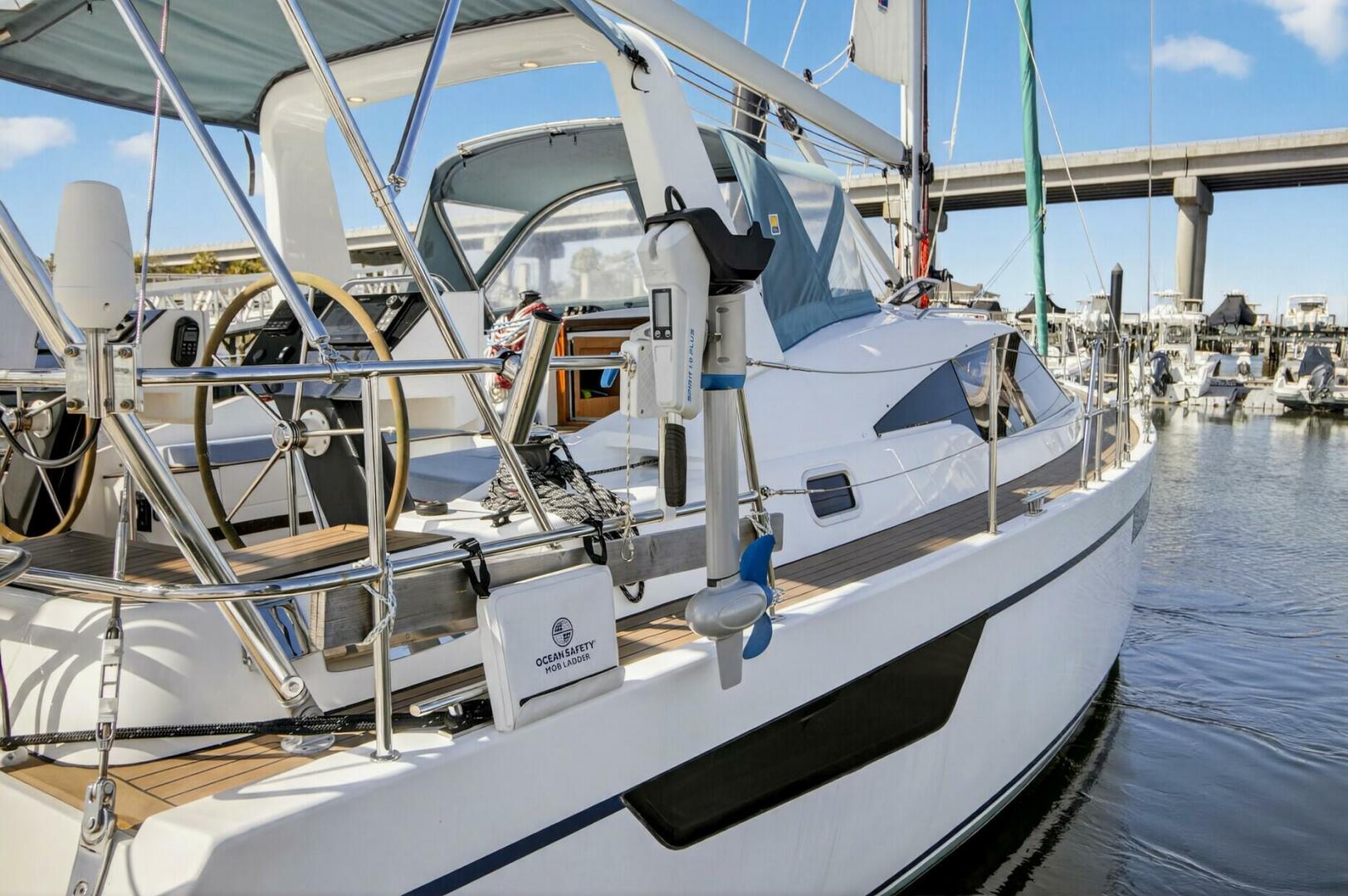
- Outboard Motor: Epropulsion Spirit 1.0
- Liferaft: Ocean ISO - greater than 24-hour pack canister - 6 person with a hammer hydrostatic release and a cradle fitted to the pushpit
- Safety equipment
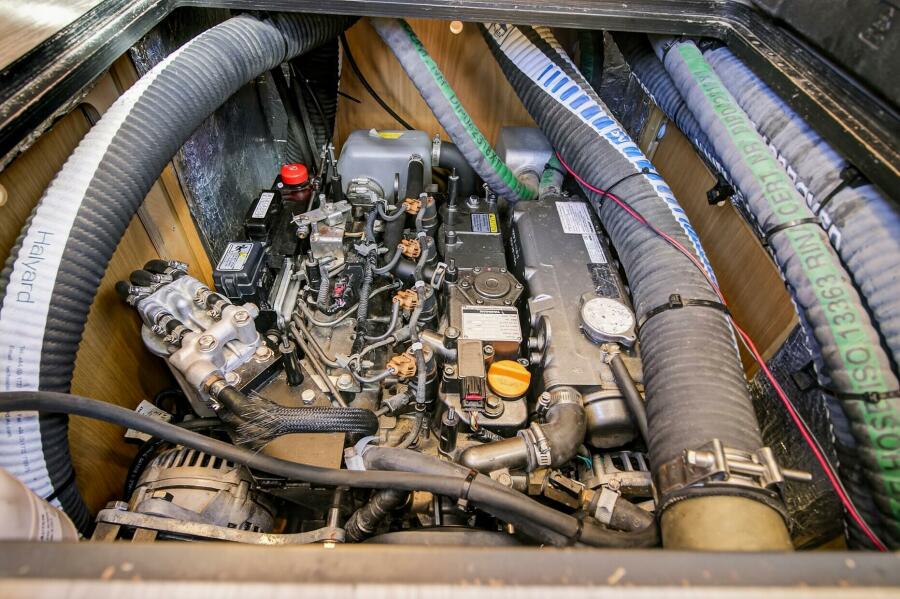
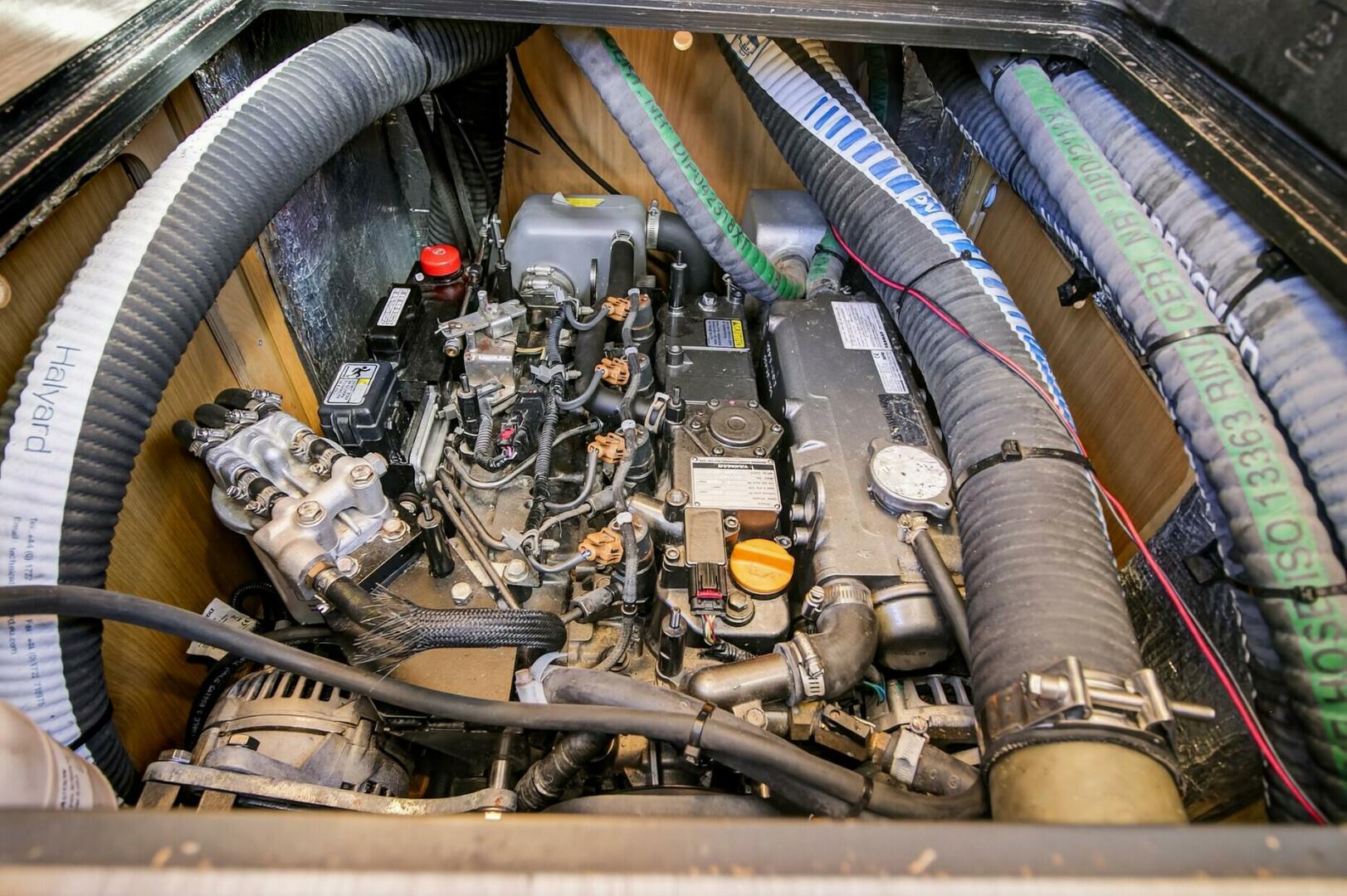
- Yanmar 4JH57 – (57 HP) 4-cylinder, fresh water-cooled, diesel engine (approximately 578 hours)
- 50-hour engine service completed
- 250-hour engine service was completed by Sopromar Centro Nautico in Lisbon, Portugal, in September 2024.
- 125-amp alternator
- Racor fuel filter
- GRP stern tube with water-lubricated stern gland
- Stainless steel propeller shaft
- Propeller: Four-blade Darglow Featherstream (feathering prop)
- Substantial skeg fitted on the centerline to protect the propeller and rudders when the yacht is dried out
- 12-volt electric ventilator
- Sound deadening to the engine box
- Integrated engine access panel
- Generator: WhisperPower Picollo 5 (3.5 kW) diesel generator
- Sopromar Centro Nautico in Lisbon, Portugal, completed the generator service in September 2024.
- Bow and Stern thrusters