
Overview — The simplest way to get a reply is a short, value-first message that ends with one low-friction next step. Not “just checking in.” Not a paragraph of context-setting. A two-line opener, one new piece of value, and a question the recipient can answer in five seconds.
Here is the formula in three steps you can use right now:
- Subject line: Use a two-word continuation subject like “Next steps” or “Quick question” — benchmarks show these drive opens significantly higher in certain cohorts.
- Opener: Reference something specific to them (a role they posted, a call you had, a result they mentioned) in one sentence.
- CTA: Ask for a yes/no or offer two specific times for a 10-minute call. Grammarly’s sales email research confirms that vague asks like “let me know your thoughts” consistently underperform specific, low-friction requests.
The templates below are organized by situation. Pick one, swap the bracketed fields, and send it today.
Table of Contents
- Why follow-up emails are worth the effort
- When to send follow-ups and what cadences actually work
- How to write a follow-up that actually gets a response
- Subject-line examples that open well
- 12 ready-to-use follow-up email templates
- Common mistakes that kill reply rates
- Research-backed tactics that outperform “checking in”
- Legal and ethical considerations in follow-up frequency and content
- Key Takeaways
- The follow-up that changed how I think about persistence
- Plo helps you automate and measure every follow-up
- Useful sources and further reading
Why follow-up emails are worth the effort
Most professionals send one message and wait. That is the single most expensive habit in sales and job searching. Research indicates that 80% of sales require 5–12 follow-up attempts, yet only ~8% of reps follow up that many times. The gap between those two numbers is where deals die.
Stat: 80% of sales require 5–12 follow-ups. Only ~8% of reps follow up that many times. — Apollo insights
The behavioral reason is straightforward. Attention is scarce, decisions carry friction, and most people default to inaction unless something nudges them. A well-timed follow-up reduces that friction. A poorly written one adds to it.
Three things make a follow-up worth sending:
- Persistence with purpose: Each touch adds new information, not just a reminder that you exist.
- Loss aversion: A final “break-up” email that signals you are closing the conversation often triggers a reply precisely because it removes the option.
- Relevance signal: A message tied to something the recipient said or did feels like a continuation of a conversation, not a cold blast.
Following up strategically converts more real estate leads for the same reason it works in any sales context: you stay present at the moment a prospect is ready to move.

When to send follow-ups and what cadences actually work
Timing is not guesswork. Different situations call for different windows, and compressing too many touches into one week is one of the fastest ways to burn a lead.

Timing rules by situation
| Situation | First follow-up | Second follow-up | Final touch |
|---|---|---|---|
| Job application | several business days after applying | about a week after first follow-up | about a week to 10 days later |
| After interview | Within 24 hours (thank-you) | 5–7 days if no feedback | 7 days later |
| Sales outreach | a couple of days after initial email | about a week and a half to two weeks later | about two to three weeks later |
| Networking | 3–5 days after meeting | 10–14 days later | N/A |
| Proposal/demo | Same day recap, then 2 days | Day 5 | Day 14 |
Two cadences you can copy
Short 4-touch cadence (job seekers, warm leads, networking):
- Touch 1: Day 0 — initial message or application
- Touch 2: a few days later — value-add follow-up (a resource, a relevant insight)
- Touch 3: about a week and a half later — check-in with a new angle
- Touch 4: around two weeks later — break-up email
Extended 7-touch cadence (B2B sales, cold outreach):
Based on a progressively spaced schedule recommended by Overloop, with increasing gaps between touches over several weeks. The progressively longer gaps reduce inbox fatigue while keeping you in the prospect’s peripheral vision. By touch 5 or 6, you pivot to a different channel — phone, LinkedIn, or a voicemail — because multi-channel sequences outperform email-only outreach once pure email engagement drops after two or three touches.
How to write a follow-up that actually gets a response
Structure matters more than length. A follow-up that works follows one spine: subject line → context opener → one new piece of value → single clear CTA. That is it.
Length and tone
Aim for under 120 words. Under 80 is better. Long follow-ups signal that you have not done the work of editing, and they shift the cognitive burden to the reader. Keep the tone conversational but professional — write the way you would speak in a brief hallway conversation, not a formal memo.
Personalization that actually works
Overloop’s research is direct on this: signal-grounded personalization (referencing a specific event, metric, or statement the prospect made) performs far better than tokenized personalization like “Hi [First Name], I noticed you work in [Industry].” Find one genuine signal — a LinkedIn post, a recent company announcement, a metric they shared on a call — and build the opener around it. One real detail beats five generic ones.
Deliverability checklist
Before you scale any sequence, confirm these are in place:
- SPF, DKIM, and DMARC records are configured for your sending domain.
- List hygiene: Remove bounced addresses and unsubscribes before each send.
- Sender reputation: Warm up new domains gradually; do not blast 500 cold emails on day one.
- Unsubscribe link: Required under CAN-SPAM for commercial email; include it in every sequence.
Authenticated senders deliver to inboxes 2.7× more often in benchmark reports. Copy changes mean nothing if the message lands in spam.
Pro Tip: Design your CTA as a yes/no question or offer two specific time slots: “Does Tuesday at 10 AM or Thursday at 2 PM work for a 10-minute call?” A recipient can answer that in three seconds. “Let me know your thoughts” requires them to compose a response from scratch — most won’t.
Pre-send checklist
- [ ] Subject line is under 50 characters and mobile-readable
- [ ] Opener references something specific to the recipient
- [ ] One new piece of value is included (not a restatement of the original ask)
- [ ] CTA is a single, low-friction action
- [ ] Email is under 120 words
- [ ] SPF/DKIM/DMARC confirmed
- [ ] Unsubscribe or opt-out path is present
Subject-line examples that open well
The subject line is the only thing standing between your message and the delete key. Two-word continuation subjects work because they feel like a thread the recipient already started.
Two-word continuation subjects (highest open rates):
- “Next steps” — works after any call, interview, or proposal
- “Quick question” — low-pressure opener for cold or warm outreach
- “Following up” — simple, honest, and still effective for warm contacts
- “Still interested?” — strong for re-engagement after silence
Signal-grounded subject lines (for personalized outreach):
- “Saw your post on [topic]” — reference a specific LinkedIn post or article
- “Re: [Company name] expansion” — tie to a news event or announcement
- “Your [metric] caught my attention” — works when you have a real number to reference
Job and interview-specific:
- “Thank you — [Role title] interview” — clean, professional, easy to search
- “Following up on my [Role] application” — direct and honest
- “Re: [Company] — next steps?” — signals you are organized and interested
Mobile visibility note: Keep subject lines under 40 characters when possible. Most mobile clients truncate at 30–40 characters in the preview pane, so front-load the most important word.
12 ready-to-use follow-up email templates
1. After a job interview — same-day thank-you
Best for: Sending within 24 hours of any interview.
Subject: “Thank you — [Role title] interview”
Hi [Name],
Thank you for the time today. I left the conversation more excited about [specific thing discussed — a project, a team goal, a challenge].
I am confident I can contribute to [one specific outcome]. Happy to send any additional materials if helpful.
Looking forward to hearing about next steps.
[Your name]
Tweak tip: Replace “specific thing discussed” with a real detail from the conversation. Generic thank-you notes get filed; specific ones get remembered.
2. Job application follow-up — no response after 5–7 days
Best for: Following up on an application when you have heard nothing.
Subject: “Following up on my [Role] application”
Hi [Hiring Manager’s name],
I applied for the [Role title] position on [date] and wanted to confirm my application came through. I remain very interested and believe my background in [relevant skill] is a strong match.
Would a brief call this week work to discuss the role?
[Your name]
Tweak tip: If you cannot find the hiring manager’s name, address the team or use the recruiter’s name from LinkedIn.
3. Sales follow-up after a discovery call — same day
Best for: Sending within one hour of a substantive sales call.
Subject: “Recap + next steps — [Company name]”
Hi [Name],
Great conversation today. Here is what I heard: [their key pain point in their own words], with a goal of [their stated outcome] by [their timeline].
I am attaching [promised resource]. Our suggested next step is [specific action] — does [date] at [time] work to move forward?
[Your name]
Tweak tip: Mirror their language in the pain-point summary. It signals you were listening, not pitching.
4. Sales follow-up — no response after 3–5 days
Best for: Second touch after a cold or warm outreach with no reply.
Subject: “Quick question — [Company name]”
Hi [Name],
I sent a note last week about [one-line summary of your offer]. Sharing this [case study / benchmark / resource] in case it is useful — [one sentence on what it shows].
Worth a 10-minute call this week?
[Your name]
Tweak tip: The new resource is the value-stack. Adding market-specific evidence like case studies or benchmark numbers outperforms restating the original ask.
5. Networking follow-up — after meeting at an event
Best for: Following up within 3–5 days of meeting someone at a conference or event.
Subject: “Great meeting you at [Event name]”
Hi [Name],
Really enjoyed our conversation about [specific topic] at [event]. I thought of you when I came across [relevant article / resource / introduction] — linking it here.
Would love to stay connected. Open to a 15-minute catch-up sometime next month?
[Your name]
6. After sending a proposal — no response after 2 days
Best for: Following up on a submitted proposal or quote.
Subject: “Re: [Project name] proposal”
Hi [Name],
Wanted to check whether you had a chance to review the proposal I sent on [date]. Happy to walk through any questions or adjust the scope if needed.
Does Thursday work for a quick call?
[Your name]
7. Meeting recap and next steps
Best for: Sending immediately after any internal or client meeting.
Subject: “Recap — [Meeting topic], [Date]”
Hi [Name],
Here is a quick summary from today:
- Key decisions: [list]
- Action items: [who does what by when]
- Next meeting: [date/time if set]
Let me know if I missed anything.
[Your name]
8. After a voicemail — email follow-up
Best for: Pairing with a voicemail you just left.
Subject: “Just left you a voicemail — [Topic]”
Hi [Name],
I just left a quick voicemail about [one-line topic]. Sending this in case email is easier.
[One sentence on the value or reason for reaching out.]Does [specific time] work for a brief call?
[Your name]
9. Demo or pitch follow-up
Best for: Sending within 24 hours of a product demo or pitch.
Subject: “Next steps — [Your company] demo”
Hi [Name],
Thank you for the time today. Based on what you shared about [their specific challenge], I think [specific feature or outcome] would have the most immediate impact.
I am attaching [relevant resource]. What does your decision timeline look like — and who else should be part of the next conversation?
[Your name]
10. Re-engagement after long silence (30+ days)
Best for: Reviving a cold lead or contact you have not spoken to in a month or more.
Subject: “Still relevant? — [Topic]”
Hi [Name],
It has been a while since we last connected. I wanted to share [new development, resource, or result] that might be relevant to what you were working on.
No pressure — just thought it was worth passing along. Still open to connecting if the timing is better now.
[Your name]
11. Break-up email — final touch
Best for: The last message in any sequence when there has been no response.
Subject: “Closing the loop — [Topic]”
Hi [Name],
I have reached out a few times and have not heard back, so I will assume the timing is not right. I am closing this out on my end.
If anything changes, my contact info is below.
[Your name]
Break-up emails often produce 8–15% reply rates where mid-sequence messages produce far less. Keep it neutral, no offers, no pressure.
12. LinkedIn message follow-up (short-form)
Best for: Following up on a LinkedIn connection request or message thread.
Hi [Name], following up on my note from last week about [topic]. Happy to keep it brief — does a 10-minute call this week work, or would you prefer I send more context here first?
Channel note: LinkedIn messages should be shorter than email. Two to three sentences maximum. If the conversation needs depth, move it to email or a call.
Common mistakes that kill reply rates
Most follow-ups fail for the same handful of reasons. Here is what to stop doing and what to replace it with:
- “Just following up” as an opener — it adds no value and signals you have nothing new to say. Replace it with one new piece of information or a specific reference to the recipient.
- Long emails — a follow-up that runs 300 words is a first email in disguise. Cut to under 120 words.
- Vague CTAs — “let me know what you think” is not a next step. Ask for a yes/no or offer two specific times.
- No value added — repeating the original ask verbatim is the fastest way to get ignored. Each touch needs one new asset: a case study, a benchmark, a relevant news item.
- Wrong cadence — sending three emails in three days, then going silent for a month, is worse than a consistent slow cadence. Space touches deliberately.
- Ignoring other channels — if two or three emails produce no response, pivot to LinkedIn or a phone call. Email-only sequences hit a ceiling.
Pro Tip: The break-up email is not a failure — it is a tactic. A clean, neutral close (“I’ll assume the timing isn’t right and close this out”) leverages loss aversion. Many recipients who ignored five previous messages reply to the break-up because they suddenly realize the option is gone. Keep it short, skip the offers, and let the silence do the work.
Research-backed tactics that outperform “checking in”
The difference between a 2% reply rate and a 15% reply rate usually comes down to three decisions: what you add, how you space the touches, and whether the message even reaches the inbox.
Stat: Authenticated senders deliver to inboxes 2.7× more often in benchmark reports. — Apollo insights
Value-stacking is the highest-ROI writing change you can make. Apollo’s research consistently shows that giving a prospect new, useful resources in each follow-up outperforms generic check-ins. One new asset per touch — a relevant case study, a benchmark number, a short insight tied to their industry — signals that you did the work and that the conversation is worth continuing.
Fibonacci-style cadence prevents the two most common sequencing mistakes: compressing too many touches into one week, then abandoning the lead entirely. The Day 0, 2, 5, 9, 14, 21, 28 spacing recommended by Overloop maintains momentum without triggering spam filters or inbox fatigue.
Deliverability first. Copy changes are wasted effort if your messages land in the promotions tab or spam folder. Authenticate your domain (SPF, DKIM, DMARC), clean your list before each send, and monitor bounce rates. This is the operational layer most professionals skip.
Run small experiments. A/B test one variable at a time:
- Subject line type (two-word continuation vs. signal-grounded)
- CTA format (yes/no question vs. two time-slot offer)
- Email length (under 80 words vs. 80–120 words)
Track open rate, reply rate, and conversion to meeting or next step. Three to four weeks of data on a 50-person sample is enough to see a directional signal.
Legal and ethical considerations in follow-up frequency and content
Follow-up emails in the United States are governed primarily by the CAN-SPAM Act, which sets baseline rules for commercial email. The key requirements: include a physical mailing address, provide a clear and functional opt-out mechanism, honor opt-out requests within 10 business days, and never use deceptive subject lines or sender information. Violations carry penalties up to $51,744 per email under current FTC enforcement guidelines.
For sales sequences specifically, a few ethical lines matter beyond the legal minimum:
- Frequency: Sending more than one email per day to the same recipient is almost always counterproductive and, in some interpretations, crosses into harassment. Space touches as outlined in the cadence section above.
- Opt-out respect: If someone asks to be removed from your sequence, remove them immediately. Continuing to contact them after an explicit opt-out is both a legal violation and a reputational risk.
- Accuracy: Never misrepresent your identity, your company, or the purpose of your email in the subject line or opener. CAN-SPAM prohibits deceptive headers and subject lines explicitly.
- B2B vs. B2C: CAN-SPAM applies to commercial messages regardless of whether the recipient is a business or a consumer. GDPR applies if you are emailing recipients in the European Union, with stricter consent requirements.
For real estate professionals, the National Association of Realtors’ Code of Ethics also addresses communication standards with prospects and clients. Pair your follow-up cadence with a clean opt-out process and you stay on the right side of both the law and professional standards.
This is general information, not legal advice. Confirm current rules with a qualified attorney or review the FTC’s CAN-SPAM guidance directly.
Key Takeaways
A short, value-first follow-up with one low-friction CTA consistently outperforms longer, vague messages — and most professionals stop following up far too early.
| Point | Details |
|---|---|
| Follow up more than once | 80% of sales require 5–12 follow-ups; only ~8% of reps follow up that many times. |
| Add value every touch | Include one new asset (case study, insight, resource) per follow-up, never just restate the original ask. |
| Use a Fibonacci cadence | Space touches at Day 0, 2, 5, 9, 14, 21, 28 to avoid inbox fatigue and maintain momentum. |
| Design a low-friction CTA | Ask a yes/no question or offer two specific time slots; vague asks reduce replies. |
| Plo automates the cadence | Plo’s platform lets real estate agents and brokers build, send, and measure multi-touch follow-up sequences without manual tracking. |
The follow-up that changed how I think about persistence
There is a follow-up I sent years ago that I almost did not send. It was touch number six in a sequence I had nearly abandoned. The prospect had gone quiet after a strong first call, and every instinct said to move on. Instead, I sent a short note referencing a market report they had mentioned wanting to see, attached it, and asked one question: “Does this change anything for you?”
They replied within two hours. We closed the deal the following week.
The lesson was not that persistence always wins. It was that persistence without new information is noise, and persistence with a genuine signal is a conversation. That one market report was the difference between a dead lead and a closed deal. Every template in this article is built on that same logic: give them a reason to respond, not just a reminder that you exist.
For brokers and agents who want to measure and scale that approach, Plo’s real estate follow-up strategies resource shows how to build sequences that track which touches actually move leads forward.
Plo helps you automate and measure every follow-up
Writing great follow-up emails manually is a skill. Doing it consistently across 50 active leads while managing listings, showings, and client calls is a different challenge entirely.
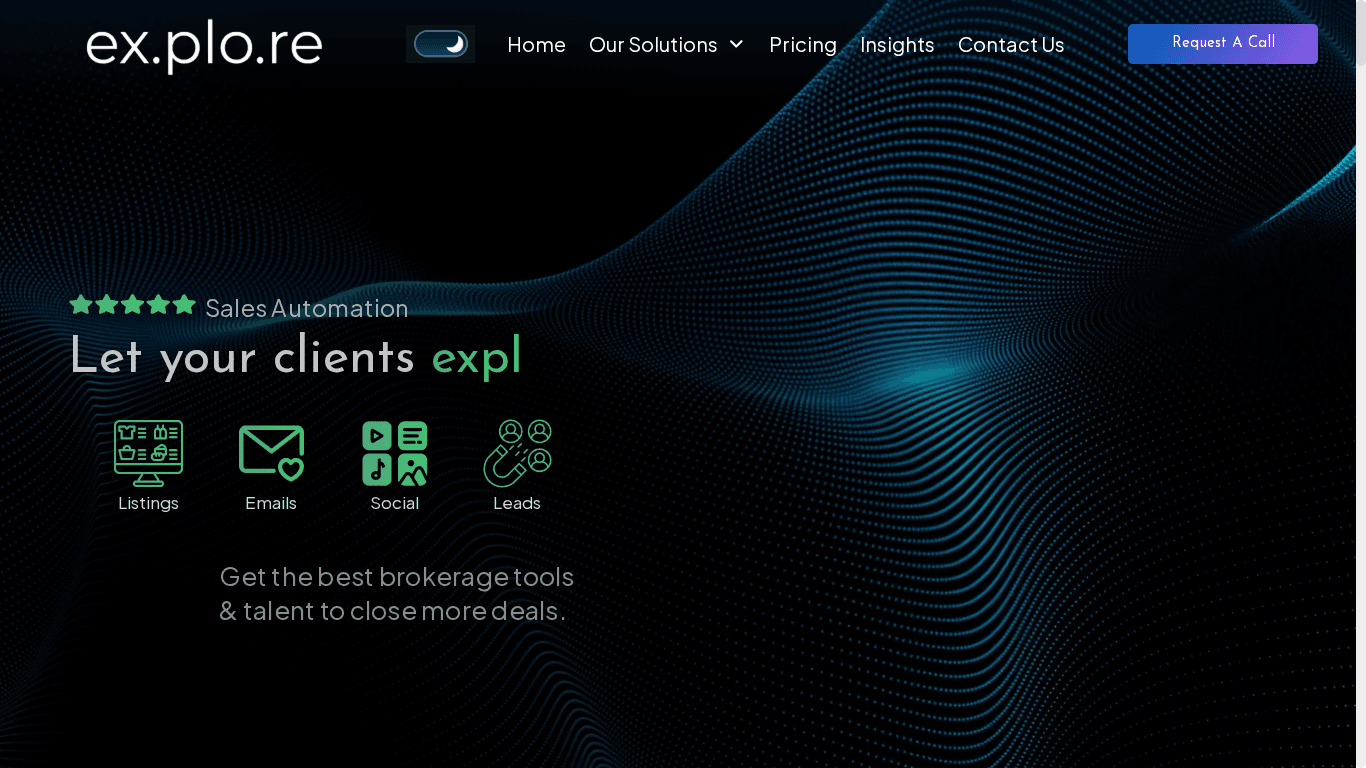
Plo is built for real estate agents, yacht brokers, and luxury sales professionals who need their follow-up cadences to run without constant manual intervention. The platform handles multi-touch sequencing, tracks open and reply rates per contact, and surfaces which leads are engaging so you know exactly where to focus your energy. One practical example: a real estate agent running a 7-touch prospecting sequence can set the cadence once, let Plo send and track each touch, and receive a daily report showing which leads opened, clicked, or replied — without logging into five different tools.
The templates in this article work manually. Plo makes them work at scale. Book a demo to see how the sequencing and measurement layer fits your current prospecting workflow, or explore the top prospecting tools comparison to see where follow-up automation fits in a broker’s full stack.
Useful sources and further reading
These are the primary sources cited throughout this article, plus a few additional references worth bookmarking:
- Apollo insights: Follow-Up Sales Email — Data on follow-up frequency, value-stacking, deliverability benchmarks, and multi-channel sequencing.
- Overloop: Follow-Up Email Guide for B2B Sales Teams — Fibonacci cadence methodology, break-up email data, and signal-grounded personalization research.
- Grammarly: How to Write an Effective Follow-Up Email After a Sales Call — CTA design guidance and practical writing advice for sales follow-ups.
- AmpUp: Sales Follow-Up Email Templates — Template library and research on adding new information to each follow-up touch.
- Hardin-Simmons University Career Services: 12 Follow-Up Email Templates — Job-context templates covering interviews, applications, and networking follow-ups.
- GradeMyClose: Sales Call Follow-Up Strategy — Tactical breakdown of the same-day recap email and how to structure post-call follow-ups.
- Plo: Real estate follow-up strategies that convert more clients — Industry-specific follow-up methods and cadence examples for brokers and agents.
- SendMLS — Partner resource for agents managing offer follow-ups and MLS-related communication workflows.