

Referred real estate leads convert 30% better than other lead types, making referral marketing one of the most powerful client acquisition strategies for agents and luxury brokers. Unlike cold outreach or traditional advertising, referral marketing harnesses the trust your satisfied clients already have with their networks. This guide explains what referral marketing is, why it works exceptionally well in real estate and luxury brokerage, and how you can implement it to grow your local business.
Table of Contents
- Understanding Referral Marketing: Definition And Principles
- Why Referral Marketing Works In Real Estate And Luxury Brokerage
- Common Misconceptions And Pitfalls In Referral Marketing
- Comparing Referral Marketing To Other Client Acquisition Methods
- Referral Marketing Strategies Tailored For Real Estate Agents And Luxury Brokers
- Step-By-Step Implementation Guide For Referral Marketing Programs
- Measuring And Optimizing Referral Marketing Success
- Boost Your Client Acquisition With Expert Prospecting Tools
- Frequently Asked Questions
Key takeaways
| Point | Details |
|---|---|
| Referral marketing leverages trusted personal networks | Social proof and personal recommendations drive higher trust than mass advertising. |
| Superior conversion and ROI performance | Referral leads convert 30% better and deliver 4x ROI compared to traditional ads. |
| Success requires proactive engagement | Structured follow-up and personalized incentives significantly improve referral rates. |
| Tracking metrics enables optimization | Monitor conversion rates and referral frequency to refine your program continuously. |
Understanding referral marketing: definition and principles
Referral marketing is a strategy that leverages the trust and relationships your existing clients have with their networks to generate new business leads. Instead of casting a wide net with traditional advertising, you tap into the personal recommendations of satisfied customers who vouch for your services. This approach fundamentally differs from cold outreach because it relies on trust and social proof as fundamental principles rather than interruption-based advertising.
The core principles that make referral marketing effective include:
- Leveraging existing satisfied clients as advocates who introduce you to potential buyers or sellers
- Building strong relationships that naturally encourage clients to recommend your services
- Creating organic growth through personal networks rather than paid advertising channels
- Using social validation to reduce skepticism and accelerate the decision-making process
For real estate agents and luxury brokers, referral marketing creates a sustainable pipeline of warm leads who already trust you before the first conversation. Unlike billboard ads or online campaigns that target strangers, referrals come pre-qualified with credibility. Building this foundation requires intentional relationship nurturing and strategic client engagement, but the payoff in lead quality and conversion rates makes the investment worthwhile.
Why referral marketing works in real estate and luxury brokerage
Real estate and luxury brokerage transactions involve significant financial commitments and emotional stakes, making trust the most valuable currency in your business. Referral sources strongly influence client trust and decision-making because buyers naturally seek validation from people they know before making major purchases. When a friend or family member recommends you, it carries more weight than any advertisement ever could.
Several psychological and behavioral factors explain why referral marketing delivers exceptional results:
- Social proof reduces buyer skepticism instantly, allowing you to skip the trust-building phase that consumes weeks with cold leads.
- Homebuyers and luxury clients actively ask their networks for agent recommendations before searching online or responding to ads.
- Referred clients demonstrate higher loyalty and tend to stay with you for repeat transactions and future referrals.
- High-value luxury transactions make personal recommendations even more critical since clients want assurance about your expertise and reliability.
The numbers back this up powerfully. Studies show that referral marketing generates leads with significantly higher conversion rates compared to other acquisition channels. Referred clients also close faster because the relationship foundation already exists. For luxury brokers specifically, the personalized nature of referrals aligns perfectly with the white-glove service expectations of high-net-worth clients. Your existing satisfied clients become your most effective marketing team, opening doors that traditional advertising cannot reach.
Common misconceptions and pitfalls in referral marketing
Many agents believe referral marketing is a passive strategy where happy clients automatically send business your way without additional effort. This myth causes more failed referral programs than any other factor. Proactive referral programs generate better leads than passive approaches because satisfied clients often need prompting and a clear path to make introductions, even when they want to help you.
Here are the most common misconceptions that undermine referral marketing success:
- Myth: Referrals happen automatically. Reality: You must actively ask for referrals, create systems to remind clients, and make the referral process simple.
- Myth: Referral leads are easy and immediate. Reality: Success depends on relationship nurturing, timing your requests strategically, and maintaining consistent communication.
- Myth: Referred clients don’t need follow-up. Reality: Poor follow-up causes most lost referral opportunities, even when leads come from trusted sources.
- Myth: Generic incentives motivate everyone. Reality: Personalized rewards based on individual client preferences drive significantly more referrals.
The biggest failure point occurs when agents request referrals but then drop the ball on timely follow-up with the referred prospect. Even warm leads go cold quickly without prompt engagement. Another common mistake is using one-size-fits-all incentive programs that fail to resonate with your diverse client base.
Pro Tip: Set up automated reminders in your CRM to follow up with both the referring client and the new prospect within 24 hours. Personalize your thank-you gestures based on what you know about each client’s preferences, whether that’s a handwritten note, a favorite restaurant gift card, or tickets to a local event.
Comparing referral marketing to other client acquisition methods
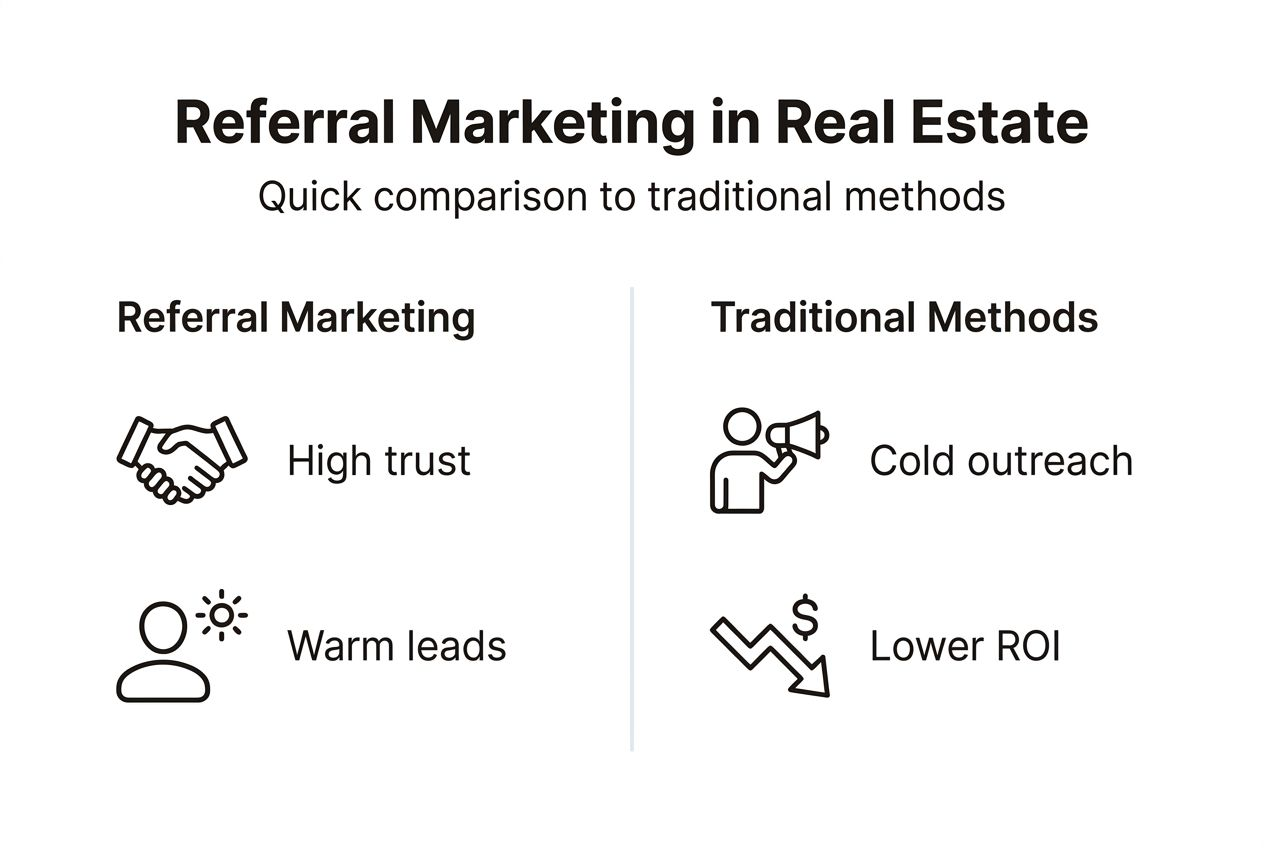
Understanding how referral marketing stacks up against traditional advertising and cold outreach helps you allocate your time and budget more effectively. Referral marketing outperforms traditional advertising in both cost efficiency and lead quality, making it one of the highest-return strategies available to agents and luxury brokers.
The data tells a compelling story:
- Referral leads convert approximately 30% better than leads generated through paid advertising or cold calling.
- The ROI from referral marketing programs averages about 4 times higher than traditional advertising campaigns.
- Referral clients typically have higher lifetime value because they trust you from the start and refer others themselves.
- Cost per acquisition for referral leads is substantially lower since you leverage existing relationships rather than paying for ad impressions.
| Method | Conversion Rate | Average ROI | Lead Quality | Upfront Cost |
|---|---|---|---|---|
| Referral Marketing | High (30% above average) | 4x traditional ads | Excellent | Low |
| Traditional Advertising | Below average | 1x baseline | Variable | High |
| Cold Outreach | Low | Below 1x | Poor | Medium |
| Social Media Ads | Medium | 1.5-2x | Mixed | Medium-High |
Traditional advertising offers broader reach and brand visibility, which can be valuable for new agents building name recognition. However, it lacks the targeting precision and inherent trust that referrals provide. Cold outreach requires significant volume to generate results and often produces lower-quality leads who need extensive nurturing.
For local market dominance, referral marketing delivers the best balance of efficiency, effectiveness, and sustainability. The impact on client acquisition becomes compounding over time as each satisfied client potentially refers multiple new prospects who become advocates themselves.

Referral marketing strategies tailored for real estate agents and luxury brokers
Implementing effective referral marketing requires specific tactics designed for the unique dynamics of real estate and luxury brokerage relationships. Generic referral programs fail because they don’t account for the high-touch, relationship-driven nature of your business.
Personalized incentive strategies:
- Offer exclusive experiences for luxury clients, such as private wine tastings, yacht club memberships, or VIP event access.
- Create tiered reward programs where frequent referrers receive increasingly valuable recognition and benefits.
- Use handwritten thank-you notes and personalized gifts that reflect individual client interests you’ve learned throughout your relationship.
- Consider reciprocal referrals where appropriate, introducing your clients to trusted service providers in your network.
Client segmentation and targeting:
- Identify your most satisfied clients through post-transaction surveys and ongoing relationship touchpoints.
- Segment clients by relationship strength, transaction satisfaction, and likelihood to have relevant contacts in their network.
- Prioritize recently closed clients when timing is optimal and their positive experience is fresh.
- Focus on clients who are natural connectors within their social and professional circles.
Systematic referral request process:
- Develop clear scripts for asking for referrals that feel natural and emphasize mutual benefit.
- Time your requests strategically around successful closings, milestone celebrations, or positive client interactions.
- Make the referral process simple with pre-written introduction templates clients can easily forward.
- Use automated prospecting workflows to scale your referral requests without losing the personal touch.
Successful luxury broker marketing strategies integrate referral programs seamlessly into the overall client experience. Your agent branding should position you as someone who delivers exceptional results worth recommending to friends and colleagues.
Pro Tip: Create a “VIP Referral Partner” designation for clients who consistently send quality referrals. Offer them exclusive benefits like first access to new listings, quarterly market briefings, or invitations to intimate client appreciation events. This recognition motivates continued referrals while strengthening your relationship.
Step-by-step implementation guide for referral marketing programs
Launching a successful referral marketing program doesn’t require complex technology or massive budgets. Follow this practical implementation sequence to start generating more qualified leads through your existing network.
-
Identify your referral sources. Review your client database and select 20-30 satisfied clients who had positive experiences and maintain strong networks. Prioritize recent transactions where enthusiasm is highest.
-
Develop your referral request messaging. Create personalized scripts and email templates that clearly explain what type of client you’re seeking and make it easy for advocates to introduce you. Focus on the value you provide rather than making it about your need for business.
-
Design your incentive structure. Choose meaningful rewards aligned with your client segments. Luxury clients might appreciate exclusive experiences, while first-time buyers might prefer practical gifts or service credits.
-
Implement tracking systems. Set up your CRM to log referral sources, track conversion rates, and trigger automated follow-up sequences. Tag referred leads so you can measure their lifetime value over time.
-
Execute your outreach campaign. Contact your identified referral sources with personalized requests. Schedule face-to-face coffee meetings when possible for the highest impact.
-
Follow up immediately with referrals. When someone refers a prospect, thank the referrer within 24 hours and contact the new lead promptly. Keep referrers updated on progress without violating confidentiality.
-
Deliver incentives and recognition. Send thank-you gifts or rewards as soon as the referred client becomes a qualified opportunity, not just after closing. Public recognition through social media testimonials or client spotlights reinforces positive behavior.
-
Monitor and optimize continuously. Review your referral metrics monthly, adjust incentives based on what motivates different client segments, and refine your messaging based on response rates.
Structured referral program implementation ensures you’re building a sustainable client acquisition system rather than hoping for sporadic referrals. The key is treating referral marketing as a proactive business development strategy that receives regular attention and refinement.
Measuring and optimizing referral marketing success
Tracking the right metrics transforms your referral program from a hopeful activity into a predictable revenue generator. Data-driven referral marketing optimizes client acquisition outcomes by revealing what works and what needs adjustment.
Essential metrics to monitor:
- Referral conversion rate: The percentage of referred leads that become clients compared to other lead sources.
- Referral frequency per client: How often individual clients send referrals, helping you identify your most valuable advocates.
- Sales volume from referrals: Total revenue generated through referral sources as a percentage of your overall business.
- Time to conversion: How quickly referred leads close compared to other acquisition channels.
- Referral source quality: Which clients consistently refer high-value prospects who match your ideal client profile.
- Incentive ROI: Cost of your referral rewards compared to the revenue generated from referred clients.
| Metric | Target Benchmark | Tracking Method |
|---|---|---|
| Referral Conversion Rate | 40-60% | CRM pipeline reports by source |
| Referrals Per Active Client | 0.5-1.0 annually | Client activity logs |
| Referral Revenue % | 30-50% of total | Financial reporting by source |
| Average Time to Close | 20% faster than cold leads | Deal cycle analysis |
Optimization strategies based on data:
Review your metrics quarterly and adjust your approach based on what the numbers reveal. If certain clients consistently refer quality leads, increase your engagement with them and ask what motivates their advocacy. When conversion rates lag, examine your follow-up speed and communication quality with referred prospects.
Compare the ROI of your referral program against other marketing channels to inform budget allocation decisions. Most agents discover referral marketing delivers 3-4 times better returns than paid advertising, justifying increased investment in relationship nurturing and referral incentives.
Use your CRM to automate performance tracking and set alerts for important milestones like referral anniversaries or when a client hasn’t referred anyone in six months. These triggers prompt timely outreach to re-engage advocates and keep your business top of mind.
Pro Tip: Create a simple monthly dashboard showing your top five referral sources, conversion rates by source, and total referral revenue. Share anonymized success stories with your referral network to demonstrate the value of the introductions they’re making and encourage continued participation.
Boost your client acquisition with expert prospecting tools
Maximizing your referral marketing results requires efficient systems that help you track relationships, automate follow-up, and convert warm leads into closed deals. The right tools amplify your personal efforts without sacrificing the authentic connection that makes referrals work.

Explore our comprehensive resources designed specifically for real estate agents and luxury brokers who want to streamline their prospecting and client acquisition processes. We’ve tested and reviewed the best lead generation tools for realtors, helping you choose solutions that integrate seamlessly with referral marketing strategies. Our detailed prospecting workflows for brokers show you exactly how to convert referrals into sales efficiently while maintaining the personal touch that luxury clients expect.
Whether you’re launching your first structured referral program or optimizing an existing system, the right technology and expert guidance make the difference between sporadic results and consistent client growth.
Frequently asked questions
What is referral marketing?
Referral marketing is a strategy where you leverage satisfied clients and professional contacts to generate new business leads through personal recommendations. Instead of relying on cold outreach or paid advertising, you tap into the trust your existing network has with their friends, family, and colleagues. This approach delivers higher conversion rates because referred prospects already trust you before the first conversation.
How do real estate agents ask for referrals effectively?
The best time to ask for referrals is shortly after positive client interactions, such as successful closings or milestone celebrations when satisfaction is highest. Use clear, personalized messaging that focuses on mutual benefit rather than making it about your need for business. Explain specifically what type of client you’re seeking and make the introduction process simple with templates or clear next steps. Timing and personalization significantly improve referral response rates.
What are the best incentives to motivate luxury clients to refer?
Luxury clients respond best to personalized thank-you gifts, exclusive experiences like private wine tastings or VIP event access, and high-end recognition rather than generic cash rewards. The key is tailoring incentives to individual client preferences you’ve learned throughout your relationship. Personalized luxury incentives make referrals feel like a natural extension of your exceptional service rather than a transactional exchange.
How can I measure if my referral marketing program is working?
Track key metrics including referral lead conversion rates, total sales volume from referrals as a percentage of your business, and how frequently individual clients send referrals. Use your CRM to monitor these numbers and compare referral ROI against other marketing channels. Systematic measurement enables continuous optimization by revealing which clients are your best advocates and which incentives drive the most referrals.