
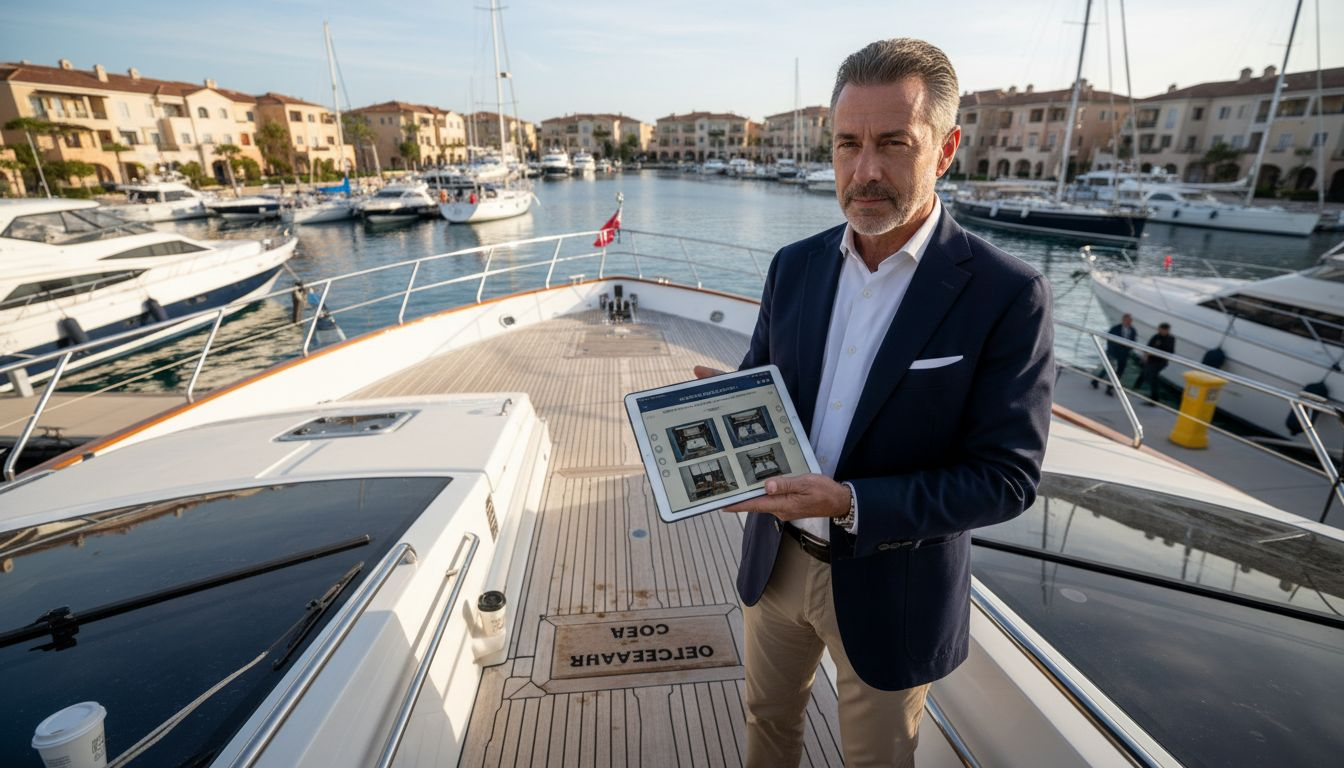
The difference between a fleeting online glance and a serious sales inquiry often comes down to how well your virtual tours capture luxury and immerse high-net-worth clients. As premium yacht brokers compete on a global stage, the choice of the best virtual tour platform and preparation tactics can directly impact client engagement. This guide reveals proven strategies that spotlight your vessels’ unique features, turning first impressions into qualified opportunities that drive conversion in any market.
Table of Contents
- Step 1: Select The Right Virtual Tour Platform
- Step 2: Prepare Yachts For Immersive Walkthroughs
- Step 3: Set Up Professional Streaming Equipment
- Step 4: Guide Clients Through Interactive Yacht Experiences
- Step 5: Verify Tour Quality And Client Engagement
Quick Summary
| Essential Insight | Detailed Explanation |
|---|---|
| 1. Choose an Intuitive Platform | Selecting a user-friendly virtual tour platform enhances ease of use and efficiency in showcasing luxury yachts to potential buyers. |
| 2. Prepare Yacht Meticulously | Ensure the yacht is spotless and staged well to create a stunning digital experience that captivates clients at first glance. |
| 3. Use High-Quality Equipment | Investing in proper streaming equipment and technical setup elevates the presentation quality, making it professional and engaging for viewers. |
| 4. Structure the Tour Narratively | Guide clients through the yacht with a clear flow and highlight features to create an immersive experience that resonates emotionally. |
| 5. Analyze Engagement Metrics | Tracking viewer engagement and interaction metrics provides actionable insights to refine future virtual tours and improve conversion rates. |
Step 1: Select the right virtual tour platform
Choosing the right virtual tour platform is where your entire strategy either gains momentum or stumbles. This decision affects how smoothly you can showcase vessels, how quickly clients move through the buying journey, and ultimately how many tours convert to serious inquiries. Your platform needs to handle the technical demands of luxury yacht marketing while remaining simple enough that you can manage tours without becoming a software engineer.
Start by identifying what your luxury yacht clientele expects. High-net-worth buyers aren’t scrolling through grainy images or clunky interfaces. They want immersive, interactive experiences that respect their time and intelligence. Look for platforms that support interactive hotspots and multimedia content, allowing you to embed video clips of the yacht’s engine room, add links to specification sheets, or highlight custom features that set your listings apart. The best platforms in this space offer customizable branding so each tour feels like a direct extension of your brokerage, not a generic template.
Ease of use matters more than you might think. You’ll be creating tours on tight timelines, often juggling multiple listings simultaneously. Platforms like Matterport, CloudPano, and Kuula make the process intuitive enough that you can upload 360-degree photos, arrange them into a logical flow, and add interactive elements without needing specialized training. Some brokers mistakenly choose platforms based on feature lists alone, then abandon them because the workflow is too complicated. Don’t make that mistake. Test the platform with one listing before committing to a full subscription.
Privacy and security should factor into your decision heavily. When you’re marketing luxury vessels worth millions, you can’t have potential buyers taking unauthorized screenshots or sharing interior details with competitors. Leading platforms provide privacy controls and customizable viewing options, letting you restrict downloads, watermark content, or require passwords before viewers access the full tour. Some allow you to disable certain angles or hide sensitive information until serious buyers verify their credentials.
Consider how the platform integrates with your existing workflow. Can you embed tours directly into your website and listing descriptions? Does it connect with luxury broker marketing tools you already use for lead tracking and client management? The more seamlessly your virtual tour platform feeds into your prospecting and sales cycle, the faster you’ll close deals. You want potential clients to experience the yacht, express interest, and flow directly into your sales pipeline without friction.
Live guided tour capabilities are worth investigating if you work with high-volume inquiries. Some platforms let you conduct real-time, narrated tours where clients see exactly what you want them to see, similar to scheduling a private showing. This adds a personal touch that static tours can’t match and often converts better with serious buyers who are ready to commit.
Finally, test mobile responsiveness carefully. Many buyers will first encounter your tours on their phones or tablets while on yachts, at exclusive events, or traveling between properties. A platform that looks gorgeous on desktop but becomes unusable on mobile will lose you conversions.
Pro tip: Start with a 14-day free trial and create a complete tour of one vessel from start to finish. This gives you real insight into platform limitations and workflow before you invest in a full subscription.
Here’s a quick comparison of popular virtual tour platforms tailored for luxury yacht marketing:
| Platform | Custom Branding | Security Features | Live Guided Tours |
|---|---|---|---|
| Matterport | Full logo and color use | Password protection, watermarks | Available with add-on |
| CloudPano | Flexible white-labeling | Angle restrictions, privacy settings | Built-in for teams |
| Kuula | Custom themes, labels | View access controls, links expirable | Third-party integration |
Step 2: Prepare yachts for immersive walkthroughs
Prepping your yacht for a virtual tour is completely different from preparing it for a traditional showing. You’re not just cleaning for a few hours of foot traffic. You’re creating a digital experience that will be viewed thousands of times by potential buyers across continents. Every detail matters because your virtual tour becomes the first impression for most serious prospects. They’ll scrutinize angles, lighting, cleanliness, and space in ways that match or exceed an in-person visit.
Start with the fundamentals. Your yacht needs to be immaculate. Professional-grade cleaning goes beyond the typical turnover. Focus on eliminating shadows, dust on trim, water spots on windows, and any signs of wear. Staging involves arranging furniture and decor to emphasize flow and openness rather than creating a lived-in feel. Remove personal items, clutter, and anything that could distract from the vessel’s luxury positioning. Think of your yacht as a high-end retail environment. The goal is to let potential buyers visualize themselves aboard without competing visual noise. Professional staging and proper lighting are essential to convey the true ambiance and luxury onboard, helping viewers imagine their experience effectively.
Lighting transforms everything. Natural light is your best friend, but you’ll need strategic supplemental lighting for interior spaces and areas without adequate windows. Harsh shadows destroy immersion and make spaces feel smaller. Soft, even lighting across cabins, the galley, and common areas creates an inviting atmosphere. If you’re shooting during overcast days, temporary lighting rigs can compensate. Some brokers hire professional lighting technicians for this exact reason. The investment pays off immediately in viewer perception and conversion rates.
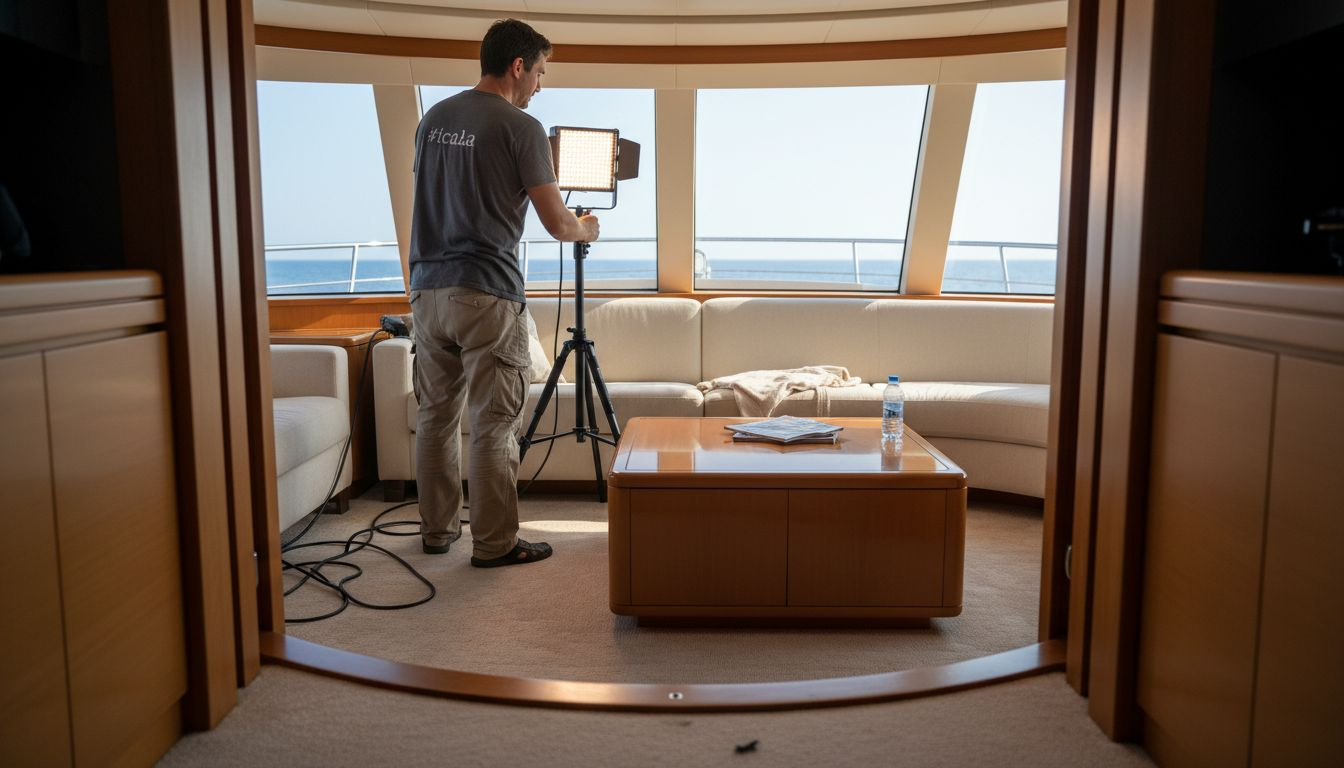
Access and safety preparations matter more than most brokers realize. The camera operator and equipment need stable platforms to capture 360-degree imagery from multiple angles without compromising safety. If you’re shooting on water, you need calm conditions. Rough seas make camera setup unstable and create motion sickness in viewers experiencing the tour later. Secure all loose items, ensure deck safety for crew movement, and plan your shot sequence in advance. Make sure stairways, companionways, and tight spaces are accessible without removing equipment or obstructing pathways.
Technical spaces deserve special attention. Engine rooms, mechanical compartments, and electrical closets often intimidate buyers because they’re unfamiliar territory. Presenting these areas effectively requires strategic angle selection and lighting that highlights quality construction, maintenance condition, and sophistication of systems. If your yacht has aluminum hull details, advanced navigation systems, or recently upgraded mechanical components, these become selling points in the virtual tour. Showcase them without cramming the viewer into uncomfortable angles.
Coordinate your shot list before the camera operator arrives. Map out every space you want to capture, identify the best vantage points, plan lighting needs, and note any obstacles. This preparation cuts your shooting time in half and ensures you don’t miss critical angles. Outdoor spaces like the sundeck, flybridge, and water platforms are as important as interiors. Buyers want to envision entertaining, relaxing, and experiencing the full yacht lifestyle.
Water conditions on shooting day matter significantly. Schedule your photography during optimal conditions. Early morning light is often ideal. Avoid peak sun angles that create harsh shadows. If you’re moored at a marina, position your yacht to maximize natural light and minimize background clutter. A cluttered marina in the background distracts from the vessel itself.
Pro tip: Schedule your virtual tour photography immediately after major maintenance, repairs, or interior updates. Buyers respond dramatically better to vessels in pristine condition, and timing your shoot right after work is completed ensures maximum visual impact.
Step 3: Set up professional streaming equipment
Setting up your streaming equipment is where your virtual tour goes from amateur recording to broadcast-quality presentation. Your tech stack directly impacts how potential buyers perceive your professionalism, the clarity with which they see your yacht, and whether they stay engaged throughout the entire experience. This isn’t about having the most expensive gear. It’s about having the right gear configured correctly to handle live walkthroughs without glitches, lag, or quality degradation that turns prospects away.
Start with your camera setup. A high-definition camera capable of capturing rich detail is non-negotiable. Professional-grade DSLR or mirrorless cameras work exceptionally well for yacht tours because they handle varied lighting conditions beautifully and produce the visual quality that luxury clients expect. Your camera needs to perform smoothly during movement through tight spaces and maintain focus as you navigate cabins and exterior areas. Paired with your camera, you’ll want reliable computers with sufficient processing power to handle the video stream without dropping frames. Your computer becomes the command center, processing the camera feed, managing audio, controlling lighting cues, and delivering the broadcast to your audience simultaneously. Underpowered computers cause stuttering, crashes, and worst case, you lose your entire broadcast midway through the tour.
Audio quality makes or breaks immersion. Many brokers underestimate how critical clean audio is. Background engine noise, wind, or poor microphone placement ruins an otherwise stunning visual experience. Invest in clear audio equipment like lavalier or shotgun microphones that capture your narration crisply while minimizing ambient yacht noise. A lavalier mic clipped to your shirt works well for hosted tours where you’re walking clients through the spaces. A shotgun mic mounted on your camera works better if your tour is more cinematic with minimal speaking. Test your audio before going live. Have someone monitor sound levels in real-time to catch issues before they reach your viewers.
Lighting systems transform how your yacht appears on camera. Professional-grade LED panels are worth every dollar. They’re lightweight, adjustable, and controllable remotely, which matters when you’re narrating and moving simultaneously. Position lighting to eliminate shadows in cabins, enhance the galley’s appeal, and make the master suite look inviting. Outdoor lighting for deck areas requires different approaches since natural light dominates. Reflector panels and strategic equipment placement help balance harsh sun and shadows. Test your lighting setup before your live stream. What looks good to your eye might look completely different on camera.
Your internet connection is the invisible foundation of everything. High-speed, stable internet is absolutely critical. Nothing kills credibility faster than a tour that buffers, freezes, or drops quality mid-broadcast. If you’re streaming from a yacht at a marina, the venue’s wifi might not cut it. Invest in a mobile hotspot with a dedicated plan or multiple backup connections. Hardwired ethernet connections are ideal if available. Test your bandwidth before going live. A simple speed test shows upload speeds, which matter far more than download speeds for streaming. Most professional tours require minimum 5 megabits per second upload, but 10-15 megabits provides comfortable headroom.
Streamlining your broadcast requires capture cards and specialized software. Streaming software like OBS Studio or Streamlabs gives you professional control over your broadcast. You can display graphics, switch between camera angles if using multiple cameras, monitor audio levels, and manage chat or questions from viewers. Capture cards allow you to route your camera feed through your computer with minimal latency. This setup feels technical, but modern streaming software makes it increasingly user-friendly. Most platforms offer free versions with solid features, allowing you to test before investing in premium subscriptions.
Run complete technical tests before any live broadcast. Do a full walkthrough using your actual equipment, internet connection, and broadcast software. Check camera positioning, audio clarity, lighting balance, and internet stability at the exact location where you’ll conduct the tour. Have someone else watch the stream simultaneously to catch issues you might miss. This rehearsal prevents expensive embarrassments and builds your confidence.
Pro tip: Invest in a portable backup power system for your streaming computer and lighting gear. Marina power can be unreliable, and losing power mid-tour destroys client confidence and wastes your preparation. A quality battery backup costs under $500 and eliminates this risk entirely.
Step 4: Guide clients through interactive yacht experiences
Guiding clients through your virtual yacht tour is where you transition from simply showing a vessel to creating an experience that builds confidence and accelerates buying decisions. This step determines whether prospects view your tour passively or engage actively with the yacht’s features, layout, and potential. The difference between a mediocre virtual tour and an exceptional one lies entirely in how effectively you navigate clients through the experience while maintaining their engagement and addressing their unspoken questions.
Start by structuring your tour with a clear narrative flow. Don’t just wander randomly through the yacht. Begin with an overview shot of the exterior to establish scale and positioning, then move methodically through functional spaces. Show the salon first to help clients visualize entertaining and living. Follow with the galley and dining areas, then transition to cabins and crew spaces. End on the sundeck or exterior entertaining areas where clients imagine themselves enjoying the lifestyle. This sequence mirrors how luxury buyers mentally explore a property. When you guide clients through this logical progression, it feels intuitive rather than disorienting. Interactive hotspots throughout the tour allow viewers to access customized information about specific areas and amenities, enabling them to explore at their own pace while having expert assistance available when needed.
Narration transforms a tour from documentary footage into a conversation. Your voice becomes the connection point between the yacht and the potential buyer. Speak clearly about each space’s purpose, highlight unique features, and address anticipated questions proactively. If you’re touring the master suite, mention the separate his and hers bathrooms, the walk-in closet, or the ocean views from the bed. In the galley, discuss appliance quality and storage solutions. On the bridge, explain navigation systems and automation. Clients listening to your narration form mental images of daily life aboard. They imagine morning coffee on the sundeck or evening entertaining in the salon. Your words create that narrative.
Incorporate pop-up information boxes, embedded videos, and interactive links strategically throughout your tour. Don’t overwhelm viewers with information at every step. Instead, place hotspots where they naturally enhance understanding. Link to specification sheets when discussing mechanical systems. Embed video clips showing the tender deployment or the water toys in action. Create clickable links to related listings if you have similar vessels or to contact forms for inquiries. These interactive elements transform passive viewing into active engagement. Viewers begin exploring rather than just watching.
Live guided tours offer advantages that recorded tours cannot match. When you conduct real-time walkthroughs, clients can ask questions, request to see specific areas again, or request focus on particular features. You can read their energy and adjust your pacing accordingly. If someone seems particularly interested in the owner’s suite, spend more time there. If they want to understand mechanical systems, navigate to the engine room with enthusiasm. Live tours create personal connection and demonstrate your expertise in real time. You’re not just showing a yacht; you’re sharing your professional perspective and helping them evaluate fit.
For recorded tours, consider offering optional follow-up calls. After prospects watch your tour, provide a clear path to schedule a brief consultation to discuss specifics. Many viewers will have questions that prevent them from moving forward. A 15-minute call addressing their concerns often converts them from interested to seriously interested. Position this follow-up as a service, not a sales tactic.
Integrate your virtual tours into your broader marketing channels. Embed tours on your website, share them via email to qualified leads, and feature them in social media campaigns. The more accessible and visible your tours become, the more qualified inquiries you’ll receive. Track which tours generate the most engagement and which prospect segments watch longest. This data reveals which yachts and angles resonate most strongly with your market.
Measure success by tracking viewer engagement metrics. How long do prospects spend in the tour? Which spaces receive the most focus? Do they click interactive hotspots? Do they reach out afterward? These insights help you refine future tours and understand what genuinely moves the needle with your clientele.
Pro tip: Offer specialized client onboarding that explains how to navigate your virtual tours before they begin. A brief email or video showing how to use hotspots, adjust viewing angles, and access additional information prevents frustration and increases how long prospects stay engaged with your content.
Step 5: Verify tour quality and client engagement
Verifying your tour quality and measuring client engagement separates brokers who optimize their strategy from those who simply upload content and hope for results. You’ve invested in equipment, prepared your yacht meticulously, and created professional tours. Now you need concrete data showing whether those tours are actually driving results or where they’re falling short. This step transforms your virtual tours from a marketing tactic into a measurable sales driver.
Start by identifying the metrics that matter most to your business. Total views tell you how many people are discovering your tours, but they don’t tell you whether viewers are genuinely interested. Dwell time is far more valuable. If prospects spend eight minutes in your tour, they’re seriously evaluating the vessel. If they spend 40 seconds, something isn’t resonating. Tracking metrics like viewing duration, hotspot interactions, and tour completion rates reveals which tours hold attention and which ones lose viewers quickly. Most virtual tour platforms include built-in analytics dashboards. Matterport, CloudPano, and similar platforms provide detailed breakdowns of user behavior automatically. If you’re embedding tours on your website, Google Analytics tracks page views and user flow, giving you additional context about how prospects discover and interact with your content.
Heatmaps are your window into which spaces capture buyer attention. These visual overlays show which areas of your yacht receive the most focus and interaction. If viewers consistently linger in the master suite but rush through the galley, that tells you something important about what drives interest for your target market. Maybe the galley needs better lighting or more detailed narration. Maybe it’s genuinely less impressive than the owner’s suite, and you should adjust your tour sequencing. Heatmap data is incredibly practical because it guides specific improvements. Rather than guessing what works, you’re responding to actual viewer behavior.
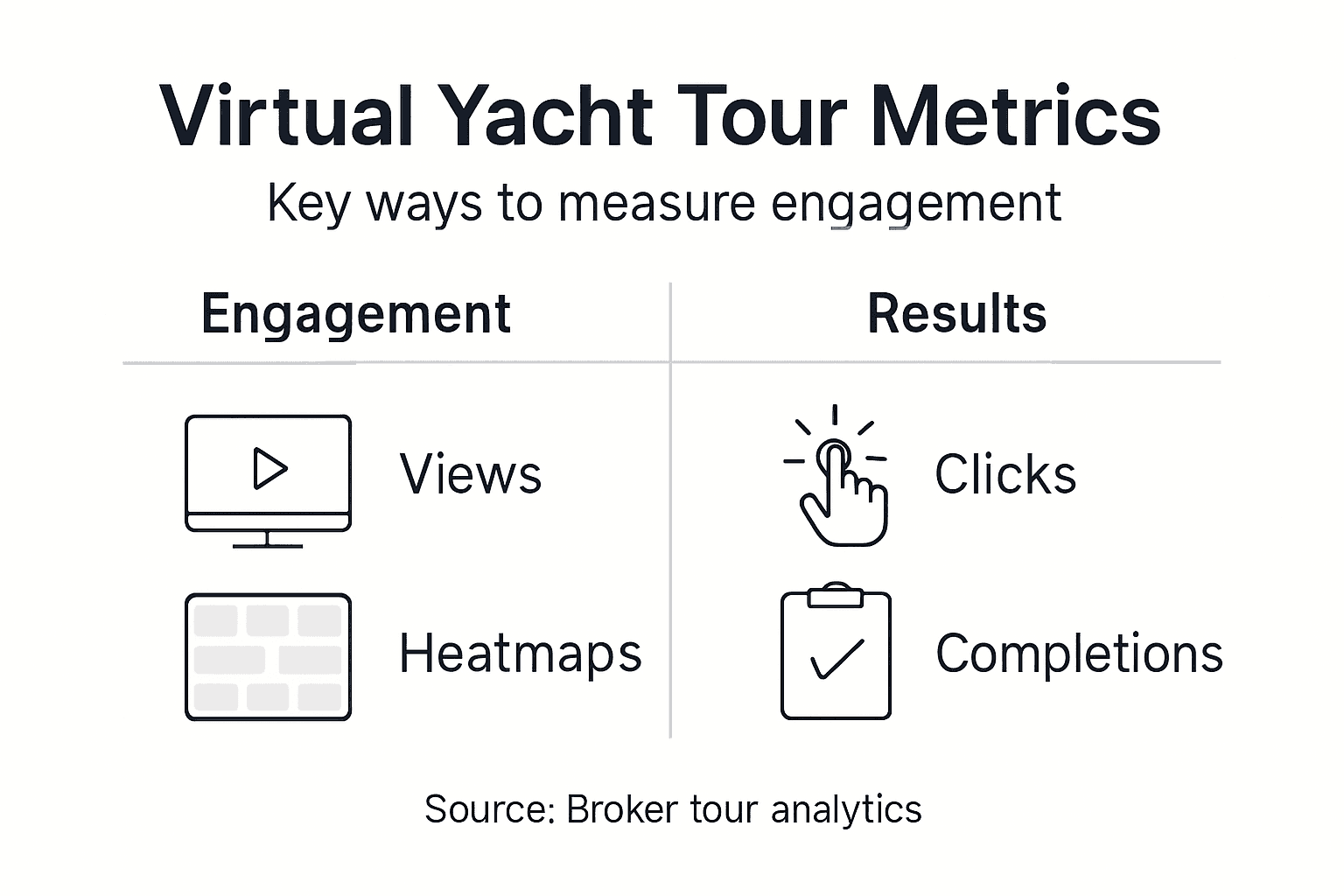
Click through rates on your calls to action reveal purchase intent. How many tour viewers click the inquiry form? How many request a callback? How many click through to contact your brokerage? These metrics connect virtual tour engagement directly to sales pipeline activity. If 12 percent of viewers click your inquiry form but only 2 percent of site visitors who don’t watch tours do the same, your virtual tours are dramatically improving conversion. This is the data you use to justify continued investment in high-quality production.
Geographic distribution data shows you where your tours are resonating globally. If most viewers are from specific regions or countries, you might tailor future tours or marketing strategies to those audiences. Maybe a particular vessel attracts strong interest from European buyers but minimal engagement from Asian buyers. That insight helps you invest your marketing budget strategically.
Tour completion rates matter significantly. If 40 percent of viewers finish your entire tour but 60 percent drop off midway, investigate why. Are certain sections too long? Is the middle of your tour losing momentum? Does your narration drag at specific points? Completion rates above 75 percent typically indicate strong engagement, while rates below 50 percent suggest structural problems. Low completion often means your tour sequencing, pacing, or presentation needs adjustment.
Understanding user behavior through heatmaps, completion rates, and demographic data guides meaningful content refinement. Don’t just collect data. Act on it. If your master suite consistently receives heavy interaction, consider creating extended tours or supplementary videos focused on high-interest spaces. If certain yacht types generate significantly better engagement than others, invest more heavily in those categories.
Collect qualitative feedback alongside quantitative metrics. Send brief surveys to prospects who’ve watched your tours. Ask what they liked, what confused them, and what would have helped them evaluate the yacht more effectively. Sometimes a single piece of feedback reveals a problem that metrics alone wouldn’t identify. Maybe viewers couldn’t figure out how to access hotspots. Maybe the lighting made a gorgeous cabin look dingy. Direct feedback is actionable in ways that pure numbers aren’t.
Establish benchmarks and track improvement over time. Your first tours set baselines. As you refine production quality, narration, and tour sequencing, you should see metrics improve. Track average dwell time monthly. Monitor completion rates. Watch inquiry conversions. These trends reveal whether your optimization efforts are paying off. After three months of implementing changes based on analytics, you should see measurable improvement.
The table below summarizes key engagement metrics and what they reveal about your virtual yacht tours:
| Metric | What It Shows | How to Use the Insight |
|---|---|---|
| Average Dwell Time | Interest level of viewers | Improve weak segments, highlight best areas |
| Completion Rate | Engagement with entire tour | Revise pacing if low, refine narration |
| Hotspot Interactions | Feature or area curiosity | Add detail where interaction is highest |
| Inquiry Click Rate | Lead conversion effectiveness | Focus follow-up on highest converting tours |
Pro tip: Set up automated alerts for tours underperforming compared to your benchmarks. If a yacht’s virtual tour suddenly drops 30 percent in engagement compared to last month, investigate immediately. Something changed, whether that’s a technical issue with the tour file, reduced marketing visibility, or an expired listing. Quick identification of problems prevents wasted marketing spend on broken tours.
Elevate Your Virtual Yacht Tours With Expert Tools and Support
Conducting immersive and engaging virtual yacht tours requires more than just great footage. The article highlights crucial challenges like choosing the right platform, ensuring privacy, managing high-quality streaming equipment, guiding clients effectively, and tracking engagement metrics. These pain points affect how quickly you convert inquiries into serious buyers and how smoothly you manage each step of the sales cycle.
Imagine having a streamlined system that simplifies your entire workflow while providing powerful tools to amplify your professional impact. At ex.plo.re CRM, we specialize in helping luxury brokers and yacht agents optimize client prospecting and refine their sales pitch through cutting-edge technology and expert talent. Our solutions integrate with your virtual tours, allowing effortless lead tracking, personalized client onboarding, and data-driven follow-ups. This means you spend less time juggling software and more time closing deals.
Stop letting complex tour setups and low engagement metrics slow your sales momentum. Discover how ex.plo.re CRM empowers you to deliver exceptional virtual experiences that captivate buyers and accelerate revenue. Get started now to transform your tours into measurable sales drivers and become the power broker your clients deserve. Visit ex.plo.re CRM today to unlock your full potential.
Frequently Asked Questions
How do I choose the right virtual tour platform for my yacht marketing?
Selecting the right virtual tour platform is crucial for showcasing your yacht effectively. Look for platforms that offer interactive features, customizable branding, and ease of use, allowing you to create tours without technical expertise. Test the platform with a single listing before fully committing to ensure it meets your needs.
What preparation is needed for my yacht before filming a virtual tour?
Before filming a virtual tour, ensure your yacht is thoroughly cleaned and staged to highlight its luxury appeal. Remove personal items and clutter, and focus on optimizing lighting and flow to create an inviting atmosphere. Plan your shot list in advance to maximize filming efficiency and capture critical angles.
How can I enhance client engagement during virtual yacht tours?
Engaging clients during virtual yacht tours involves structuring the tour with a clear narrative and incorporating interactive elements. Narrate the tour clearly, highlighting unique features, and use hotspots for additional information. Encourage clients to ask questions in live tours, making the experience interactive and personal.
What equipment do I need for high-quality virtual yacht tours?
For high-quality virtual yacht tours, invest in a high-definition camera, professional audio equipment, and reliable lighting systems. Ensure you have a stable internet connection to avoid streaming interruptions. Set up your equipment beforehand and run technical tests to ensure everything operates smoothly during the tour.
How do I measure the success of my virtual yacht tours?
To measure the success of your virtual yacht tours, track metrics like average dwell time, completion rates, and hotspot interactions. Use these metrics to identify areas of improvement and refine your future tours. Aim for at least a 75% completion rate to indicate strong viewer engagement and interest.
What should I do if my virtual tour engagement drops?
If your virtual tour engagement drops, investigate the possible reasons based on your analytics data, such as low completion rates or reduced viewer duration. Adjust your narration, pacing, or visual quality based on viewer feedback and insights. Implement changes immediately to enhance the tour experience and improve engagement within a month.