
Nearly 80 percent of high-performing American yacht brokers attribute their biggest sales wins to referrals from trusted networks. In a luxury market where reputation is everything, a single recommendation can instantly transform a connection into a lucrative deal. Understanding how referrals operate within the American yacht brokerage scene reveals surprising truths about professional credibility, the power of personal endorsements, and the direct link between strong relationships and increased revenue.
Table of Contents
- Defining Referrals In Yacht Brokerage
- Types Of Referral Sources And Networks
- How Referrals Boost Broker Revenue
- Legal And Ethical Issues In Referrals
- Common Referral Pitfalls To Avoid
Key Takeaways
| Point | Details |
|---|---|
| Referral Importance | Referrals are crucial for yacht brokers, operating as trusted recommendations that convert relationships into sales opportunities. |
| Quality Over Quantity | Successful brokers prioritize building high-quality referral networks over merely accumulating contacts, fostering genuine trust and relationships. |
| Economic Benefits of Referrals | Referrals generally yield 30-50% higher conversion rates and lower acquisition costs, reinforcing the value of strategic networking. |
| Legal and Ethical Compliance | Brokers must navigate legal boundaries and maintain ethical standards in referral practices to avoid reputational and legal risks. |
Defining Referrals in Yacht Brokerage
Referrals represent a powerful growth mechanism for yacht brokers, essentially functioning as personalized recommendations that transform professional networks into sales opportunities. Within the yacht brokerage ecosystem, a referral occurs when an existing client, professional contact, or network member introduces a potential buyer or seller to a yacht broker based on their positive prior experience.
Understanding the nuanced landscape of yacht brokerage referrals requires recognizing their strategic importance. Yacht broker prospecting involves cultivating relationships that generate consistent recommendation channels. These referrals are not random occurrences but deliberate outcomes of professional reputation, trust-building, and strategic relationship management.
Effective yacht brokerage referrals typically emerge through multiple professional channels. These include marina networks, yacht club connections, marine industry professionals, past clients, luxury real estate agents, and high-net-worth social circles. Each referral represents more than a potential transaction – it signifies a validated professional recommendation that carries significant credibility. Successful yacht brokers understand that referral quality matters more than referral quantity, focusing on developing deep, meaningful professional relationships rather than pursuing superficial networking strategies.
The value of a well-executed referral system cannot be overstated. Specialized yacht brokers recognize that referrals provide a pre-vetted pathway to potential clients, dramatically reducing the time and resources required for traditional prospecting. By maintaining exceptional service standards and consistently delivering outstanding client experiences, yacht brokers can transform satisfied clients into active brand ambassadors who spontaneously recommend their services within their extensive professional and social networks.
Types of Referral Sources and Networks
Yacht brokers operate within a complex ecosystem of potential referral sources, each representing unique opportunities for business growth. What is yacht brokerage fundamentally depends on understanding these diverse networking channels that can generate high-quality client leads and recommendations.
Primary referral networks for yacht brokers typically encompass several strategic categories. Professional networks include marine industry professionals such as boat manufacturers, marina managers, yacht club administrators, and marine insurance specialists. Personal networks involve past clients, sailing enthusiasts, luxury real estate agents, and high-net-worth social connections. These networks provide credible pathways for introducing potential yacht buyers and sellers to specialized brokers.

Some of the most powerful referral sources emerge from unexpected professional intersections. Luxury real estate agents, wealth management advisors, and maritime legal professionals often encounter clients interested in yacht transactions. By cultivating relationships with these adjacent professional domains, yacht brokers can create robust referral pipelines. Specialized yacht brokers understand that strategic networking transcends traditional sales approaches, focusing instead on building genuine professional relationships built on trust and mutual respect.
Successful referral networks are not passive systems but actively managed ecosystems. Yacht brokers must invest time in relationship cultivation, providing value to their professional contacts, maintaining regular communication, and demonstrating expertise. This approach transforms referral sources from transactional contacts into committed professional allies who actively seek opportunities to recommend the broker’s services. By consistently delivering exceptional client experiences and maintaining a reputation for integrity, yacht brokers can transform their professional networks into powerful, self-sustaining lead generation platforms.
How Referrals Boost Broker Revenue
Referrals represent a critical revenue acceleration mechanism for yacht brokers, transforming professional connections into direct financial opportunities. By leveraging strategic networks, brokers can dramatically reduce acquisition costs and increase transaction probability. Brokerage marketing automation enables sophisticated tracking and optimization of these referral pathways, turning recommendations into measurable revenue streams.
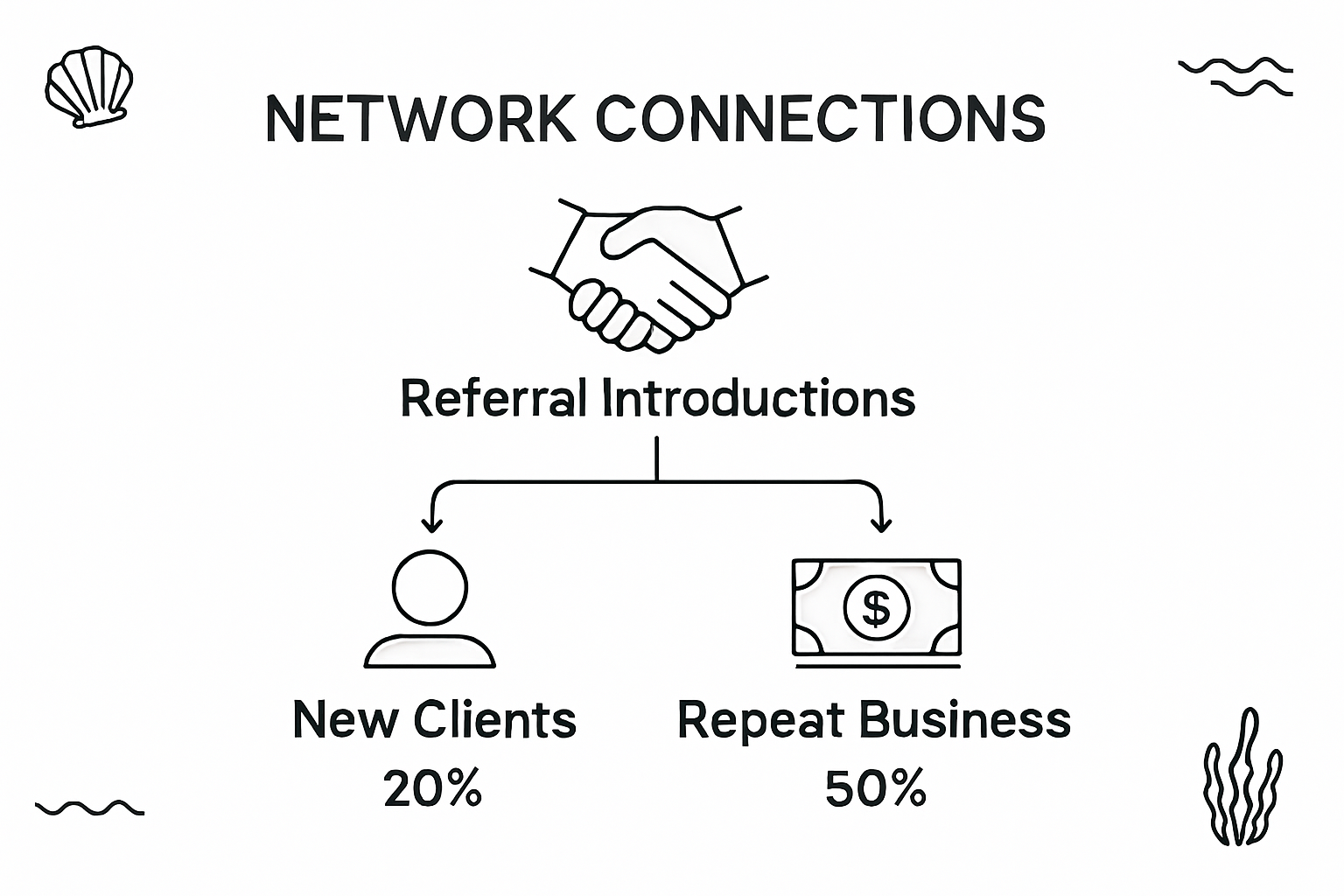
Referral economics in yacht brokerage operate on a fundamentally different model compared to traditional sales approaches. Referred clients typically have 30-50% higher conversion rates and substantially lower client acquisition costs. These pre-vetted leads arrive with inherent trust, having been recommended by a respected professional contact. This trust translates directly into higher engagement rates, faster transaction cycles, and increased likelihood of successful yacht sales or purchases.
The financial impact of referrals extends beyond immediate transaction values. Successful yacht brokers understand that each high-quality referral represents a potential long-term relationship network. Clients referred through trusted channels are more likely to become repeat customers, provide additional recommendations, and contribute to a broker’s reputation. By cultivating deep, meaningful professional relationships and consistently delivering exceptional service, brokers can create a self-reinforcing ecosystem of recommendations that generates sustainable revenue growth.
Strategic social sharing mechanisms further amplify referral potential, allowing brokers to showcase successful transactions, client testimonials, and professional achievements. These visibility strategies transform individual referrals into broader network effects, where satisfied clients and professional contacts become active brand ambassadors. The cumulative effect is a powerful, organic marketing system that continuously generates high-quality leads while simultaneously building the broker’s professional credibility and market reputation.
Legal and Ethical Issues in Referrals
Navigating the complex landscape of referrals in yacht brokerage requires a nuanced understanding of legal and ethical boundaries. Branded websites play a crucial role in establishing transparent communication channels that help brokers maintain professional integrity while managing referral relationships.
Compliance standards in yacht brokerage referrals involve multiple critical considerations. Brokers must adhere to strict disclosure requirements, ensuring that any referral arrangements are fully transparent to all parties involved. This includes clearly communicating any referral fees, commissions, or compensation structures. Ethical referral practices demand complete honesty about the nature of professional relationships, potential conflicts of interest, and the financial implications of recommendations. Failure to disclose these details can result in significant legal repercussions, including potential professional sanctions, financial penalties, and damage to professional reputation.
The regulatory landscape for yacht brokerage referrals is particularly intricate, involving potential intersections with maritime law, commercial sales regulations, and professional licensing requirements. Brokers must carefully document referral agreements, maintain clear records of all communications, and ensure that each referral meets both legal and ethical standards. This involves obtaining appropriate consents, protecting client confidentiality, and avoiding any practices that could be construed as steering or inappropriate influence.
Professional social sharing platforms introduce additional complexity to referral ethics. Yacht brokers must be vigilant about maintaining client privacy while leveraging professional networks. This requires a delicate balance between showcasing professional achievements and protecting sensitive client information. Successful brokers develop robust protocols that allow them to celebrate professional successes without compromising ethical standards, ensuring that each referral and subsequent interaction upholds the highest levels of professional integrity and legal compliance.
Common Referral Pitfalls to Avoid
Referral strategies in yacht brokerage are fraught with potential missteps that can undermine professional relationships and revenue potential. Brokerage marketing automation helps brokers identify and mitigate these critical challenges before they escalate into significant professional obstacles.
Referral quality control represents a primary area of potential failure for yacht brokers. Common pitfalls include over-relying on low-quality referral sources, failing to properly vet potential leads, and neglecting to maintain consistent communication with referral partners. Brokers often make the mistake of treating referrals as transactional interactions rather than strategic relationship-building opportunities. This approach leads to diminished trust, reduced referral frequency, and ultimately, lost potential revenue. Successful brokers understand that each referral requires personalized attention, timely follow-up, and a genuine commitment to delivering exceptional client experiences.
Another critical area of potential failure involves inappropriate compensation and disclosure practices. Yacht brokers must establish clear, transparent referral fee structures that comply with legal and ethical standards. Many professionals inadvertently create conflicts of interest by offering overly aggressive referral incentives or failing to disclose compensation arrangements. These practices not only risk legal repercussions but also damage professional credibility. Brokers should develop standardized referral agreements that clearly outline expectations, compensation terms, and mutual responsibilities.
Strategic social sharing can help mitigate referral risks by providing additional context and transparency. However, brokers must be cautious about over-sharing sensitive information or violating client confidentiality. The most sophisticated yacht brokers develop comprehensive referral management protocols that balance professional visibility with strict adherence to ethical guidelines. This approach transforms potential pitfalls into opportunities for building trust, demonstrating expertise, and creating a robust, sustainable referral ecosystem.
Maximize Referral Power to Accelerate Your Yacht Brokerage Growth
Referrals are the lifeblood of sustained success in yacht brokerage but managing and amplifying these vital connections can often feel overwhelming. The challenge lies in nurturing genuine relationships, ensuring referral quality, and maintaining ethical transparency while efficiently converting leads into loyal clients. If you want to transform your existing network into a reliable source of high-converting prospects, our solutions at ex.plo.re empower you to do just that.

Take control of your referral ecosystem by leveraging cutting-edge tools designed specifically for yacht brokers. At our CRM platform, you will streamline your prospecting, automate follow-ups, and keep every referral source engaged with ease. Start turning every recommendation into measurable revenue while safeguarding ethical practices and boosting your reputation. Don’t wait to become the trusted, specialized yacht broker your network wants to recommend. Discover how at ex.plo.re CRM and elevate your referral strategy today.
Frequently Asked Questions
What are yacht brokerage referrals and why are they important?
Yacht brokerage referrals are personalized recommendations from existing clients or professional contacts that connect potential buyers or sellers to a yacht broker. They are important because they transform professional networks into sales opportunities and carry significant credibility, enhancing growth and revenue.
How can yacht brokers effectively cultivate referral networks?
Yacht brokers can cultivate referral networks by building genuine relationships with various stakeholders, including past clients, luxury real estate agents, and marine industry professionals. Providing exceptional service and maintaining regular communication are key to transforming these contacts into committed referral sources.
What are the economic benefits of referrals for yacht brokers?
Referrals lead to higher conversion rates and lower client acquisition costs, as referred clients come with inherent trust. This trust results in quicker transaction cycles and a higher likelihood of successful yacht sales or purchases, contributing to sustainable revenue growth for brokers.
What legal and ethical considerations should yacht brokers be aware of regarding referrals?
Yacht brokers must adhere to compliance standards, including clear communication of referral fees and avoiding conflicts of interest. Transparency is crucial for maintaining professional integrity while managing referral relationships, protecting client confidentiality, and documenting referral agreements.