

Over 60 percent of real estate professionals now rely on AI for business planning and strategy. Staying ahead in such a fast-moving industry means using every tool available to spot trends, refine goals, and outperform the competition. AI-driven business planning is not science fiction but the new reality, offering smarter ways to build, adapt, and execute plans that make success a tangible goal for real estate agents ready to lead.
Table of Contents
- Defining Real Estate Agent Business Plan AI
- Key Components of an AI-Driven Business Plan
- Essential AI Tools for Real Estate Professionals
- Implementing AI Strategies in Real Estate Sales
- Common Challenges and Mistakes to Avoid
Key Takeaways
| Point | Details |
|---|---|
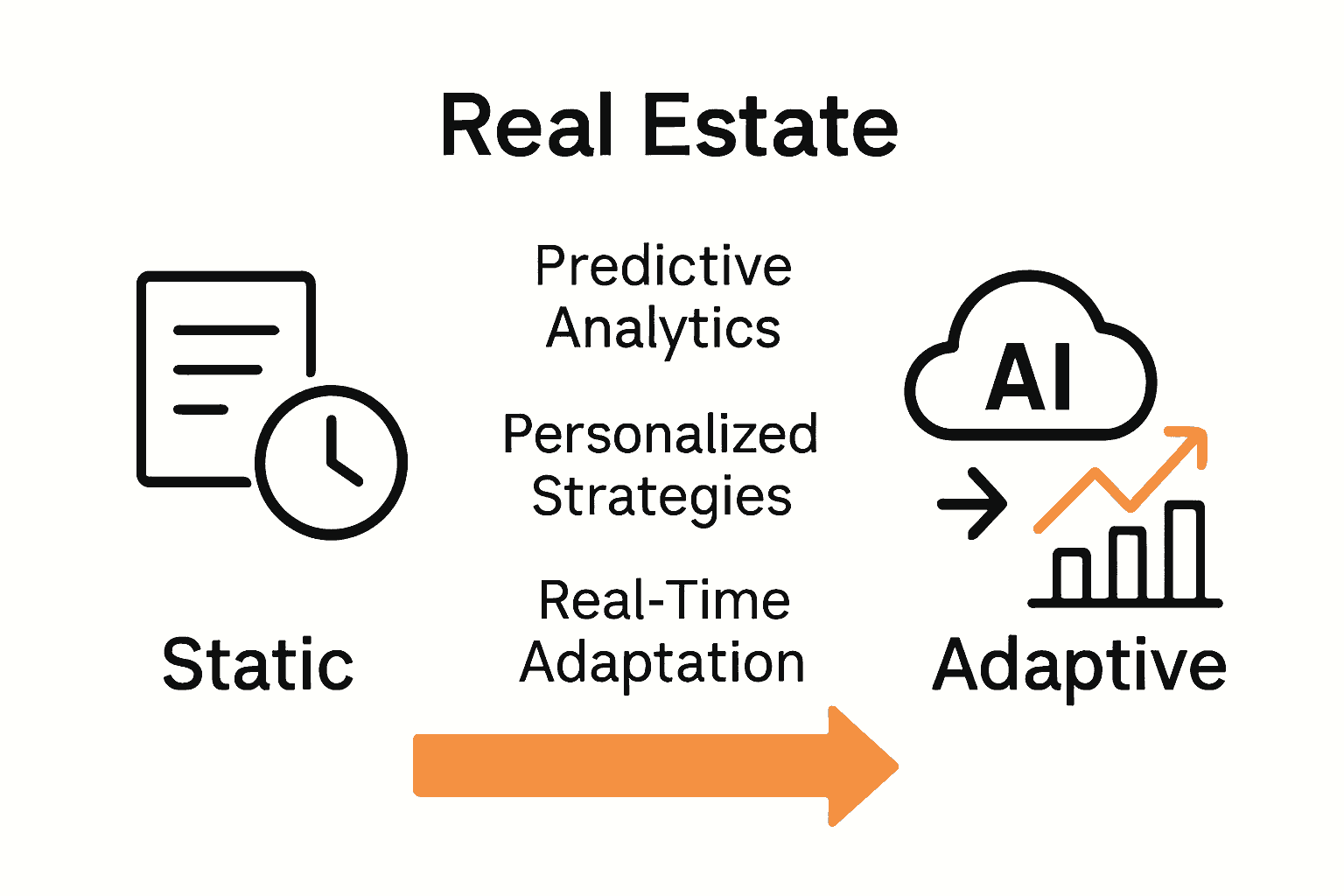
| AI-Powered Business Planning | AI transforms real estate business plans from static documents to dynamic frameworks, enabling agents to act on real-time data and predictive insights. |
| Enhanced Market Intelligence | AI tools empower real estate professionals with predictive analytics and personalized strategies, improving decision-making and identifying market opportunities. |
| Optimized Sales Strategies | Implementing AI in sales processes enhances client interactions through intelligent lead scoring and personalized property matching, driving efficiency. |
| Caution in Implementation | Real estate professionals must avoid over-reliance on technology and ensure human expertise and ethical considerations are integral to AI adoption. |
Defining Real Estate Agent Business Plan AI
In the rapidly evolving landscape of real estate entrepreneurship, AI-powered business planning is transforming how agents conceptualize, develop, and execute their strategic roadmaps. According to research from arxiv.org, artificial intelligence represents a powerful scaffold system capable of addressing complex challenges in business plan development, offering entrepreneurs unprecedented support in transforming creative ideas into actionable strategies.
At its core, Real Estate Agent Business Plan AI functions as a sophisticated digital co-founder, providing data-driven insights and strategic recommendations tailored specifically to individual real estate professionals. arxiv.org highlights how AI agents can effectively convert creative business concepts into viable solo enterprise models, enabling agents to navigate market complexities with enhanced precision and strategic clarity.
The key capabilities of Real Estate Agent Business Plan AI typically include:
- Automated market trend analysis
- Personalized competitive landscape assessment
- Predictive revenue modeling
- Strategic client acquisition recommendations
- Risk mitigation strategies
- Dynamic business plan adaptation
Real estate professionals leveraging AI-driven business planning gain a significant competitive advantage by transforming traditional linear planning approaches into intelligent, adaptive frameworks that respond dynamically to market shifts and emerging opportunities. Real Estate Broker Marketing Tools can further amplify these AI-generated insights, helping agents translate strategic recommendations into concrete marketing and growth initiatives.
Key Components of an AI-Driven Business Plan
An AI-driven business plan for real estate agents represents a sophisticated, dynamic framework that goes beyond traditional static documentation. scirp.org highlights how AI technologies are revolutionizing key operational functions, transforming business planning from a retrospective exercise into a predictive and adaptive strategic tool.
The core components of an AI-powered business plan typically encompass several critical dimensions that leverage advanced analytics and machine learning capabilities. Predictive market intelligence serves as the foundational layer, enabling real estate agents to anticipate market trends, client behaviors, and potential investment opportunities with unprecedented accuracy. According to research from arxiv.org, creating dynamic regulation and innovation ecosystems is crucial for effectively integrating AI into business operations.
Key structural components of an AI-driven business plan include:
- Automated Market Analysis
- Real-time trend tracking
- Competitive landscape assessment
- Localized demand prediction
- Financial Modeling
- Predictive revenue forecasting
- Risk assessment algorithms
- Investment opportunity scoring
- Client Acquisition Strategies
- Personalized targeting
- Behavioral pattern recognition
- Conversion probability calculations
These intelligent systems transform traditional business planning by providing real-time, data-driven insights that adapt continuously.
 Is Your Business Ready? By embracing AI-driven methodologies, real estate professionals can develop more agile, responsive, and strategically nuanced business approaches that anticipate market dynamics rather than simply reacting to them.
Essential AI Tools for Real Estate Professionals
Artificial Intelligence is revolutionizing the real estate landscape, offering professionals unprecedented capabilities to streamline operations and enhance decision-making. AiBusinessWeek highlights the transformative potential of AI tools across multiple dimensions of real estate management, from property search optimization to advanced market analysis.
According to BPM, AI-powered systems are delivering substantial benefits including increased operational efficiency, enhanced accuracy in predictions, and more sophisticated decision-making frameworks. Real estate professionals can now leverage cutting-edge technologies that were previously unimaginable, turning complex data into actionable strategic insights.
Key AI tools for real estate professionals include:
- Predictive Analytics Platforms
- Market trend forecasting
- Investment opportunity assessment
- Risk evaluation algorithms
- Automated Valuation Models
- Instant property price estimation
- Comparative market analysis
- Neighborhood value projection
- Client Relationship Management
- Personalized communication tracking
- Lead scoring and prioritization
- Automated follow-up systems
By integrating these sophisticated AI tools, real estate professionals can transform their traditional workflows into data-driven, hyper-efficient ecosystems. Amplify Your Impact Through intelligent automation and predictive insights, agents can now focus more on building relationships and closing deals, while AI handles the complex analytical heavy lifting.
Implementing AI Strategies in Real Estate Sales
Artificial Intelligence is reshaping the real estate sales landscape, offering professionals sophisticated strategies to enhance client interactions and optimize sales processes. JETIR research reveals groundbreaking approaches to property search and matching, demonstrating how AI can dramatically improve property recommendations and valuation techniques.
The implementation of AI strategies requires a multi-dimensional approach that transforms traditional sales methodologies. According to IJSET, integrating data-driven frameworks enables real estate professionals to make more precise, efficient decisions while dramatically reducing operational complexities. These advanced systems provide unprecedented insights into market dynamics, client preferences, and potential investment opportunities.
Key AI implementation strategies include:
- Intelligent Lead Scoring
- Predictive client interest analysis
- Automated qualification protocols
- Priority ranking of potential buyers
- Personalized Property Matching
- AI-powered recommendation engines
- Behavioral pattern recognition
- Customized property suggestion algorithms
- Automated Communication Systems
- Intelligent chatbots
- Personalized follow-up sequences
- Real-time response optimization
By strategically deploying these AI-powered approaches, real estate professionals can transform their sales processes from reactive to proactively predictive. Yacht Brokerage Sales Guide for Power Brokers provides additional insights into leveraging advanced technological strategies that can significantly enhance sales performance and client satisfaction.
Common Challenges and Mistakes to Avoid
Artificial Intelligence integration in real estate presents a complex landscape of potential pitfalls that professionals must carefully navigate. Arxiv highlights the critical challenge of regulatory complexities, emphasizing the need for dynamic and adaptable innovation ecosystems when implementing AI-driven strategies.
Ethical considerations represent another significant hurdle in AI adoption. SCIRP reveals profound concerns surrounding data bias, potential job displacement, and emerging socioeconomic disparities that can arise from unchecked AI implementation. Real estate professionals must approach technological integration with a nuanced, responsible mindset that prioritizes transparency and equitable outcomes.
Key challenges and mistakes to avoid include:
- Technological Over-Reliance
- Neglecting human relationship skills
- Blindly trusting AI predictions
- Ignoring contextual market nuances
- Data Management Failures
- Poor quality data input
- Insufficient data privacy protocols
- Inadequate security measures
- Implementation Missteps
- Rushed technology adoption
- Lack of staff training
- Incomplete integration strategies
Successful AI implementation demands a balanced approach that combines technological innovation with human expertise.
 Role of Data in Yacht Sales: Complete Guide provides additional insights into creating robust, ethical AI strategies that complement rather than replace human professional capabilities.
Elevate Your Real Estate Business Plan with AI-Driven Tools
Building a strong real estate business plan requires more than just creativity. The real challenge lies in turning ideas into actionable strategies that adapt to local market dynamics and client needs. This article highlights how AI brings predictive analytics, automated market analysis, and personalized client acquisition strategies to life. But tapping into these benefits demands the right tools that work alongside your existing efforts without complicating your workflow.
At ex.plo.re CRM, we understand the pressure agents face to stay ahead while managing a busy sales cycle. Our platform is designed to amplify your impact by seamlessly integrating AI-powered insights with everyday prospecting and sales activities. Whether you want to improve your sales pitch or win more local clients, we provide the technology and expert support to help you become a true power broker.
Ready to transform your business plan from static to strategic? Discover how you can harness automated market trends and client prioritization today.
Transform Your Real Estate Sales Strategy
Streamline Prospecting with AI Tools
Explore Our Full Suite of Solutions

Take control of your growth now by visiting ex.plo.re CRM and see how AI can elevate every part of your business planning and sales process.
Frequently Asked Questions
What is Real Estate Agent Business Plan AI?
Real Estate Agent Business Plan AI is an advanced tool that combines artificial intelligence with business planning to help real estate agents develop effective strategic roadmaps. It provides data-driven insights and recommendations tailored to the individual needs of real estate professionals.
How does AI enhance market analysis for real estate agents?
AI enhances market analysis by automating market trend assessments, providing real-time data on competitive landscapes, and predicting localized demand. This enables agents to make informed decisions based on accurate, up-to-date information.
What are the key components of an AI-driven business plan for real estate agents?
Key components of an AI-driven business plan include automated market analysis, predictive financial modeling, and personalized client acquisition strategies. These features help agents adapt to market dynamics and improve decision-making.
What challenges should real estate professionals be aware of when implementing AI strategies?
Real estate professionals should be mindful of challenges like technological over-reliance, data management failures, and implementation missteps. Balancing human expertise with AI capabilities is crucial for successful integration.
Recommended
- Real Estate Broker Marketing Tools | Built For Brokers, By Brokers
- Realtor Special – 20 Years Providing luxury brokerage services
- 20 Years Providing luxury brokerage services
- How Agility Can Give Real Estate Agents a Competitive Edge – Berriault and Associates Consulting Group
- Role of Home Inspection for Realtors: Complete Guide