
More than 60 percent of yacht brokers say that accurate data makes or breaks their sales success. In a market where small pricing errors can mean thousands lost, understanding the full power of information is no longer optional. Yacht professionals today face a fast-evolving landscape, and those who master data are the ones closing high-value deals. Discover how data is reshaping yacht sales, driving smarter strategies and giving brokers a decisive edge.
Table of Contents
- Defining The Role Of Data In Yacht Sales
- Types Of Data Used In Yacht Transactions
- Leveraging Data Analytics For Sales Growth
- Data-Driven Client Segmentation And Targeting
- Compliance, Privacy, And Data Security Standards
- Common Data Pitfalls In Yacht Brokerage
Key Takeaways
| Point | Details |
|---|---|
| Data as a Competitive Advantage | Utilizing comprehensive data analytics allows yacht brokers to make informed decisions, predict market trends, and enhance marketing strategies. |
| Types of Essential Data | Successful yacht transactions rely on various data types, including vessel specifications, historical performance, and comprehensive buyer demographics. |
| Predictive Client Segmentation | By employing sophisticated analytics, brokers can create detailed client profiles that enhance targeting and improve sales conversions. |
| Importance of Data Security | Implementing robust data security measures is crucial to protect sensitive client information and ensure compliance with privacy regulations. |
Defining the Role of Data in Yacht Sales
Data is the silent powerhouse transforming yacht sales from a relationship-driven industry into a strategic, insight-powered marketplace. Modern yacht brokers recognize that raw information becomes a competitive advantage when analyzed intelligently. By leveraging comprehensive data points, sales professionals can make more precise decisions, predict market trends, and craft targeted marketing approaches.
The core role of data in yacht sales encompasses several critical dimensions. First, market intelligence allows brokers to understand pricing dynamics, buyer preferences, and inventory trends. This means tracking metrics like average sale prices, time on market, seasonal fluctuations, and specific buyer demographics. Sales professionals who integrate data-driven insights can position their offerings more strategically, reducing listing times and maximizing sale values.
Data strategies in yacht sales typically involve multiple sophisticated tracking mechanisms:
- Detailed vessel specifications and history
- Comparative market analysis tools
- Buyer preference tracking
- Geographic market segmentation
- Real-time pricing trend monitoring
Brokers who embrace data-powered approaches gain significant competitive advantages. By understanding nuanced market signals, they can anticipate client needs, customize marketing strategies, and develop more precise valuation models. Yacht Broker Marketing Tools represent a modern approach to integrating these advanced data capabilities directly into daily sales workflows, transforming raw information into actionable strategic insights.
Types of Data Used in Yacht Transactions
Yacht transactions involve complex data ecosystems that go far beyond simple price and specification details. Boat International highlights that comprehensive brokerage market data encompasses multiple intricate layers of information critical for successful sales and strategic decision-making.
The primary types of data utilized in yacht transactions can be categorized into several key segments:
- Vessel Specification Data: Comprehensive technical details including length, year of manufacture, builder, model, hull material, engine specifications, and onboard amenities
- Historical Performance Data: Previous ownership history, maintenance records, repair logs, and documented sea trials
- Market Valuation Data: Comparative pricing across similar vessels, depreciation rates, and current market trends
- Buyer Demographic Information: Age, geographic location, purchasing preferences, and financial capability
Financial and Legal Documentation represents another crucial data category. SuperyachtIntel emphasizes that global fleet data and order books provide critical insights into market dynamics. These documents typically include:

- Ownership transfer records
- Tax documentation
- Insurance histories
- Registration details
- Compliance certification
Advanced yacht brokers now leverage sophisticated data integration tools to transform raw information into strategic insights.
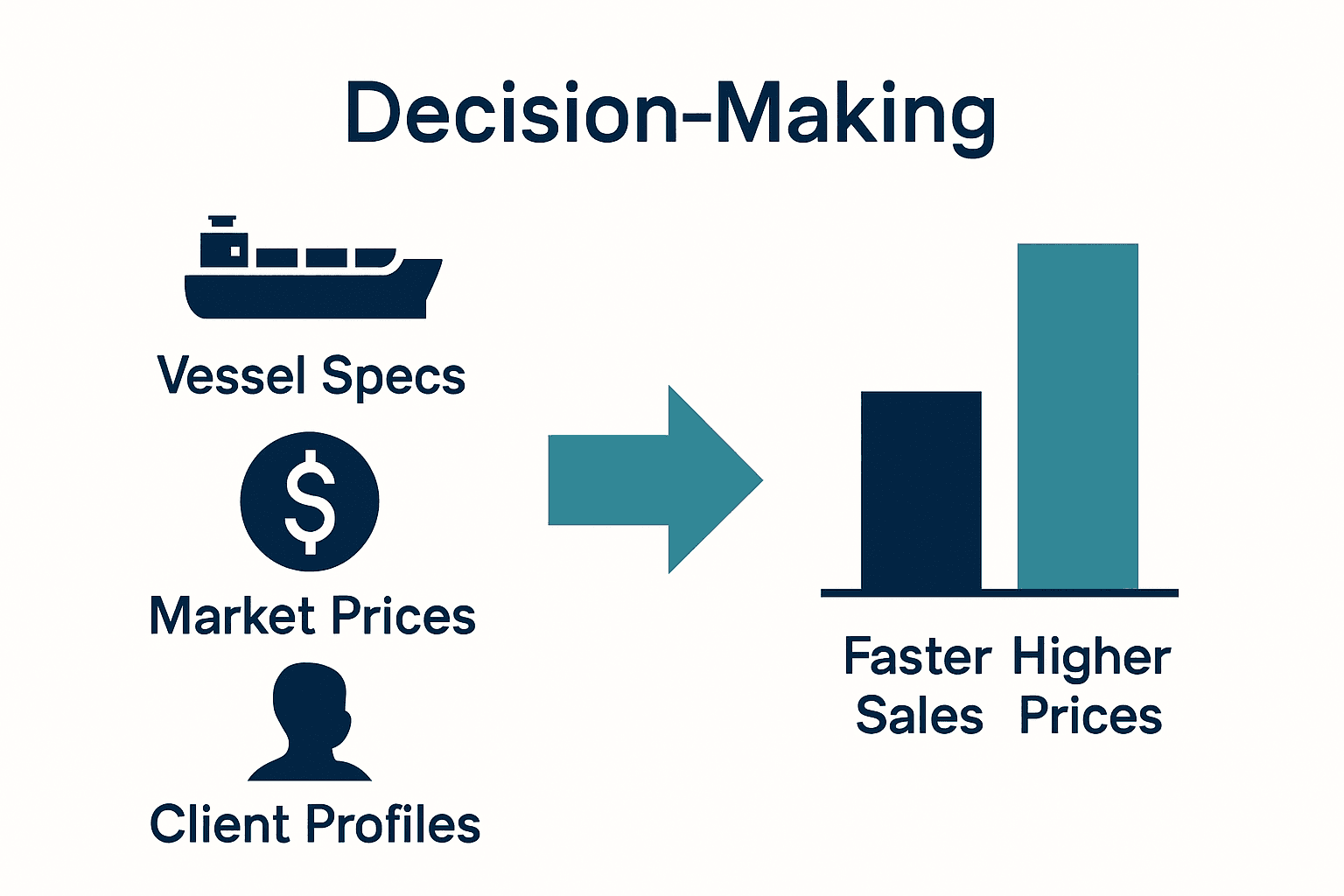 Clients can benefit from this data-driven approach, which enables more transparent, efficient, and precise yacht transactions by providing comprehensive market understanding and reducing transactional uncertainties.
Leveraging Data Analytics for Sales Growth
Data analytics has revolutionized yacht sales by transforming raw information into strategic growth opportunities. Predictive modeling enables brokers to anticipate market trends, understand buyer behaviors, and develop targeted sales strategies that dramatically improve conversion rates and operational efficiency.
Successful data analytics in yacht sales typically involves multiple sophisticated approaches:
- Segmentation of buyer demographics
- Predictive pricing models
- Customer journey mapping
- Inventory optimization
- Sales cycle prediction
The core strategic advantages of data analytics include precise targeting and personalized marketing. Brokers can now drill down into granular details like buyer preferences, spending patterns, and seasonal purchasing trends. This allows for hyper-targeted marketing campaigns that speak directly to specific client segments, increasing the likelihood of successful transactions.
Advanced analytical techniques transform traditional sales approaches. Machine learning algorithms can now predict potential buyers with remarkable accuracy, recommend personalized vessel options, and even estimate optimal listing prices based on comprehensive market data.
Broker Marketing Tools represent the next generation of sales intelligence, providing yacht professionals with unprecedented insights and competitive advantages in a complex market landscape.
Data-Driven Client Segmentation and Targeting
Client segmentation represents a powerful strategy that transforms traditional yacht sales approaches by enabling hyper-personalized marketing and targeting. By leveraging sophisticated data analytics, brokers can dissect potential buyer markets into precise, actionable categories that dramatically improve sales conversion rates and marketing efficiency.
Effective client segmentation in yacht sales typically involves analyzing multiple interconnected data dimensions:
- Demographic Segmentation: Age, income level, professional background
- Behavioral Segmentation: Past purchasing history, interaction patterns
- Psychographic Segmentation: Lifestyle preferences, recreational interests
- Geographic Segmentation: Regional variations in yacht ownership and usage
- Financial Capability Segmentation: Investment potential and purchasing power
Modern yacht brokers utilize advanced analytical techniques to create nuanced buyer profiles that go beyond traditional market categorizations. These profiles enable targeted communication strategies, personalized vessel recommendations, and precisely timed marketing interventions. By understanding each segment’s unique motivations and constraints, brokers can craft messaging that resonates deeply with specific buyer groups.
The ultimate goal of data-driven segmentation is creating a predictive marketing ecosystem that anticipates client needs before they fully articulate them. Broker Marketing Tools now provide intelligent platforms that transform raw demographic data into actionable sales strategies, allowing yacht professionals to build more meaningful, targeted client relationships with unprecedented precision and efficiency.
Compliance, Privacy, and Data Security Standards
Data security has become a critical imperative in yacht sales, where sensitive client information and high-value transaction details demand rigorous protection. FONASBA highlights the growing necessity of digital solutions that integrate robust security protocols to safeguard transaction integrity and client confidentiality.
Key compliance and privacy standards in yacht sales encompass several critical dimensions:
- Encryption of personal and financial data
- Secure client information management
- Transparent data handling processes
- Regular security audits and vulnerability assessments
- Compliance with international data protection regulations
Fly Yachts emphasizes that emerging technologies like blockchain are transforming data security by providing unprecedented levels of transaction transparency and protection. These advanced technologies enable brokers to:
- Create immutable transaction records
- Verify client identities securely
- Prevent unauthorized data access
- Ensure end-to-end transaction tracking
- Maintain comprehensive audit trails
Modern yacht brokers must adopt a proactive security approach that balances technological innovation with stringent privacy protections. Create platforms now offer intelligent solutions that integrate cutting-edge security measures, enabling professionals to manage client data with unprecedented confidence and regulatory compliance.
Common Data Pitfalls in Yacht Brokerage
Data mismanagement represents a critical challenge in yacht brokerage, where seemingly minor errors can significantly impact sales performance and market positioning. Boating Industry warns that overpricing inventory based on inaccurate data can lead to prolonged listings and substantially reduced profitability for brokers.
The most prevalent data pitfalls in yacht sales typically manifest in several key areas:
- Incomplete vessel history documentation
- Outdated market valuation metrics
- Inconsistent data entry practices
- Lack of real-time market trend analysis
- Poor data verification processes
Fly Yachts emphasizes that misinterpreting market data can result in suboptimal pricing strategies that dramatically reduce a vessel’s competitive appeal. These misinterpretations often stem from:
- Relying on stale comparative market data
- Failing to account for unique vessel modifications
- Overlooking regional market variations
- Neglecting comprehensive condition assessments
- Ignoring seasonal market fluctuations
Modern yacht brokers must develop robust data validation frameworks that continuously verify and update information. Book A Demo With Becca offers professional insights into creating systematic approaches that minimize data-related risks, ensuring more accurate, transparent, and successful yacht transactions.
Harness the Power of Data to Elevate Your Yacht Sales
Maximizing yacht sales means overcoming challenges like data mismanagement and leveraging complex market insights effectively. If you want to transform raw information into precise buyer targeting and intelligent pricing strategies, it is essential to use tools designed to organize and analyze your data seamlessly. By embracing concepts like predictive pricing, client segmentation, and real-time market trends from the article, you can stop missing opportunities and start closing deals faster.
Experience how streamlined prospecting combined with data-driven sales intelligence can elevate your brokerage. Discover our cutting-edge CRM platform built specifically for yacht brokers and luxury sales professionals who want to amplify their impact without changing their workflow. Our system helps you manage client information securely, predict market movements, and tailor your pitch to fit each unique buyer – all in one place.
Don’t let fragmented data slow you down. Join others who have boosted their sales performance by integrating advanced tools designed to handle the complex data demands of yacht brokerage. Visit ex.plo.re CRM now and unlock the potential of your sales process for immediate results. Your next successful transaction is just a click away.
Frequently Asked Questions
What role does data play in yacht sales?
Data plays a critical role in yacht sales by providing market intelligence, allowing brokers to understand pricing dynamics, buyer preferences, and inventory trends. This enables more precise decision-making and targeted marketing strategies.
How can yacht brokers leverage data analytics for sales growth?
Yacht brokers can leverage data analytics by using predictive modeling to anticipate market trends, analyze buyer behaviors, and develop targeted sales strategies. This leads to improved conversion rates and operational efficiency.
What types of data are utilized in yacht transactions?
Yacht transactions utilize various data types, including vessel specification data, historical performance data, market valuation data, and buyer demographic information. This comprehensive data helps in making informed decisions throughout the sales process.
What are common data pitfalls in yacht brokerage?
Common data pitfalls in yacht brokerage include incomplete vessel history documentation, outdated market valuation metrics, and inconsistent data entry practices. These issues can lead to inaccurate pricing strategies and prolonged listings.